Ian Thomas Malone

Pop Culture Archive

Sunday

22

February 2015

1

COMMENTS

Parks and Recreation Surpassed The Office Through The Strength Of Its Supporting Cast

Written by , Posted in Blog, Pop Culture

I’m sure some of you regard the title of my article as blasphemy. There are plenty of reasons to think that. In terms of mainstream popularity, The Office wins. It’s hard to envision Parks and Recreation even existing without The Office. P&R was supposed to be a spinoff of The Office for much of its development. Greg Daniels, who co-created P&R, was the driving force in adapting The Office from its British counterpart. The two share much DNA, which makes comparisons inevitable.

Which isn’t entirely fair. Though both are workplace comedies, The Office was literally about an office, while P&R was afforded the opportunity to explore Pawnee in a way that The Office never really got to do with Scranton. Utilizing the whole city allowed P&R to greatly expand its cast of recurring characters and develop its culture in a way made impossible by focusing on one set. It seems unfair to compare the two on these grounds, as The Office could never really have its own pit or Lil Sebastian.

It wouldn’t be unfair to compare the two shows using Michael Scott and Leslie Knope, but I’m reluctant to do that on the grounds that Steve Carrell and Amy Poehler are both so talented that a stalemate is inevitable. Both leads were incredibly strong and shared some similarities. From a stylistic standpoint, Knope was afforded more room to grow since P&R wasn’t tethered to her shortcomings to the extent The Office was to Scott’s naivety and lack of friends.

Where can we compare them and see some differences? Simple. Parks and Recreation’s supporting cast isn’t just superior to The Office’s. It’s not even close. Now you might think this is unfair to say since The Office had double the regular cast members and that’s certainly something to consider, but The Office also had close to eighty more episodes. Not so unfair.

Parks and Recreation invested in all of its characters. The best example of this is Gary/Jerry/Larry/Terry/Garry Gergich, who matches up reasonably well with Office tertiary characters like Kevin Malone and Toby Flenderson. Jerry is often the butt of the joke, but the show takes extreme caution to make sure Jerry always has victories to call his own. Jerry is the only character with a consistent spouse for the duration of the show (though she doesn’t appear until season five). Gayle is attractive and doesn’t mock Jerry like the Parks department. It’s also hinted that he’s quite well endowed. Donna’s success with both her career and romantic life also go to show how dedicated P&R was to fully developing all of its characters.

The only tertiary character on The Office to get this kind of caring treatment is Phyllis Lapin-Vance. Victories for Kevin and Meredith were few and far between, while other characters like Stanley and Creed rarely factor into the plot at all. There’s rarely an episode of Parks and Recreation that doesn’t give all its characters something to do.

If you look at The Office’s main supporting cast compared to P&R’s, it’s once again not even close. Even if you took out Ron Swanson, quite possibly the greatest character in either series, it’s hard to say that Tom, April, Ann, Ben, Chris, and Andy, and don’t romp Jim, Pam, Dwight, Andy, …and Ryan!

You could take Leslie out of the equation and still have a great episode. The Office tried to do that with Scott’s departure and people hated seasons eight and nine (I actually didn’t, but more on that in another article). I’m not saying P&R could have survived without Leslie, but the show didn’t live or die solely by her shenanigans.

Which isn’t to say that The Office didn’t have a strong supporting cast. I think the Jim/Pam romance is a little overrated to say the least, but Dwight remains one of the best comedic TV characters of all time. Andy was annoying and terrible, which does drag things down a bit, but others like Oscar and Angela did grow to the point where they wouldn’t have been out of place in the opening credits.

I figured I’d mention Mark Brendanawicz now, just to say I did. He wasn’t awful, but P&R didn’t hit its stride until he left. Moving on.

The supporting cast of P&R are endearing because they were allowed to thrive without being constantly overshadowed by the lead character. Ron could have paternal relationships with April, Andy, and to a lesser extent, Tom and Ann. Ben could be flabbergasted by April and Andy’s immaturity. Chris could have a meltdown about his sessions with Dr. Richard Nygard with just about anyone and it would work.

Any combination of P&R characters could result in comedy gold. You might be quick to say the same about The Office and that’s true. The difference is that P&R did take advantage of those opportunities far more than The Office ever cared to (though it cared more about this once Carrell left).

Obviously these are two great shows, but P&R stands above The Office. It might not be far that P&R had a guy like Rob Lowe as one its more minor characters, but that doesn’t change the fact that P&R consistently rewarded its talent with material to work with.
Tuesday

17

February 2015

0

COMMENTS

Celebrity Apprentice Recap: Episode 8

Written by , Posted in Blog, Celebrity Apprentice, Pop Culture

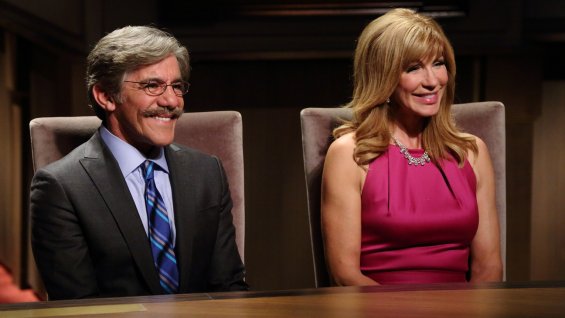
Last night I picked Geraldo Rivera to become the next Celebrity Apprentice.

I was wrong.

I haven’t spent much time fretting over my inaccurate prediction. My recaps have spelled out many of my thoughts on Leeza’s chances. I never thought she couldn’t win, just that there wasn’t a clear logical reason to pick her over Geraldo. It’s one thing to want her to win over Geraldo (who doesn’t), but to say she was a better player is a bit of a stretch.

Before I go into that, I want to point something out. For the past few weeks I’ve talked about Trump’s love of playing kingmaker. I’d cite this as the only real reason Arsenio Hall beat out Clay Aiken. The trouble was that Geraldo is rooted at Fox News and Leeza didn’t appear to want to make a comeback.

Trump snuck in a potential Today Show’s opportunity for Leeza. While I won’t say that played a “deciding factor,” I will say that if he had ever said that before, I would’ve picked Leeza easily. The Today Show’s ratings are bad enough that this seems like a possible option.

Leeza had one thing going for her over Geraldo. She possessed a far better record. How much does this matter?

Less than you’d think.

If record mattered, Trump wouldn’t have canned all of Infinity in the last task before the finale. It was kind of ironic to see Johnny Damon bring up Leeza’s record repeatedly considering he was also part of the team that won five in a row. Trump was never going to have a finale that included the semi-articulate Damon or a Real Housewife.

Let’s explore the five-task win streak. If you looked at the pieces, you don’t really see this powerhouse that should curb stomp the likes of Geraldo and Lorenzo. That’s not to downplay the legitimacy of their wins. They had the better concept more often that not, especially with the Nordstrom task.

How much was Geraldo to blame for those losses? Nordstrom, not at all. Chock full O’Nuts, meh. They lost that one to a bizarre video featuring fake fighting between Brandi and Kenya. I won’t pin that on anyone, even Leeza as project manager, who mostly deferred to Ian.

Then there’s the booze cruise. This is really the task where Leeza’s prowess proved better than Geraldo, though Hooter’s was more of a downfall than his “screw the terrorists” comment. We’ll give credit where credit is due here.

The Trump National Doral was a disjointed mess as a task. Could have gone either way, at least from what we saw on TV. I wouldn’t say either Leeza or Geraldo factored into the decision.

Which brings us to Babies Luv Buns. Another task where Leeza and Gerlado could have sat out the task completely and made no impact on the outcome. You didn’t need a helicopter to beat Babies Luv Buns.

What’s the point of this? Leeza might have had a better track record than Geraldo, but in that five loss streak, she only truly bested him once and that wasn’t the task she was PM on. Was Leeza a better candidate to become Celebrity Apprentice?

No. Don’t believe me? Find a point in the show where Leeza won it for her team. Difficult, right?

The final task worked in her favor as well, even though it was basically an afterthought. She raised more money in the last task, but the emphasis on collective earnings throughout the show during the finale seemed to indicate that wasn’t much of a deciding factor. Tony Orlando seemed to be better than Olivia Newton John (apparently the Josh Grobin mention in the previous episode was a complete afterthought). Who knows?

So why did she win? Despite my analysis, which picks apart her legitimacy as a candidate, she really wasn’t bad either. The 3-0 record as PM matters. It stands up well against Geraldo, who had a 2-0 record prior to the finale. She played safe. Safe won.

The fact that Geraldo won both Lorenzo and Ian over makes his loss all the more puzzling. He raised more money and wasn’t completely hated like Annie Duke. So why did he lose?

As far as finalists go, Geraldo looked like Piers Morgan and Leeza resembled Arsenio Hall. One was dominant. One was not. I don’t think anyone is going to shed a tear that Leeza won. I’m not, but it was the wrong call. Unless Leeza ends up working for the Today Show. I did probably overestimate how much of a factor Trump’s love of Fox News would play, but the man does love his nepotism.

That’s it for Celebrity Apprentice recaps. Thanks for reading them. I’m going to take a break from recaps until Game of Thrones. My new book, A Trip Down Reality Lane, comes out in a week. I encourage you to check it out (what’s a little shameless self promotion).

Monday

16

February 2015

0

COMMENTS

The Ramifications of Jimmy’s Departure from Downton Abbey

Written by , Posted in Blog, Downton Abbey, Pop Culture

Note: I have seen all of series five of Downton Abbey, which has two more episodes to go in America. This article does not contain spoilers for those episodes. I recommend reading my article on the implications of Matthew’s death as there’s some overlap in subject matter.

At its core, Downton Abbey has always been about change. Lord Grantham, Lady Violet, and Mr. Carson fight this at nearly every corner, while many of the show’s other characters welcome it. As we’ve seen from five series that cover a twelve year time span, even the British aristocracy cannot escape change. For the most part, that’s a good thing.

The natural progression of this change is a shrinking servant staff as Earls learn to dress themselves and pour their own tea. Nearly every servant, young and old have explored this change in mentality as they ponder their places in the ever changing dynamic. Despite this, we saw the cast expand in series three with the arrivals of Alfred, Jimmy, and Ivy.

Seeing fresh faces at Downton coupled with the new aged business practices of Matthew and Tom breathed new life into the dynamic and suggested that Downton might be able to survive without sacrificing too much of the old world. Downton was hiring, not cutting back. Lord Grantham even created a new position for Thomas Barrow, creating the underbutler position to ensure that he could continue to be the man everyone loves to hate.

The youth movement was short lived. By the end of episode one of series five, Alfred, Ivy, and Jimmy were all gone. No new footmen were hired as Molesley was left to endure the wrath of Carson alone. The kitchen features the occasional character helping out, but Ivy was certainly not replaced from a storyline perspective.

This kind of makes sense. Alfred left to become a chef, aware that there wasn’t much of a future in the service industry for a footman. Seeing Molesley struggle to find work despite having experience as both a butler and a valet must have reinforced that. Ivy similarly jumped ship for a new adventure, traveling to America to serve Cora’s brother Harold. Jimmy was the only one whose departure wasn’t linked to the changing times, having been dismissed after being caught in bed with Lady Anstruther.

Alfred’s departure can be easily explained. He needed to go in order to make room for Molesley, who was without a position at Downton. Linking his leaving to the changing times was an added bonus. Ivy wasn’t exactly in a position where she needed to go, but it’s pretty clear that her character was expendable and likely a waste of screen time. She was boring.

The only departure that didn’t really have an obvious motive belongs to Jimmy. That’s not to say that there wasn’t one. Ivy and Alfred were the two characters he interacted with the most, but there was still Barrow, Daisy, and to a lesser extent Rose. Problem is, there isn’t a lot that could have been done with them from a storyline perspective.

I suppose Jimmy could have had a relationship with Daisy, but that wouldn’t have made much sense. A relationship with Rose would’ve been too similar to Sybil/Tom (not that Fellowes is against repetitive storylines). There are limitations for how much Jimmy could do with Barrow as well. It’s not really hard to see why he was viewed as expendable.

The implications of their departures seem to matter more than the loss of them as characters. Not hiring a new second footman means that Downton has cast aside formality for practicality. They didn’t need two footmen, but does that mean there shouldn’t be two footmen?

A side effect of their departure was that it removed Downton as a future centerpiece of prosperity. The young people moved on and the old people need to make arrangements for retirement. Daisy’s storyline has been all about this, undoubtedly provoked by the departures of her peers.

This is where I think getting rid of Jimmy was a mistake. Even if there wasn’t a clear storyline for him, he was still worth keeping around for the sake of appearances. He made Downton look like less of a retirement community.

Fellowes has had no trouble going long periods of time without giving characters like Patmore and the Bates anything to do. Instead of doing that with Ivy and Jimmy, he sent them away. In doing so, he cast a rather premature spotlight on the inevitable direction Downton is headed toward. We know what’s coming. We just didn’t need to see it this early.

Series 6 is widely considered to be the last for Downton Abbey. My next DA themed article will talk about why that’s a good idea, but it’s important to understand why losing Alfred, Ivy, and Jimmy made series 7 such an improbability. Killing the youth movement sped everything else up, a problem that will be further exacerbated by Rose’s presumed departure as the actress is filming Cinderella. There isn’t much else left to do but wrap things up. I’m not convinced that had to be the case all along.

Thursday

22

January 2015

0

COMMENTS

Did Parenthood Make the Right Decision to Come Back for Season 6?

Written by , Posted in Blog, Pop Culture

You may remember that Parenthood was the subject of my first pop culture article here on this website. I argued that the season five finale provided enough closure to avoid a sixth season entirely. Season five was a roller coaster of ups and downs, though mostly downs, with uneven storylines that seemed to lack direction. Given that this was once one of the best shows on network TV, I wanted to see it go out with a bang rather than a whimper.

NBC thought otherwise and renewed the show for a sixth season, cutting both the episode order and the actors’ salaries in the process. Now, it’s important to note that uneven episode counts have been with Parenthood since the beginning. No show in network television history has had a seasonal episode breakdown of 13, 22, 18, 15, 22, and 13, a feat more impressive when you consider that Parenthood didn’t air during Writer’s Strike.

Keeping this in mind, it makes some sense that Parenthood has struggled with inconsistent plotlines. It’s hard to get into a proper groove when your episode order is constantly switching (hiatuses also exacerbate this problem). Max certainly wouldn’t appreciate this.

To season six’s credit, it doesn’t really tarnish the show’s legacy at all. It also hasn’t been very good. Surprised? No.

The real problem was that the show wasn’t particularly committed to either wrapping everything up or making new storylines. We saw continuations with the Julia/Joel marital problems and Sarah/Hank will they won’t they. Neither one was particularly necessary.

Then there was the disaster of Chambers Academy, which could be seen from a mile away. Christina has slowly degenerated into the show’s worst character. She does nothing for full episodes at a time and then when she gets a storyline, it’s something way over the top which is never mentioned again once the next absurd thing comes into play.

Parenthood also decided that it might be a good idea to feature some of Hank’s extended family in what is being marketed as the show’s “farewell season.” This is obviously done because of budget cuts, but it also shows why coming back under these conditions was a terrible idea in the first place. Hank has been a godsend to the show since his introduction, but we didn’t need to see his ex-wife.

Other characters like Jasmine, have been reduced to mere cameos. The show also decided to rehash the “sell the Luncheonette” storyline for whatever reason. To save even more money, they might have just taken the old footage from season three and used it again. The real mistake with this plotline is that it kept Adam away from more interesting storylines.

Zeek’s health storyline is kind of unnecessary, but not too surprising. What else was he going to do? Camille fits under the Jasmine mold of “I’m here and that’s about it.” If Zeek dies, well then the show’s over anyway. Not much else to say.

In Parenthood’s prime, it was easily one of the best dramas on network TV, probably in all of TV. At its worst, it was frustrating. Seasons five and six have been pretty rough, which can lead one to rethink its overall legacy.

The truth is, network TV hasn’t had a ton of great dramas over the past few years, which means that Parenthood’s legacy won’t be terrible affected. It’s not better than Hannibal, The Good Wife, or Scandal, but it’s certainly better than much of it. Even at its worst.

Shows age. They usually get bad when they do. Parenthood did. But this was to be expected to a certain extent. With that in mind, season six doesn’t change much.

Was I wrong? Not really. The damage was just done already.

Tuesday

13

January 2015

0

COMMENTS

Celebrity Apprentice Recap: Episode 3

Written by , Posted in Celebrity Apprentice, Pop Culture

Before we tackle part one of this episode, which once again featured two tasks, I thought I would clarify that Trump was wrong in saying that allowing the Project Managers to keep their own money had “never been done before.” This was also done in the fifth task of season 3, which featured John Rich against Marlee Matlin, arguably the two most impressive fundraisers in the show’s history. More on that later.

I tweeted last night that Jamie Anderson might be the worst player in Celebrity Apprentice history and having slept on that, I still find that to be the case. Comic relief contestants like Gary Busey, Rod Blagojevich, and Dennis Rodman all drew the ire of their teams time and time again, but that was the singular least impressive Boardroom showing in Celeb Apprentice history, potentially of all time. You’d have to go back all the way to season one, where Omarosa knocked off a few of the women to find comparable instances.

Jamie made three horrendous mistakes. She admitted early on that she was bullied into the concept that she didn’t quite believe in. More importantly, she didn’t set anyone up to take the fall. This was problem one.

Problem two was that she was completely indecisive in the boardroom. Her team was chaotic in deciding who to set up for the fall. Kate, Brandi, and Kenya were all targets. Jamie could have made a case to plea for any of their firings and probably could have knocked off Kate or Brandi. Kenya would have been tough considering she’s the only competent player of these four.

Had Jamie picked a target, maybe she could have survived. She could have even defended bringing Kate and Kenya back as Kenya was responsible for the loss and Kate is disliked. But then she admitted she made a mistake. Then she tried to see if Trump would bring Brandi back. It was over for her before that, but this was just embarrassing. LaToya Jackson made a similar mistake during All-Stars in not bringing back Omarosa, but at least she put up a fight.

Jamie? No, there was no fight here. After years of this show, it’s clear that certain contestants come into the game knowing how it’s played. Jamie wasn’t one of them. She made nearly every basic mistake in the book and this was no surprise.

Let’s go back to the money predicament. Geraldo and Ian collectively raised close to $600,000, a figure that Trump later raised to that exact sum. Jon Rich and Marlee Matlin back in Celeb Apprentice 3 raised over $1,600,000. Big difference, right?

It can be easy to forget that the whole “winning team gets all the money” is highly problematic when you’re hitting your big donors up. Especially when you’re a D list celebrity like Ian Ziering, who probably doesn’t have many rich friends. His charity, The EB Medical Research Foundation, needs that money. The person who gave the $165,000 check probably had ties to that cause. It would have been pretty awkward had the money gone to Geraldo.

We saw this in Celeb Apprentice 5, where Patricia Velasquez lost her $126,962 to Paul Teutul Sr. In that season’s finale, she tried to explain to Trump that a school couldn’t be built because her donors spent their money only to see it go to a different charity. That was awkward for many reasons and the truth of the matter is, these are the rules.

But the way they framed the narrative with Ian’s emotional plea would’ve made it difficult to see his money go to Geraldo. While Trump (as usual) exaggerated the significance of his decision to allow them to keep their money, it was the right call. This show is mostly about entertainment, but it’s nice to see them act like human beings every once in awhile.

Fundraising tasks aren’t very interesting. It’s fun to watch the people who barely raise any money look awkward, unless it’s Ian trying to get Terrell Owens to do something. Despite making close to $70 million in the NFL not counting endorsements, Owens is broke. It’s no surprise he has no rich friends.

The show usually adds some sort of contest element to the task to get the participants to actually care about their product to raise some extra cash. That’s rarely a difference maker. Ironically, it would have been the case here. I’m not really sure if there was a single element to this task besides selling, which is unusual.

It’s rare that the two weakest players in the game get fired consecutively. Trump made the right calls. Athletes have rarely made for interesting contestants on this show. Damon is just as boring, though not entirely incompetent. He made for a decent PM, albeit one steamrolled by Geraldo.

If I had to pick the final four now, I’d go with Geraldo, Ian, Kenya, and Leeza, though I fully expect at least two of them to screw things up for themselves. Leeza is a dark horse, but one that Trump likes. Sig Hansen looks to have most of Paul Teutul’s negative traits in that he’s quiet and awkward, but also doesn’t have the large Rolodex. He could be a dark horse, Jesse James type sleeper candidate, but that’s also because there are far worse contestants still on the show.

Brandi’s meltdowns resemble NeNe Leakes’ too much for me to care. Leakes quit. I imagine Brandi might as well. This is a weird season without any overly dominant players aside from Geraldo, who’s too bold for his own good. But we get to see Joan Rivers next week! I miss her.

Saturday

10

January 2015

3

COMMENTS

Analyzing the Impact of Matthew’s Death on Downton Abbey

Written by , Posted in Blog, Downton Abbey, Pop Culture

 Note, while I dislike spoiler notes immensely, as Downton Abbey is currently airing in America, I thought it was polite to note that this article contains minor spoilers through season five as it’s completed its run in England already.

It’s hard to believe it’s been two years since the abrupt car accident took Matthew Crawley away from Downton Abbey at the tail end of the season three Christmas Special. Perhaps it feels longer because of the drop in quality since the heir to Downton left the show. The excellent season five Christmas special shows that DA does have some life left, making now an appropriate time to take a look at how Matthew’s death changed the show.

Downton Abbey, being an ensemble drama, means that it’s hard to argue that Matthew’s death changed the storylines for every single character on the show, even though he was a main character. Matthew didn’t frequently interact with everybody on the show, making it hard to really say that his death impacted everyone equally. You could argue that he might have played a part in Mrs. Patmore’s dead nephew storyline, but you wouldn’t really say that his death altered her arc in any substantial way.

I’ve organized the impact of Matthews’s death on the cast by five tiers. I’m going to exclude Lord Gillingham, Charles Blake, and the rest of Mary’s suitors who were introduced post season three as it’s unlikely they would have been even introduced had Matthew stayed on the show.

Tier 1 (Major): Mary, Molesley

Tier 2 (Secondary): Lord Grantham, Isobel Crawley

Tier 3 (Unknown): Lady Rose, Tom Branson, John Bates, Anna Bates

Tier 4: Everyone else.

Tier 1 is fairly straightforward. Mary’s entire storyline was completely altered because of her husband’s death. No Matthew means no suitors. It’s possible that either Lord Gillingham or Charles Blake could have been introduced in a similar fashion to Simon Bricker, but most of her storylines would be in conjunction with Matthew’s. Maybe she would be a better mother.

Molesley is the other one whose entire storyline was impacted by Matthew’s absence. Matthew’s death caused Molesley’s complete fall from grace, going from valet to second footman. This might have been for the best from a screen time perspective, but he was already comic relief. He might have been in a better positon to court Miss Baxter, but Fellowes has always found ways to screw Molesley. Matthew’s death took much of his dignity, but perhaps it made him more endearing to the audience.

Tier 2 might be a point of debate for some, especially considering that Isobel is Matthew’s mother. But his move to Downton set up Isobel’s relationship with Violet quite nicely and I think that would have happened regardless of whether or not Matthew died. Obviously there were grief moments that wouldn’t have happened, but I don’t think her storyline took the drastic turn that Mary and Molesley experienced.

Lord Grantham fits largely under the same category. Aside from the will stuff, Robert’s storylines would have happened anyway. Matthew would have been involved with the business matters, but you can mostly swap Mary out with him to see what would have happened there. I don’t think Matthew’s death necessarily precluded him from any particular storyline.

We can split up the Tier 3 Unknowns into two categories. Lady Rose and Tom likely experienced slightly larger roles due to Matthew’s death. But I don’t think it’s fair to say that Matthew’s presence would lead to any major changes for either one. Rose could have still come to Downton to represent the younger side of the aristocracy. There was the role of Sybil to be replaced as well, though she was hardly a major character in season three.

Tom is a bit trickier. There’s no denying that he filled some of Matthew’s role, both in Lord Grantham’s eyes and the viewer’s. But would Matthew’s presence prevent his relationship with Miss Bunting or interfere with his desire to move to America? I don’t think so. Matthew meant a great deal to Tom, but his path wasn’t blocked by having a friend and similar (relative) outsider.

As for the Mr. and Mrs. Bates, they seem like an interesting choice to put in the mix considering neither shared much screen time with Matthew. But Matthew’s death lead to Lord Gillingham, which led to Mr. Greene and Anna’s subsequent rape. If Greene hadn’t done it, there’s certainly the possibility that someone else could have. But Matthew’s presence and the need to give him something to do might have cancelled that one out entirely. We don’t know. Hence the unknown.

Which is sort of the same for the rest of the cast. You could say that Matthew might have developed a rapport with Carson, but that’s pure speculation that isn’t really rooted in anything. He could have gotten caught up in a Barrow plot or maybe not.

One element worth speculating on is whether or not Alfred, Ivy, and Jimmy would have left if Matthew hadn’t died. While Matthew didn’t really have anything to do with those three, he was at the forefront of Downton’s “youth movement” in season three, as he and Tom worked with Lord Grantham to modernize things from a business perspective. Entering season six, that youth moment is largely gone, though there’s a new footman in Andy who could bring down the servant’s average age by quite a bit.

One could point to Matthew’s death as indirectly causing Alfred’s departure as Molesley took his place as footman. I wouldn’t say that necessarily needed to be the case and the subsequent departures of Ivy and Jimmy suggest that if that hadn’t have happened, something else might have. Unless you want to make the argument that Matthew’s death elevated the importance of Molesley as a character, rendering some of the servants redundant since there’s only so much screen time to go around.

Which isn’t an unfair point. Matthew’s death took much of the “let’s bring Downton into the modern times” away and instead created a sort of holding pattern that did the show no favors in its lackluster forth season. It’s fair to suggest that the show would have been more business related if for any other reason than it would’ve needed something to take the place of all the grieving over Matthew’s death.

Matthew’s death may not have created much of a visible “void” considering Downton’s large cast, but it had a tremendous impact. Shows like DA tend not to get better with age, but much of the complaints over the past two years fall on Mary’s storylines and the stunting of the plot that was forced by his death. That was avoidable, but it still happened because Dan Stevens wanted off the show before Fellowes could figure out how to adjust properly.

Wednesday

17

December 2014

0

COMMENTS

Ranking The Office Christmas Episodes

Written by , Posted in Blog, Pop Culture

While Christmas episodes are common for many TV shows, there aren’t too many that have them as seasonal mainstays. Perhaps it’s especially appropriate considering the original UK series ended with a Christmas Special. Christmas at Dunder Mifflin represented a time for humor, plenty of feels, and an excuse to congregate under the mistletoe, while usually drunk off of vodka or beet wine.

This list ranks the seven Christmas episodes. Note seasons one and four did not have Christmas themed episodes, as one was only six episodes and four was during the Writer’s Strike. As with all of these sorts of lists, the rankings are somewhat subjective. I encourage you to debate my findings in the comment section if you disagree.

  1. “Christmas Wishes” (Season 8)

Surprise, surprise! “Christmas Wishes” was actually a high point in an otherwise terrible season, but it pales in comparison to most of the other Christmas episodes. The Jim/Dwight plotline deserves credit for putting a new spin on a tired gag, but ultimately the Erin/Andy mess drags the episode down.

It’s easy to forget how much of the show’s later seasons were tied up in the Andy/Erin romance, which was never as interesting as the show wanted it to be (it’s also featured prominently in “Secret Santa” and “Dwight Christmas,” despite the latter’s lack of Andy). This is an entertaining episode, but it’s easy to see why it’s at the bottom of the list.

  1. “Moroccan Christmas” (Season 5)

“Moroccan Christmas” is another Christmas episode that doesn’t get much of its laughs from its A plot. Michael’s attempted intervention for Meredith wasn’t as funny as it could’ve been and probably should have been relegated to a different episode. Phyllis seems somewhat uncharacteristically mean in this episode, though as “Secret Santa” also shows that this tended to happen in isolated cases.

Dwight’s unicorn toy plotline provides the laughs from a storyline perspective. This episode is fueled by superb Kevin and Creed lines and also from Michael’s attempt to invent new mixed drinks such as the orange vod-jus-ka. Depending on how you feel about Andy, his embarrassing moments are also quite entertaining.

  1. “Classy Christmas” (Season 7)

Being hour-long episodes, “Classy Christmas” and “A Benihana Christmas” are somewhat difficult to place as it’s harder to compare them to the regular length episodes. “Classy Christmas” is light on laughs as it focuses primarily on the return of Holly. As her return signaled the beginning of the end for Michael, this is certainly understandable.

It’s effective in its mission to tug at the heartstrings. The Jim/Dwight dynamic is hilarious while the Daryl subplot falls flat. Ultimately there’s enough here to like, but not as much to love. Besides Jim freaking out in the parking lot as he anticipates a mass snowballing from Dwight of course.

  1. “Secret Santa” (Season 6)

This might be the best episode of the Michael and Jim as co-manager era, depending on how you feel about the morality of “Scott’s Tots.” Michael’s reaction to Phyllis as Jesus is Michael at his best. Angela supporting the presence of Jesus at the party was also a great subtle gag.

The episode also does a great job of showcasing some of Dwight’s subtleties. He’s not sparring with Jim or acting especially crazy, but he’s entertaining nonetheless. Phyllis threatening to bring Bob Vance into the equation was also hysterical. The big news of the sale of Dunder Mifflin was a nice touch and didn’t take away from the jokes at all.

  1. “A Benihana Christmas” (Season 3) 

The other Christmas episode to feature Michael feeling sad about a woman is also the other double length episode. This episode is also the first to really showcase Andy’s true character to someone other than Jim and Karen (which isn’t always a good thing). Jim and Pam pull off one of the most memorable Dwight pranks, which was surprising since Jim was dating Karen at the time.

The Jim/Pam tension along with Michael’s somber tone had a lot of potential to derail the laughs. But they’re pretty consistent through the extended episode. The highlight is without a doubt when Michael marks his date with a sharpie to tell her apart from her friend.

  1. “Dwight Christmas” (Season 9)20t49ix

This is the pick I’m going to get the most slack for without a doubt. While the show took a dive after Michael left, season 9 had quite a few standout episodes. But with the exception of the finale, none were as memorable as “Dwight Christmas.”

This episode serves as both a tribute to past Christmas episodes and a reminder as to why these were so cherished in the first place. Dwight’s “traditional” family Christmas was hilarious and the Jim/Pam moments were their highpoint in an otherwise shaky season for the couple. Daryl also shines as he drunkenly broods over Jim’s apparent neglect with regards to the Philadelphia sports job.

  1. “Christmas Party” (Season 2)

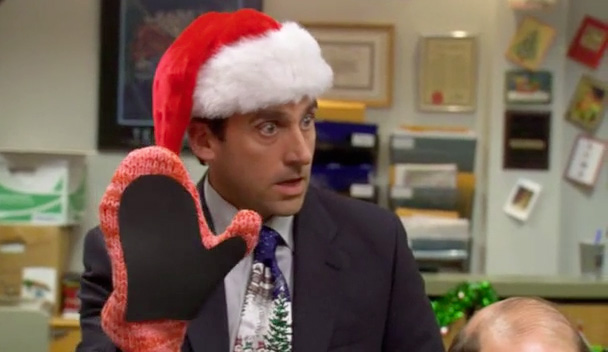
This one doesn’t need much explaining. Yankee swap is classic Michael as is his overspending on a gift coupled with his disdain for Phyllis’ homemade oven mitt. Creed’s old man coat rivals Kevin’s foot bath (a gift for himself) for best gift of the episode.

“Christmas Party” also features some of the best Jim/Pam moments and played a big part in their eventual courtship. This episode is more than just the best Christmas episode, it’s one of the best of the whole series. The only thing that could have made it better is if Dwight kept the teapot to use nasally in future episode.

So there are the rankings. Disagree with my order? Comment below. Since it’s the Holiday season, I figure I can get away with pointing out that my book, Five College Dialogues, makes a great gift. Cheers!

Friday

5

December 2014

0

COMMENTS

Could the Onion Knight Bring a Belated Gift to the Bastard Wedding?

Written by , Posted in Blog, Game of Thrones, Pop Culture

While the separation of the Stark children can lead one to forget about the importance of the North in general, excluding The Wall, much of A Dance With Dragons alludes to the depth of the Northern conflict. There’s been plenty of blog and podcast speculation on the Battle of Ice and for good reason. At first glance, we tend to forget about minor houses like Ryswell, Dustin, and Cerwyn in favor of speculation surrounding the more important characters. I initially set out to write an overview of my thoughts on the outcome of the battle, but instead want to focus on a more specific x factor in all of this who could change everything.

This article will approach things more from a literary/storyline perspective. There isn’t a lot of textual evidence so most of this should be treated as educated speculation. I’ll include some links at the bottom for more information on the Battle of Ice.

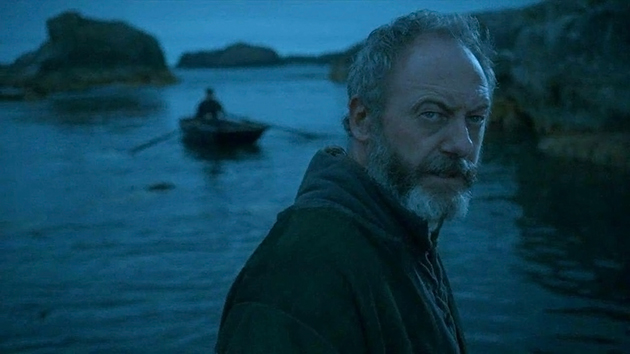
When we left Davos Seaworth in A Dance With Dragons, he was about to embark on a dangerous mission to secure the loyalties of House Manderly for Stannis’ cause. This involves traveling to the dangerous island of Skagos to retrieve Rickon Stark, who set out there with Osha and Shaggydog after A Clash With Kings. We don’t really know if they’re actually there, but for the sake of the storyline, I think it’s fairly safe to assume they made it.

There’s something odd about the placement of Davos’ chapters in A Dance With Dragons. They’re over well before the end of the book. Now you can argue that this doesn’t have to mean much because there’s a ton of characters and other major POV characters like Bran get similar shafts. But Davos’ quest has immediate ramifications to the story line while characters like Bran and Arya play more into the bigger picture.

The real question is, could Davos have enough time to go to Skagos, get Rickon, and make it to Winterfell before the battle?

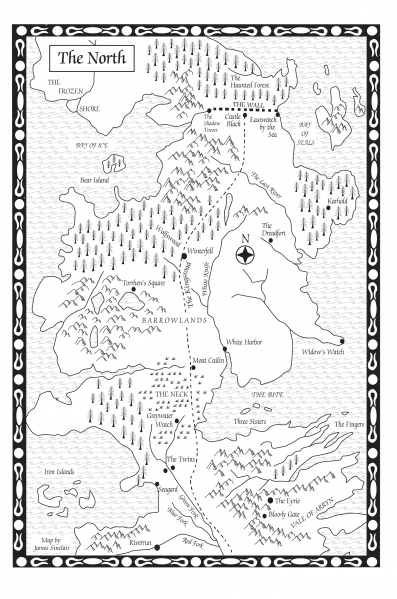
Let’s look at a map and see.

Credit to James Sinclair of A Wiki of Ice and Fire

Credit to James Sinclair of A Wiki of Ice and Fire


Skagos is a bit far from White Harbor. Davos doesn’t really know anything about the island. It’s also kind of far from Winterfell and we don’t know that Osha and Rickon even want to go with Davos. It’s also winter and Davos isn’t an expert in Northern geography. Things rarely go perfectly in these books and they would need to for Davos to factor into the equation. Doesn’t look too promising, right?

Maybe.

Time is tricky in A Song of Ice and Fire. The events of Robert’s Rebellion are supposed to take place in just a year, which leaves plenty of discrepancies that haven’t really been explained. Factor in the fact that Davos is an experienced smuggler and Osha knows the area and you’ll see that we have what appears to be the best makings to pull off a job like this. Davos is the man who got past the Tyrell blockade to save Storm’s End after all.

The other kicker is the start of the battle itself. It hasn’t started yet and doesn’t appear to be completey imminent either. Stannis has his hands full with what to do with the Karstark’s and the Greyjoy’s. To answer the question of where or not its possible Davos to make it, the best answer is that it can happen if Martin wants it to happen.

Another thing to consider is what would happen if The Winds of Winter picks up with Davos in Skagos or even further behind in his journey. That pretty much takes this particular plotline out of the equation for the whole book, as we’d likely be treated to another traveling narrative. This plotline isn’t completely needed to fuel the Northern story, but its absence would create somewhat of a holding pattern that doesn’t seem too terribly likely with what’s happening at the Wall and in Winterfell.

Davos isn’t the only x factor in all of this. There’s another character whose placement is important when considering the likelihood of the return of a Stark to Winterfell.

Wyman Manderly

What’s he doing at the Bastard Wedding? Why does this obese man want to make the long trek in bad weather to attend a wedding of people he hates? Couldn’t he have sent someone else with his Frey pies and added that to the list of things he does to piss Roose Bolton off?

Yes, but he didn’t and that means something.

Davos’ quest is all about securing Manderly’s loyalties and yet Manderly seems to have a death wish at Winterfell. Bolton knows he’s up to no good. Is there really a scenario where Manderly isn’t a surefire goner in this battle?

It’s right up Martin’s alley to have Davos show up with Rickon right as Manderly bites the dust, or snow if you will. Which doesn’t really mean that Manderly’s army doesn’t defect, but the cause would be without its biggest Northern supporter still alive save for the captured Greatjon Umber. If Manderly is a goner and Davos doesn’t show up, doesn’t that sort of take some of the fun out of the White Harbor chapters?

Outcomes of the Battle of Ice are tough to speculate. It could go many ways. It’s hard to envision a scenario where Stannis loses, but doesn’t die. What does Davos do without Stannis? It’s not like he’s a throwaway character. With what’s happening at the Wall and with Mance fooling around, winning doesn’t necessarily mean all is well in the land of the Mannis either. Having Rickon doesn’t mean that all of the other houses will flock to his cause either. This whole thing is a mess, but that’s a big part of why it’s so entertaining.

Here’s my simple speculation for the outcome of the Battle just to give you an idea where all I think all of this could go (I am not at all confident that this is how it will actually go). Stannis wins after the Umber’s and Manderly’s unite behind him, Roose dies, and Ramsay flees back to the Dreadfort after seeing that Rickon’s presence ruins everything and they Frey’s won’t support him. This gives the fans an outcome without concluding anything in the North.

But I am confident that Rickon will be a factor. Why? Because now is the time where he matters. Wizard Bran, Azor Azai Jon, and Littlefinger backed Sansa aren’t part of the equation just yet, but likely will be down the road. Stannis needs some sort of boost to keep him in the picture, unless the Battle of Ice is his last stand. Which it could be, but if it is then where does Rickon come in at all? The Onion Knight should deliver because that’s what Davos does. He’s one of the series more bankable characters and easily the best person for this particularly job besides possibly Drogon.

So here’s my speculation. Is any of this hard evidence? Not when you compare it to something like R + L = J. But the depth of those theories is a big part of why ASOIAF is so special and not every single thing that happens requires a prophetic foreshadowing. This one’s foreshadowing comes from surface level logic. Thanks for reading and please leave a comment with your own speculation/thoughts if you feel so inclined.

Here are some links to check out for Battle of Ice related content

https://cantuse.wordpress.com/2014/09/30/the-mannifesto/


https://www.youtube.com/watch?v=syFM7936yMs


https://bryndenbfish.wordpress.com/2013/11/15/a-complete-analysis-of-the-upcoming-siege-of-winterfell-part-1/


Sunday

30

November 2014

0

COMMENTS

Should The Walking Dead Revisit Its Seasonal Episode Count?

Written by , Posted in Blog, Pop Culture

The Walking Dead will air its “season finale” tonight. The quotation marks are there to highlight the somewhat grey area surrounding that phrase. While the show comes back in February, AMC is advertising this as a finale and past seasons have showed us that this show puts more stock in providing a noteworthy midseason break than many other shows that use the same practice.

The rationale behind splitting up a season into two parts is clear. It’s a common way for cable shows to expand their episode counts beyond the standard thirteen. In the case of The Walking Dead, it also allows the show to keep plotlines fresh. Season two was the only one to use a thirteen-episode model. The group’s elongated stay at Herschel’s farm provided plenty of reasons why this isn’t the greatest idea.

Problem is that the show has changed quite a bit since then beyond just the cast changes, though it’s worth noting that only seven of the characters from season two are still alive. This isn’t a show where the characters stay in one place for very long anymore. It’s also followed Lost’s later season model in keeping its ensemble cast separated into groups for large periods of time.

This makes splitting up the seasons into eight episode blocks problematic. There is a ton of stuff going on and its happening to tons of characters. Remember how little screen time T-Dog and Beth got back when everyone was just hanging out on the farm? The cast has grown exponentially since then while the death count has slowed down, leaving the show with the task of figuring out what to do with all its characters.

The simple answer? Expand the episode count to twenty.

This is neither unprecedented nor ridiculous in nature. The SyFy Channel’s old Sci-Fi Friday block of Stargate SG-1, Stargate Atlantis, and Battlestar Galactica used this model to great success. None of these shows were quite the phenomenon that The Walking Dead is either. This show is AMC’s cash cow, especially with Breaking Bad over and Mad Men on its way out. There’s nothing really standing in the way of more episodes.

You can make the argument that The Walking Dead is the most popular cable show of all time. Its ratings crush most of what’s on network TV and that doesn’t take in harder to quantify numbers like Twitter traffic and Netflix views. It may not be a contender in many awards shows, but it has what matters most, the interest of the people.

We can use the critical complaints to examine why a switch would be a good idea from a storyline perspective. Splitting up the season the way The Walking Dead does creates the need for an extra finale and primer, which also affects episode progression. The constant rise/fall dynamic makes for great suspense and anticipation, but it also takes precious screen time away from advancing the plot. This problem is exacerbated by extreme character centric episodes that leave out the bulk of the cast.

Which is probably the point. Urgency exists mostly in the eyes of the characters. For the show itself, it’s not really headed in a specific direction. Since the prison, the characters have been roaming, but so has the plot. That’s really all it can do.

If you look at the last three eight episode blocks, you see a pattern. The first episode wraps up the cliffhanger and there’s at least two episodes dedicated to very specific character studies that leave out the majority of the cast. Excluding the finale, that leaves four episodes to get the plot forward before it needs to blow things up again (sometimes literally). For a show with such a large cast, that’s not enough time at all.

Expanding the episode count would make Beth or Governor centric type episodes easier to stomach. Its easy to see why the show likes these types of episodes, but this isn’t the type of show that can afford to toss episodes away on non-essential characters. Adding more episodes lets the show have its cake and eat it too, with plenty of filler.

Wednesday

26

November 2014

0

COMMENTS

The Similarities of “Baby Got Back” and “All About that Bass”

Written by , Posted in Blog, Pop Culture, Social Issues

I had an interesting experience on my way to Dunkin Donuts yesterday. While flicking through the radio stations, I encountered Six Mix-a-Lot’s classic “Baby Got Back” (not Nicki Minaj’s painful “Anaconda” pseudo cover). After indulging in the perennial favorite of middle school mixers, I switched channels only to find Meghan Trainor’s “All About that Bass.” This bizarre coincidence got me thinking about the overall message of these two songs.

At first glance, we might call Trainor self-empowering and Mix-a-Lot misogynistic. Which sort of makes sense but you could also look at it a different way. Trainor says love your body and Mix-a-Lot says he loves your body. That’s kind of nice right?

Both songs address the issue of “skinny bitches” Mix-a-Lot opens his songs with a conversation between two condescending, presumably small butted, women criticizing the tushie of another girl, denounced as a prostitute until Mix-a-Lot jumps in to start the song. Trainor addresses them herself with “go ahead and tell them skinny bitches that,” with regards to her plans to bring booty back (it’s still somewhat unclear where it went in the first place). It wouldn’t be fair to Trainor to not mention that she says she just playing, though that phrase has been a major bone of contention against the song as people have accused her of “skinny shaming.”

We also see a similar love of genuine curves from both performers. Both take shots at the silicone Barbie look. Trainor “won’t be no stick figure silicone Barbie doll,” expressing a concurring opinion to Mi¬x-a-Lot’s “silicone parts of made for toys.”

The difference in message deviates on the matters of romance as to be expected. Trainor is speaking from a personal standpoint. Mix-a-Lot is an observer and a fan. So whose message with regards to matters of the heart is better?

Mix-a-Lot’s

You might be shaking your head at this point. But look at what Trainor uses to address suitors. She says her mother has told her “boys like a little more booty to hold at night,” which is another rallying point for her critics. This one is perhaps more legitimate than the “skinny bitches” comment as she’s essentially using outside perception as a factor in determining her own self worth.

This is something that Mix-a-Lot has to do. He is an outside observer. This matters in terms of the context of the message itself. It’s harder to dismiss the commentary of a curvaceous woman speaking about being curvaceous than the words of a man who calls himself Sir Mix-a-Lot.

Which is actually unfair to Mix-a-Lot. The inspiration for this article came from a line in “Baby Got Back,” where he says “so Cosmo says your fat, well I ain’t down with that.” Couple that with his earlier assertions that he’d “rather stay and play,” and you get a picture of a man who’s not necessarily as misogynistic as one might think at first glance.

So what to take away from all of this? Both of these songs essentially preach the same message. Love your body. This is somewhat skewed in the case of Mix-a-Lot as the sexual innuendos tend to dissipate one’s desire to analyze his message. But Trainor’s isn’t exactly perfect either. These songs really aren’t all that different, which really just means you should love your body regardless of what a musician wants to tell you.