Ian Thomas Malone

Monthly Archive: June 2026

Monday

15

June 2026

0

COMMENTS

Classic Film: Paris is Burning

Written by , Posted in Blog, Movie Reviews, Pop Culture
One of the harder parts about growing older as an LGBTQ person is the realization that the better tomorrow that was promised isn’t exactly coming. The 2015 Supreme Court decision Obergefell v. Hodges was supposed to turn the page on all the homophobic rhetoric that basks in this nation’s culture. Instead, we got a wave of anti-trans legislation and lobbying to roll back gay marriage that continues to this day.

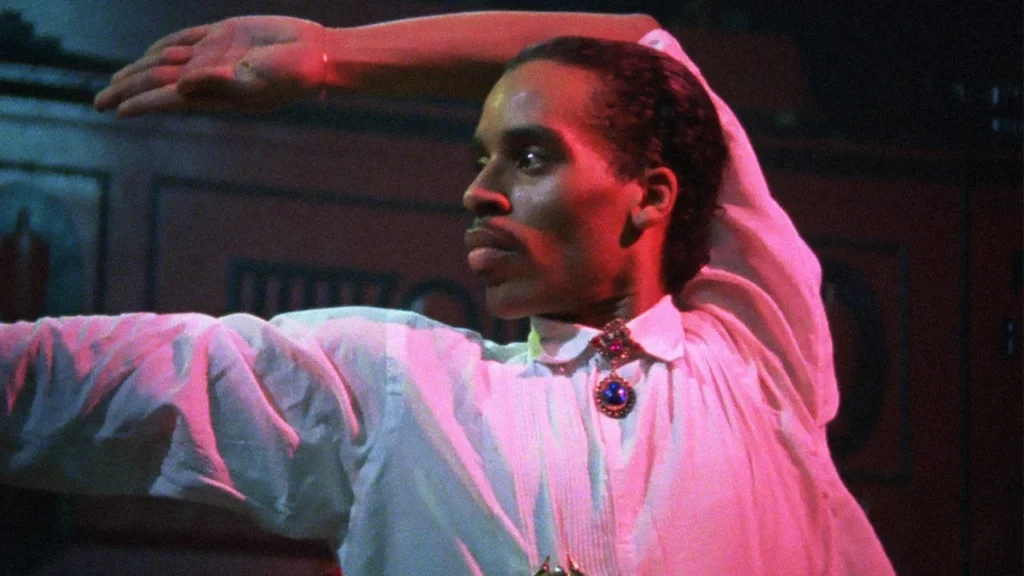
The 1990 landmark documentary Paris is Burning remains an invaluable resource in the queer liberation movement. Set against the backdrop of New York’s ball culture, the film chronicles a diverse group of performers from a few of the “houses” that serve as found families for those who were rejected by their biological parents. Twenty-five years before the mainstream media treated Caitlyn Jenner’s coming out as a “Book of Genesis” style origin story for an entire group of people, plenty of trans folk found community amongst each other.

Director Jennie Livingston presents an easily accessible portrait of ball culture and its origins. The footage captures the larger-than-life feel of walking the runway, the energy in the room radiating through the screen. As many of the interviewees said, ballroom is all they have.

Many of the subjects had grand aspirations for careers in the arts. While performers like Madonna made millions appropriating dance moves such as voguing from ballroom culture, the originators were stuck on the fringes, a plastic trophy serving as the only real acknowledgement of their achievements. The outside world still has its limits for trans folk, especially women of color, but inside the ballroom, they could be anything.

Livingston’s work is inherently bleak at times, filmed in the middle of the AIDS crisis and centered on one of the most impoverished groups in the nation. That dread doesn’t really come across, even with subjects like Venus Xtravaganza, who was murdered before the conclusion of the documentary, a crime that remains unsolved. Their lives are more challenging than most, in a country hellbent on keeping trans people down, but they still find the joy in life.

The most powerful moment in the film comes from subject Dorian Corey, speaking on the nature of activism. Her statement, “You don’t have to bend the world. I think it’s better to just enjoy it,” is an important thing to keep in mind for plenty of trans people trying to survive in modern America.

It’s hard to wake up in an unjust world. Nobody wants to be told not to fight so hard for a better tomorrow. But tomorrow is coming regardless. The fact that it may not look pretty isn’t an excuse not to go out and find the joy where you can.

There can be a certain frustration watching Paris is Burning 36 years later, watching many of the same realities afflict the LGBTQ community. Those doors that the ballroom queens couldn’t kick down are still inaccessible to all but a handful of people. Progress has been made. AIDS, which took the lives of many of the film’s subjects, is no longer a death sentence.

The visibility question is another point that the world seems unwilling to grapple with. What is the use-value of visibility? Trans people existed in the 80s, as the film eloquently portrays.

America today still acts as if trans people are some new, recent thing. Paris is Burning showed full, vibrant communities, decades ago. The world just didn’t want to listen. A disgusting number of states are passing laws trying to pull the wool over the eyes of their own citizens, trying to pretend like the stuff portrayed in this documentary hasn’t always been around.

Like many of the subjects of the film, today’s LGBTQ community may not live long enough to see true equality obtained. That’s a depressing thought to sit with, until you consider how much progress we have made, how much joy there is to be had, if you’re willing to stand up and stand out in a world that doesn’t necessarily want you around.

Paris is Burning is a timeless reminder to have a good time as civilization crumbles all around us. Trans people may never achieve true liberation. That’s no excuse not to have fun along the way.

Monday

15

June 2026

0

COMMENTS

Classic Film: Wild at Heart

Written by , Posted in Blog, Movie Reviews

The timelessness of The Wizard of Oz is not a particularly complex notion. Judy Garland’s performance as Dorothy is eminently relatable across generations. We all want to feel at home, whether that’s a physical place, or in the arms of a man who talks like he’s doing an Elvis impersonation.

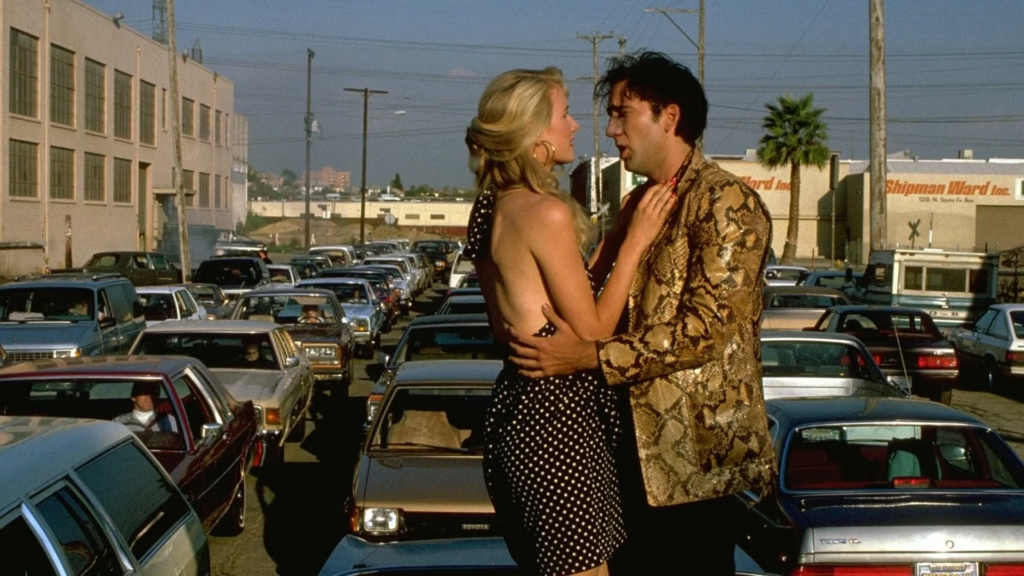
David Lynch’s 1990 film Wild at Heart is an unwieldy homage to one of the crown jewels of cinema. Swapping out for Dorothy and co. are Lula Fortune (Laura Dern) and Sailor Ripley (Nicolas Cage), two young people hopelessly in love. Sailor is sentenced to jail for five years after killing an assailant who attacked them with a knife, hired by Lula’s mother, Marietta (Diane Ladd). The two resume their romance after Sailor gets out, breaking his parole with a road trip to California.

The film finds its Lynchian weirdness on the road, with plenty of surrealistic visuals to keep Lula and Sailor company on the way to California. Not content to see her daughter run off, Marietta sends her boyfriends Johnnie Farragut (Harry Dean Stanton), a private detective, and Marcello Santos (J.E. Freeman), a gangster, after them. To make money for the trip, Sailor links up with unhinged criminal Bobby Peru (Willem Dafoe) for a robbery, one of many questionable decisions he makes along the journey.

Wild at Heart is a beautiful film to look at. The cinematography is top-notch. Lynch is clearly having the time of his life, supplementing the eerie road imagery with spooky visuals of his own. Dern brings an infectious chemistry to Lula, commanding every scene, sometimes with a single facial expression.

Part Wizard of Oz homage, part tribute to soap opera melodramatics, Lynch never really figures out how to tackle his adaptation of Barry Gifford’s novel of the same name. The screenplay is a mess. Dern and Cage both show up to play, but they’re rarely given anything to work with. They carry a few scenes on chemistry alone, but it’s hard to shake the feeling that neither really understands what their director is going for.

Lynch has a lot of interest in the scenery, but he doesn’t explore his characters at all. We learn almost nothing about Lula or Sailor, a dynamic that grows tiresome across the film’s unwieldy 124-minute runtime. Lynch’s preoccupation with violence doesn’t deliver the expected shock value. Often, it just feels like he’s being opaque for the sake of being opaque.

Oddly enough, having done little to earn such dramatic payoff, Lynch largely sticks the landing. The third act has a lot to say about the power of love to cut through life’s endless noise, a fitting dynamic for a film that’s mostly parlor tricks from a man capable of better. He leans on The Wizard of Oz a little too much for any of this to be particularly impressive, but Lynch almost makes up for his work’s inexplicable mundaneness.

Wild at Heart won the Palme d’Or at the 1990 Cannes Film Festival, despite being met with loud boos at its premiere. Maybe those boos came from pearl-clutchers who objected to the film’s graphic violence and sexual content. Maybe they were just very bored.

There is some joy to be had watching the two lovebirds go at it, despite everything that life throws at them. Time demands a lot from us. True love can still win out. It’s never too late to fight for another tomorrow.

Part of what makes David Lynch so iconic is his ability to create such singular worlds. Wild at Heart has a script that was in desperate need of additional work. The end result is such a half-baked experience, especially when compared to the rest of his filmography. Despite all that, even though this movie is not particularly good, Lynch’s effort is hard to get out of your head. Even in failure, he crafted something worth watching.

Monday

1

June 2026

0

COMMENTS

‘I Love Boosters’ review: capitalism meets its surrealist match

Written by , Posted in Blog, Movie Reviews, Pop Culture

The past few years have taught a lot of Americans about the levers of capitalism that have exploited the working class since the dawn of time. The idea of hard work being all you need for success is practically the stuff of fairy tales. People have caught on to the reality that billionaires rarely achieve such status by playing by the rules.

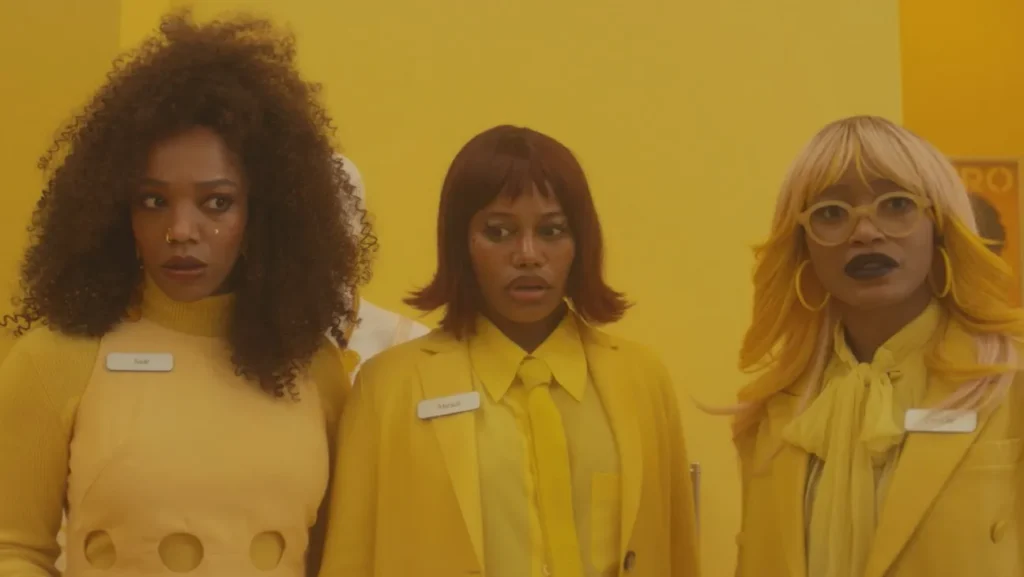
Boots Riley’s absurdist crime comedy I Love Boosters takes aim at the business practices of the fashion industry. Corvette (Keke Palmer), Sade (Naomi Ackie), and Mariah (Taylour Paige) are three “boosters,” people who shoplift high-end clothing to resell at a discount on the black market. Living out of a closed-down fast-food chicken restaurant, their favorite target is the Metro Designers chain, owned by Christie Smith (Demi Moore), an idol of Corvette’s.

Christie, an outspoken personality on social media, exploits her workers both domestically and abroad. Metro Designers specializes in monochrome collections, which store employees are expected to purchase for themselves each season when the stores completely rebrand to a new color. Working conditions at her Chinese sweatshop are inhumane. One of the workers, Jianhu (Poppy Liu) started raiding Metro Designers’ shops after her aunt died and her mother got cancer from the sandblasting at Christie’s shops.

Riley’s work reaches new levels of surrealism when the Boosters team up with Jianhu, who is armed with a portable transportation device that’s also capable of deconstruction and situational acceleration, riffing on Marx’s theory of dialectical materialism. The transporter devices are quite amusing, if not a little stifling amidst everything else going on. When it’s not busy diving into heavy Marxism, the narrative makes space for more surface-level critiques in the form of Dr. Jack (Don Cheadle), who runs a classic pyramid scheme called Friends being Friendly.

There is a lot going on in I Love Boosters. Riley’s attention to style is perpetually on display, particularly the set design. Christie’s office, built on an incline, helps set the tone for the film’s lack of subtlety. The score, performed by Tune-Yards, operates on the same wavelength as Riley’s frantic sense of pacing.

The three leading women have a natural sense of chemistry. We don’t learn a ton about any of them as people. Corvette gets the most character development, especially opposite a mysterious man with a pinky ring (LaKeith Stanfield) but Riley is pretty content to let things play out as a fairly standard revenge piece.  Moore and Cheadle showed up to play, while Will Poulter shines in a bit role as one of the store managers. Paige is the real comedic standout, constantly eliciting laughs through Mariah’s antics.

Riley’s worldbuilding is the key to the film’s success. Everything feels lived-in, fostering an inclusive atmosphere for the narrative’s ample humor. The dramatic tension rarely lets up, an exhausting 113-minute runtime that could probably have shaved ten minutes off.

The film wears its anti-capitalist message on its sleeve, but the substance of the story doesn’t go much deeper. There’s too much going on for Riley to really thoroughly explore any of his themes. Cheadle’s storyline doesn’t really receive enough attention to justify its place in the narrative.

Capitalism itself largely relies on people being too overwhelmed to process all of life’s own whiplash. Riley takes a lot of big swings with I Love Boosters. They don’t all land perfectly, but the space he created is so much fun to spend time in. The arts as a whole would be a lot healthier if more artists were given space to work their own magic like Riley.