Ian Thomas Malone

Monthly Archive: April 2026

Tuesday

14

April 2026

0

COMMENTS

Classic Film: To Live and Die in L.A.

Written by , Posted in Blog, Movie Reviews, Pop Culture
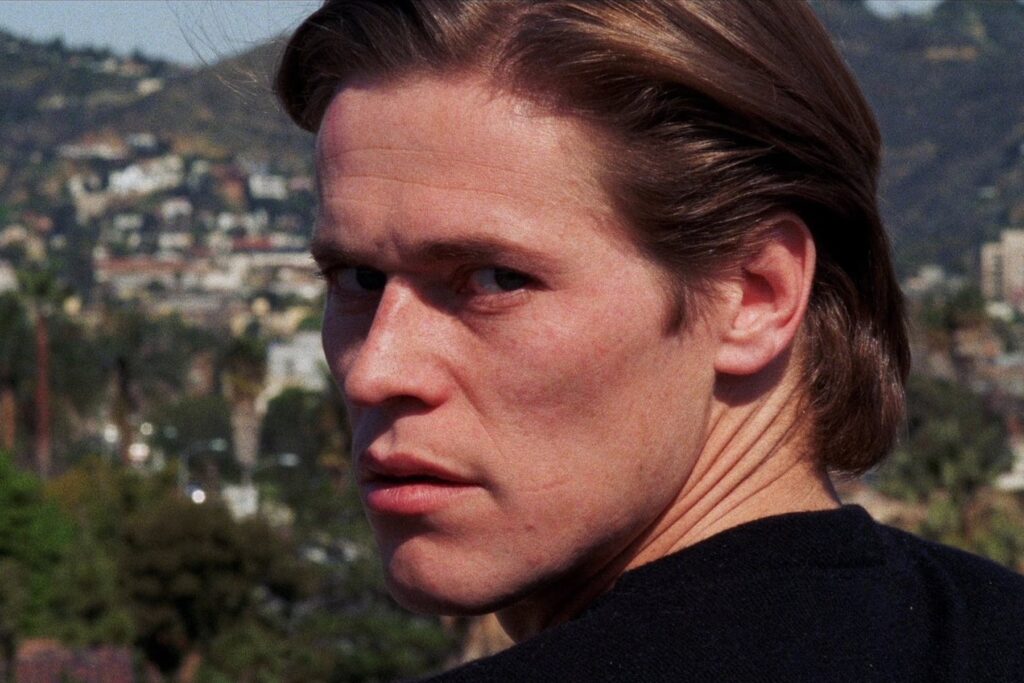
The city of Los Angeles is in a tumultuous era for its marquee industry. As film studios gobble each other up, and bureaucratic red tape makes it harder than ever to film in the entertainment capital of the world, it can be easy to forget the vibrancy that the city brings to each production that chooses to call it home. The city itself is essentially the main character of the 1985 classic To Live and Die in L.A.

Richard Chance (William Petersen) and Jimmy Hart (Michael Greene) are Secret Service agents assigned to a counterfeiting case in Los Angeles after foiling a terrorist plot to assassinate President Reagan. Hart, imminently approaching retirement, spends his last few days on the job locating the counterfeiter’s warehouse, run by Rick Masters (Willem Dafoe). Hart is killed after discovering the operation, with Chance vowing to avenge his mentor.

Now working with John Vukovich (John Pankow), Chance vows to take down the counterfeiting ring and avenge his partner, regardless of ethical lines. Vukovich takes umbrage with Chance’s unethical approach to the case, including his relationship with Ruth (Darlane Fluegel), a convict turned informant who’s out on parole. Chance frequently extorts Ruth by threatening to send her back to prison, the first of many laws he tramples over in his pursuit of Masters.

Director William Friedkin was no stranger to the genre by 1985, having previously directed The French Connection, one of the gold standards of American thrillers. To Live and Die in L.A. is a masterclass of dramatic tension. Friedkin never lets up across the 116-minute runtime, an immaculately paced fever dream set against the dreamy backdrop of the city and Wang Chung’s spectacular score.

Friedkin’s triumph comes from an extended car chase, one of the best in film history. To Live and Die in L.A. is a rare case of style mattering more than substance. Petersen does an admirable job in the lead role. Friedkin isn’t very interested in exploring Chance as a person, but Petersen more than sells his determination to avenge his friend.

Chance’s tenuous relationship with Vukovich is a classic tale of Los Angeles, a city full of transplants. Many come to the West Coast with no connections, and little more than a suitcase. LA is the kind of place that rewards those with an open heart and a scrappy, endless drive. Maybe it’s the sunshine, or the abandoned warehouses everywhere, but LA is the kind of city where you can make a new best friend in the course of an afternoon.

LA is also the kind of place where an artist can parlay their talents into a successful counterfeiting operation. Masters is the film’s most interesting character. Dafoe beautifully plays into Rick’s mystique. You can’t always tell if he wants to kill Chance, or sleep with him. Maybe both, another classic tale of the city.

To Live and Die in L.A. is kind of a mess. Friedkin threw character development out of the window, but managed to sustain his narrative for almost two hours on vibes, beautiful people, and Wang Chung. It doesn’t make a lot of sense, but with car chases like this, who’s really thinking about anything?

Friday

10

April 2026

0

COMMENTS

Classic Film: Brink!

Written by , Posted in Movie Reviews

A cornerstone of Gen-X culture was the fear of “selling out.” Joy was not tied to the clutches of capitalism. You made art for the love of the game, not for profit. Nirvana, the standard-bearers of the entire generation, famously kept their ticket prices low, criticizing the artists who exploited their fans.

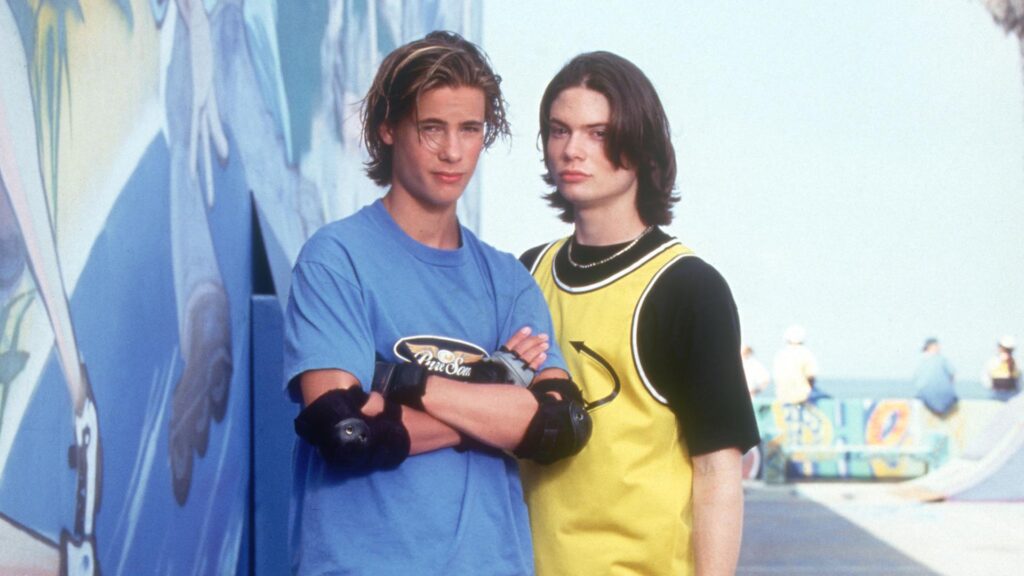
That kind of anti-profit mindset drives the narrative of the 1996 Disney Channel Original Movie Brink!, a loose adaptation of the 1865 Dutch children’s novel Hans Brinker, or the Silver Skates. Andy “Brink” Brinker (Eric von Detten) is a young high school student who skates strictly for fun. His friend group is known as the “Soul-Skaters,” eschewing monetary gain in favor of their love of the game.

A rival group of high schoolers skate for Team X-Bladz, which pays them a salary, along free with gear and promotional opportunities. Team X-Bladz is led by Val (Sam Horrigan), a vicious bully unafraid to cheat to achieve his objectives. Val sees his teammates as a commodity, victory his only lodestar.

The Brinker household is put under financial strain when Andy’s father, Ralph (David Graf), suffers an injury at work. With his father’s disability pay coming to an end, and an uncertain future at his construction job, Andy joins Team X-Bladz, leaving his friends out to dry at the upcoming Invitational. Andy leaves everyone in the dark, including his father, who forbade him to try out for Team X-Bladz, instead finding employment for his son at the local dog groomer, Pup ‘N Suds.

Brink! is a decidedly anti-capitalist narrative that goes to great lengths to avoid engaging with the financial reality of the Brinker family, undercutting the film’s valuable warnings to future influencer generations. Andy is a phenomenal skater. Even Val, the stereotypical high school bully, acknowledges the raw talent of his carefree rival.

The real antagonist in Brink! is the American healthcare system. Director Greg Beeman covers for capitalism in several peculiar ways. Val’s villainy is amped up to the point of absurdity. Jimmy (Geoffrey Blake), the owner of Team X-Bladz, is not a bad dude at all. He’s actually quite pleasant in all of his interactions with Andy. His only real crime is putting control of his expensive team in the hands of a vicious high school student.

The other members of Team X-Bladz are also not bad people. Boomer (Walter Emmanuel Jones, an original Power Ranger) is quite nice to the Soul-Skaters. The film tries hard to promote an anti-capitalist message, at odds with the reality that Val, who possesses a tenuous grasp on the levers of Team X-Bladz, is the film’s only bad guy.

The film also bends over backwards to craft a scenario that makes the perpetually affable Brink into a bad guy. Andy was trying to do the right thing by helping his father out. His main crime was lying to his friends, particularly defecting to a rival team ahead of the Invitational, itself a precursor to the Championship (neither tournament has any name more specific than that).

The narrative loses a bit of steam when Andy’s lies catch up to him. His friends shun him, even after he explains his parents’ financial situation. To them, refusing sponsorships was something they all did together, because money would dilute their enjoyment of the sport.

The film’s through line boils down to “Skating is what we do. It’s not who we are.” Brink achieved this revelation after his father confessed to having put too much of his own identity into his job. The message is clear. Work and play are separate.

In a fairy tale world, this theme might make some sense. The problem is that film doesn’t exist in a vacuum. Even in 1998, Brink! is dealing with broader safety-net issues that still plague America to this day.

The “Soul-Skaters” are supposed to be the good guys. But Jimmy and his Team X-Bladz aren’t really villains besides Val. Andy’s friends on the other hand, refuse to forgive Andy until he rejects his opportunity for financial gain. Andy is the best skater among them, presented with a real chance to help benefit his family. His real friends stood in the way of that, a theme endorsed by the film’s narrative.

Gen-X hated selling out. Gen-X can also afford homes. The idea of suppressing monetizable skills in favor of some purity test is fine in the abstract.

But Brink! is a film made by Gen-X for predominantly millennial audiences. Few millennials have the same safety nets that were already disappearing in the 90s. The influencer era has opened so many doors for artists and athletes to monetize their talents.

Is that really so wrong? Brink! is a fun film. Von Detten has a certain charm that makes him easy to root for. This film tackles big themes, among the more ambitious efforts of the 90s DCOM output.

Andy Brink has a lot of integrity. Brink! as a film leaves a lot to be desired on that front. High school is a period where children start to grow up. Capitalism is an unavoidable aspect of reality. Unfortunately, for many, so is selling out. Gen-X might think that’s lame, but people in glass houses shouldn’t throw stones at future generations, most of whom can’t afford any house at all.


Monday

6

April 2026

0

COMMENTS

‘The Drama’ review: Zendaya and Pattinson salvage a charming, underwhelming romcom

Written by , Posted in Blog, Movie Reviews, Pop Culture

Society has a weird way of selectively clutching its pearls regarding morality. We’ve celebrated bad people for years, villains we love to hate. But social issues, like gun violence and abortion, exist in this space, where people second-guess the suitability of the subject matter for artistic purposes.

The Drama is a film that basks in the taboo nature of its material. Charlie (Robert Pattinson) is a British museum curator living in Boston. He notices Emma (Zendaya) reading a book. Rather than engage her in a normal conversation, Charlie lies about having read the book.

The narrative takes a time jump to right before Charlie and Emma’s wedding. At a wine tasting that seemed a little too close to the wedding, the two get drunk with their best man and maid of honor, each sharing the worst thing they’d ever done. The relatively harmless crude game took a turn when Emma revealed that as a child, she’d planned and almost carried out a school shooting.

Director Kristopher Borgli is clearly having the time of his life exploring the messy nature of love, set against the backdrop of the most heinous hypothetical many could think up. Plenty are familiar with the concept of “love makes you do crazy things,” but that whole dynamic takes on a different meaning when love is making you forgive crazy things. The narrative essentially exists in a level deeper than that, as the entire case against Emma amounts to a thought crime, something she came close enough to achieving that she became deaf in one ear from rifle practice, but not actually something she went through.

Charlie, on the other hand, has more tangible deficiencies. He’s a liar. His friends who are judgmental of Emma have also done bad things in their lives. The Drama works best as a narrative when it allows itself to explore the inherent messiness in watching not great people judge someone who is probably a psychopath.

Zendaya brings such a quiet intensity to Emma that really sells the whole experience. Her performance highlights Emma’s vulnerabilities that draw you in, even if you don’t trust her in the slightest. Charlie’s infatuation with her, and his reluctance to cut her from his life, make perfect sense.

In Zendaya, Borgli found an actress capable of eliciting all the nuance from Emma needed to make everything work. His screenplay and narrative choices betray a lack of confidence. Early on, Emma reveals that Charlie was her first real crush, having met him at the age of 28, a sequence clearly meant to convey a personality disorder.

Frequently throughout the film, we see a younger Emma (Jordyn Curet), sometimes alongside Charlie. We see some of Emma’s motivations, lonlieness and a desire to belong, not dissimilar from alt-right fare centered on the manosphere. At times, it feels like Borgli is simply throwing stuff out into the ether as possible explanations for Emma’s character rather than exploring her through the mechanics of the material itself.

Emma’s revelation consumes the whole film, a layered thought experiment that isn’t explored with nearly the same depth with which it was created. There’s a lot of fun to be had in watching Charlie wrestle with his emotions. Pattinson is perfect for the way, infectiously charming while wielding the kind of ego necessary to entertain the thought of staying with Emma.

We see Charlie’s personality deficiencies mostly through the prism of his relationship to Emma. We don’t learn much about Charlie himself. Borgli shows a bit of Charlie and Emma’s work lives to get a glimpse of who they are outside of their relationship, but the scenes border a bit on filler. These characters are fun to watch, but they’re not really convincing people.

Borgli also has nothing interesting to say about school shootings, somehow completely removing politics from potentially the most politically charged topic in the country. At one point, Charlie wonders how many other Americans think about mass shootings, considering how many we have each week. This observation would be more compelling if it went anywhere.

Zendaya and Pattinson have enough chemistry to buoy the experience, but The Drama lacks depth. This is a really interesting subject, explored solely at the surface level. As a filmmaker, Borgli has a lot of impressive technical skills and a firm grasp on the pacing of his work. The 105-minute runtime flies by.

School shootings are a part of American life. There is no reason we shouldn’t be able to tackle this subject in our art, even if some people find that notion gauche. Art is not supposed to be comfortable.

But the best art also has a perspective. The Drama has a really engaging hook. It has brilliant lead performances by two actors at the top of their games. If only it had something more interesting to say.

Friday

3

April 2026

1

COMMENTS

‘The Super Mario Galaxy Movie’ review: another bucket of slop for your feed trough

Written by , Posted in Blog, Movie Reviews, Pop Culture

For all the talk of the difficulties of landing a perfect sequel, the formula offers a few key advantages. Sequels don’t have to dedicate chunks of their runtimes to establishing their characters. We know that more isn’t always better, but with a franchise like Mario, it really should be. There’s certainly no shortage of subject material to adapt.

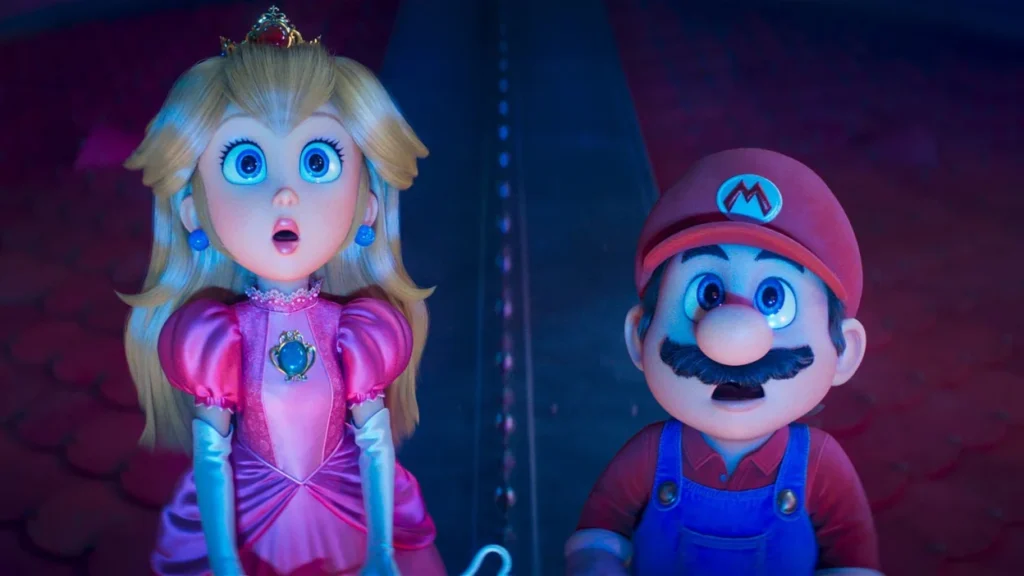
The Super Mario Galaxy Movie dives right into its plot. Princess Rosalina (Brie Larson) raises the Lumas, a cute starry species, on the Comet Observatory, having long ago sent her sister Peach (Anna Taylor-Joy) to the Mushroom Kingdom. Rosalina is captured by Bowser Jr. (Benny Safdie), seeking to carry on his father’s legacy.

The film largely follows Peach’s efforts to rescue her sister, while Mario (Chris Pratt), Luigi (Charlie Day), and newcomer Yoshi (Donald Glover) guard the Mushroom Kingdom back home, including their Bowser (Jack Black), still their prisoner after the events of the first film. There are some cursory thoughts given to things like character development, quickly abandoned. The narrative rarely lets up the gas, even to properly introduce the newcomers.

Directors Aaron Horvath and Michael Jelenic have no ambitions for their work beyond crafting a feature-length cutscene, a gorgeous film with absolutely zero substance. It’s almost astonishing to see how little effort was put into telling a story. The brisk 98-minute runtime has little room for an overstuffed cast or anything at all besides constant action sequences.

The Super Mario Galaxy Movie falls into the same trap as many recent franchise sequels of prioritizing new characters at the expense of the titular hero. Mario is barely a factor in his own movie. There isn’t a single scene where Chris Pratt makes an impression as the leading character of the film.

There is a certain temptation to say that Peach is actually the star of the movie, given her added screentime. The relationship between Peach and Rosalina is certainly the emotional anchor, and the banter between Peach and Toad (Keegan-Michael Key) is a lot of fun. The film doesn’t really have a star, constantly bouncing back and forth between its characters and its action sequences, rarely taking a moment to breathe.

The lack of downtime really kills the humor. Day, Key, and Black were all highlights of the first film, the latter clearly having the time of his life as Bowser. Black is completely wasted, while Day and Key are given little to do. Worst of all, Donald Glover is given practically nothing to work with for Yoshi. They’re all just kind of there.

The film does have a lot of easter eggs. Longtime Mario fans will be impressed with the way the throwbacks were woven into the action, but that dynamic begs the broader question. Why wasn’t such care taken toward the rudimentary fundamentals of this story? Why is this such an empty experience?

The answer lies in the bread and butter of filmmaking. We are given no reason to care about Mario. The only effort made to make us care about Peach comes from tugging at the emotional heartstrings of a sibling relationship, not from work put into the screenplay. The action is quite good. Once again, Horvath and Jelenic have shown us that they know how to adapt video gameplay, a feat that might be impressive to anyone who hasn’t seen one of those epic Super Smash Bros. openings. They’re really, really good at the easiest part of this whole experience.

The storytelling is pure slop. To call it paint-by-numbers would be insulting to the brainpower required to count. The Rosalina rescue mission is lazy and predictable, just like the whole experience, which is actually pretty frustrating if you’ve ever played a Mario game, which almost always has that one level that drives you crazy. Unlike this nonsense, those games have identities.

That level for these movies appears to be character development. The Super Mario Galaxy movie has some entertainment value from the nature of the spectacle, but it’s a stunningly empty experience. Mario’s source material is a video game. That’s no excuse for his exceedingly lazy characterization over the past two films.

Mario games have never forgotten that great gameplay doesn’t have to come at the expense of great art. Super Mario Galaxy is one of the greatest games of the 21st century. If only this movie had any ambitions beyond replacement-level content for young children with poor attention spans.