Ian Thomas Malone

Monthly Archive: August 2026

Friday

28

August 2026

0

COMMENTS

‘Coyote vs. Acme’ review: a heartfelt victory lap for iconic American characters living under capitalism’s endless greed

Written by , Posted in Blog, Movie Reviews, Pop Culture
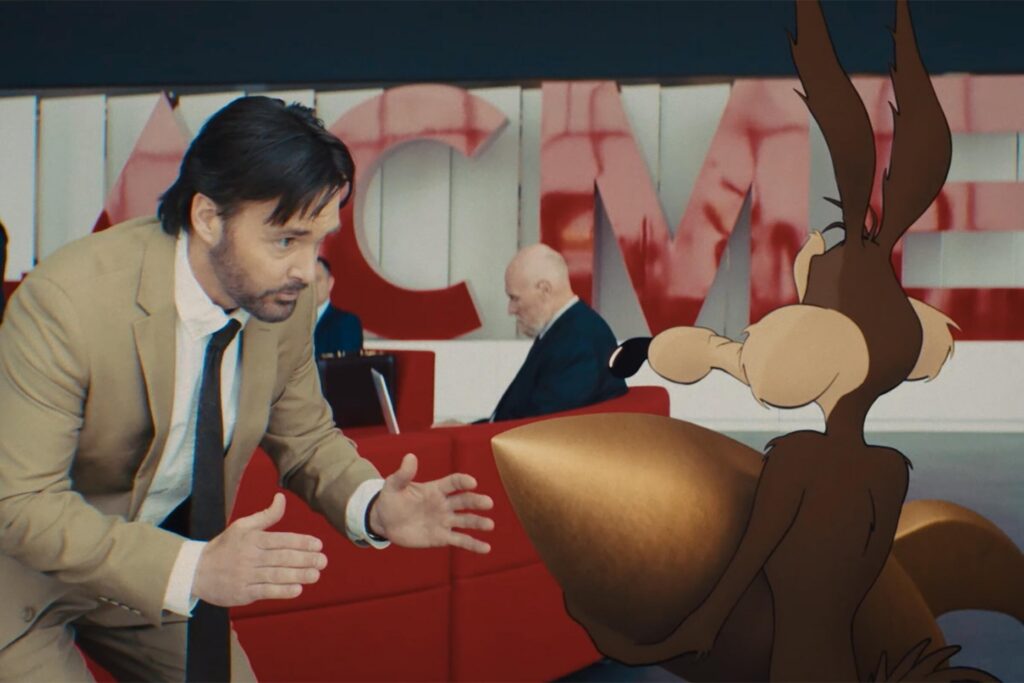
We’re living in a time of great uncertainty amidst the heavy consolidation of the film industry. Paramount has been promising to be a good caretaker of Warner Bros., as many fear the inevitable layoffs that come when two titans of the entertainment landscape live under one roof. The production, cancellation, and return of Coyote vs. Acme should serve as a warning sign for anyone who thinks that these big studios care about anything other than their immediate bottom line.

The Looney Tunes are Warner Bros.’s most precious asset, one of the great treasures of American media. Warner Bros.’s treatment of their iconic intellectual property, demonstrated their complete apathy toward the legacy they’re supposed to steward. All of that is on full display, three years later, as the once-cancelled film finally hits theaters.

The film follows Wile E. Coyote, finally fed up with the quality of goods he’s been buying from the Acme Corporation all these years. Coyote brings his case to the law offices of Avery, Jones & Maltese. The senior partner, Kevin Avery (Will Forte), specializes in personal injury cases of cartoon violence. Rejecting Kevin’s urging for a quick settlement, Coyote instead chooses to take Acme to task for foiling his efforts to capture the Road Runner.

Director Dave Green’s work succeeds on many levels. Coyote vs. Acme pokes fun at the exploitative levers of capitalism through a nuanced layer of Looney Tunes’ magic. The film pays homage to nearly a century of lore while never resting on the laurels of nostalgia. This story is less a deconstruction than an expansion, putting the Looney Tunes back on the big screen, where many, maybe not their corporate overlords, believe they belong.

The film has a lot of obvious parallels with the real-life trials and tribulations of Warner Bros. A big corporation exploits cartoons to gauge the viability of human exploitation, something we see every day. The film finds most of its magic in the chemistry between Coyote and Kevin. Forte works wonders opposite the film’s silent protagonist, finding great emotional depth in the film’s quieter moments when the anvils aren’t dropping, and the TNT isn’t going off.

Coyote vs. Acme pulls off a level of intimacy rarely seen from massive intellectual properties anymore. This is a film trying to tell a story, not pad its runtime with a parade of throwbacks and celebrity cameos, which isn’t to say that there aren’t stars. John Cena puts forth some of the best work of his career as Buddy Crane, Acme’s principal lawyer and Kevin’s law school classmate.

But this is a film with some of the most iconic characters in American history that isn’t trying to be a blockbuster. Wile E. Coyote is one of the most memorable characters in the Looney Tunes roster, but he isn’t an obvious choice to anchor one of their few major theatrical releases, just as Will Forte is hardly known as a Hollywood leading man. The two are perfect for each other, achieving a kind of smaller-scale magic that we don’t see too often anymore.

The animation is beautiful, blending seamlessly with the live-action setting. The script has humor for audiences of all ages. There are a lot of genuinely laugh-out-loud moments. Best of all, the film doesn’t draw all its comedy from low-hanging nostalgia.

Where the film falls a little short is in the mechanics of the screenplay. The hybrid animation approach is bound to draw comparisons to Who Framed Roger Rabbit?, the genre’s gold standard. Part of what made Roger Rabbit work so well was that it was a genuinely good noir story. The best satire understands the mechanics of its source material.

Coyote vs. Acme has a lot of scenes in the courtroom, but it’s not a particularly good legal film. The narrative beats are easier to spot than Wile E. Coyote’s desert antics. Much of this wouldn’t be much of an issue if the film didn’t hold back on the reality of its existence. Everything is just a little too predictable.

Few would expect a Warner Bros. property to go very hard on Warner Bros. as a company, but it passes on the chance to offer some interesting perspectives, particularly between its protagonist Kevin’s lack of ambition and the stagnant nature of the film industry as a whole. Art is supposed to be challenging. Good art often shows us something new. We don’t see either of those things coming from the big studios anymore.

Part of why Coyote vs. Acme’s cancellation was so sad at the time was that all reports indicated that this was a quality film. That turned out to be true. A studio was ready to put an installment of its most-treasured franchise out to pasture, just because it wasn’t going to be the hottest film of the summer.

It took the work of another distributor, Ketchup Entertainment, for this film to see the light of day. There’s something so profoundly unsettling about the idea that a major studio suppressed quality work in the name of a tax write-off. It’s hard not to leave the theater thinking that if the big studios had their way, we’d be eating nothing but slop.
Monday

10

August 2026

1

COMMENTS

‘I Want Your Sex’ review: Gregg Araki’s best film in years also feels weirdly safe

Written by , Posted in Blog, Movie Reviews, Pop Culture

Gregg Araki played a major role in defining the exuberance of queer cinema in the 1990s. His work was unapologetically sex-positive, even as his characters’ lives unraveled in pursuit of carnal pleasure. More than a decade removed from his last feature film and seven years removed from his passable TV series Now Apocalypse, Araki is back with the remarkably unsubtle I Want Your Sex.

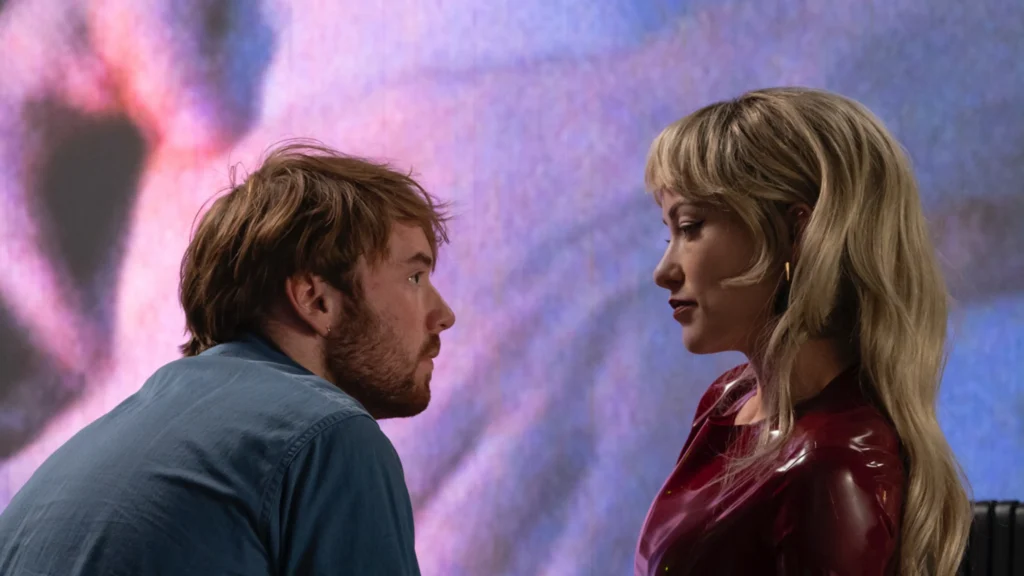
The film starts off with a nod to Sunset Boulevard, complete with a body floating in a pool, before embarking on a flashback. Elliott (Cooper Hoffman) is a young, fairly unambitious art school graduate looking for a job so he can finally pay rent to his best friend Apple (Chase Sui Wonders). He finds employment at a studio belonging to Erika Tracy (Olivia Wilde), an artist who’s been coasting on her early success for years.

Erika’s interest in Elliott stems largely from a sexual nature, transforming her subordinate from employee to personal kink dispenser. For his part, Elliott really enjoys being submissive. His relationship with his girlfriend Minerva (Charli XCX) is on the rocks, the ambitious grad student having grown tired of his antics. Elliott is putty for Erika’s hands, and he sort of likes it?

Araki has crafted a messy playground to explore power dynamics. Erika’s professional authority over Elliott renders any relationship between them highly inappropriate, but there’s another layer at play. Countless men, including Elliott, fantasize about dominant women. They like to give up the reins, often treating women as kink dispensers in the process.

Araki’s screenplay, co-written with Karley Sciortino, is very funny. Wilde largely carries the film, adding a lot of nuance to Erika that the screenplay wasn’t terribly interested in. None of the characters are explored very thoroughly, including Elliott. Hoffman does an admirable job in the lead role, but Araki is more interested in torturing Elliott than giving us any perspective.

I Want Your Sex is very entertaining, Araki’s best film in years. It’s also not a very compelling commentary on BDSM or the art industry. Araki obviously finds it fun to explore the taboos of workplace sexual harassment. There are a lot of laughs to be found, but there’s something missing at the core of the feature.

The more time we spend watching Elliott’s awkward interactions with women, namely Erika, Apple, and Minerva, the less compelling he comes across. We don’t know Elliott’s professional ambition at all. We know he likes being dominated but struggles against the clearly stated confines of his illegal affair. It feels like there is a lot left on the table within the brisk 90-minute runtime, particularly with regard to Apple and Minerva. Charli XCX makes the most of a very limited role, leading one to naturally wonder why she wasn’t given something meatier.

Araki did manage to provoke some thought on the nature of workplace sexual harassment. Elliott’s status as somewhat of a wet noodle dulls the sympathy that one might have for someone in his plight. It shouldn’t be relevant that he sort of liked it, but that uncomfortable spot is usually where Araki does his best work. Here, he largely settles for good-enough work. I Want Your Sex is a fun movie. It’s just hard to walk out of the theater without the notion that this could have all been better.

Monday

3

August 2026

0

COMMENTS

‘Spider-Man: Brand New Day’ review: entertaining fare that’s stuck in the stale MCU format

Written by , Posted in Blog, Movie Reviews, Pop Culture

For all the talk of superhero fatigue, one reality is abundantly clear. Spider-Man is still very, very popular. The world of the MCU may not know who Peter Parker is anymore, but the friendly neighborhood webslinger still brings crowds to the theaters.

The title Brand New Day suggests a kind of new adventure for Spider-Man. The film itself isn’t exactly interested in that. Instead, it’s mostly concerned with the ramifications of the end of the last film, a new era firmly rooted in the past.

Peter (Tom Holland) is by himself in New York, eating Little Caesars pizza and being a computer genius in a dumpy apartment. He’s very upset that Ned (Jacob Batalon) and MJ (Zendaya) have moved on without him, sharing an apartment in New York together after graduating from MIT. On his own without The Avengers, Peter is embracing the character’s origin as a street hero, occasionally teaming up with The Punisher (Jon Bernthal).

But something isn’t right with Peter. His spider hormones are all out of whack. A visit to Bruce Banner (Mark Ruffalo) leads him to take his healthcare into his own hands, a process that might have yielded better results if a mysterious figure (Sadie Sink) wasn’t going around possessing all the people around him.

Director Destin Daniel Cretton does an admirable job making Brand New Day feel like something original. The cinematography is gorgeous, and the pacing is different from typical Marvel fare. Holland has grown up quite a bit over the years. This version of Peter Parker is certainly compelling, even if the story around him isn’t all that interesting.

While Brand New Day might look a little different from the rest of the MCU, the story is still firmly rooted in franchise tropes. There are too many characters for anyone to have a chance to breathe. The action sequences are fairly underwhelming, with lackluster special effects. The decision to mess around with Peter’s powers feels like something out of Superman.

The biggest casualty of the film’s lack of focus is Zendaya, reduced to the mere object of Peter’s affection. Agency lies at the heart of her story, as she lost her memories of Peter at the end of the last film. That lack of agency predictably pigeonholes what Zendaya can do with the character.

That whole dynamic weighs on the concept of a “brand new day.” This is not a new day at all. It’s merely picking up the pieces from the last movie. The first three Holland Spider-Mans formed a trilogy of sorts, with “home” in the title. This new movie suggests a different path that never really comes, which kind of makes sense. Those movies were not really a trilogy. All four are part of the MCU, playing by the MCU rules.

There is still a lot to enjoy in the movie. Holland’s chemistry is pretty perfect with the whole cast, but particularly Bernthal. The film might have been better off letting the two of them do their own thing the whole time, a buddy street crime film. The stakes aren’t exactly earth-shattering here, which is a refreshing change of pace, but the third act doesn’t exactly jell either.

Brand New Day is very entertaining, while never quite breaking free from the problems that have stagnated the broader MCU. The film is too tethered to its franchise obligations to ever get a chance to do its own thing. Worse than that, it feels oddly small at times, and not in a good way.

These movies used to think bigger. Now, hormones are the villain. Loneliness is an interesting subject for a superhero movie to tackle, and certainly a compelling one. The trouble is, the MCU is far too busy to ever let Peter have a moment to himself. The end result is the same cluttered mess we’ve seen dozens of times before.