Ian Thomas Malone

Pop Culture Archive

Tuesday

11

November 2014

0

COMMENTS

Season 5 of Downton Abbey Bides Its Time While Waiting for the End

Written by , Posted in Blog, Downton Abbey, Pop Culture
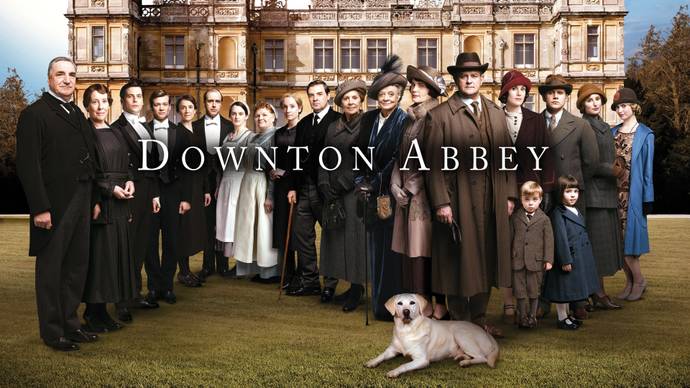
Change has always had a consistent presence on Downton Abbey. Being a period drama, we have a fairly good idea of where the show is going to go as it creeps closer to its inevitable finale. Despite this, the show has done a remarkable job in breathing new life into the old house and decaying aristocratic society.

We saw this particularly in season three with the arrivals of Alfred, Jimmy, and Ivy, which gave the show’s dynamic a breath of fresh air. The youth movement did wonders to negate the feeling that from here on out, life at Downton would veer from the extravagant to the simplistic. With Alfred’s departure in series four, Ivy’s after the Christmas Special, and Jimmy’s after the first episode of series five, that youthful energy is all but gone, leaving Daisy in a similar holding pattern she was in at the start of the show.

The absence of the three of these characters isn’t a big loss from a story perspective. Eight episodes is hardly enough time to adequately address the show’s ensemble cast anyway. Their departures address something that we’d all rather avoid. Things are winding down and now it’s starting to show.

The future was a predominant theme is season five. Carson, Hughes, Patmore, and the Bates all made arrangements for their retirements while Tom continued to grapple with his desire to leave for America while taking Sybbie’s best interests into consideration. Lord Grantham continued to weigh the interests of the village against his obligation to preserve the way of life that can be threatened by those whose interest lie solely in monetary game. Mrs. Crawley debates a marriage proposal to the disdain of Lady Violet, who fears losing her treasured companion as selfish as that may be.

Problem is, this is all familiar territory. Edith and Tom’s storylines are merely continuations of plots from last season that could, and probably should have been wrapped up. Lady Rose’s late-season courtship with Atticus is just about the only fresh plotline to be had other than Mrs. Crawley, who unexpectedly found herself in possession of one of the show’s better stories.

The Bates remain the biggest thorn in Julian Fellows’ paw. He has never really known what to do with them. Sadly, this has resulted in yet another murder plotline that’s even droller and tedious as the first. It’s hard to imagine that #freebates was ever a legitimate fan rally as the couple hasn’t had a positive moment in years.

Fan sentiment also provides a roadblock for Lady Edith and her illegitimate child. It’s sad story. It isn’t a particularly interesting one and Edith’s years of being an annoying/whiney character didn’t do the plot any favors. After five seasons of watching her mope around, it’s hard to care.

This season had a few shining moments worth remembering. Miss Bunting quickly became of the most hated characters in the show’s history and Fellow’s timed her depature perfectly as to not allow her to overstay her welcome (or rather unwelcome). Thomas received redemption of sorts from Dr. Clarkson in one of the season’s most touching moments. Molesley was Molesley and as such, got his own article.

I watched an old season two episode in between episodes to see the contrast between then and now. It’s to be expected that shows drop off a bit as they get older. Even a worldwide phenomenon like Downton.

The problem is that Downton has an identity crisis, a problem that’s existed since the World War I storyline ended but was exacerbated by Matthew’s death. The show knows where it’s going, but it doesn’t know what to do with itself in the meantime. It seems to be a fairly safe assumption that next season will be the final one, which may not be such a bad idea.

Downton Abbey is certainly more entertaining the most of what’s on TV, but it’s also clear that the show is well past its prime. Fellows overindulged in repetitive storylines and drew out others unnecessarily. It’s hard to call season five bad, but when the bar was raised so high from previous years, the drop in quality is a tad unfortunate. The Dowager would certainly not be impressed.
Friday

7

November 2014

0

COMMENTS

Mr. Molesley: The Man, The Myth, The Legend

Written by , Posted in Blog, Downton Abbey, Pop Culture

From his first appearance in episode two, it would be hard to tell that Joseph Molesley would become one of Downton Abbey’s most endearing characters. From butler to valet to laborer to footman, Molesley has a list of occupations rivaled only by Thomas. The backwards progression of these jobs naturally lead to a consistent suffering matched only by Lady Edith. Yet as season five comes to a close, Molesley goes on, earning both the adoration and respect of his fellow workers and viewers alike.

Molesley begins his time on Downton as the butler to Mrs. Crawley, a job that appears to have been organized by either Robert or Violet as Molesley was away from the area at the start of the show. He continued to be a minor character and occasional comic relief throughout the first season. His standout moment was perhaps when Matthew struggled to embrace his services, creating a unique moment where the lavish excess of the upper class is countered by the pride that a person like Molesley takes in his duties.

We see this evolve in season two as Molesley finds himself with little to do in Mrs. Crawley’s absence. Rather than sit around twiddling his thumbs, Molesley makes himself useful at the big house. This is overshadowed by his accidental drunkenness brought on by wine tasting and his failed romantic overtures directed at Anna. Season two establishes Molesley as the good-natured Mr. Bean like klutz destined to be Julian Fellows’ whipping boy.

This “Molesley must suffer” mentality continues in season three. With Matthew engaged to Lady Mary, it makes sense that Molesley would be destined for the big house as the valet to the heir of Downton. Problem is that Matthew doesn’t want a valet. But then he gets one for some strange reason, only it’s not Molesley. It’s Alfred. Without the interference by a jealous Thomas, who insisted that Alfred was not ready for such duties, Molesley might still be in the service of Mrs. Crawley.

Molesley’s high status as Matthew’s valet was short lived. While Mary and Mrs. Crawley could recover their statuses following Matthew’s death, there was no one for Molesley to valet for. Season four showed Fellows’ love of making Molesley suffer as convenient landing destinations for his services were foiled using spotty logic. Mrs. Crawley could’ve easily taken him back as butler and Spratt could have been kicked to the curb following his sabotage of Molesley’s audition. So poor Joesph had to settle for the lowly job of second footman.

The problem is that the positive outcomes would’ve taken him away from the big house, which at this point is where he belongs. The staff has taken quite a beating over the past two years, seeing O’Brien, Alfred, Jimmy, and Ivy all leave. The latter three weren’t exactly replaced by new characters, making Molesley even more important.

There are two distinct versions of Molesley that the viewer gets to see. There’s the drunken bumblehead who loses at cricket and can’t seem to catch a break. But then there’s the man who shows a genuine desire to help others like Baxter and Daisy and of course, the strong man victory in the season three Christmas special.

Mrs. Patmore’s scolding of Daisy for her treatment of Molesley was what prompted me to write this article. In telling Daisy to be nice to people who are kind, Patmore reminds us why people like Molesley are special. They’re rare.

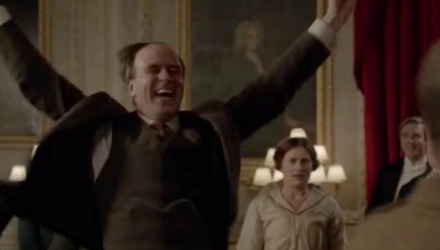
Molesley has had his fair shares of ups and downs, but besides his reluctance to accept the footman position, which received a rather rude response from Carson, he takes his fortunes in stride (even his strong man carnival victory). How many of us can say the same?

Through five seasons, Molesley has grown from a background comic relief figure to the heart and soul of Downton Abbey. He’s an older worker facing uncertain times without the capital of Carson, Hughes, Patmore, and the Bates, who can all invest in retirement options. But you wouldn’t know that just by looking at him. He’s neither the best looking nor the most interesting person on the show, but his consistent good nature sets him apart from the rest of the cast and earns him a place in the viewer’s hearts.

Thursday

16

October 2014

0

COMMENTS

Breaking Down the Netflix Stock Drop and What Needs to Be Done Moving Forward

Written by , Posted in Blog, Pop Culture

Netflix’ stock took a tumble yesterday despite impressive growth in its third quarter earnings. There are two obvious reasons for this that stand out. The timing of HBO’s announcement that a separate subscription for HBO Go will be available in 2015 is certainly not a coincidence. Netflix personally attributes the stunted growth to the dollar price increase, which has merits especially considering the Qwikster blunder of 2011.

We live in a time of tremendous growth for the streaming market as a whole. Channels like FX are dedicating large portions of their ad space toward pushing their streaming services. Amazon has original programming that’s starting to garner mainstream attention. Even Yahoo has entered the fray.

While Netflix might have the largest piece of the pie and there’s little reason to think that another service will take over as king of the hill, it’s clear that being king of said hill means less than it once did. It’s not too different from the smart phone market, which is still lead by Apple but faces much stiffer competition in the year 2014 than 2007.

But what does this mean for Netflix? The service has increased its original programming department, but still relies heavily on older content to appease its viewer base. We’ve seen this recently with their increased ad campaigns promoting debuts of Gilmore Girls and Friends, which have been off the air for quite some time. Supplementary programming is necessary for every service, especially the ones that launch entire seasons at once.

There are two questions that need to be asked. The first is whether or not Netflix is doing enough to please its current subscriber base. An expanded original programming department has worked wonders as House of Cards and Orange is the New Black have established Netflix’ status as a legitimate contender for awards season and have supplied the company with an impressive amount of buzz.

But that’s only for two days out of the year for publications plus however long it takes viewers to get through the seasons. For binge watchers, that might actually be only two days. Other shows like Hemlock Grove and Bojack Horseman don’t carry the same amount of widespread appeal. So then what?

That’s why Netflix has so many other shows to watch. But for people who have cancelled cable and only use Netflix, is that really enough? The increased emphasis on original programming comes with exponentially higher costs than acquired content. Which means that Netflix doesn’t acquire as many shows as it once did to help make up the difference. That’s almost to be expected as there are only so many shows out there. Amazon has a fair amount of exclusive contracts of its own with shows like The Good Wife, Justified, Broad City, and Awkward, cutting into the available pool of shows.

Netflix raised its price in an effort to dissuade people from canceling their subscriptions after watching shows like House of Cards or OITNB. But that’s only a dollar. It’s conceivable to suggest that a person could watch their fill of Netflix’ offerings in a two month span, especially if they had subscribed in the past or have a DVR. Cable providers have increased their on demand offerings, making it more plausible for TV aficionados to live with Netflix than it has been in the past.

The second question is whether or not Netflix is doing enough to attract new subscribers. Unlike the first question, which depends mostly on the viewer, this is a clear no. With years of mainstream advertising under its belt, it’s hard to argue that there are many people in America who don’t know about Netflix or haven’t at least considered getting it.

Now there are external factors to consider. Houses with poor wifi are less inclined to pay for streaming services. There’s also houses that simply can’t afford it at all. But what about the people who just simply said no?

Let’s look at Friends, which is Netflix’ big grab to start of the year 2015. Friends is a beloved show that embodies the 90s and will certainly be one that users will want to check out. But are there really that many people who are going to subscribe because of Friends? The show is still on TV multiple times a day and has had numerous box set re-releases that have been quite popular. It’s hard to make the case that there’s that many people out there desperate to watch Friends who can’t find a way already.

Which is Netflix’ underlying problem. Tens of millions of people have it and enjoy it. But tens of millions of people have thought about getting it and decided not to. Further more, people who have gone through their library have decided to take a break and aren’t being given much incentive to come back except for two months out of the year.

The streaming competition isn’t going to get any lighter in the coming years. Netflix is a pioneer and continues to offer top tier original programming. But the company cannot forget that growth is best maintained by a continued commitment to original programming and consistent quality acquisitions.

Thursday

9

October 2014

0

COMMENTS

Awkward Ends at an Unawkward Time

Written by , Posted in Blog, Pop Culture

Before we begin, I did check to see that unawkward was in fact a word. Not doing so would have been, well, awkward. Dictionary.com says it is and you can trust things on the internet, right?

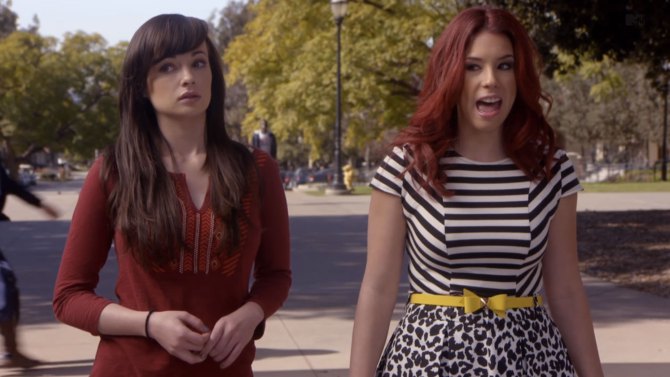
As MTV’s Tuesday triple threat of Awkward, Faking It, and Happyland solidified a new era in quality scripted programming for the network that aired music videos during the Clinton presidency, we learn that the trio will not be together for much longer. MTV renewed Awkward for a fifth a final season. While the episode count is unclear, we do know that we won’t be following the story of Jenna Hamilton to her college years.

College is rather unsurprisingly the number one cause of death for many high school shows. Dawson’s Creek, The O.C., and Gossip Girl lost much of their spark when characters were separated and uninspiring themes like time management and long distance relationship took the forefront of the melodrama. One Tree Hill skipped college altogether. Beverly Hills, 90210 was the only one that saw the survived its time at an institution of questionable higher learning.

Awkward would have had an awkward time of it since Jenna is the show’s distinct point of view character. It’s hard to imagine more than one or two of the show’s cast making the jump. Awkward without Sadie, Tamara, or Matty just wouldn’t work.

Beyond that, the show has struggled since creator Lauren Iungerich left after season three. The show has improved since Oliver Trask/Georgina Sparks knockoff Eva Mansfield bid adieu, but it’s probably for the best that the show is starting to make its way toward a clear end goal. The show benefited immensely from an often ambiguous academic timeline, but high school doesn’t last forver.

Awkward will depart having left a positive mark on both MTV’s scripted programming department and on high school works as a whole. The show’s often absurdist tone helped convey real life issues in a way that hadn’t been done before. It carved a niche in a well-trodden field that should put it in the same league as the aforementioned teen classics as time goes on. It’s made an impact already with Faking It, which is set in a similarly surreal high school.

We’ve got at least fifteen episodes left depending on what they choose to do with season five, which could give it either a Spring or Fall 2015 end date. That’s more than enough time to enjoy Sadie’s insults, Tamara’s rapid fire pop jargon, and Valerie’s obliviousness. It’s unclear whether Ming will return to give the Asian mafia the proper send off it deserves. Hopefully Jenna doesn’t break her arm again.

Wednesday

24

September 2014

0

COMMENTS

Does 7th Heaven Stand the Test of Time?

Written by , Posted in Blog, Pop Culture

This is the first part of a new series that will be appearing periodically that re-evaluates the legacy of popular TV shows that have been off the air for some time. I encourage you to subscribe to updates if you’d like to follow the series as well as my other work on a more consistent basis.

The WB had more than its fair share of signature series throughout its ten-year lifespan. Shows like Dawson’s Creek, Buffy the Vampire Slayer, and Felicity have helped the channel carve its niche in the hearts of the angst-riddled youth of America. But no show fully embodied the spirit of the network quite like 7th Heaven. A recent cast reunion photo prompted me to pick the show as the first subject of this new feature.

While the first three shows I mentioned have had their legacies reinforced by the successful careers of many of the actors involved, 7th Heaven was semi-robbed of that luxury by Jessica Biel, a divisive talent to say the least. 7th Heaven was the only WB show to be on the air for the networks’ full tenure and holds an overwhelming majority of its ratings records. For the last few years, it was just about the only thing going right which paved the way for the merger with UPN to form The CW.

Powered by family values in an era where programming was increasingly looking to deviate into edgier content, 7th Heaven found success in the simplicity of its formula. This was a show about a family and not much else. It turns out a crowded house and a never-ending supply of melodrama is enough to churn out eleven seasons worth of material. Despite the reliance on the shock value of the “very special episode,” the series was the gold standard for the PTV.

But what are we supposed to think about 7th Heaven in the year 2014? It might not be on Netflix, but it is on Amazon’s Prime Instant Video, making it a viable option for binge watching. The real question is whether or not the series holds up eight years after it went off the air.

The first thing we need to do is figure out 7th Heaven’s prime years. For a show that lasted eleven seasons, this cannot be done unanimously. We can separate the show into three distinct eras with a standard deviation of half a season. Seasons one through four focus mostly on the Camden family alone. Five through seven start to introduce outside characters into the mix such as fan favorites Robbie Palmer and Ben Kinkirk. Eight through eleven are defined by the post adolescent years of nearly all the Camden children with friends of Ruthie filling in for the empty nest left by Matt, Mary, an adult Lucy, and an occasionally absentee Simon. A rough sketch, but not an inaccurate one.

Seasons three through six stand out as the show’s prime years. The majority of the Camden children are old enough to carry their own plotlines and Matt’s college years as well as Mary’s mischievous ones supply memories of the show’s lasting memories. As with shows like Law & Order, prime years are made difficult by the show’s episodic nature, but these were the years where the melodrama yielded its finest fruit.

Which makes recommending it to new viewers problematic since season one is largely forgettable in the grand scheme of the show. Regardless of whether or not you’d like to include season two in the prime years, and there’s a case for that, it’s hard to recommend a show that requires the viewer to sift through hours of subpar material to get to the good stuff. In this day and age, that simply isn’t necessary.

This of course has no effect on the show’s nostalgic value as older viewers have enough necessary background information to simply skip right to the prime years. As far as rewatchability is concerned, the show holds up quite well. The sets get somewhat monotonous after awhile, but there’s little within the show’s actual content that’s genuinely dated. Being a family show, this is hardly shocking, but it is somewhat unique to see a show that doesn’t fall victim to the trends of its time.

7th Heaven’s legacy was affected by the ill-fated eleventh season on The CW. The renewal occurred after the tenth season finale ratings beat all the other shows that were scheduled to make the jump, but that had a price that should have been taken into consideration. The show was always a ratings hit, but the large budget, which was the main factor in ending the show after season ten, prevented season eleven from ever having a fighting chance at success. Following a heartfelt finale that reunited all the Camden’s, season eleven was filmed on a shoestring budget and it showed.

So what to make of 7th Heaven in the year 2014? If you grew up watching the Camden kids get in trouble for trivial reasons, you’ll likely enjoy the stroll down memory lane. It was a concept that the show nailed perfectly and few shows have even attempted to mimic the formula. First time viewers might have trouble figuring out why they should care. Had Barry Watson, David Gallagher, and Beverly Mitchell been more successful, this likely wouldn’t have been the case. Beyond it’s addictive nature, it’s hard to hook new viewers into a 90s prime time soap opera with all the other choices.

But if you’re looking for a glimpse of what The WB was like, it’s impossible to get an accurate image without watching at least a few episodes of 7th Heaven. It may not have been as buzz worthy (or as good in certain parts) as Dawson’s Creek or Buffy the Vampire Slayer, but it outlived the networks entire roster and as such, remains a piece of the 90s worth remembering.

Here is a list of shows I’m considering doing “Does This Stand the Test of Time” on. Oz, Ally McBeal, The X-Files, Six Feet Under, The OC, Homicide: Life on the Street, Beverly Hills 90210, St. Elsewhere, Batman: The Animated Series, Babylon 5, Boy Meets World, Andromeda, and Stargate SG-1. If you would like to see one of these next or if you have your own suggestion, please comment below. Thank you for reading.

Sunday

7

September 2014

0

COMMENTS

The Importance of Joan Rivers to The Celebrity Apprentice

Written by , Posted in Blog, Pop Culture

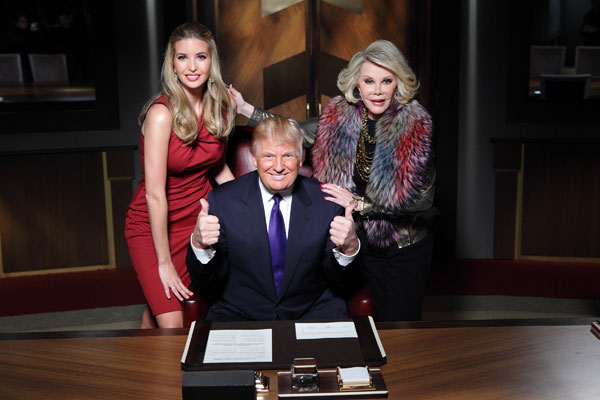
For the second time in less than a month, we’ve had to say farewell to a true comedy legend. Joan Rivers’ impact on entertainment is both profound and well documented. As such, I decided to do a tribute based more on her impact on my television guilty pleasure, The Celebrity Apprentice.

From top to bottom, it’s hard to argue that season two of Donald Trump’s faux business competition was its weakest. Neither team meshed particularly well with each other. The men had the argumentative Herschel Walker and Clint Black, the boring Brain McKnight, Jesse James, and Scott Hamilton, as well as the comedic, yet short lived Tom Green and Andrew Dice Clay. Green pales in comparison to other season’s joke contestants such as Gary Busey and Rod Blagojevich. Then there was Dennis Rodman, whose alcohol infused antics were funny for a little while until it became clear that the NBA Hall of Famer had a serious problem that needed to be addressed rather than laughed at.

The women weren’t much better. Joan along with her daughter Melissa, provided most of the team’s entertainment value. The team was compromised mostly of even less famous dead weight than the men. Claudia Jordan, Natalie Gulbis, and Tionne Watkins did absolutely nothing throughout their time of the show. Khloe Kardasian, who back in 2009 had yet to become a household name, was famously fired for taking a task off to deal with a DUI, which seems reasonable until you consider that contestants are frequently allowed to miss tasks for other engagements. Annie Duke filled the role as the season’s high roller, but her semi-celebrity status and bland personality made her far less exciting than other big money players. It wouldn’t be fair to say that Brande Roderick did nothing, but her status as one of the more memorable contestants goes to highlight the core problem with this season as a whole.

The Joan/Melissa Rivers dynamic is one that had never been done before on CA. Alliances have been made over the years, but we’ve never seen two family members participate at once. Since Trump has a fascination with the dated men vs. women mold, the two Rivers started off on the same team. This was fairly uneventful for the first part of the show, which is to be expected as the real drama needs time to develop. We saw the seed of a Joan/Annie feud planted in the second episode, but that was just a glimpse of what was to come.

While being on separate teams didn’t cause the drama that Trump would’ve liked, it did make for some exciting boardrooms. Joan or Melissa would often interject on the other’s behalf in confrontations, often to the chagrin of the boardroom advisors. Piers Morgan openly challenged the notion that Joan should defend her daughter, a question Trump was smart enough not to ask.

Joan provided the season’s most memorable moment when she chastised Annie and Brande for their tactic’s, which lead to Melissa’s firing shown here.


The two most important things to take away from this video are that Joan is a great mother and that she knows that this show is a joke and should be treated as such. Her line “I don’t want to hear this charity nonsense” seems foolish when you consider that the show’s prize is $250,000 to the winner’s charity plus the hundreds of thousands raised throughout the show. But that’s just the surface level of what was at stake here.

Joan showed character in thwarting Brande’s sympathetic stance. But she was right in assessing that the show is essentially an extended 15 minutes of fame for the bulk of the cast. She had arguably the strongest ties to her charity than any of the other contestant, having served on the board of directors for God’s Love We Deliver since 1994, but she knew that the game, like anything else, should be played with class. And when class wasn’t shown to her daughter, who had her fair share of tirades, she walked out with her. That’s what you do.

Of course she came back to win and showcase her charity to millions of people who may not otherwise know their great work. It’s not hard to imagine what that season would have been like without her. It was an uneventful season filled with boring and unlikable “celebrities.” Except for Joan, who came out winning for a whole number of reasons.

Rivers made a career of calling things as she saw them, but what made her special was that she could do that with a sense of class and human decency. Her victory on Celebrity Apprentice wouldn’t crack the top 100 of her career accomplishments, but that goes to show you what an extraordinary woman she was. You wouldn’t be able to say the same about Piers Morgan or Arsenio Hall, who owe their post CA success to Trump’s rigged nepotistic nonsense. She will be missed for many reasons, but I’ll remember her most fondly for “poker players are trash darling, trash.”

Sunday

31

August 2014

0

COMMENTS

The 2014 Summer TV Season Wrap Up

Written by , Posted in Blog, Pop Culture

A few weeks ago, I found myself in a state of disappointment over the summer TV season, a mentality that dissipated a bit as summer wore on. New shows such as Extant, Satisfaction, Rush, Tyrant, Halt and Catch Fire, The Last Ship, The Strain, Manhattan, You’re the Worst, and Married certainly weren’t bombs, but it’s hard to call any of them must see television either. They join sophomore offerings Ray Donovan, Under the Dome, Defiance, Maron, Graceland, and Hemlock Grove as shows that have niche audiences that don’t really draw the same wider excitement that older summer shows like Six Feet Under, Rescue Me, Entourage, Nip/Tuck used to have. This could be largest offering of ho hum shows in summer TV history.

Which leaves a few standout shows that for the most part existed either on the front or back end of the TV season. Louie and Orange is the New Black were long awaited gems, but they were also done before June was even halfway over. For all that was on in July, Rectify and Masters of Sex were the only universally praised shows airing new episodes. The fact that they air on Saturday and Sunday doesn’t do much to help the lull of must see summer television. Then there are Royal Pains, Falling Skies, Suits, and Covert Affairs, which have devoted fan bases, but aren’t really turning heads with innovation or ratings. True Blood is the sole veteran show to bid farewell and followed in the footsteps of Burn Notice and Dexter in supplying plenty of reasons for why its departure should be celebrated and not mourned.

The new shows mentioned all share in common that they exist in the middle ground between celebrated and irrelevant. The aggregate for the positive say they’re entertaining while the common complaint from the detractors is that they’re meh. Then there’s The Leftovers, which might have a similar Metacritic rating but doesn’t belong with the aforementioned rookies as it was easily the most polarizing show of the summer season. Damon Lindelof’s first show since Lost deserves most of its criticism, but I can’t say that I regret watching the grim yet sporadically satisfying post Rapture drama.

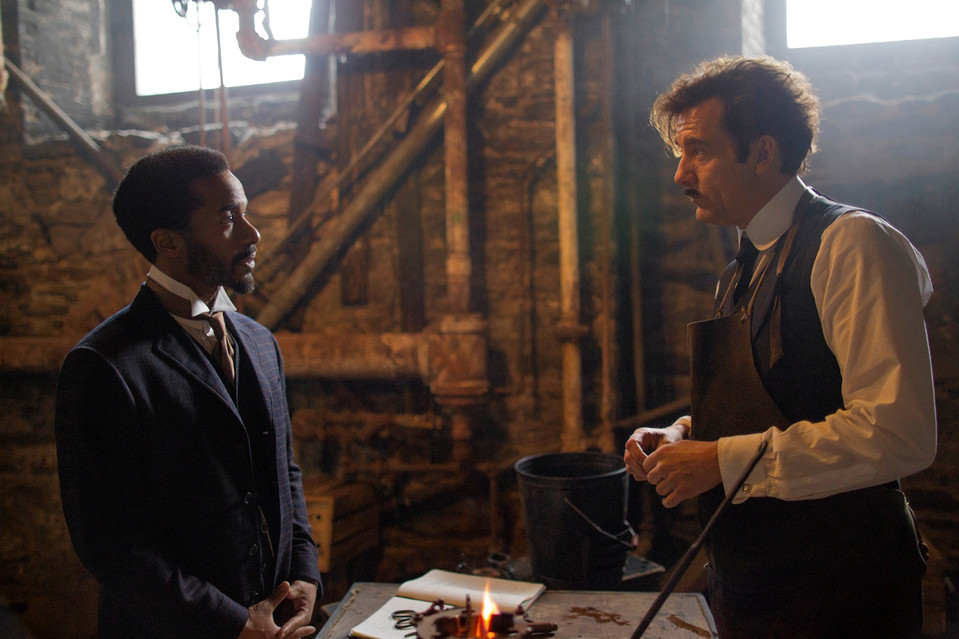
August began to change my opinion of the season as a whole. Outlander and The Knick are exactly what the summer season needed. Both shows are visually stunning, well acted historical dramas that haven’t proved they belong among TV ‘s best yet, but show far more potential than any of the other freshman shows. Garfunkel and Oates is in a similar position, which isn’t a big deal as we tend to forget that many shows don’t hit their stride in their first season anyway. The potential is there and it’s appreciated. It’s also worth noting that as neither have finished their runs, this could change sooner rather than later.

So what to make of the 2014 summer season? There was plenty to watch and if you tried all the new shows, chances are you liked at least one or two. How memorable they’ll be moving forward is another story.

I can’t think of another summer season that saw so many rookie shows wind up in the no man’s land between good and great. The rise of Netflix makes that territory less appealing as there’s no reason to watch something that you aren’t completely into with so many other choices at your disposal. If even just one or two had separated themselves from the pack, we’d be looking at a very strong summer season. Perhaps we still are. But that will vary from person to person when it could’ve been a consensus.

Opinions of the 2014 summer TV season remain largely subjective. But there’s something to be said for all the failed potential. TV’s in need of a few new headlining must see programs and we didn’t really get that this summer. But if you look at what we did get, you see that it could’ve been one for the ages. History could be kinder to it should any of those shows step up their game, but for now it was a puzzling year marred by odd scheduling and missed opportunities.

Tuesday

12

August 2014

0

COMMENTS

Remembering Robin Williams

Written by , Posted in Blog, Pop Culture

Humor is largely a concept that’s largely indicative of its time period. That’s why we hold virtuosos like Charlie Chaplin and Mel Brooks, who transcend generational boundaries, in such high regard. Sadly we lost one of those artists last night.

Robin Williams was a one of a kind performer who seamlessly crossed both genre and time. It’s hard to believe that the man who brought life to Aladdin’s Genie was the same force who brought Jeff Bridges back to the path of righteousness in The Fisher King. Then of course there’s Good Morning Vietnam, Mrs. Doubtfire, Hook, Good Will Hunting, and Jumanji, which established Williams’ versatility to adapt his one of a kind style to the worlds his characters inhabited. Williams didn’t just use his power for laughs. He brought genuine emotion to each and every performance whether he was acting in a comedy or a drama.

Williams also was an incredibly generous man who gave his time, money, and name to worth causes such as the St. Jude’s Children’s Hospital and the USO, which provides entertainment for our troops. He used his talent for good. Which makes the circumstances of his death all the more tragic.

The idea that someone once dubbed the Funniest Man Alive could take his own life sounds like the plot of an especially irreverent Woody Allen film. That’s sad. It makes you rethink the accuracy of the famous Beatles quote “the love you take is equal to the love you make.” All you can hope for is that a man who brought joy to millions of people over a storied career finally finds the peace that this world couldn’t give him.

Robin William’s death sucks plain and simple. He leaves behind a tremendous legacy that will live on for future generations to enjoy. Few actors could take a film like Jumanji and turn it into an endearing classic. Thank you Robin Williams.

Tuesday

1

July 2014

0

COMMENTS

Yahoo, Community, and the Cancelled TV Show

Written by , Posted in Blog, Pop Culture

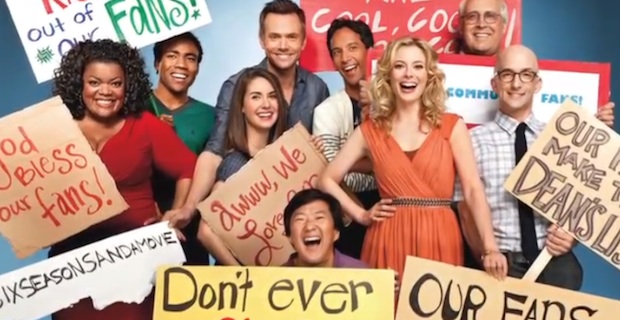
The popular fan mantra #sixseasonsandamovie took an improbable step closer to reality as Yahoo announced it is picking up Community for another season. An earlier post focused on the unlikelihood that such a pickup could happen and quite frankly, given who picked it up, I can’t say any of that was unmerited at the time. The popular opinion was that Hulu was Community’s best bet and hope began to dwindle once that fizzled out last week.

There was never any question that Community had value to somebody. Few shows on TV have half as good a fan base. That value translates best into buzz appeal, which is likely Yahoo’s primary reason for picking the show up. Yahoo is a bit of a dated website to begin with before you consider that it actually does have original programming. Community will bring significant attention to that line-up when it returns next year.

Buzz is also the big reason why Netflix should never have been considered a season contender to pickup Community in the first place. Netflix didn’t need the exposure. They’ve done that already with Arrested Development and to a lesser extent, The Killing. A show that aired on network TV for five years comes with a pretty hefty price tag that Yahoo can justify by the exposure alone. Even before we consider that Netflix has actually been referenced in multiple Community episodes, it’s fairly safe to say the average Community fan knew what Netflix was and probably had access to it in some form. They probably also know what Yahoo is, but the original programming angle is new territory for many.

29% of the new shows that premiered on network TV in the fall of 2013 were cancelled, a number that’s largely consistent with previous years. Most of those were rightfully cancelled though critical hits like Enlisted and The Trophy Wife are mourned. Cable shows fare a bit better, but in most cases, the reaper is kept at bay because those networks can afford a little more time to see if a show can be successful.

So what can we learn about Community’s revival? Is this lightning in a bottle or a shift in the TV dynamic. The latter is tempting, but it’s still the former.

This worked because Community has a massive cult following that’s been fostered in this sort of environment for years and a network looking for a shiny show to get some attention. Hulu, Netflix, and Amazon all could’ve picked it up, but they didn’t because quality alone isn’t a reason to bring something back from the dead. If that were true, 2013 wouldn’t have been the year that Enlightened and Bunheads left before their time. Television can still host Shakespearian tragedies, there’s just more hope now than ever before.

But now in theory, Yahoo is out of the mix for whatever show gets a big fan campaign next year. There’s still Hulu and Amazon who haven’t hosted a refugee just yet. Will they? Maybe, but if they do it’ll be for economic reasons and not for quality purposes.

Over the years of covering TV ratings, a common reaction I’d hear when people would respond to a grim prediction I’d made was, “but it’s so good.” There was a time where that really didn’t matter and it’s good that we’ve moved toward a direction where now that sort of matters. Ratings still influence cancellations but the landscape has evolved to the point where shows like Community can survive to the natural conclusions that fans desire.

Is that a good thing? Fundamentally, yes. I think people were starting to come around to the idea that Greendale wasn’t going to be saved this time and we won’t know if it really should’ve until the new season comes on next year. I’m excited to find out.

Monday

23

June 2014

2

COMMENTS

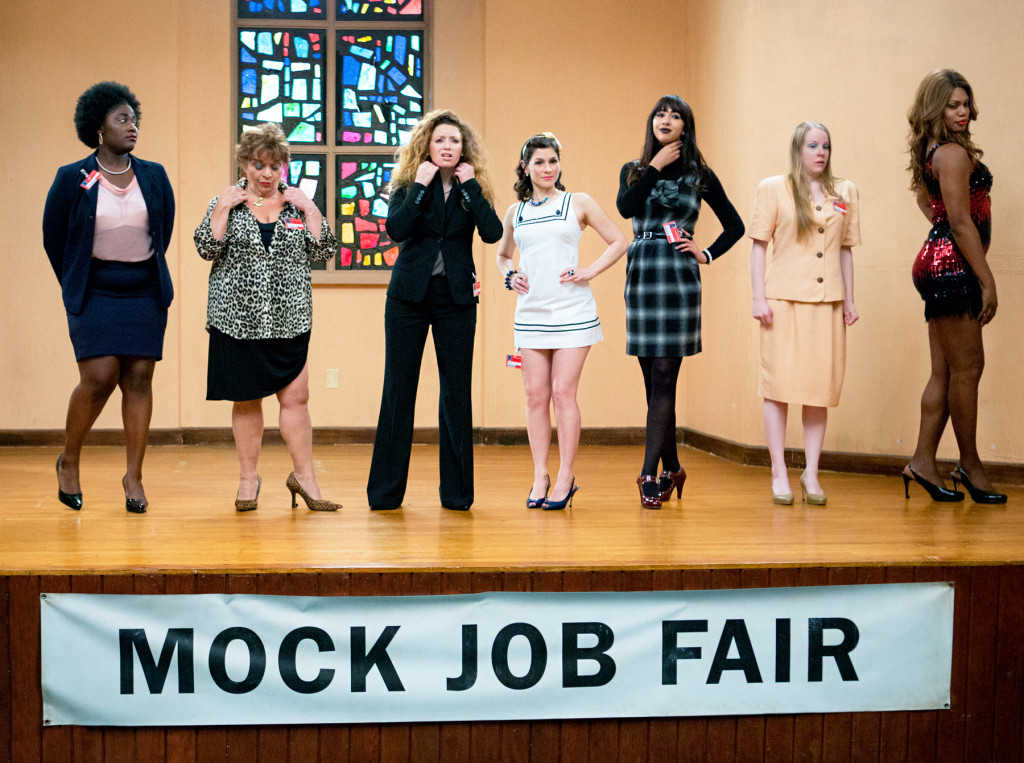
Orange is the New Black Searches for Balance Between Plot and Character Development

Written by , Posted in Blog, Pop Culture

Is it possible for Orange is the New Black to simultaneously be one of the best shows on TV and overrated? Season two of the prison comedy-drama solidified the show’s status as Netflix’ flagship program. The hype was certainly big, which isn’t very surprising considering the complete lack of anything else happening on TV in the month of June. But does it deliver?

This season takes much of the focus away from Chapman. The acting has always been OINTB’s strongest attribute and the cast rarely misses a beat. Kate Mulgrew and newcomer Lorraine Toussaint are responsible for the season’s meatiest moments while other characters make the most of their more limited screen time.

While the cast excels with whatever they’re given, the show suffers from a lack of direction. There are plenty of plotlines, but none of them feel as developed as they could be. Flashbacks and unnecessary scenes involving Jason Biggs, the show’s sole rotten egg performer, waste precious screen time that could be better dispersed elsewhere. Chapman’s breakup with Larry was a perfect opportunity to get rid of Biggs and yet the show missed a perfect opportunity to shed the 90s has been. There’s no good reason to keep him on the show when other characters are given nothing to do for the whole season.

The show also doesn’t utilize its ensemble cast to its full potential. For the most part, they’re completely separated from one another by individual plotline with very little overlap. The quirk feels a bit toned down when the characters are separated from one another and that’s not necessarily a good thing.

The season as a whole feels a bit incomplete when it’s all said and done. Most storylines are left unresolved and the payoffs are less rewarding than they should be. It’s okay for OINTB to put its focus on character more than plot, but the balance is a bit lacking. The flashbacks aren’t needed in every episode anymore and the show would do well to recognize that. The same problem plagued Lost in its later years when the flashbacks were no longer necessary. Format changes are okay.

The wasted time affects the season’s most interesting storyline involving contraband smuggling and the subsequent power struggle between Mulgrew, Toussaint, and Selenis Leyva. The plotline is never dull, but it never reaches its full potential either. Hints are made that it could have prison wide ramifications, which would be the natural progression and yet the show hesitates to make this the center of attention. It feels like a slightly extended subplot that is naturally the big attention grabber as it’s the easiest talking point.

Chapman’s storyline is the biggest mess of them all. She starts off the season being duped by Alex, then paints herself as some kind of badass, followed by a highly unrealistic/unnecessary furlough, and finally settles for some Stockholm syndrome. Fun right?

Season two is often a mess and yet it’s a fun mess. The cast is a treat to watch and the concept lends itself well to binge watching. It’s no different from having regrets about eating a pint of ice cream in one sitting though no matter how fun it is. The acting is immensely satisfying, but you’re bound to question what it was all for.

The bar in theory should’ve been raised for this season coming off such a successful debut. It delivers on the acting front, but when it comes to creating a season with a beginning, middle, and end, the show fails to figure out how to make it all come together. That’s the problem with a show that only airs new episodes one day a year. You burn through the episodes fairly fast without stopping to examine the flavor.

Which is fun, but it isn’t the greatest thing since sliced bread (or Phish Food, whichever came first). OINTB is a very enjoyable program, but much of its praise should be taken in context. It doesn’t need to be better than anything else on TV, because the competition is hibernating when it comes out. The show entered itself for Emmy consideration as a comedy, a move that’s been tried by hour-long comedy-dramas like Desperate Housewives, Ugly Betty, and Glee to mixed results. I’d be surprised if the show didn’t win Best Supporting Actress for either Mulgrew or Uzo Aduba, but voters have been reluctant to reward dramatic series for exploring genre loopholes.

This post has been oddly hard on a season that I did enjoy, but it’s somewhat unsatisfying when you consider the lack of growth that the show took in its sophomore offering. That’s hardly the slump that many other shows have struggled with, but it does preclude it from true contention as TV’s best program. OINTB is a show that settles for the status quo because the status quo works without trying to see if things could be better.