Ian Thomas Malone

Pop Culture Archive

Sunday

10

March 2019

3

COMMENTS

Captain Marvel Is An Unremarkable Origin Narrative That Never Lets Its Star Shine

Written by , Posted in Blog, Movie Reviews, Pop Culture

The early entries in the Marvel Cinematic Universe excelled at establishing their characters, relatively independent of any obligations to a larger connected continuity. All of the previous origin narratives across the three phases of this massive saga have allowed their heroes the opportunity to make their own mark on an audience, knowing that the idea of bringing them all together for a big team-up constantly lingers in the background. Investment in these characters is the primary reason behemoth undertakings like Avengers: Infinity War work so well.

Captain Marvel feels oddly rushed for a first-time solo adventure. From the first moments on, the film rarely stops to catch a breath. Lost in the frantic pacing is the idea that Carol Danvers is a person whom the audience might enjoy getting to know along the course of the film’s brisk two-hour run time. Danvers spends much of the film trying to figure out her own past, but the narrative is too all over the place to give any sense of direction to her development as a character.

Brie Larson is totally underutilized in the title role, never really getting a chance to shine, despite her character’s immense powers. There are a few scenes where Larson gets to showcase Danvers’ personality, mostly opposite Samuel L. Jackson, who puts in a predictably solid effort as Nick Fury. The immaculate process of digitally de-aging Fury and longtime MCU stalwart Phil Coulson (Clark Gregg) is more remarkable than most of the lines either character speak throughout the film.

As with many MCU films, there are far too many villains. Jude Law and Ben Mendelsohn each portray complex characters whose potential depth is lost in a narrative that simply doesn’t have time to fully flesh out the conflict between the Skrull and the Kree. The film does little to suggest that Lee Pace and Djimon Hounsou, both reprising their roles from The Guardians of the Galaxy, are there for any reason other than to simply serve as connections to the broader continuity. Lashana Lynch is also underutilized as Maria Rambeau, Danvers’ best friend and the link to her past on earth.

Nostalgia is a powerful force throughout the film, which goes to great lengths to recreate 90s America as well as the feel of the early days of the MCU. As fun as it is to see Danvers crashing into a Blockbuster Video or Coulson interacting with the juggernauts of the franchise after years on Agents of S.H.I.E.L.D., the sense persists that the film is trying too hard to retcon Captain Marvel into its world, as opposed to weaving her in naturally through the force of her as a character. This narrative should be Captain Marvel’s first, and everything else second, but too often it spends its time functioning as a prequel to the Avengers Initiative. Fury’s presence is an asset, but the jumbled mess that is the Kree/Skrull storyline burdens a film that never seems sure of what it wants to be.

Captain Marvel feels less like an origin narrative and more like a placeholder for bigger, better things to come. The audience knows that Danvers is going to play a big factor in Avengers: Endgame, but the prospect of beating up Thanos two months from now doesn’t do much to sell the movie being presented to audiences right now. Future films will be able to focus more on the conflict between the Skrull and the Kree, but how much are we supposed to care? It’s hard to get excited about Captain Marvel leading the Avengers down the road when she’s not even fully trusted to carry her own movie.

The action scenes are mostly duds, poorly framed and constantly set against bland color palettes. There are bits of humor here and there, but there isn’t enough dramatic tension for the jokes to really land. Like Thor, Captain Marvel’s sheer strength makes it a bit harder to craft compelling fight sequences, but it doesn’t feel like any effort was made to put anything on screen that the audience might remember a week later.

The MCU has very few misfires, but this one simply didn’t come together despite following the same general formula the franchise has deployed for most of its other films. Thoroughly unremarkable, Captain Marvel wanders aimlessly through various half-baked plotlines without ever investing in its title character. For a film set in the past with its eyes on the future of the franchise, for some reason, it never seemed capable of living in its own present.
Tuesday

5

March 2019

0

COMMENTS

Leaving Neverland Lets Michael Jackson’s Accusers Speak Their Truth

Written by , Posted in Blog, Pop Culture, Reviews

Leaving Neverland is the kind of film that forces the viewer to question the very mandate expected of documentaries to present the truth, or at least its very best interpretation of the facts. The narratives of Wade Robson and James Safechuck, who both accuse Michael Jackson of sexually abusing them as children, hardly produce much evidence to prove their cases other than the disturbing similarities in their accounts. For diehard fans of the legendary pop-star, the failure to offer up a definitive smoking gun proving their allegations might be enough to dismiss them entirely, to keep on believing in the man they adore.

Much of the coverage of the #MeToo movement has focused on the punishments doled out to the accused, fired from their cushy jobs or cast out from polite society. Such narrative framing is inherently transactional in nature, with the notion of justice guiding the reaction to each termination. Leaving Neverland lacks an outlet to pursue this objective, with Jackson’s death and the statute of limitations laws complicating any idea of closure.

Lost in the broader headlines of #MeToo is the more nuanced objective of many of the people who have spoken out over the course of the movement. For many, justice never enters the equation. For many, all that’s desired is simply to be heard.

Leaving Neverland is not a film about justice, but rather the long-term corrosive effect of years of abuse. Both Safechuck and Robson had complex relationships with Jackson that neither appears to have fully worked out just yet. There is no notion of righting these wrongs. The film paints a clear picture of the damage done to both of their families for the simple mistake of trusting the perceived generosity one of the most powerful celebrities in the world.

For a documentary with a runtime of nearly four hours, Leaving Neverland feels surprisingly intimate in its scope. Relying entirely on accounts from the accusers and their families, the film painstakingly explores their relationships with Michael Jackson. The documentary bounces between both families, chilling the audience with the consistency of each narrative. The broader context of Jackson’s sexual abuse trials and his death are held until the second part, though always framing the narrative through its impact on Robson and Safechuck. This isn’t Michael Jackson’s story, but theirs.

Leaving Neverland is a very hard film to watch. The documentary wields tremendous power in the simplicity of its narrative, almost like listening to the two families sit in therapy as they worked through the repressed horrors they endured. It’s clear that many members of each family loved Jackson and found it incredibly hard to cope with what he put the children through. This dynamic creates several moments of frustration toward the parents that failed to see the seemingly obvious, but the film rarely concerns itself with judgment. Reality is far more complex than any truths hindsight could have illustrated.

While the film will undoubtedly earn some criticism for its one-sided approach that never gave anyone from Jackson’s estate a chance to respond, Leaving Neverland never goes out of its way to vilify the pop star beyond laying out his alleged crimes. The film presents its case without any broader call to action. Michael Jackson’s legacy is a complicated one, but the documentary doesn’t concern itself with trying to deal with that. Its only focus is to finally allow the Robson and Safechuck families the chance to tell their side of the story.

Public opinion on Michael Jackson can be (broadly) divided into three categories. There are those who reject the claims of his accusers entirely, those who view him as a creep and want nothing to do with his body of work, and those who seek to separate the complicated man from his artistic genius. Leaving Neverland doesn’t try to move people from one of those camps into another, but it does force a light on the complicated mentality of the third group. People can enjoy his music while accepting the merits of his accusers, but much of the coverage of Jackson since his death has sought to sweep the unseemly portions of his legacy under the rug. This documentary reminds the public at large that there’s still a lot about the man that shouldn’t be forgotten when remembering him.

Leaving Neverland is a timely film for the #MeToo era, focusing less on the idea of justice than the simple power that comes from finally being heard. There’s nothing on earth that can fix the wrongs done to Wade Robson and James Safechuck. Their lives and those of their families were permanently damaged as a result of their relationship with Jackson. While justice won’t be served, the film draws its greatest strength through the closure that the process has hopefully offered these tragic victims.

Thursday

21

February 2019

0

COMMENTS

A Discovery of Witches Is a First-Rate Drama Full of Magic & Romance

Written by , Posted in Blog, Pop Culture, Reviews

The worldwide phenomenon that the Twilight series sparked created an impression that vampire-themed entertainment was a fad, destined to fade over time. This notion forgets the longevity of bloodsucker-themed fiction, a genre that’s endured for more than two hundred years. Works like Sky One/Sundance Now’s A Discovery of Witches remind us how much the genre has to offer with top-notch talent crafting the material.

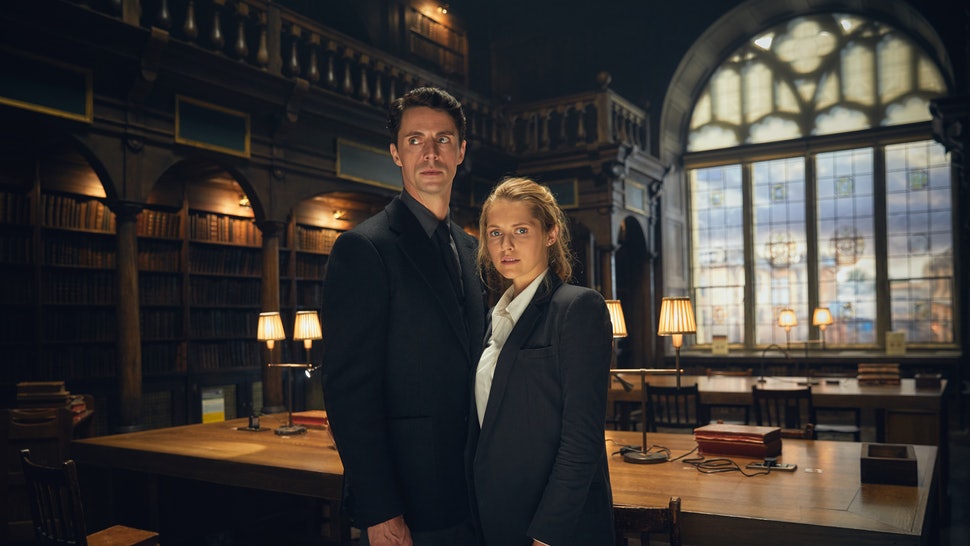
Based off of the critically acclaimed All Souls trilogy by Deborah Harkness, A Discovery of Witches follows Diana Bishop, an academic of magical ancestry as she finds a manuscript that holds the secrets to the broader mythical world that includes demons, vampires, and witches. With help from the handsome vampire Matthew Clairmont, Bishop tries to make sense of her findings while avoiding the influences of the powerful Congregation, an Oxford-based group tasked with maintaining order between the various magical factions.

With stellar production values and first-rate performances, A Discovery of Witches is the rare show that nails just about every aspect of a compelling first season. The chemistry of lead actors Teresa Palmer and Matthew Goode radiates through the screen, selling their romance alongside all the other world building required to set the stage. Too many first seasons string the audience along with promises of greater things to come later. A Discovery of Witches is extremely well-paced, introducing its cast of characters while always keeping the plot moving.

Though the show is set in contemporary times, the extensive use of estate houses and old libraries makes the show feel at times like a period drama. The supporting cast is fairly intimate, including veteran TV actors such as Owen Teale, Alex Kingston, and Louise Brealey. While most of the drama focuses on Bishop and Clairmont, the show wisely keeps the number of supporting characters to a minimum, allowing the actors to shine with limited screen time.

What really stood out in A Discovery of Witches’ first season was the way it explained its world of magic without ever diving into length exposition dumps. Plenty of shows take an episode or two to go in back in time and explain how all the circumstances came to be. Witches gives its audience what it needs to know without resorting to information dumps. There are questions left to be answered, of course, but that’s true of any narrative. The confidence in its storytelling is quite palpable.

Already renewed for two more seasons, A Discovery of Witches managed to stuff its first outing with plenty of plot and character development while leaving plenty for future stories. They took a concept that many thought was completely worn out and methodically breathed new life into the vampire genre. A lot of shows are guilty of holding back in their freshman efforts, understandably leaving some gas in the tank to keep the audience engaged. It’s relatively rare to see a show unafraid to go into its narrative full-throttle. The result is an immensely satisfying first-rate drama that should be a must-watch for fans of mythical storytelling.


Thursday

21

February 2019

2

COMMENTS

Alita: Battle Angel Is a Collection of Stunning Visual Sequences That Lacks a Cohesive Story

Written by , Posted in Blog, Movie Reviews, Pop Culture

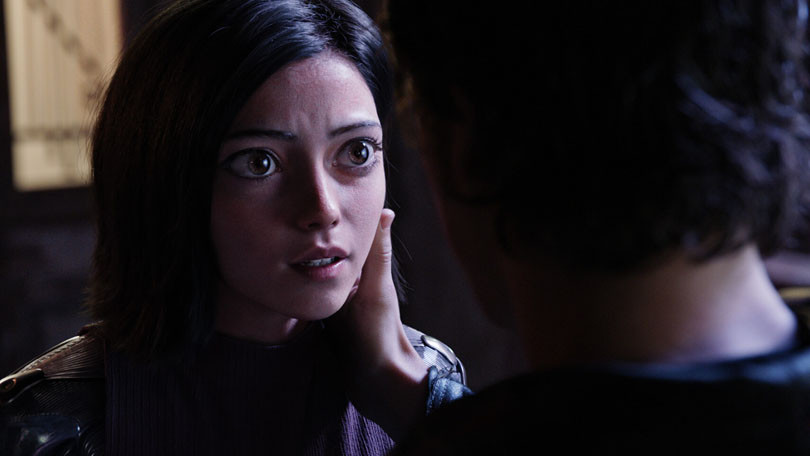
Movies like Alita: Battle Angel showcase the sheer power of seeing a movie on the big screen better than most. With breathtaking special effects in practically every scene, the sense of awe and wonder remains present for practically the entire two-hour runtime. Unfortunately, the vision, beautifully put together by director Robert Rodriguez and producer James Cameron, is severely undercut by the absence of a cohesive narrative holding all of that imagery together.

Alita: Battle Angel does not really have a central narrative. There are many subplots present, but none that really stick out as the one to use when giving a one-sentence explanation of the plot. A scientist named Dr. Dyson Ido, played by Christoph Waltz, rebuilds the titular cyborg, played by Rosa Salazar, who is revealed to be a three-hundred-year-old warrior and the last of her kind. Alita befriends a boy named Hugo, played by Keean Johnson, who teaches her about the futuristic game motorball. Mahershala Ali and Jennifer Connolly also hover around the narrative as Vector and Chiren, two shady individuals connected with the darker side of Iron City, the film’s central location.

Though almost all of the characters are connected to each other through highly implausible coincidences, there is little connecting the various strands of a plotline. The city of Zarem, which hovers above Iron City, serves as a MacGuffin, as Hugo tries to buy passage, but the film only gives this narrative sporadic attention throughout the film. Early on Dr. Ido is revealed to be a “Hunter-Warrior,” Iron City’s mercenary version of law enforcement, a plotline that supplies much of the film’s action. Problem is, the action really isn’t in service to some bigger purpose, leaving the visually stunning scenes with an empty after taste.

The presence of motorball is Alita: Battle Angel’s biggest shortcoming. The film makes no effort to explain the rules, bringing more attention to the game as a total knockoff of the cult classic Rollerball. It could have had value as a sideshow similar to podracing in The Phantom Menace, but the film thrusts the motorball into the spotlight for reasons that never really add up.

The film also includes a completely unnecessary romance between Alita and Hugo that feels crafted out of obligation to the concept that it should have a love story rather than any narrative necessity. The romance along with Connelly’s character Chiren, who happens to be Dr. Ido’s ex-wife, could’ve been cut from the film entirely with next to zero narrative consequences.

The action sequences are spectacular and the effects are of the high quality that one would expect from a film with Cameron’s name attached. As Alita: Battle Angel, it becomes clear that most of the drama that precedes the fight scenes is there merely to necessitate the battles. Unoriginal conflict can be forgiven in service to stunning visual sequences, but the film suffers from an inability to pick a singular generic narrative to get behind. It’s practically impossible to put aside the incoherent plot when the film is constantly changing gears.

Despite the lack of narrative continuity, the script is occasionally witty, offering a few laugh-out-loud moments. As a character, Alita is very relatable, if not a bit bland. The performances are all fairly strong, even if Waltz, Connelly, and Ali look a bit out of place in a film that doesn’t always know how to utilize their talents.

There is a lot to like in Alita: Battle Angel, which never falls into the territory of boring. Unfortunately, it’s difficult to recommend a film that could never decide what it wanted to be. The film fails to present a cohesive narrative to anchor its visual splendor, giving the audience plenty of entertaining sequences but little to root for.

Sunday

17

February 2019

0

COMMENTS

Dead Ant Is a Weirdly Endearing B-Movie Triumph

Written by , Posted in Blog, Movie Reviews, Pop Culture

Part of the appeal of b-movies lies in their innate ability to redefine the parameters of expectation that audiences naturally take with them when sitting down to watch a film. The “so bad it’s good” trope reflects the fact that entertainment value can occasionally circumvent the typical binary we use to judge art. Dead Ant is a film acutely aware of this sentiment, embracing camp in favor of anything resembling a coherent narrative.

The plot of Dead Ant is fairly straight-forward. A washed-up hair metal band on its way to a music festival runs into a nasty insect problem after a pit-stop for psychedelic drugs. The cast of characters is fairly intimate, mostly featuring the members of the band Sonic Grave, including Sean Astin, Jake Busey, Rhys Coiro, and Leisha Hailey. Tom Arnold, co-star of the 90s hit True Lies, puts in a strong performance as band manager Danny, delivering most of the film’s memorable comedic lines.

The film struggles through its first half-hour, full of dated clichés about political correctness and power ballads. The idea that a hair metal band would be searching for a “comeback” in the late 2010s, decades after the genre’s heyday, is an absurdity that the film could’ve wielded to its comedic benefit, especially since none of the members look old enough to have been in a band in the 80s. Thankfully the jokes start connecting by the second act, timed well with the introduction of the titular ants.

Dead Ant finds its groove once it trades in the clichés for camp comedy, delivering several laugh-out-loud moments. There’s a point where Arnold starts to look more comfortable in his role, dropping one hilarious line after another in rapid succession as the characters start to fight back against the ants. Coiro is another standout of the film’s second half, owning his ridiculous scenes with a healthy dose of charm, like he finally figured out what the film was supposed to be. Dead Ant is the kind of movie that owes its success largely due to its actors’ willingness to embrace the film’s absurdities.

The script is a bit disjointed at times, but the actors find grace even with the occasional tumble through their lines. The plot holes are transformed into amusing comedic moments, embracing its own inconsistent continuity. In a strange way, the errors serve to heighten the film’s replay value, if only to see if there’s more lurking in the ant-riddled desert.

While few b-movies are known for their stellar special effects, Dead Ant actually exceeds expectations with plenty of pretty believable ants. There are a couple scenes where the digital ants hardly line up with the havoc they’re supposed to be causing, but in a way that’s part of the fun. The film never lets the effects distract from other comedy it’s trying to deliver, maximizing its assets in the process.

Clocking in at just under ninety-minutes, Dead Ant provides plenty of laughs without ever overstaying its welcome. The first half-hour is regrettably underwhelming, but the film course corrects with enough time left to provide an entertaining experience. If the idea of a b movie filled with hair metal and giant killer ants seems like your cup of tea, you won’t be disappointed by this weirdly endearing film.  

Monday

11

February 2019

0

COMMENTS

PEN15 Is One Of Hulu’s Best Original Shows

Written by , Posted in Blog, Movie Reviews, Pop Culture

The first episode of Dawson’s Creek garnered much controversy all the way back in 1998 for daring to talk about subjects like masturbation and premarital sex, airing at a time before premium cable changed the television landscape. Two decades later, shock value just doesn’t carry the same weight. The idea of a TV show set in middle school starring two adult actresses covering similar subjects in a far more graphic manner barely raises an eyebrow.

PEN15 sets its sights on the most cringe-worthy chapter in many people’s educational experience. As much as high school can be defined as a time full of awkwardness and poor decisions, middle school offers an environment with far less freedom and a lot more puberty. The sexual tension that fuels so many high school dramas essentially begins in middle school, though television has been reluctant to cover that period for obvious reasons. The material is too graphic for child actors, and adult actors don’t exactly look convincing playing thirteen-year-olds.

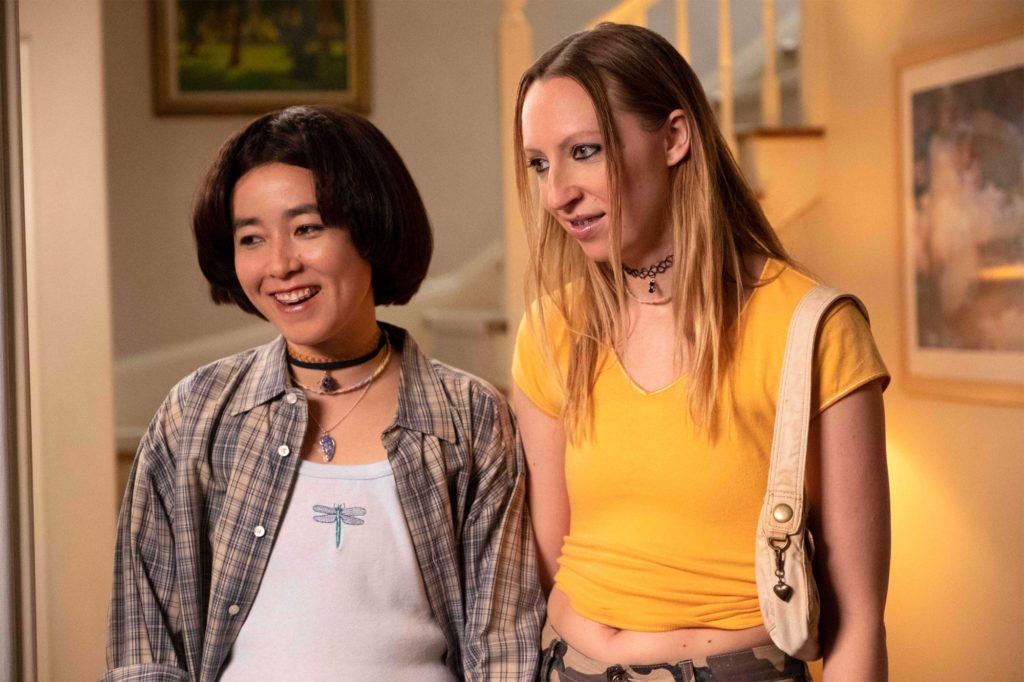
While co-creators and stars Maya Erskine and Anna Konkle hardly look like children, both actresses are immensely effective in sidestepping that issue completely. PEN15 crafts its own funhouse version of reality that allows Maya and Anna to navigate its halls with relative grace, considering the heavy dose of cringe comedy offered in practically every scene. Suspension of disbelief is hardly needed, as PEN15 eloquently captures the zeitgeist of adolescence in the early 2000s.

Though the adult actors carry the bulk of the drama, PEN15 does have an impressive cast of child actors in supporting roles. Each episode is mostly self-contained, allowing the show to thoroughly cover a wide variety of topics in its first season. There isn’t a single episode that reeks of filler, a rarity among streaming shows, especially in their first seasons.

What sets PEN15 apart from many shows that depict childhood is its unapologetic refusal to force resolution. For many, if not most, middle school is a cringe-worthy time that we’d like to forget. All the efforts made by ABC’s Afterschool Specials and shows like 7th Heaven and Boy Meets World to turn each conflict into a teachable moment seem to forget how often bad things happen that don’t serve some broader purpose. Kids can be mean. Often, justice isn’t served. The bad guys win all the time. Shows can pretend like there’s some silver lining hidden in bullying, but PEN15 deserves a lot of credit for throwing conflict out there in a way that doesn’t try to package it all up by the end of the episode.

Back in 2015, Wet Hot American Summer: First Day of Camp crafted a hilarious prequel that worked around the fact that actors in their 40s were playing teenagers. PEN15 deployed a similar approach, wielding the surreal to offer some brutally honest commentary on the struggles of growing up. The show has quickly become one of Hulu’s best original series. Few shows dare to take on middle school, but Maya and Anna prove how powerful such a journey can be while providing a hilarious experience along the way.

Monday

11

February 2019

0

COMMENTS

Following the Same Instruction Manual as Its Predecessor, The Lego Movie 2 Is Hilarious & Sweet

Written by , Posted in Blog, Movie Reviews, Pop Culture

The worst sequels are the ones that are too self-conscious about their own existence, straining the narrative with an unnecessary mandate. The world didn’t need The Lego Movie 2: The Second Part, but of course that was never going to have any bearing on whether or not the film was made. The success of the first made a follow-up inevitable. The notion of whether a follow-up could resonate in quite the same way is the only question that should be asked.

The Lego Movie’s biggest strength was its ability to blend silliness with thought-provoking realism. The film wielded a broad spectrum of human emotion, leaving the audience with much to chew on by the time the credits started to roll. That kind of experience is hard to recreate for many reasons, chief among them being that the viewers walk into the theatre knowing what’s in store for them.

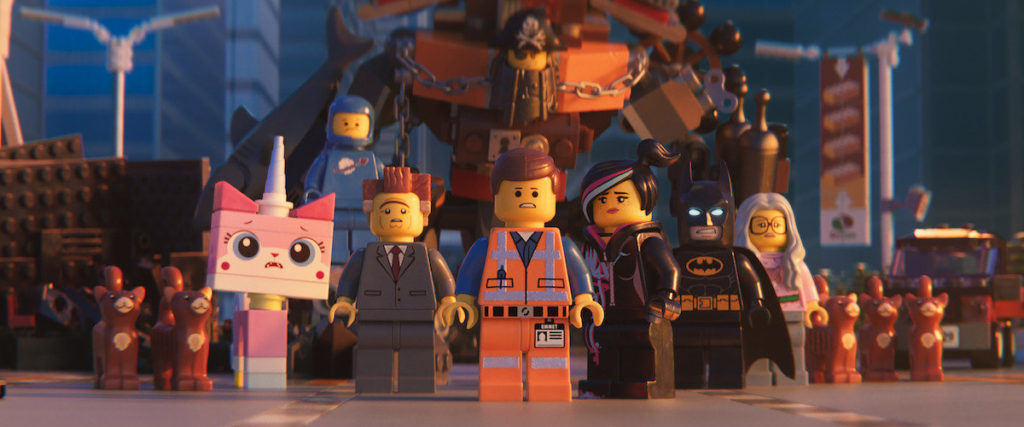
The Second Part doesn’t try to reinvent the wheel, or the brick. The narrative is largely another medley of light-hearted humor set against a real-world backdrop, this time in the form of Finn struggling to get along with his younger sister. The jokes continue to come at a rapid-fire pace, delivering plenty of laugh-out-loud moments. The film does an excellent job offering jokes for audiences of all ages, alternating gags with plenty of references aimed at older viewers, including some memorable lines on Chris Pratt’s career and the state of DC Comics.

Sequels often mess with their characters’ personalities in an effort to manufacture new drama. Thankfully, The Second Part doesn’t fix what isn’t broken, playing to its characters’ strengths without forcing any unnatural conflict. Emmet is still an unrelenting optimist, Lucy is still afraid to open up, and Batman is still a raging narcissist. There are little bits of character development here and there, but the movie as a whole is content to keep the dynamic of the first film in place.

The musical numbers don’t pack the same punch and the plot wins zero points for originality, but the film has more than enough heart to make up for its lack of imagination. The Second Part is a lot of fun. Unimaginative concepts can still be entertaining, just as plenty of films are made each year that are completely derivative of earlier classics. The idea that a sequel should bring something new to the table can exist alongside the notion that it might just be okay if one doesn’t.

The Lego Movie 2: The Second Part is a well-paced comedy that knows exactly when to tug on the heartstrings. It’s not as imaginative as the first, but that’s practically a given for any sequel. When it comes to providing an experience well worth seeing on the big screen, the movie hits every note that matters. Maybe that won’t be enough for a future installment, but for now, everything is still pretty awesome.

Wednesday

30

January 2019

0

COMMENTS

Breaking Down the Fyre Festival Documentaries

Written by , Posted in Blog, Pop Culture

Are two Fyre Festival documentaries in the same week too much, or not enough? Having watched both in one day, I can’t honestly say I’ve had my fill of Fyre just yet. The horrors of the event provide more effective scares than most fictional narratives could hope to achieve. The sheer absurdity of the event, one that practically everyone involved knew would be a disaster, hasn’t lost any appeal after two feature-length films.

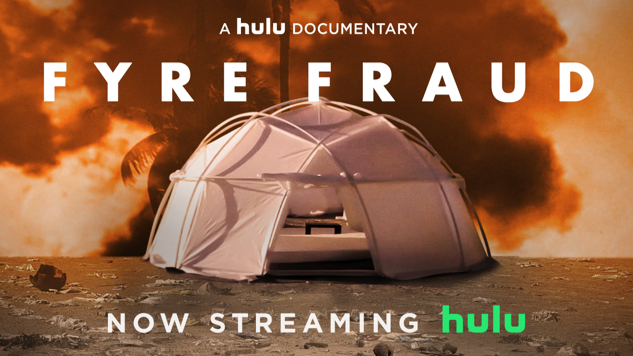
There’s something timeless about Billy McFarland. Hulu’s Fyre Fraud makes the mistake of using McFarland as a conduit to criticize millennials, forgetting how many carnival barkers make their living off the same antics. He’s insufferably caught up in himself, for no apparent reason other than the faint idea that he could exist in proximity to the rich and famous.

Fyre Festival was a dream concocted in service to nothing other than the idea of a dream. The documentaries give about as much focus to the music as MTV does these days. You get the sense that it was never about music, but rather the idea of being on a tropical island with a bunch of famous people. In that regard, the attendees kind of got what they paid for, an experience to remember.

Neither documentary presents much cause for sympathy for the ticketholders, much in line with the internet’s initial reaction to the disaster as it unfolded. The notion of a “once in a lifetime” experience exists in on the surface level with regard to something like the Fyre Festival, but falls apart when you consider the unspectacular music lineup. McFarland sold the dream of exclusivity, the chance to live a real-life Instagram story. In many ways, all the media surrounding the disaster gave the attendees exactly what they wanted, an event unlike any other in music history. Surely the stories of surviving Fyre are worth more cultural capital than a Blink-182 concert.

The Fyre Festival documentaries have captured an impressive slice of media attention, especially when you consider how much new content debuts each week. The entire saga was the perfect blend of millennial-centric catastrophe, a lightning rod used to indict an entire generation. Just like the Tide Pod Challenge that followed a few months later, there’s nothing inherently illuminating about Fyre Festival, an obvious con that fooled the kind of people who spend their days on Instagram looking for the white rabbit beyond their reality.

If you’re wondering which documentary is more worthy of your time, the Netflix one gives you a much more satisfying front-row seat to the disaster as it unfolded. For the true Fyre experience, watch them both back to back. You’ll wonder how so many people could be fooled by one man, but maybe you’ll also think about why we as a country delight in these train-wrecks.

Wednesday

30

January 2019

0

COMMENTS

Shameless Doesn’t Have a Clue What to Do with Its Characters

Written by , Posted in Blog, Pop Culture

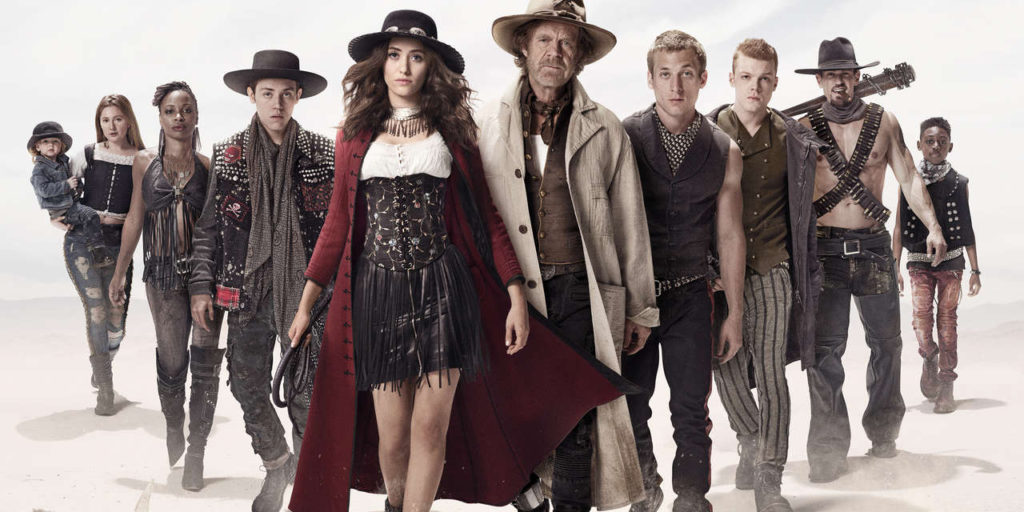
Ensemble dramas like Shameless are built for the long haul. Every single Gallagher child had departed the original UK version of the series by the conclusion of its ninth season. Assuming no additional cast members leave in the coming episodes besides the departures already announced, the U.S. version will reach that same point down only two Gallagher children. With much of its original cast intact, the U.S. version hasn’t needed to pivot its focus in quite the same way. Unfortunately, the show doesn’t really know what to do with its characters.

For the first few years of the show, Emmy Rossum carried the weight of the show’s emotional core on her back. Fiona’s downward spiral back in season four showcased Rossum’s talent as an actress, offering a heartbreaking depiction of the difficulties of upward mobility out of poverty. In between underwhelming romantic storylines, the show spent much of season eight with Fiona back on the rise. While another fall from grace seems inevitable given the natural arcs of television, it’s sad to see season nine send Fiona out with such pathetic a whimper, embodying the very worst traits of her father.

Season nine has little to say about any of the Gallagher children. With his alcoholism under control, Lip is without a storyline that gives any hint of where his future might lead. Cameron Monaghan’s departure from the series left Ian in jail, thankfully away from the horrendous “gay Jesus” plotline, a concept that might have seemed edgy for cable television back in 2001. After years of struggling to get her act together, Debbie has a stable job, left only with throwaway storylines mining homosexual experimentation for no reason in particular. Liam finds himself kicked out of his private school for no apparent reason, left to play second fiddle to other Gallagher plots. Carl is the only one with any sense of direction in his life, though he’s spinning his tires for the most part with “ripped from the headlines” gags like the electric scooter scheme.

Nine seasons in, Shameless feels tired. The show is content to use current political topics like the #MeToo movement and family separation at the border as weekly plot points without ever really presenting anything interesting to say. Kevin & Veronica have felt like filler for years, rarely factoring into what the Gallaghers are doing at large. Frank’s antics are mildly amusing, if not a waste of William H. Macy’s talent.

Shameless used to be pretty good at multi-season arcs. Fiona, Lip, and Ian, in particular, all had storylines that didn’t play out like high octane roller coasters, moving from high to low with each passing episode. For some reason, the show essentially gave up on that stuff in favor of hitting the reset button every year. The substitute plots can be hit or miss, but there’s little emotional weight behind any of it.

As good an actress as Emmy Rossum is, it’s hard to get emotionally invested in Fiona’s farewell arc. She’s been increasingly isolated from the main Gallagher clan over the past few seasons, repeating a cycle of toxic relationships and bad business decisions. Given the bleak outlook of the show in general, a happy ending was hardly in order, but the lazy planning robbed Rossum of the chance to go out with a bang.

Shameless used to provide a unique look at Chicago’s working class. Now the show is a shell of its former self, wandering from episode to episode without any clear long-term direction. To a certain extent, the show was hindered this season by a need to wrap up storylines for two main characters, but these problems have existed for a while now. There are still plenty of competent actors on the show, but Shameless needs to figure out something worthwhile for them to do.

Tuesday

22

January 2019

2

COMMENTS

Fyre Fraud Loses Sight of the Scandalous Festival In Pursuit of Millennial Bashing

Written by , Posted in Blog, Movie Reviews, Pop Culture

Millennials are a frequent punching bag for the media. Apparently, we’re selfish, superficial, and we ruin everything, claims that we’re supposed to believe have never applied to any other generation. Hulu’s new Fyre Fraud documentary, one of two films released about the disastrous festival in the Bahamas, builds its premise based on the notion that such a grift could only work in modern times. Such a thesis seems to forget that America’s luxury class has always pursued community through exclusivity.

Social clubs have been popular for hundreds of years, granting access to those deemed worthy of membership in the eyes of the elite. Hugh Hefner’s Playboy Club was built around the same premise, mainstreaming a sense of community through a shared interest in seemingly refined tastes. People frequent cigar lounges not for smokes, but for the chance of a fraternal bond blossoming beneath the fumes.

Fyre Fraud paints Fyre Media CEO Billy McFarland, currently serving a six-year prison sentence for crimes related to the festival, as a kind of genius capable of manipulating the easily-fooled millennial masses. The younger generation somehow deserves some blame for falling victim to the con, which hired hundreds of influencers to create an aura of luxury before any infrastructure was put in place to deliver on such promises. The documentary hoists McFarland up as a natural symptom of a narcissistic generation, hailing him as the spiritual successor to The Wolf of Wall Street Jordan Belfort.

The documentary is less about the festival than it is about McFarland, who was paid to appear in the film under ethically dubious circumstances. Billed as a “true-crime comedy,” Fyre Fraud uses frequent animated cutaways to poke fun at the disaster. There’s a lot to laugh at about Fyre Festival, as social media at the time collectively mocked the hoards of rich kids stranded in the Bahamas after being denied the luxuries they overpaid for. For some reason, the documentary felt obliged to play the role of standup comedian rather than to let the contemporaneous jokes speak for themselves, laughing off serious material that deserved closer scrutiny.

There are a few scenes where the interviewers hold McFarland’s feet to the flames, but can’t manage to shake anything substantive from his slick hands. There are natural reservations on his part to not reveal any information that could add to his prison sentence, but he isn’t forthcoming about much of anything at all. It’s hardly uncommon for a subject to not appear in a hostile documentary, which begs the question of why the film felt the need to pay him to appear at all. Such time could have been spent providing a fuller picture of how the festival was doomed from the get-go, or to showcase the many Bahamians who were conned out of payment for their services.

The documentary does shed some much-needed light on the involvement of Jerry Media, the company behind the infamous “fuckjerry” Instagram account that helped market the festival. Jerry Media produced the other documentary on Fyre Festival, a conflict of interest that deserves to be called out, but Fyre Fraud handles this footnote in a way that seems driven less out of journalistic obligation than as a dunk to claim moral superiority over a competing narrative. There are certainly other people to blame for Fyre Festival than simply McFarland, but this documentary doesn’t spend much time on any of the other perpetrators beyond those who dared to make their own film about the experience.

Fyre Fraud hoists Billy McFarland up as a straw man indictment against millennials, casting aside a thorough examination of the festival in favor of cheap laughs. Grifters like McFarland have been around for thousands of years, robbing Peter to pay Paul. The only difference between McFarland and Charles Ponzi is that none of Ponzi’s victims were able to post an Instagram picture of their experience. The documentary allows McFarland’s charms to suck the air out of the room, lazily criticizing millennials at the expense of exploring the greatest con in festival history.