Ian Thomas Malone

Pop Culture Archive

Monday

15

April 2019

0

COMMENTS

John Boyne’s Lazy “Support” For Transgender Rights

Written by , Posted in Blog, Pop Culture, Social Issues
The letters that make up the LGBTQ community suggest a sort of unity among the various gay & gender diverse subsections. This of course, puts aside the fact that all of the letters have vastly different experiences. Intersectionality is vital toward understanding that while we may all be part of the same umbrella term, each of us faces different levels of inequality.

Irish author John Boyne, a gay cisgender man, has recently written a novel titled My Brother’s Name is Jessica about a boy who discovers that his sibling has a gender identity different than the one assigned at birth. One could take umbrage with the title, which misgenders a transgender woman, or the idea that Boyne is writing about transgender issues despite not being transgender, but perhaps more concerning is an op-ed Boyne recently published. The piece which decries the use of the word “cis” in its title, defends tennis star Martina Navratilova for comments she herself has apologized for, and equivocates on the bigotry of TV writer turned obsessive anti-trans keyboard cowboy Graham Linehan among other things is far more concerning.

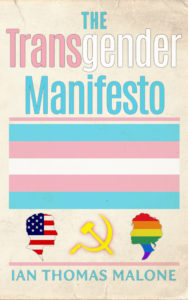
The word cisgender has been used by the scientific for decades despite Boyne’s claim that it’s “given by trans people to their nontransgender brethren.” In fact, “cis” draws its origins from Latin, meaning “on this side of,” to refer to people whose gender identity matches the sex they were designated at birth. “Cis” is to gender identity what “straight” is to sexuality. It’s kind of a clunky word, one that I criticize in The Transgender Manifesto, but thankfully for cisgender people, society at large doesn’t really expect them to use it very often, almost always in relation to transgender people.

Naturally, “cis” has received backlash from many anti-transgender people, who created the #cisisaslur hashtag to protest the scientific term. Boyne seems totally on board with this mentality, writing, “I don’t consider myself a cis man; I consider myself a man.” On the surface level, one can kind of see his point, cis being an unnecessary term that doesn’t fundamentally change the way society views him. Trouble is, this mentality perpetuates the notion that cisgender is the “default setting.” It’s not fundamentally any different from a white man demanding that no one refer to him as white or a straight person insisting that people only refer to them as normal.

Similarly tone deaf is Boyne’s defense of Navratilova. Navratilova, seen for decades as a champion of gay rights, published an op-ed in The Times where she referred to transgender athletes as “cheats” and regarded the very notion of allowing them to compete as “insane.” Navratilova later apologized for her remarks after being dropped as an ambassador for Athlete Ally, an LGBTQ nonprofit.

Boyne presents Navratilova’s narrative as something completely unworthy of criticism, writing, “For anyone to suggest that a person of her courage is phobic about anything is to deliberately ignore her history.” Such a mindset presents a strange either/or scenario. Navratilova has quite obviously been a champion of gay rights, but that doesn’t change the prejudiced nature of her mentality toward transgender athletes who are frequently portrayed as imposters seeking to game the system. The recent media obsession with transgender athletes ignores the fact that not a single transgender athlete has competed in the Olympics since the IOC started permitting trans athletes back in 2003. While anti-transgender pundits frequently warn of a transgender take-over in sports, they seem decidedly unsure of when such an invasion is actually going to occur.

It’s one thing for Boyne to continue supporting Navratilova, an iconic tennis star and someone who has done a lot of legitimate good for gay athletes, but such praise does not need to diminish the hurtful words that she rightly issued an apology for. Boyne’s words talk over the transgender community who face plenty of discrimination in sport, and pointlessly attempt to frame transphobic comments as something other than bigoted. A person who cared about intersectionality might have left well enough alone, but Boyne felt the need to chime in on a matter than didn’t call for comment from a gay man completely unaffected by her words.

Boyne’s reaction to his op-ed has further perpetuated the idea that he doesn’t actually care about the transgender community he writes about. Boyne tweeted that he would engage with comments that weren’t “rude” or “aggressive” but most of his replies were aimed at people praising him, including a few anti-transgender accounts.

https://twitter.com/john_boyne/status/1117405196706095104

My own reply, which received over a hundred likes, went unanswered.


This wouldn’t be much of an issue if Boyne hadn’t found the time to apologize to noted obsessive transphobe Graham Linehan for including him in the op-ed. Linehan. Oddly enough, Boyne’s apology was later deleted, preserved by screenshot.


The idea that he made time for Linehan, who tried to strip funding for a transgender children’s charity and has been warned by the police for anti-transgender harassment among other things, suggests that Boyne doesn’t have much regard for the community he spends his time writing about. Anyone wondering where Linehan’s heart is located doesn’t need to look further than his Twitter feed.

I can get that Boyne is upset about the reaction to his op-ed. No one like to feel piled on, but instead of introspection, Boyne has instead dug into the notion that his critics are merely rude or aggressive. Such tone-policing ignores the broader issue, that Boyne’s words were misguided, hurtful, and ignorant of a community he’s currently attempting to represent in his own work.

Intersectionality reminds us of the importance of engaging with people whose perspective differ from one’s own. Boyne doesn’t seem to care to engage with the transgender community over his comments or his book. A man who displays more concern for the critics of transgender people than the community itself is probably not the best person to be dramatizing our lives in novels. His lazy concern for trans rights has no place in the public discourse, a pathetic attempt to monetize a group of people he otherwise demonstrates nothing but disdain toward.
Wednesday

10

April 2019

0

COMMENTS

A Dark Place Is a Well-Crafted Mystery

Written by , Posted in Blog, Movie Reviews, Pop Culture

Dozens of TV procedurals air hundreds of episodes each week featuring murders that are discovered and solved in a forty-minute timespan. For film, the added runtime carries a greater sense of weight, knowing that the audience will likely never see these characters again. A Dark Place is the kind of film that manages to present an intriguing character while never losing sight of the objective at hand.

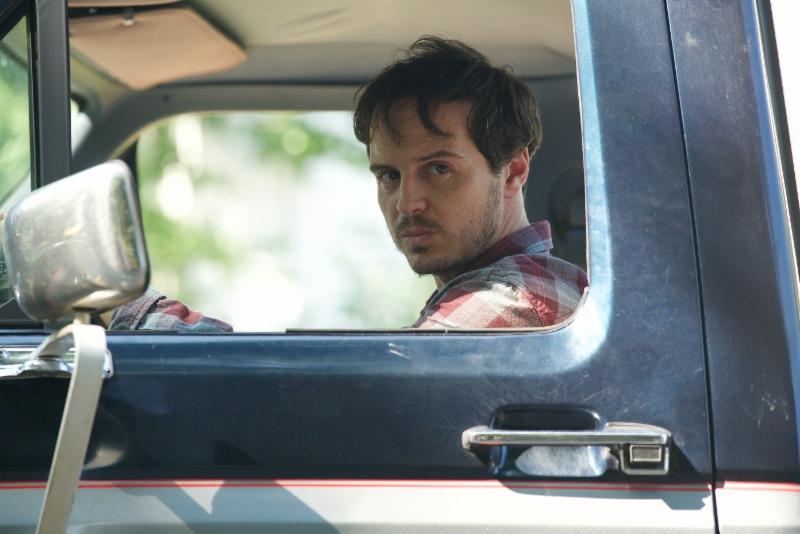
Donald Devlin is a peculiar man. He runs his sanitation route, takes care of his sick mother, and tries to be a decent father, but there’s something about him that’s fairly odd. He has an affection for keeping warm in already hot temperatures and displays a weird sense of concern for the death of a young boy in his neighborhood, presumed drowned under potentially dubious circumstances.

Despite the disinterest of the local sheriff in investigating the death as a homicide, Donald takes it upon himself to investigate. The result is what you might expect if your town oddball decided to suddenly start playing detective. People start asking questions as Donald searches for answers.

Like its protagonist, A Dark Place is a weird film. It’s beautifully shot, as director Simon Fellows frames many of his scenes in a way that subtlety brings out the nuances in his actors’ performances. Andrew Scott, known to the general audience as Moriarty on the BBC’s Sherlock, does an excellent job portraying Donald, always keeping things interesting if even through a quiet expression on his face. We don’t learn much about Donald, such as the specific disorder driving his obsessive behavior, but that’s not really a problem either. He’s a sympathetic protagonist who’s easy to root for even though there isn’t much of a broader character arc beyond the murder mystery itself.

The mystery is well-paced, if not a little predictable. There’s surprisingly little suspension of disbelief required to get behind Donald as an amateur sleuth, but some of the pieces of the puzzle are perhaps a little too neatly put together. The brisk speed of the narrative does allow the audience to forgive a few of the clichés, like sheriffs giving a warning about asking too many questions, the kind of stuff you’d find in just about any amateur story.

Clocking in at just under ninety minutes, the film is one that probably could have used with an extra ten minutes to fully flesh out Donald’s relationships, particularly with his daughter, played by Christa Beth Campbell. Campbell gives a strong performance for a young actress, especially opposite a veteran performer like Scott, helping to soften out Donald’s more tedious personality quirks. Bronagh Waugh also gives a lively performance as Donald’s coworker Donna.

A Dark Place could’ve benefitted from a little more character development, but the film is an engrossing mystery that’s well worth a watch. Andrew Scott always keeps things interesting, giving a solid performance that’s enough to buoy the film through some of its more predictable parts. It hardly reinvents the wheel, but Fellows put together an enjoyable film for fans of the genre.

Sunday

7

April 2019

0

COMMENTS

Shazam! Breathes New Life into the DCEU

Written by , Posted in Blog, Movie Reviews, Pop Culture

For all the talk about the disastrous state the DCEU was in, the solutions always seemed pretty simple. Earlier entries piled on dour imagery and quite simply weren’t much fun to sit through. Thankfully, Shazam! got that message loud and clear.

It’s hard to believe that the first live-action adaptation of Shazam! premiered all the way back in 1941, back when the character was called Captain Marvel. Perhaps it’s fitting that a follow-up would debut the same year that Carol Danvers’ Captain Marvel finally made her first big screen appearance, with both superheroes expected to play major roles in their respective franchise’s futures. Despite the name change and all the copyright battles, Billy Batson is still the boy behind the red suit, able to wield the power of six different gods by speaking a single word.

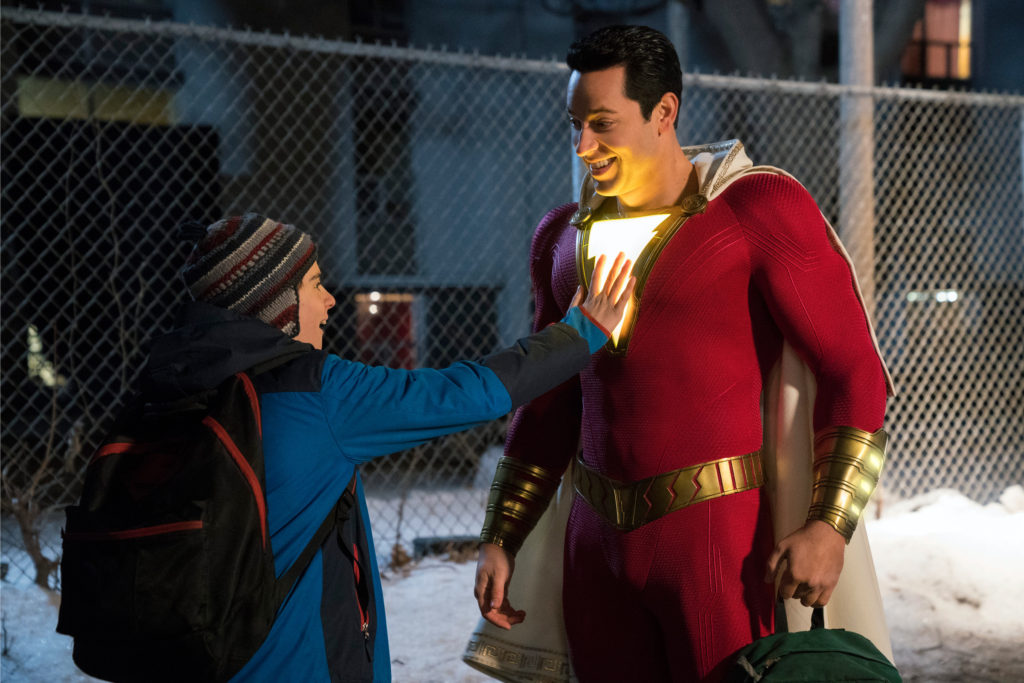
Shazam! is the rare superhero film that feels more like a comedy than an action flick. Many of the scenes are laugh out loud hilarious, the kind of humor that presents itself naturally and not just as comic relief. Zachary Levi does a spectacular job inhabiting the mind of a fourteen-year-old child, exhibiting all the wonder and awe that many of us would feel if we suddenly possessed superpowers. Jack Dylan Glazer also provides much of the laughs as Billy’s foster brother Freddy, displaying an extraordinary amount of confidence and comfort in a lead role for an actor his age.

One of the downsides of these extended universes is that their narratives often feel overstuffed as they juggle their own story as well as obligations to the broader continuity. Shazam! thoroughly exists within the established DCEU, but the references all feel deliberate, in service to the film at hand. Shazam! possesses the best script and narrative pacing of any DCEU film released. It manages to be hilarious while also displaying a tremendous amount of heart. Billy’s adopted family all get their moments to shine, an impressive feat for an action film dealing with a big cast.

A comedy like Shazam! probably didn’t need to hit a home run with its villain, but the film thoroughly fleshes out Dr. Thaddeus Sivana, providing enough backstory to understand the motivations behind the menace. He’s not particularly likable, unlike Black Panther’s Killmonger, but Mark Strong plays him in a way that makes the audience at least understand where the character is coming from. The film provides some thought-provoking commentary on the notion of “chosen ones,” and what happens to the people who didn’t necessarily get the chance they thought they deserved.

My only point of criticism is that the third act at times feels a bit overly drawn out. Part of this undoubtedly stems from the film’s reluctance to overstuff its plot, understandable for a film dealing with a child superhero first learning to control his powers. The ending leaves you with a rare feeling for a superhero film these days, hungry for a direct sequel and not just a large team-up with other members of the universe. A most impressive feat for a franchise that’s been too often defined by its misfires.

Shazam! is the best film of the DCEU thus far, an action-packed adventure full of humor and heart. Billy Batson has been through quite a lot over the past eighty years, changing names and publishers, but this film is proof that the character still has a lot to offer. While the DCEU once looked like a complete mess, things appear to be shaping up for the franchise. Shazam! is the perfect reminder of the power of not taking one’s self too seriously.

Friday

5

April 2019

0

COMMENTS

Hurley Presents a Surface Level Narrative of a Fascinating Man

Written by , Posted in Blog, Movie Reviews, Pop Culture

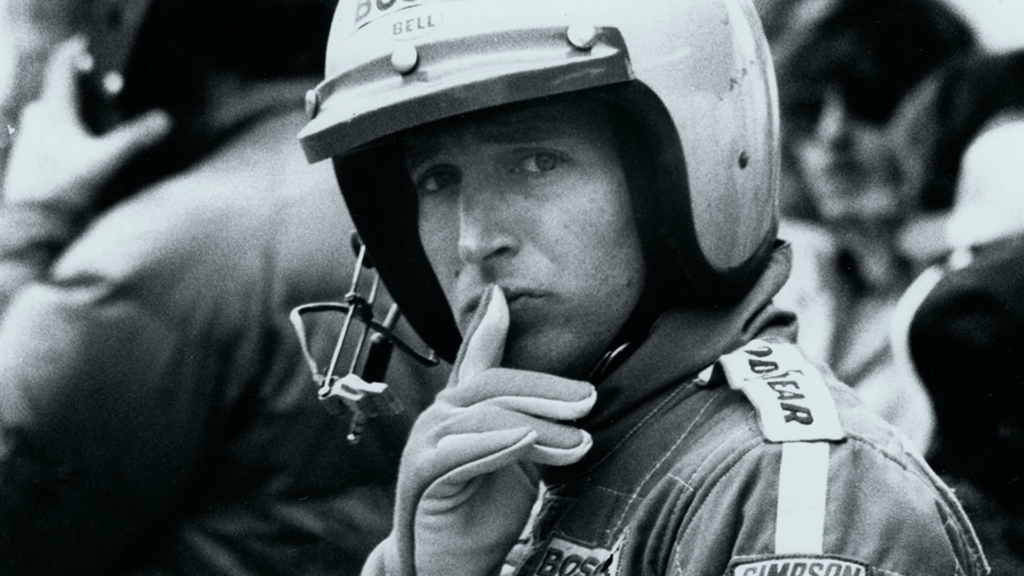
While the past decade has made great progress in removing the stigmas around homosexuality, documentaries like Hurley serve as excellent reminders for how difficult it can still be for some people to embrace being gay publicly. Professional sports, in particular, remains a fairly hostile environment for LGBTQ people, with many preferring to stay in the closet during their careers. The life of motorcar legend Hurley Haywood could have shed some light on this dynamic, but too often the film that bears his name is too reluctant to dive beneath the surface.

Hurley focuses on two separate narratives for most of its runtime, Haywood’s homosexuality as well as his relationship with teammate Peter Gregg, who committed suicide in 1980. Actor and racer Patrick Dempsey, who serves an executive producer on the film, offers context for Hurley’s place in motorcar lore. People unfamiliar with endurance racing might be confused at first, as the film doesn’t do much to explain the specifics, but you do get a sense for what sets Haywood apart from his contemporaries.

The documentary struggles with the contrast between Hurley’s racing achievements and his life as a closeted homosexual. Haywood has no trouble explaining his achievements throughout the film, at times coming across as rather boisterous, but he’s quite uncomfortable talking about life as a gay man in professional sports. The contrast in confidence is palpable, but the documentary is reluctant to pursue what it means for Haywood to have spent close to seventy years of his life hiding who he really was.

As important as Peter Gregg was to Haywood’s career as a racer, his prominence in the documentary seems puzzling at times. There are several instances where multiple interviewees criticize aspects of Gregg’s personality in sequence, though it’s unclear what larger purpose these accounts serve. The film isn’t ostensibly about Gregg, and its participants start to look a bit petty as they continue to harp on the deceased racer, a situation exacerbated by several interviews with one of Gregg’s children.

The film presents conflicting explanations for why Haywood chose to come out as this particular point in his life. Haywood himself offers up a touching account of a conversation he had with a young closeted gay man, clearly inspired by the profound effect he had on the individual’s life. This perspective is contrasted by Haywood’s clear reluctance to embrace the “activist” label. At one point, one of the interviewees goes on a long-winded diatribe about how Haywood should not become a gay activist, doing so with a kind of subtle homophobia that America continues to struggle with. The “tolerance but not acceptance” approach is one that feels increasingly dated as society acknowledges the injustices of policies like Don’t Ask, Don’t Tell. Hurley regrettably chose to play a “both sides” approach by including interviews that offered up opinions for how Haywood should present his homosexuality to the world.

Haywood’s husband Steve Hill provides much of the background for their relationship over the years. His scenes are some of the most powerful in the film, emotionally recounting how difficult it was to watch the man he loved celebrate his success from a distance. Hill provides a valuable historical perspective on the closet, immeasurable challenges that America is thankfully moving away from.

What’s sadly missing from Hurley is the idea of resolution for all those years Haywood and Hill spent hiding their relationship. Part of this likely stems from the fact that Haywood didn’t come out publicly all that long ago and still seems fairly uncomfortable talking about his sexuality. There isn’t really any takeaway beyond the sense that Haywood wants to occupy the space between being helpful and a full-on activist. Hurley misses an easy opportunity to shed light on the hardships forced upon LGBTQ athletes, never quite suggesting that something in that culture needs to change.

While it’s easy to understand that Haywood doesn’t want his sexuality to define his legacy, Hurley suffers from a surface level approach to its central narrative. The film would have been better off simply presenting more of a career retrospective, without putting too much weight on Haywood’s coming out to anchor such a large portion of its runtime. Hurley Haywood is an easy man to admire, an individual who achieved great success in a field that still remains hostile to a core part of his existence. The documentary about his life doesn’t really do justice to the man, a film that plays it too safe to present anything meaningful for LGBTQ athletes who might look to Haywood’s story for inspiration.

Tuesday

2

April 2019

1

COMMENTS

Dumbo Is an Overstuffed Mess

Written by , Posted in Blog, Movie Reviews, Pop Culture

For all the talk of Disney live-action remake fatigue, Dumbo made a lot of sense to get one of its own. Given that the original animated classic clocked in at just over an hour, there was plenty of space for an update to spread its own wings, or ears. Unfortunately, director Tim Burton never quite seemed sure which direction to take his adaptation in.

Burton’s Dumbo starts off on the right foot, evoking nostalgic memories of the original circus. The sight of the seminal Casey Jr. Circus Train is immediately contrasted with the dour state of the Medici Brothers’ Circus, facing financial problems in a post-World-War 1 America. Danny Devito was perfectly cast as owner/ringmaster Max Medici, in search of a marquee act to keep his troupe afloat. While this dilemma could have easily served as the main plot point for the film, Burton had loftier expectations, to the film’s detriment.

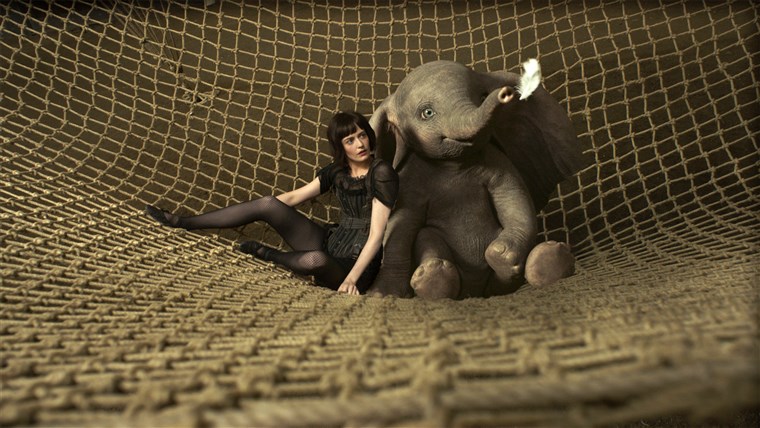
In the absence of talking animals, Colin Farrell is tasked with anchoring the moral heart of the film. Farrell’s Holt Farrier and his two children are perfectly serviceable voices for the titular elephant, but the emphasis on their family crisis simply isn’t as interesting as anything involving Dumbo. CGI Dumbo is adorable, but he’s weirdly often not the focus of his own movie.

To make matters worse, Michael Keaton and Eva Green are thrown into the film’s second half, forcing a conflict that feels increasingly forced as time goes on. Neither character is particularly fleshed out, a puzzling decision when you consider that the movie spends a good deal of its first half establishing various members of the Medici troupe. With a crowded human cast, the climax is robbed of much of its emotional impact, having not adequately invested in the characters we’re supposed to care about.

Dumbo’s needlessly over the top third act is one of the most chaotic disasters ever depicted in a Disney film. Too often, the plot feels reverse engineered in service to Burton’s grand vision of a finale and not a natural sequence of events. Characters behave in peculiar ways that receive little to no build up. Worst of all, Dumbo feels like a bit player in his own movie.

Much of Dumbo is competently crafted. The sets are beautiful, the CGI is well designed, and the performances are perfectly compelling. The script is another story, all over the place with little flow from scene to scene. Had the film simply centered itself on the key conflict of the original, a cute little elephant who misses his mother, it wouldn’t have been very difficult to produce an enjoyable cinematic experience. Instead, Burton flies all over the map with his plot, ensuring that none of its pieces connect by the end of the film.

Dumbo squanders its charming source material with an overstuffed narrative that moves too quickly to explore its characters. One of the chief complaints of the Disney live-action remakes is that they inevitably pale in comparison to the original. While that was probably bound to be the case for a movie based on one of the most iconic animated films of all time, a live-action Dumbo had plenty to offer. It just could have done with a fewer plotlines taking time away from that cute little flying elephant.


Saturday

30

March 2019

0

COMMENTS

Satan & Adam Squanders a Good Story with No Sense of Narrative Direction

Written by , Posted in Blog, Movie Reviews, Pop Culture

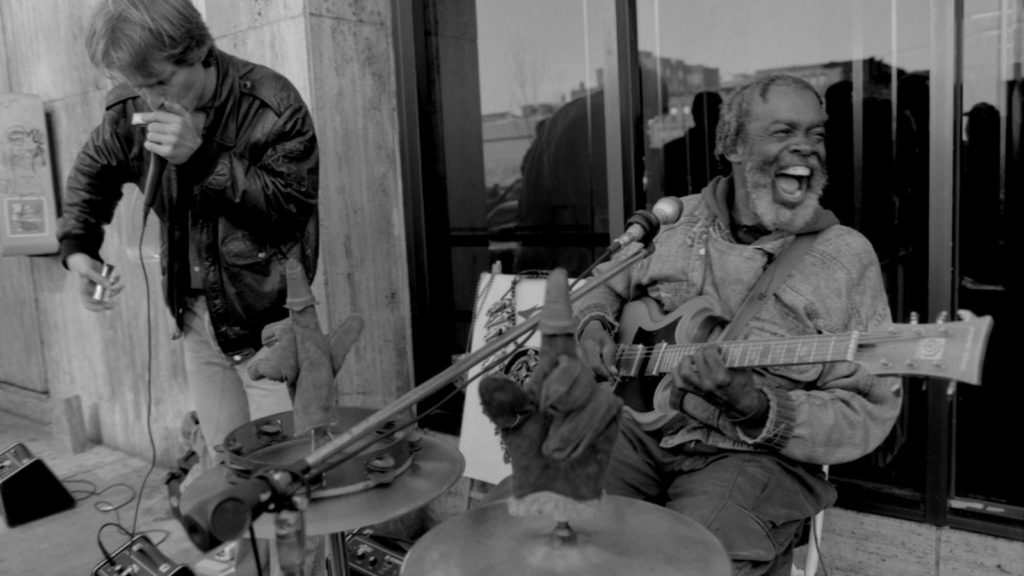
The story of blues duo Satan and Adam is a fascinating one that transcends racial and generational barriers. The pairing of a young white kid playing harmonica on the streets of Harlem alongside a black guitarist who was once signed to Ray Charles’ Tangerine Records produced a unique sound that brought them plenty of success, including numerous festival appearances and a European tour opening for Bo Diddley. Unfortunately, the documentary tasked with presenting their story never seems confident as to how to tell it.

As a film, Satan & Adam is all over the place. The documentary starts off by setting the scene of racial tension in New York City in the 1980s, featuring interviews with Al Sharpton. Presented alongside the introductions of Adam Gussow and Sterling “Mr. Satan” Magee, the narrative appears to assign some broader societal purpose behind their pairing, except the film abandons that subject early on. The mentioning of racial tension appears to essentially exist in the film to make the case that it was hard for a person like Adam to perform on the streets of a predominantly black neighborhood. It’s a weird point to bring up with regard to an Ivy League-educated individual, and one that falls flat in its efforts to garner sympathy for Adam’s outsider status.

The documentary struggles in its duel presentation of Mr. Satan and Adam’s lives. Gussow is interviewed extensively throughout the film, but Mr. Satan’s legend is largely established through third-person accounts. Mr. Satan had played for decades alongside James Brown, King Curtis, and Big Maybelle, which makes Adam sound fairly boisterous in several scenes where he equates their playing abilities. The absence of interviews from Mr. Satan creates the illusion that he’s deceased throughout much of the film’s first half.

Satan & Adam struggles to establish Adam’s likability, positioning him as the singular force behind the commercialization of their music. Adam published an article in Harper’s Magazine in 1998, and he admits that he begrudgingly shared half the commission for the story at Magee’s request. Gussow is also depicted as the driving force behind their studio recording, but the impact of this on Mr. Satan’s life is left unclear, a puzzling decision since the documentary extensively covers Satan’s mental breakdown and abrupt move to Florida. Adam is nowhere to be found throughout Satan’s recovery, a point that’s only briefly touched upon.

The film lacks a cohesive overarching narrative, only briefly focusing on Satan and Adam’s success as a duo. Their inclusion on U2’s classic Rattle and Hum album is mentioned along with an interview with The Edge, but the segment feels like a minor footnote instead of a high point of their careers. Satan’s life is fascinating, but the documentary suffers when only Adam’s story is presented, especially given how much of the narrative is driven by Adam’s own accounts. Magee’s wife, Miss Macie, is introduced late in the film, presented essentially as a villain disrupting the band. Macie’s antagonistic introduction is paired with a few quick interviews that hint at tension on the road, though the documentary moves on shortly after without really explaining anything. It’s never really made clear what the filmmakers expect anyone to make of these brief snippets of conflict.

Satan & Adam has a good story to tell, but the documentary never establishes a consistent narrative to tie its many pieces together. With a runtime of barely eighty minutes, it’s possible that the documentary bit off more than it could chew, tackling two separate lives, their joint musical career, as well as Harlem race relations all in one film. What’s oddly missing is the clear sense that both of their lives were improved by their relationship with each other. Satan would have been a Harlem legend regardless of Adam, while Gussow has enjoyed a career teaching literature at the University of Mississippi in Oxford. The lasting legacy of Satan and Adam is one that the film never quite establishes. For a documentary that took over twenty years to film, Satan & Adam doesn’t know what it wants to say.

Thursday

28

March 2019

0

COMMENTS

Dirtbag: The Legend of Fred Beckey Is a Powerful Testament to the Will of the Human Spirit

Written by , Posted in Blog, Movie Reviews, Pop Culture

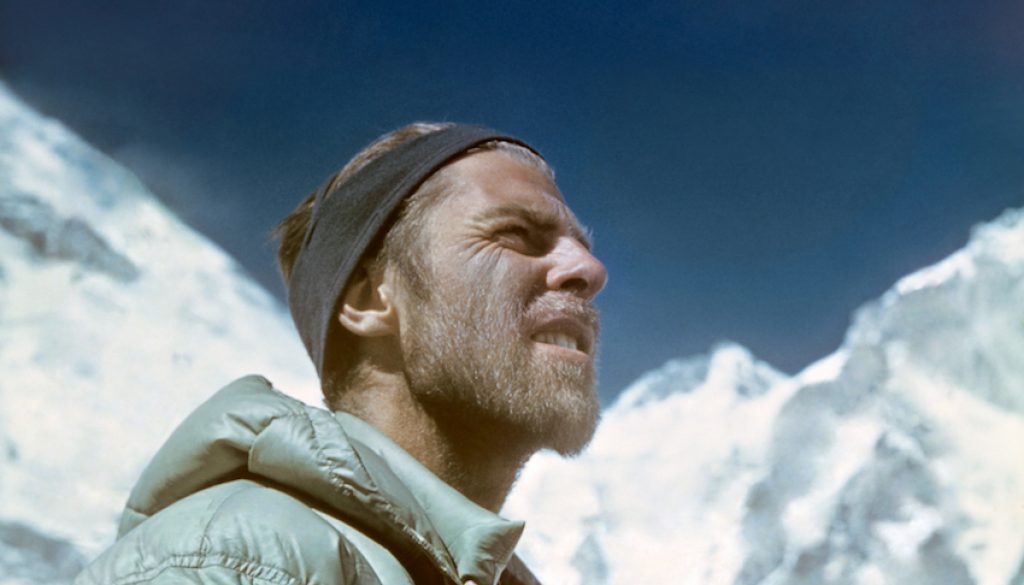
Passion is one of those concepts that’s easy to visualize if not challenging to define. The life of Fred Beckey, who spent the vast majority of his ninety-four years on earth rock climbing, is hard to describe without the word passion. Dirtbag: The Legend of Fred Beckey sought to explore the ethos behind the man who was fortunate enough to spend the bulk of his life doing what he loved.

The term “dirtbag,” used to refer to climbers who religiously pursue the less-than-glamorous outdoors lifestyle, was popularized by Beckey himself. Credited with more first ascents than any other North American climber, an achievement unlikely to ever be surpassed, Beckey slowly carved out his legacy over decades spent persistently pursuing any mountain he could get his hands on. Over the course of his life, Beckey published numerous books on climbing, and he received the seldom-awarded President’s Gold Medal from the American Alpine Club.

Dirtbag is mostly presented as a retrospective, chronicling Beckey’s extensive career. Director Dave O’Leske shot over ten years of footage of Beckey, who was still an active climber in the last years of his life. The documentary early on establishes Beckey’s reluctance to participate, an avoidance of the spotlight that perhaps explains his status as a cult hero within the climbing community. Using old footage and photographs, the film does an excellent job in giving the viewer a front-row seat to Beckey’s life over its various stages.

Reluctant as he was, Beckey makes for a fascinating subject. Unconcerned with his broader legacy, the old climber captivates the screen in each of his interviews, mixing philosophical observations with coarse humor. Even benign moments like watching Beckey call up companions for a prospective climb in the middle of a retail store provide interesting portraits into how greatness is crafted through sheer persistence.

The subject of women is one that the film handles in rather poor taste. Though there are numerous interviews chronicling Beckey’s womanizing habits, including a few from former lovers, the documentary includes a few crude animations that don’t really serve any broader purpose than to hype up that kind of behavior. The animations put the documentary in an awkward position, going a step beyond anything explicitly described of Beckey, and fail to add to the narrative in any meaningful way.

While Beckey may not have demonstrated much interest in introspection, the film makes a convincing case for his place in alpine lore. The documentary takes a look at some of Beckey’s contemporaries who went on to make big names for themselves on major expeditions that he was excluded from, as well as the simple fact that Beckey’s longevity is largely due to his embrace of the often lonely nomadic lifestyle. Beckey pursued his dream practically exclusively, at the expense of a family or any sense of financial security. O’Leske deserves a lot of credit for providing a balanced look at the complete picture of his subject.

Dirtbag paints a fascinating portrait of what it means to live life in full pursuit of one’s passions. Fred Beckey’s story is one that’s easy to marvel at without feeling any desire to follow suit. Whatever map can be drawn to plot the course of success invariably involves a heavy helping of determination. Above all else, Dirtbag challenges its viewers to consider the full ramifications of following your dreams.

Wednesday

27

March 2019

0

COMMENTS

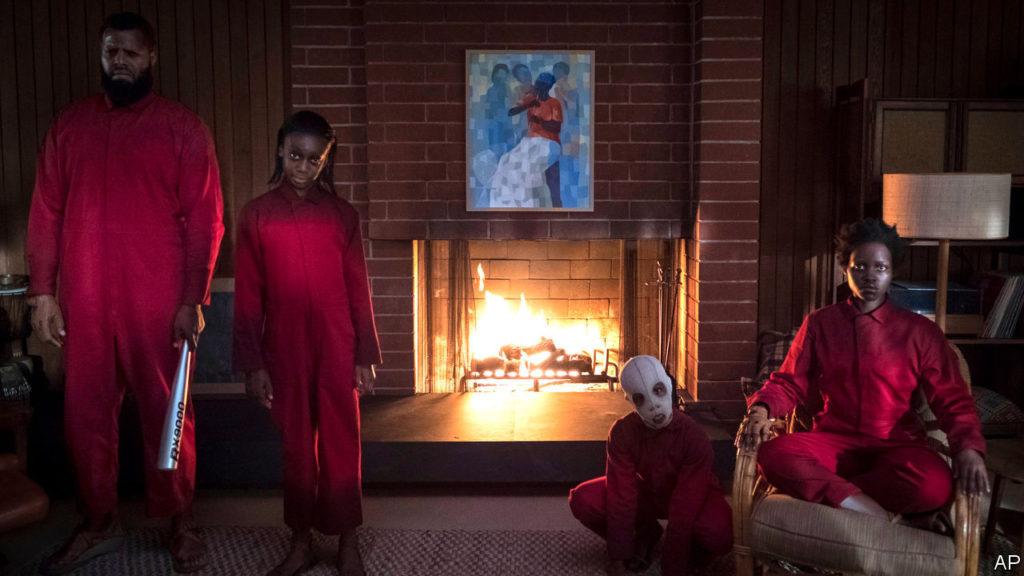
Us Is a Terrifying Yet Thought-Provoking Horror Film

Written by , Posted in Blog, Movie Reviews, Pop Culture

Part of what made Jordan Peele’s directorial debut Get Out such a treat was the way it defied typical genre expectations, throwing practically everything and the kitchen sink at its audience. As a more traditional horror film, Us feels practically tame by comparison, offering scares that wouldn’t seem out of place in an entry into the Halloween or Nightmare on Elm Street franchises. For a director as innovative as Peele, the confines of staying within horror’s established norms might feel constraining, but the talented director has a way of captivating with whatever material he chooses to work with.

Peele takes something as benign as a carnival funhouse mirror and turns it into an object of apprehension. Adelaide is a girl haunted by her experience of walking into one late one night, discovering something that felt like more than a reflection. Years later, with a loving family, she finds herself continually reminded of the night, fearful of repeating the terrifying events.

Us is the kind of film that demands a lot from its actors, with each tasked with playing the doppelganger version of their characters. Lead actress Lupita Nyong’o handled this job exceptionally, carving out distinct identities that played well against each other. Nyong’o is a very expressive actress, often using gestures and expressions to convey emotion rather than simple words. The film’s child cast, including Madison Curry, Ashley McKoy, Shahadi Wright Joseph, and Evan Alex give strong performances that demonstrate a refreshing sense of comfort for young talent in a horror film.

While Peele is an Oscar-winning screenwriter, he uses dialogue sparingly throughout much of the film. The subtle score and expressive actors often carry the suspense, without a ton of screaming or verbal panic to convey the fear. The sets are crafted in a way that creates natural claustrophobia as the characters try to navigate the evil plaguing their home. It’s the kind of horror that creeps under your skin by disrupting one’s own notion of comfort.

As a genre, horror often has a tricky relationship with the concept of exposition. The mystery of the terror is often a big part of the scare appeal, especially since the audience can substitute their own worst fears in the void of the unknown. Efforts to explain figures like Michael Myers or Jason Voorhees often fall flat as the characters are terrifying enough with only minimal backstory. Us manages to dive into the why without losing any thrills, highlighting Peele’s talent as a storyteller. He lets the audience behind the curtain long enough to get a feel for what’s happening, while preserving plenty of the intrigue.

Us is a terrifying sophomore effort from director Jordan Peele, offering a thought-provoking perspective on the horror genre. Slasher movies don’t necessarily need to provide much fodder for the mind, but Peele reminds us of the power that film possesses to re-evaluate the way we think about the world. Us is the kind of movie that will thoroughly frighten you while leaving plenty of substance to chew on when the thrills have worn off.

Wednesday

20

March 2019

0

COMMENTS

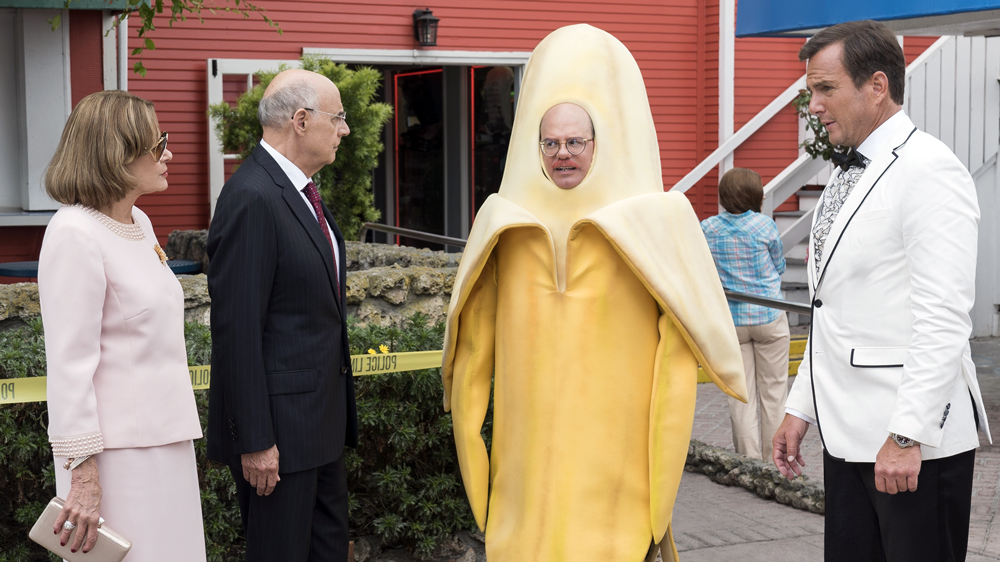
Arrested Development’s Fifth Season Is an Embarrassment to Its Legacy

Written by , Posted in Blog, Pop Culture, Reviews

Flawed as it was, season four of Arrested Development set the baseline for TV revivals in two important ways. The most prominent criticisms of the follow-up installment to the Bluth saga tended to revolve around the season’s drastically different tone from the original run as well as the lack of main characters on screen at the same time. Season five sought to rectify these issues, with results that make you wonder if the saga of the Bluths is simply too tired to continue.

Arrested Development has always been a plot-centric show, which was quite unusual for comedies when it first aired in the early 2000s. After a decade of so-called “peak–TV,” the format is far more common, which perhaps evaporates any brownie points the show could earn simply through its sheer complexity. Season four, with its fractured narrative, was hard to follow even if you were trying quite hard to piece together the events initially presented out of chronological order.

Season five, split into two eight-episode installments, the latter of which dropped last week, runs into a different problem. It’s still very confusing, a point the show seems well aware of, extensively using narrator Ron Howard to explain the plot mid-episode. The plot is also difficult to follow for the simple reason that it’s not very interesting or funny. Complexity is especially challenging when the viewer lacks an incentive to engage with the material. You can piece together the puzzle, but there’s no real payoff at the end of it.

The jokes are few and far between. There are an awful lot of gay jokes present, which might have been amusing to a general audience back in 2002, but seem weirdly out of place on a show once praised for its writing. Tobias’ Mrs. Featherbottom routine is similarly overused, lacking moments where humor is even suggested to be conveyed. Even the sharp-witted matriarch Lucille Bluth’s signature one-liners fall surprisingly flat, despite Jessica Walter’s immense talent as an actress.

The acting is serviceable, as expected with an A-list cast. Tony Hale, appearing in far more of the second half of season five than the first, is perhaps the standout Bluth, making the most of Buster’s time at the center of the narrative. Jeffrey Tambor, marred in scandal after being fired from Transparent for sexual harassment accusations as well as admitted verbal abuse of costar Jessica Walter, looks uncomfortable in the dual roles of George/Oscar. The show would have been better off simply cutting him from the show, as his presence sours an experience that’s already pretty lackluster. Portia de Rossi, who retired from acting before season five, is limited to a cameo appearance in the second half.

While the first half of season five was marred by overuse of green screens used to create the illusion that the Bluths were in the same room, the final eight episodes are far more convincing. There is a lingering distraction caused by the idea that practically every scene needs to be examined for editing, but the show does a good job of at least presenting the idea that its cast members are physically in the same space. As weird as it feels to compliment a show for that simple feature, this issue has been a persistent problem for Arrested Development since its revival.

Television has evolved considerably since Arrested Development first premiered. Single camera comedies have become more of the rule than the exception. Somewhere along the way, a show once praised for its quality writing became complacent, content to rest of the laurels of gags that debuted more than a decade ago.

Absent is any sense of urgency driving the wit. Some of the show’s best moments came from season three, when Arrested Development increasingly embraced gallows humor in the face of imminent cancellation. The threat of no additional seasons has been replaced by the sad feeling of watching a once great show tarnish its legacy with lazy follow-ups. Season five proved that Arrested Development could imitate its glory years, but the Bluths don’t seem to have anything funny left to say.

Monday

18

March 2019

0

COMMENTS

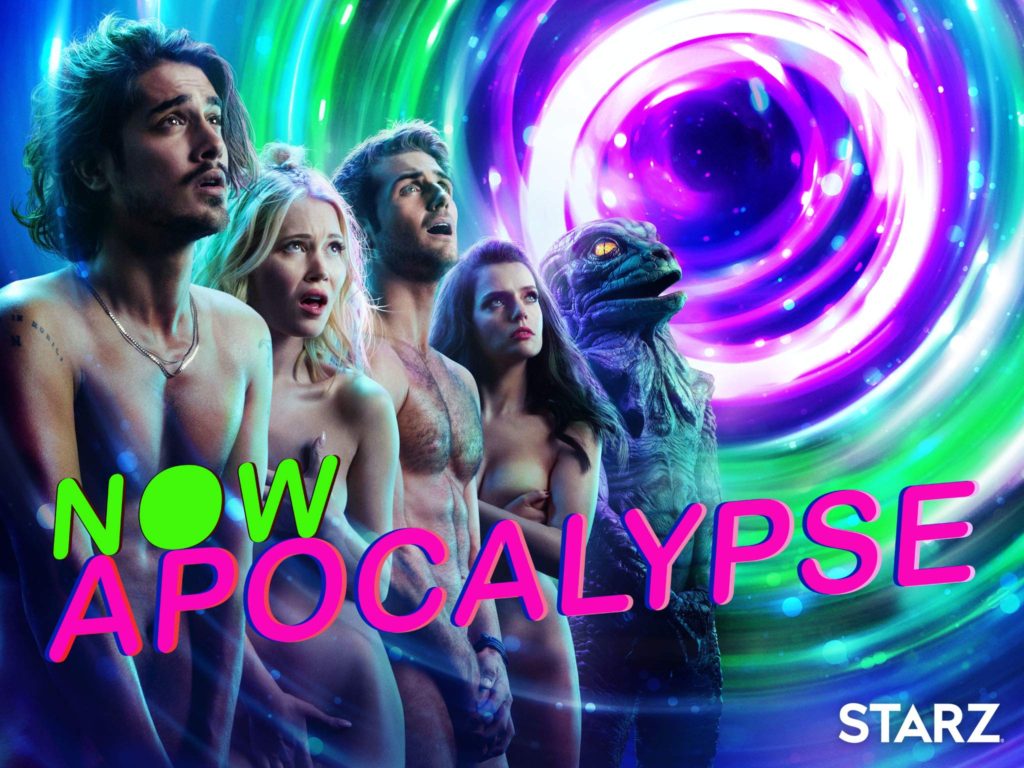
Now Apocalypse Finds Amusement in Familiar Territory

Written by , Posted in Blog, Pop Culture, Reviews

The idea of yet another half-hour comedy about millennials in Los Angeles deserves an eye-roll no matter the quality of the show itself. The trope of being affluent and sad has been more than thoroughly fleshed out over the past decade. While Starz’s new series Now Apocalypse hardly reinvents the wheel, the show’s colorful aesthetics and charming cast make for a worthwhile experience.

Crafted by filmmaker Greg Araki, whose films were at the forefront of the New Queer Cinema movement of the 1990s, Now Apocalypse follows a group of twenty-somethings in Los Angeles, searching for meaning while smoking tons of weed and having lots of sex in the process. Ulysses Zane (Avan Jorgia) can’t shake the idea that something spooky is going on in the world as he’s repeatedly ghosted by a prospective fling. His roommate Ford Halstead (Beau Mirchoff) is trying to find a connection with his sort-of girlfriend Severine (Roxanne Mesquida) as he tries to make it as a writer, constantly struggling to survive the confines of the hookup culture which hardly rewards any genuine expression of emotion. Rounding out the main cast is Carly (Kelli Berglund), an actress who moonlights as a cam girl to make ends meet.

The supernatural undercurrents in Now Apocalypse play a backseat to general millennial stereotypes in the first few episodes, much to the show’s detriment. The scripts are quite clichéd, without the expected satire the premise seems to be going for. Cell phone dating apps have been around for years, spearheading the modern day hookup culture, but television as a whole hasn’t figured out much to say about it other than that being ghosted understandably sucks.

And yet, there’s something oddly alluring about Now Apocalypse. The show handles its numerous sex scenes gracefully, including gay and polyamorous hookups, and not as exploitative in service to a larger plot point. The main cast is eminently likable despite the lack of originality in their characters. Jorgia and Berglund are quite relatable as dreamy young souls trying to find their place in an unforgiving city. Mirchoff, essentially riffing off his previous role as Matty McKibbin on MTV’s Awkward, manages to garner sympathy even as a privileged jock who finds good fortune at every turn.

Quite simply, Now Apocalypse is a lot of fun. Like the actors, the sets are gorgeous to look at. The episodes are well-paced and always seem to leave you excited about what’s going to happen next. The show slowly ups its ante on absurdity without bogging down the rest of its narrative. It’s rare for a show to introduce a concept like sex-crazed lizards and get away with not immediately addressing them in the following episode, but Now Apocalypse keeps flowing without any pressing urgency.

It’s hard to say what kind of show Now Apocalypse will be moving forward, assuming it builds on the paranormal introduced early on. For now, the show is quite a fun ride, well worth a binge on a lazy day. It doesn’t exactly break a ton of new ground, but the cast is enjoyable enough for that not to be much of a concern. Starz has carved out an impressive niche of offbeat half-hour programs, and Now Apocalypse is a fine addition to its lineup.