Ian Thomas Malone

Pop Culture Archive

Tuesday

22

January 2019

2

COMMENTS

Free Solo Presents a Balanced Portrait of Alex Honnold’s Superhuman Life

Written by , Posted in Blog, Movie Reviews, Pop Culture

A documentary about an athlete like Alex Honnold faces an inevitable, and somewhat unattainable, objective beyond its purpose as a film. The question of why anyone would ever free solo when the stakes are literally life and death persists long after the audience is forced to accept the idea that there isn’t going to be a satisfying answer. Fortunately, Free Solo found plenty of alternative courses that depict its subject in a way that effectively circumvents the core of the mystique.

Honnold has been making headlines for a little over a decade for his free solo feats, rock climbing without a rope, but Free Solo sets its sights on a more intimate scope. The buildup to Honnold’s climb of Yosemite Valley’s El Captain, to be the first person to free solo the immensely difficult formation, gives the film a sense of purpose beyond a mere biopic. Directors Elizabeth Chai Vasarhelyi and Jimmy Chin cover many aspects of Honnold’s life, but the film constantly returns to El Captain, allowing the historic nature of the achievement to serve as a placeholder for any notion that the audience might begin to understand why anyone would want to embark on such a perilous adventure.

Free soloing is not without its detractors, who worry that climbers like Honnold are not only recklessly risking their own lives, but also inspiring others to do the same. The film never paints Honnold as a hero or a role model, despite the obvious cozy relationship the directors enjoyed with their subject. Honnold is immensely likable, an awkward individual without an ego one might expect from his stature, but he’s also clearly not someone meant to be emulated. He’s a singular force of nature, one whose predecessors in the field of free soloing have pretty much all met grim fates. Free Solo manages to celebrate his career while constantly flashing big “don’t try this at home” warnings to the audience, best illustrated through a montage of deceased free solo climbers who lost their lives in pursuit of their passions.

The directors do an excellent job explaining the fundamentals of rock climbing to the audience, as well as the particulars that make El Captain such a monstrous wonder. Capturing Honnold’s climb in progress was an impressive feat itself. Featuring the crew in supporting roles allowed Free Solo to give an added sense of gravity to the journey, as it’s clear that all care about Alex on a deeper level than their obligations as filmmakers.

The film dedicates a large portion of its runtime to Honnold’s love life, which was deliberately presented as nonexistent in one of the first scenes but gradually blossoms over the course of the narrative. Honnold’s girlfriend Sanni McCandless is put in an unusual position for a documentary, in many ways functioning as the film’s antagonist by token of her understandable apprehension toward free soloing. The complexities of their relationship give Free Solo a sense of personal depth that might otherwise be missing, as Honnold is less than forthcoming about the motives behind his wildlife.

At times, their relationship does appear to be used as a plot point, exacerbated by the fact that they started dating after the narrative began. McCandless’ reservations are also contrasted by Honnold’s mother, who takes a completely non-interventionist approach to his free soloing. As the film progresses, it’s clear that her feelings serve as a suitable conduit for the larger issue of why anyone without an apparent death wish would keep attempting such dangerous feats. Honnold seems unbothered by the sentiment, even as he ages and adds more real-world stakes to his life. After a while, the film does an effective job convincing the audience that such motives need not be explained.

Free Solo captures one of the greatest athletic feats in history while never losing sight of its much more human subject. There is a lot to admire in Alex Honnold’s achievements. He makes for a fascinating film subject, a kindhearted man who has dedicated his life to his dreams. There is a real-world danger in idolizing his career, as free soloing often leads to perilous results. Directors Chai Vasarhelyi and Chin crafted their film responsibly, showcasing Honnold’s superhuman talents while making clear that admirers should not leave the film hell-bent on free climbing up the first large object they see.
Tuesday

15

January 2019

0

COMMENTS

Mahershala Ali Brings True Detective Back to Form

Written by , Posted in Blog, Pop Culture, Reviews

The TV landscape has changed quite a bit in the half-decade since True Detective’s debut in 2015. The novelty of seeing big Hollywood names on the small screen has diminished in the wake of new series featuring A-list talent such as Reese Witherspoon, Meryl Streep, Julia Roberts, and Michael Douglas. “Peak TV” exists as much as a cliché as a universal truth in this current era. There are more good shows on right now than anyone, even critics, has actual time to watch.

True Detective has always embraced the slow burn, a concept increasingly harder to sell in this bloated environment. After squandering much of its cultural capital on a forgettable second season, the show finds itself needing to balance suspense with the notion that its audience doesn’t necessarily need to accept that anymore. Mystique is an increasingly tougher sell, especially for week-to-week series.

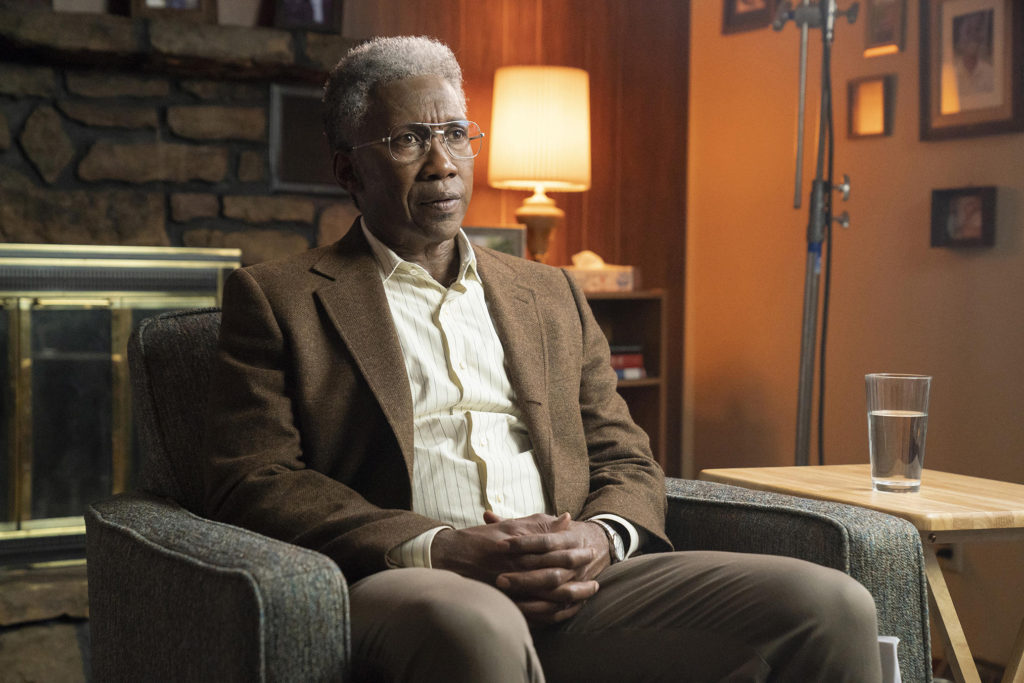
Casting Mahershala Ali in the lead role was perhaps the best decision the show could have made. Ali has the power to mine intrigue from the mundane, an expressive actor capable of playing the same role across three time periods in a way that makes each feel fresh and unique. We don’t learn all that much about his character, Wayne Hays in the early episodes, but he plays the minimalism to his advantage. His ability to captivate in each scene makes the episodes fly by in a way that was sorely missing from season two.

The time jumps also provide some interesting commentary on the nature of America’s current cultural obsession with true crime series. Unsolved crimes, particularly ones involving children, remain alive years after their cases have gone cold through podcasts and Internet message boards. The unsettling nature of these heinous acts exists in a puzzling contrast with their status as entertainment symbols, something that essentially applies on a broader scale to fictional series like True Detective that deal with brutal murders.

Season three marks a return to form for True Detective, even if though it fails to reach the highs of its freshman effort. America seems less enthralled by anthology series in recent years than it has in the past, perhaps an inevitable development for a medium pushing its saturation point. A strong performance from Mahershala Ali keeps things interesting enough to wash the stink of season two away, even if the series isn’t likely to capture the country’s attention in quite the same way again.

Monday

14

January 2019

0

COMMENTS

Mary Poppins Returns Is a Worthy Successor to a Timeless Classic

Written by , Posted in Blog, Movie Reviews, Pop Culture

For decades, the idea of a Mary Poppins sequel seemed completely sacrilegious, a notion undercut by the current climate of reboots and reimaginings.  Perhaps the only surprise is that Mary Poppins Returns took fifty years to come to fruition. Disney appeared aware of the delicate nature with which one must approach a return trip to Cherry Tree Lane, crafting a film that paid homage to its predecessor while simultaneously doing its best to put some healthy distance between the two.

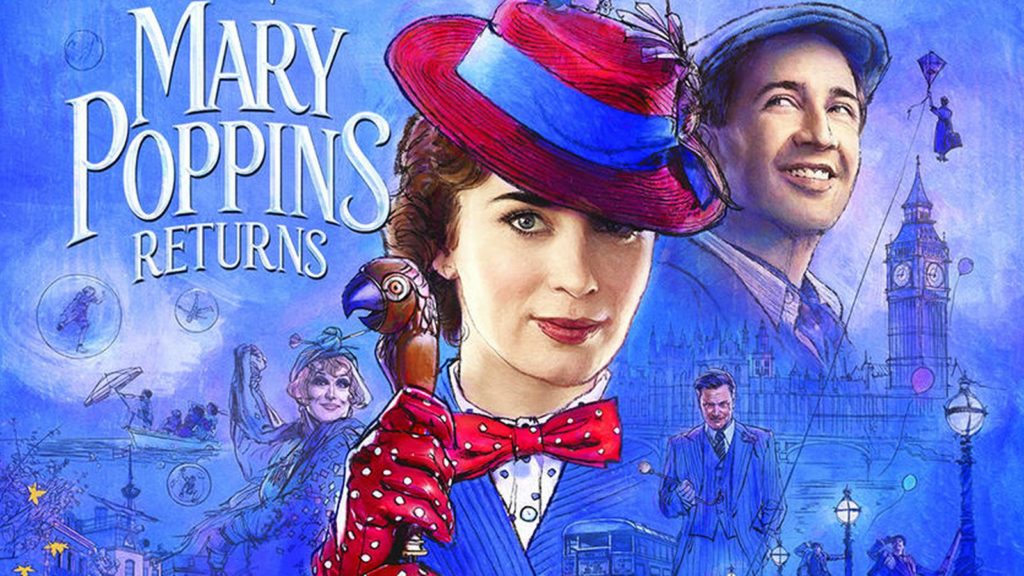
Julie Andrews’ performance as the magical nanny is one of the most iconic in film history. For all the ways that Emily Blunt appeared destined for failure in taking such a daunting task, she rather effortlessly makes quick work of any notion of comparison early on. Quite literally, Blunt’s Poppins hits the ground running, exhibiting great comfort in the role. The choice to set Returns twenty-five years after the original gave room for Blunt to play the ageless character with a greater sense of reserve than Andrews, while maintaining the quirky sense of confidence that has made the character so endearing for all these years.

A big part of Blunt’s effectiveness is her reluctance to play on the audience’s inevitable nostalgia. She remains ever-faithful to the character while never stooping to the level of impersonation. As much as Mary Poppins has remained Julie Andrews’ over the decades, Blunt transforms her into an entity similar to James Bond, a character with traits the audience expects and others that are open to interpretation.

The supporting cast eases Blunt’s burden with energetic performances that keep the audience smiling from one musical number to the next. Lin-Manuel Miranda’s charm is quite contagious, wearing such an authentic smile on his face throughout the film that you can’t help but share in his obvious joy. Colin Firth does an excellent job as the ruthless banker William “Weatherall” Wilkins, whose efforts to repossess the Banks’ home serves as the film’s primary conflict. Jeremy Swift, best-known for his role as the Dowager’s prickly butler Spratt on Downton Abbey, delivers a delectably sinister performance as Wilkins’ eager enforcer Hamilton Gooding, aided by his softer counterpart Templeton Fyre, played by Kobna Holdbrook-Smith.

Mary Poppins Returns demonstrates a careful deployment of its title character, who largely plays a backseat role in the primary conflict between the Banks family and Wilkins. Ben Whishaw and Emily Mortimer deliver compelling performances as the grown-up Michael and Jane, while the film’s child actors anchor the dramatic tension. Many sequels make the same mistake of doubling down on the assets that made the original so memorable, but Mary Poppins Returns exercises considerable restraint, making each of the Poppins-centric scenes are the more memorable in the process.

The biggest flaw of the film is its run time, which goes on about a half hour more than it probably should have given the simplicity of its primary objective. As a result, the second act drags its feet a bit in service to an entertaining yet unnecessary cameo by Meryl Streep. The musical numbers fail to reach the iconic status of the original songs, but deserve a lot of credit for their originality.

Mary Poppins Returns delivers a delightful experience that crafts its own magic while remaining faithful to its source material. Disney held itself to the highest standards, never content to settle for a cheap cash grab. The production values and the performances make for a highly entertaining movie-going experience well-worth the trip to the theatres.

Monday

14

January 2019

1

COMMENTS

A Strong Performance by Jodie Whittaker Makes Adult Life Skills a Worthwhile Experience

Written by , Posted in Blog, Movie Reviews, Pop Culture

The subject of growing up has been explored by countless indie movies, trodden well past the point of cliché. Practically every week a new film pops up promising to offer insight on the dilemma of what it means to be young and sad, unable to skirt by on the strength of one’s own quirks. Adult Life Skills takes on a similar mandate, exploring the stranglehold that grief can wield over one’s sense of direction.

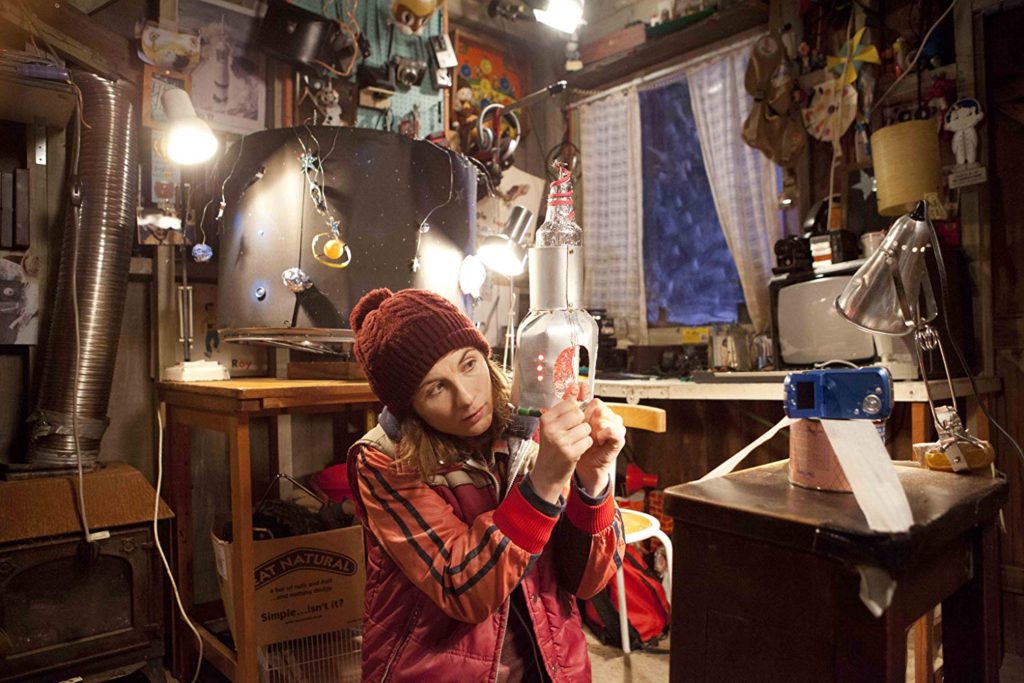
Anna’s life is a mess. Her primary method of grief management following her brother’s death is sitting in her mother’s backyard shed making videos of her thumbs discussing existential dread. Not much of a life, but that’s the kind of position tragedy can thrust a person toward, perpetuating the status quo long past its expiration date. It can be quite hard to move on when you don’t have a clue where you’re going.

Quite unlike her character, lead actress Jodie Whittaker has proven up to the task for whatever direction her career has taken her, demonstrating a remarkable range between stints on Broadchurch and as the first female doctor on the long-running Doctor Who. Whittaker makes up for a script that paints Anna as sympathetic but not particularly compelling by honing in on the subtle moments in each scene, adding a layer of depth to the cookie cutter protagonist. Her ability to weave through the nuanced nature of grief practically sustains the narrative all on its own.

Not a lot happens in Adult Life Skills, but the film plays its simple plot to its advantage. A lot of indie films take lost protagonists and string them about for ninety minutes until a chance occurrence provides enough of an aha moment to function as a climax. Coming of age films don’t necessarily offer conclusions in the typical cinematic sense, as you can’t really win at life in the same way as you can defeat a giant three-headed monster. Adult Life Skills never loses sight of its premise, delivering a satisfying resolution that doesn’t call for unnecessary helpings of suspension of disbelief.

The film is not without a few drawbacks. Aside from Whittaker, child actor Ozzy Myers (in his debut performance according to IMDB) gives the film’s only other compelling performance. Most of the characters fall more into the category of forgettable than terrible, but Brett Goldstein delivers an immensely irritating performance as Brendon, an awkward real-estate agent who drags down each scene with cringe-worthy dialogue.

Adult Life Skills makes up for its lack of originality on the strength of Jodie Whittaker’s performance. Fans of hers will find plenty to like in the way the film allows her to showcase her talent for the entirety of the brisk runtime. Not every film needs to reinvent the wheel. Many sink under the weight of their outstretched ambition. The subject of millennial angst remains a popular topic for film to explore, often promising answers the screen can’t possibly deliver. Movies like Adult Life Skills succeed in celebrating the mundane, encouraging their audiences to take each step at a time.

Friday

4

January 2019

0

COMMENTS

Vice Doesn’t Know What to Say About Dick Cheney

Written by , Posted in Blog, Movie Reviews, Pop Culture

Adam McKay achieved a seemingly impossible task with his previous film The Big Short in crafting a narrative about the financial meltdown that was both entertaining and easy to understand for the general public. The life of Dick Cheney presents similar issues, an unlikable man who has hardly lived a life that followed any semblance of a hero’s journey, carving his place in history by operating in the shadows of power. While Cheney rarely relished the spotlight during his tenure as vice president, Vice can’t function behind the closed doors of Washington.

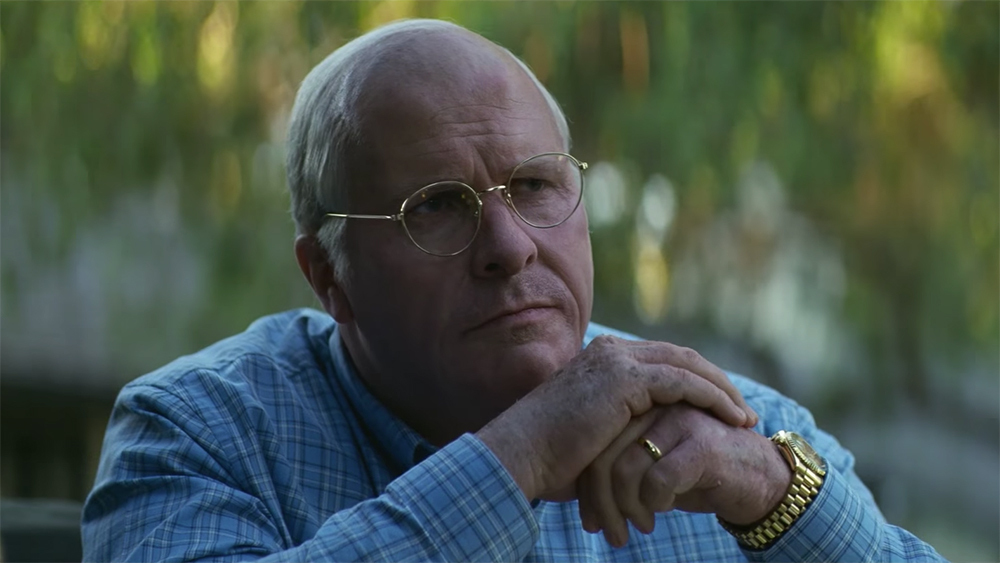
Christian Bale nails the peripherals of a Cheney impersonation. He looks and sounds just like him, but there’s little life beneath the prosthetics. The “Darth Cheney” characterization was at least in part inspired by the public’s lack of understanding of the grander motives behind the man beyond a drive for absolute power. Neither McKay nor Bale demonstrate any further clarity on that subject and it shows. The result is a robotic performance with nothing substantive to help illustrate the mystery.

As lifeless as Bale’s Cheney is at times, the performance never becomes a distraction throughout the film. The same cannot be said of Steve Carrell’s turn as Cheney’s mentor Donald Rumsfeld, the architect of the Iraq War. Secretary Rumsfeld’s outspoken personality lends well to parody, but Carrell never feels comfortable in the role. He looks the part, but he never acts with the suave sense of confidence that defined Rummy throughout his controversial career. The voice is perhaps the biggest issue. Not only does Carrell not sound like Rumsfeld, he distinctly always sounds like Steve Carrell, an unnecessary diversion that constantly feels like he’s guest hosting Saturday Night Live rather than trying for an Oscar nomination.

McKay seems aware of the potential for distraction in other characterizations, keeping a fictionalized President Nixon off-screen entirely and limiting President George W. Bush to a few pivotal scenes, even though Sam Rockwell plays a pretty competent Dubya. Amy Adams delivers the most compelling performance in the film as Lynne Cheney, perhaps the only character with a clear sense of motive. Too many characters in the film exist solely for exposition sake, awkwardly dropping summaries of key events into casual conversations even though McKay has a narrator and plenty of text to do the explaining for him.

Vice suffers from an overstuffed narrative that never demonstrates a clear sense of direction, meandering from point to point with little continuity to tie everything together. Cheney’s time as VP is almost entirely defined by the Iraq War and the controversial “enhanced interrogation” methods he championed. Perhaps the biggest problem with the film is that it treats the entirety of the Bush administration as an afterthought, dedicating surprisingly little time to covering his most consequential era. Cheney’s motives for the war are only lightly explored, an issue perhaps exacerbated by the omission of his time as Secretary of Defense, where he oversaw the First Gulf War. To Cheney, Saddam Hussein is painted in Vice as a means to an end for the exercising of absolute executive power, a lazy explanation that ignores much of the nuance and conflicting power centers at the heart of the decision.

Mary Cheney’s homosexuality is given almost as much screen time as the war, a puzzling decision that falls flat by its narrative conclusion that barely involves the VP at all. Biopics cannot provide a full picture of anyone’s life, but Vice seems far too content to squander its runtime on arbitrary chapters of Cheney’s life that no one will talk about when his obituaries are eventually written. This situation is exacerbated by the complete and utter indifference that McKay displays toward presenting anything resembling a conclusion for his film.

Vice lacks a core thesis behind its gorgeous aesthetics. The film is never boring, as its beautiful sets and excellent cast always keep things moving along. Its subject will go down as one of, if not, the most powerful vice presidents in American history. Unfortunately and inexcusably, this biopic can’t seem to find much of anything to say about the life trajectory of a man who went from being a drunk college dropout to the architect of the modern military-industrial complex.

Monday

31

December 2018

0

COMMENTS

Aquaman Squanders Jason Momoa by Overstuffing Itself at Every Turn

Written by , Posted in Blog, Movie Reviews, Pop Culture

The stakes for Aquaman are far more arbitrary than they seem. We can say that some mandate existed to “save” the mess that is the DCEU, but this notion is completely undercut by the fact that the movie makes almost no mention of its connected universe. A viewer could sit down in their seat with no knowledge that this film is Jason Momoa’s third go-around as Arthur Curry and leave never wondering if there had been life before Atlantis. Aquaman didn’t need to save anything other than the sea.

With the stink of the moody incoherent Justice League washed away, Aquaman sets a far more jovial tone. Unlike Ben Affleck, Jason Momoa constantly looks like he’s enjoying himself in his role, playing the half-human/half-Atlantean with a kind of contagious glee. His charm is up and away the film’s strongest asset, allowing the film to play up its hero’s inevitable campy moments in a way that preserves some grace in self-parody. The film is desperate to be in on the joke rather than the butt of it, a fate that has befallen every other DCEU release save for Wonder Woman. There is plenty of laughter to be had in Aquaman, though some of it appears quite unintentional.

Momoa’s enthusiasm serves an excellent deflection from a subpar script that seems to take its cues from the 1970s Super Friends cartoon instead of Zack Snyder’s DCEU offerings. Sometimes the dialogue is naturally funny, but often the laughter comes from cringe-worthy camp moments that make you wonder how a major studio approved such lackluster writing. As a superhero, Aquaman has lived for decades with a reputation for being pretty lame, with Momoa’s natural sense of swagger serving as a great counterbalance that’s too often undercut by a script that rarely does him any favors.

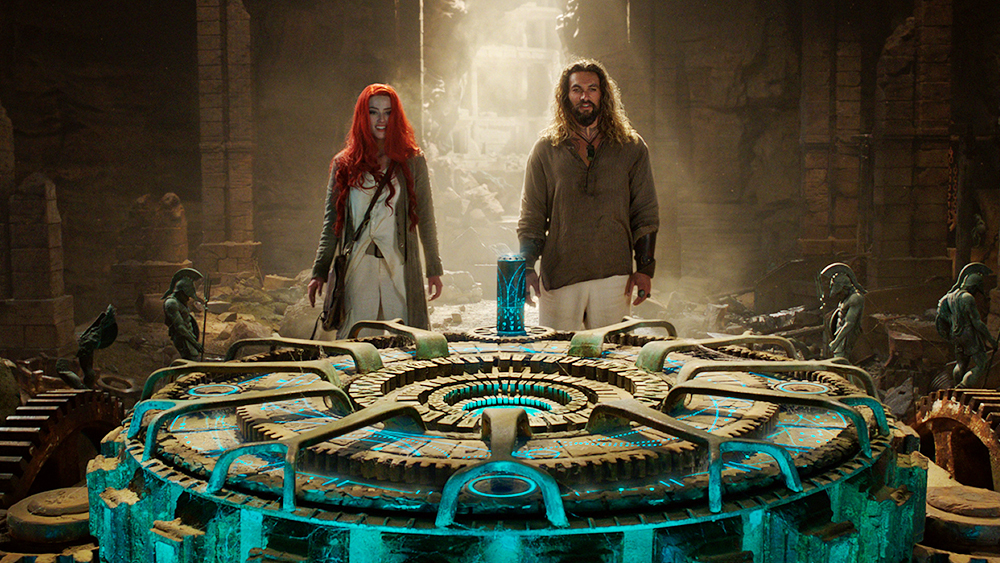
The film’s larger plot barely earns a passing grade for coherence, but Aquaman is weighed down by a few too many subplots. The opening sets up Black Mantra, played by Yahya Abdul-Mateen II, as the villain only to discard that notion early on in favor of a multi-tiered approach. Patrick Wilson never seems fully confident in carrying the role of antagonist as Arthur’s brother Orm Marius, who’s desperate to unite the various ocean kingdoms to fight back against land dwellers and all their pollution. As if two villains weren’t enough, Dolph Lundgren also hangs around as Nereus, king of Xebel and father of Arthur’s primary love interest Meera, played by Amber Heard. None of the bad guys are particularly memorable, largely because there isn’t enough time to go around between all the various rabbit holes director James Wan wants to play around in.

The bloated runtime serves as the film’s fatal flaw. Aquaman is far too long, constantly undercutting its charm in service to derivative action sequences that lose all appeal by the third act. Some of the film’s fight scenes are truly impressive in nature, but others look lifted off a Power Rangers battle. Wan squanders any goodwill on that front by stuffing far too many battles into the film, turning any camp factor from humorous to tedious.

Aquaman is very entertaining at times. If its narrative hadn’t been so overstuffed with needless subplots and excessive action sequences, it very likely would have made for an excellent superhero film. Instead, it settles for being the second best DCEU release, an accolade it was practically predestined for by token of not being a depressing slog. It is still a chore to get through in one sitting. Thorough editing could have saved this film from a fate similar to the “so bad it’s moderately entertaining” legacy of Joel Schumacher’s Batman & Robin, which exiled the caped crusader from the big screen for almost a decade. Aquaman is a marginal improvement for the DCEU, but it should have been so much more.

Wednesday

26

December 2018

0

COMMENTS

The Favourite Is a Timely Feminist Treatise on Power

Written by , Posted in Blog, Movie Reviews, Pop Culture

Feminism is an especially rich subject to explore in period dramas for many reasons. The blatant injustices of earlier eras shed light on our current climate, where inequality continues to thrive. The crimes of the aristocracy extend far beyond sexism, as the near complete absence of any sense of upward mobility dictated that one’s life circumstances were almost always determined by external factors other than free will. If we take feminism at its root definition, to strive for equality of sexes, empowering women in period dramas means freedom to be as ruthless and manipulative as their male counterparts.

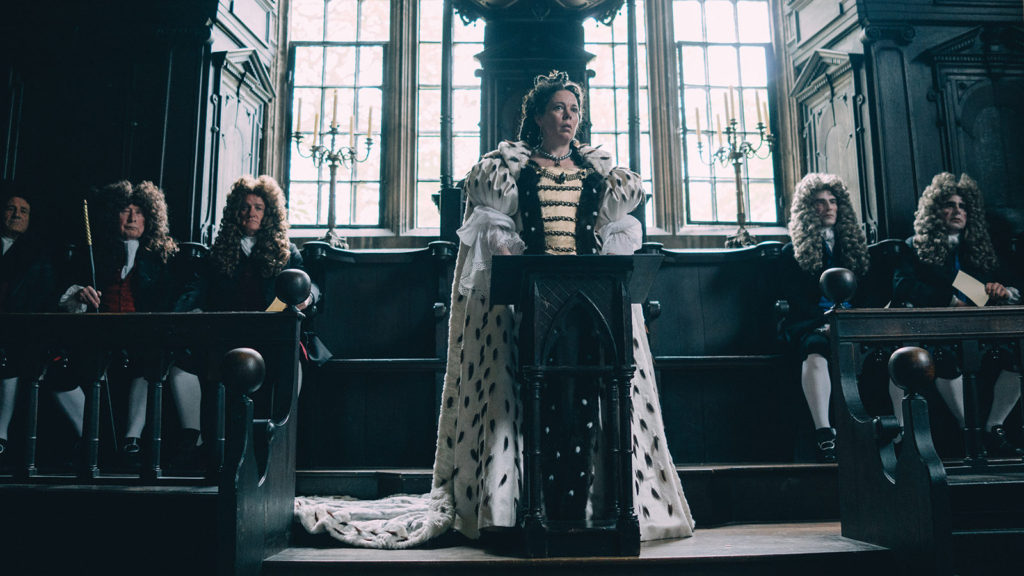
The Favourite is a film about power. Olivia Colman’s Queen Anne is a monarch whose ability to wield all that ruling entails is largely dictated by the political machinations of those around her. Hindered by a variety of ailments, Queen Anne’s lover Sarah Churchill, played by Rachel Weisz, tries to govern in her steed. Standing in the way of her proxy rule is Robert Harley, played by Nicholas Hoult, who objects to war with France and all the taxes it entails.

Emma Stone gives perhaps the finest performance of her career as Abigail Hill, who comes to court in squalor after her father squandered her family’s standing and security. Finding work as a scullery maid, Abigail quickly demonstrates that she’s not looking for handouts, but rather opportunities to reclaim that which she lost through no fault of her own. She bonds with Sarah, wrestles with Robert, and plays the games she needs to play in order to survive in a world that offers few second chances.

The film plays out largely like a stage play with a fairly minimalist approach to set locations and relying on the inter-character drama rather than the history to propel the native. The cast is spectacular, vibrantly playing off each other with such delight that you completely forget what terrible people the characters are. The Favourite lacks a true protagonist, but you can’t help but root for Abigail as she plots her way back into society.

Director Yorgos Lanthimos consistently makes his presence known throughout the film, utilizing unconventional angles and cutaways that complement the sharp dialogue in practically every scene. The Favourite never forgets that it’s a period drama, but it uses the genre as a playground of sorts, constantly bending the rigid confines of what we expect from characters in corsets. Like many of his other films, Lanthimos uses humor not as satire, but as a way to butter up his audience before delivering the cold truth about the nature of humanity.

Colman solidifies her status as one of England’s finest working actors, playing the sickly Queen Anne in a way that garners sympathy without making her out to be a victim. Vulnerability and power often seem incompatible, as if the presence of one can cancel out the other. Queen Anne is used by all the other principle characters, but Colman displays a subtle sense of strength to perpetuate the idea that she’s never incapable of reclaiming her sense of authority.

The Favourite is an uncomfortably empowering feminist film, allowing its female characters to strive for an equal sense of malice and cruelty. These characters are oddly endearing in their awfulness, unafraid to be unabashedly evil in the absence of any standard of morality. Power exists out the binary of right and wrong despite what we’re taught as children. We’re not supposed to take pleasure in being evil, but film presents a reality adjacent to our own, one where such problematic charms from a talented cast can be embraced as good theatre without any broader ramifications. The Favourite makes its period setting feel completely contemporary, unabashedly stripping power down to its raw carnal form.

Wednesday

12

December 2018

0

COMMENTS

Girl Is an Irresponsible Exploitation of the Transgender Body

Written by , Posted in Movie Reviews, Pop Culture

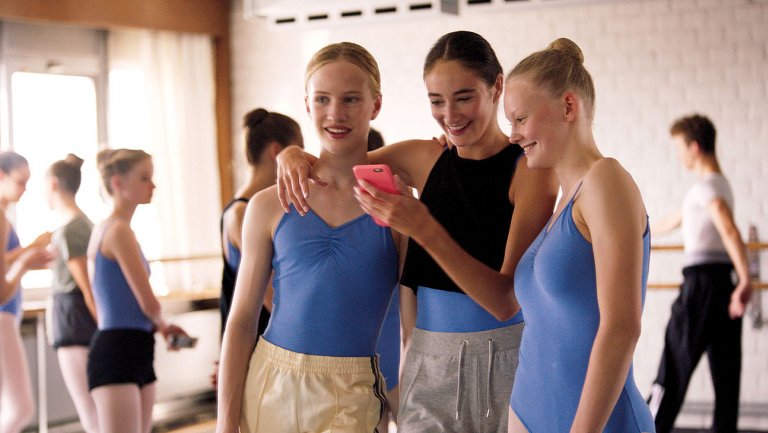
Since its success at the 2018 Cannes Film Festival, Belgium’s Girl has been causing quite a stir. Director Lukas Dhont has been criticized for his casting of a cisgender male as the teenage transgender ballerina Lara, a longstanding point of contention for films depicting trans narratives. The cisgender casting may have attracted the most controversy thus far, but Girl’s biggest red flag is Dhont’s flagrant obsession with the deterioration of Lara’s genitals.

Lara, played by Viktor Polster in his film debut, is a passionate young teenager eager to pursue her dancing at a top academy while trying to live a life unhindered by the prejudices toward her gender identity. She has a loving father, supportive instructor, and caring medical professionals but encounters discrimination from her peers and, in one bizarre instance, a professor who outright polls the female members of their class regarding their comfort toward Lara in the middle of a lesson. As cringe-worthy as that moment sounds, it’s just the tip of the iceberg for Lara’s downward spiral.

In many ways, Lara isn’t really the main character in Girl. Lara’s crotch is a much more potent force that Dhont seems hellbent on featuring at every possible moment. The film features multiple scenes of Polster’s teenage penis in plain view and several close-ups of his pubic region that’s been bloodied by Lara’s excessive taping. Any narrative value of these scenes dries up by the third go-around, leaving the sense that Dhont is farming the transgender body for all its voyeuristic worth.

Suffering has been a common theme of many, if not most, transgender narratives. Dhont takes Lara’s sadness to extreme degrees, with practically every scene dedicated either to her humiliation or the steady decline of her mental health. This hyper-focus on misery comes at the expense of Polster’s performance, whose range is essentially confined to either very sad or completely despondent. There are a few scattered moments where Polster delivers subtle expressions that showcase his talent as an actor, but the torment is so heavy-handed that it robs him of any chance to leave an impression other than the boilerplate sympathy one should naturally feel toward a teenager that’s in as much visible pain as Lara.

Girl’s timeline deserves considerable scrutiny with regard to Lara’s transition. While hormone replacement therapy is a process that’s highly individualistic in nature, it is never something that happens overnight or even in a few weeks. Based on the start of the semester and a New Year’s Eve celebration toward the end, the bulk of the film appears to take place over a six-month span, the very early stages of HRT. Dissatisfaction with progress is hardly out of the ordinary, but Dhont makes several decisions that demonstrate his fundamental lack of understanding of how transitioning works.

There’s a scene early on that features a consultation for gender confirmation surgery before Lara’s even started hormones, something that makes little sense even before you consider how delicately doctors approach treatment for transgender youth. Lara later learns that her surgery must be delayed due to her tucking, in what would be an absurdly early point for that to even be on the table, especially since her father and therapist were aware of her depression. Realistically, surgery wouldn’t be on the table for years for a teenager like Lara. Fictional narratives aren’t exactly expected to showcase complex issues in a completely authentic fashion, but Dhont plays fast and loose with the details in a way that demonstrates how little he’s interested in portraying even a semi-realistic transition. For Girl, Lara’s bloodied crotch takes precedent over anything else interesting about her identity.

There are critics out there, overwhelmingly cisgender men, who feel that this whole casting controversy is a total non-issue, repeating the adage, “acting is acting.” The trouble with this argument is that it relies extensively on a false utopian sense of society, where everyone exists on equal footing. Much of the overwhelmingly positive coverage of films such as Black Panther and Crazy Rich Asians focused on the authenticity of their inclusive casting. A Fantastic Woman, the incumbent Academy Award Winner for Best Foreign Language Film, earned worldwide praise for its transgender narrative, starring an actual transgender woman. Daniela Vega’s performance in that film captured the hardships of being transgender without focusing on her transition or her genitals.

Girl exists in stunning contrast, a film guided by cisgender voices that never seeks to explore the nuances of the transgender identity, not when it can constantly return to its point of utmost fascination. Dhont claims to have been interested in this project for close to ten years, inspired by a transgender dancer he’s since become close friends with. The trouble is that he never demonstrates any concern for transgender people beyond what you might find from a stranger on Grindr, desperate for a peek of one’s private parts. For years, prominent transgender voices have called for an end to the exploitative trauma porn that defines most depictions of trans people on screen. Instead of elevating transgender characters as people worthy of dignity or respect, Dhont exploits their bodies to his heart’s content. Girl is a deeply dehumanizing film, reducing the transgender identity from a soul to an appendage.

Tuesday

11

December 2018

1

COMMENTS

The Marvelous Mrs. Maisel’s Season Two Is Content to Be Very Good

Written by , Posted in Blog, Movie Reviews, Pop Culture

For those of us who have been Amy Sherman-Palladino fans since the early days of Stars Hollow, the overwhelming success of The Marvelous Mrs. Maisel’s first season came as a victory lap of sorts for a creator who finally achieved the recognition she deserved. The fast-talking period piece showcased all of Sherman-Palladino and her husband Dan’s best talents, a colorful zany world populated by strong women who persevere through their sheer force of will. With all the Emmys it earned, it’s easy to forget that Maisel is not simply the culmination of a career, but the start of a whole new series.

Season two’s early trip to Paris seems like a vacation of sorts for the narrative, taking a moment to bask in its own success. For a show that paints a beautiful portrait of 50s New York City, this season spends much of its time away from the Big Apple, adding a multi-episode trip to the Catskills into the mix. The cast proves charming no matter the location, delivering Sherman-Palladino’s signature dialogue with such delight that it’s hard not to smile while watching.

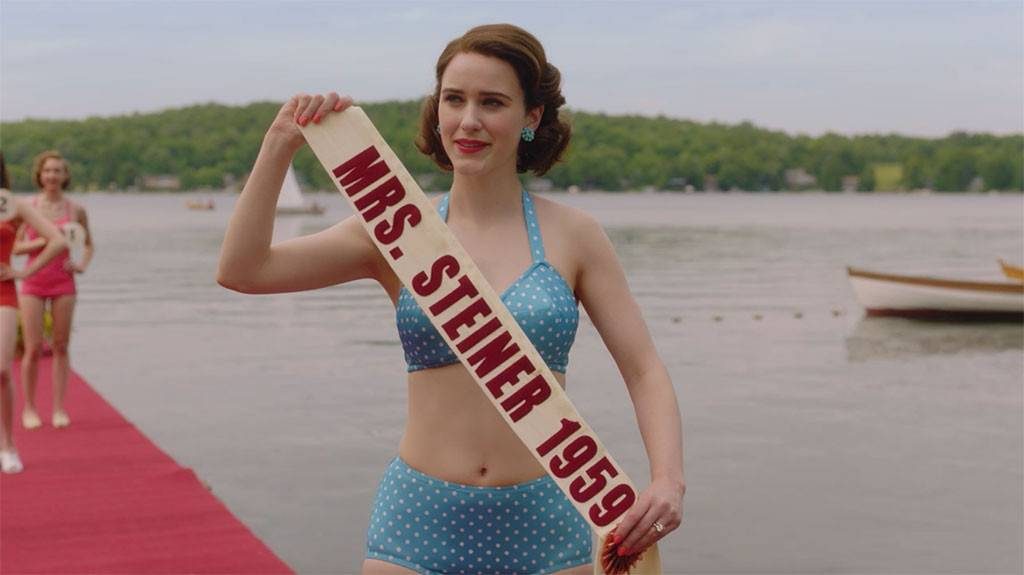
Fresh off an Emmy win for Best Actress, Rachel Brosnahan continues to shine in the title role, wearing the many narrative hats required of Midge Maisel with an uncanny sense of ease. Each scene featuring her standup is a delight. I found myself at the end of each episode only wishing there were more of them.

The Marvelous Mrs. Maisel is never particularly urgent with its narrative. Like other Sherman-Palladino shows, it is fully content to let its characters simply run around in the gonzo realities beautifully crafted by its creator. This strategy is hardly a bad one, but with only ten episodes, the show doesn’t have the pacing luxuries of a network TV offering like Gilmore Girls.

Midge’s ex Joel stands out as the weak part of the season. He’s featured far too often for an unsympathetic character whose role in the narrative is of questionable importance after the first season. This problem is exacerbated by the heightened focus on Midge’s parents, dedicating a sizable arc to their marital problems. While Marin Hinkle and Tony Shalhoub are always a treat to watch, there is the sense that their storylines came at the expense of an increased focus on Midge’s career.

While season two is almost always fun to watch, the show constantly feels like it’s content to be very good rather than great. I don’t know how fair that is. Not all shows, particularly comedies, need a sense of urgency or even particularly high stakes. The Marvelous Mrs. Maisel should not be expected to be the fictional manifestation of America’s current cultural re-evaluation of the depiction of women on screen, even if its debut seemed to perfectly answer the call of the moment. It can simply be, very good television.

The streaming era has changed the sense of what constitutes “event viewing,” both for shows that air week to week on traditional networks and for those that are dropped once a year on the online-only platforms. It’s easy to attach an added weight of obligation to a show like The Marvelous Mrs. Maisel, which set a high bar in its Emmy-winning debut. There’s a natural desire to have something that only comes around once a year be special. For all the charms of season two, the show is unnecessarily hindered by poor screen time allotment and a meandering narrative.

Monday

3

December 2018

0

COMMENTS

Love Actually in the #MeToo Era

Written by , Posted in Blog, Pop Culture

It’s not hard to understand how Love Actually became a modern Christmas classic since its premiere in 2003. Backed by one of the most star-studded British casts outside of an entry in the Harry Potter franchise, the film’s tales of seasonally inspired romance hit just about all the right notes this time of year. Just about. The #MeToo era has brought about a much-needed re-evaluation as to the ways we as a society approach love in the workplace. As Love Actually celebrates the 15th anniversary of its release, it is worth exploring the various problematic ways in which some of its characters exploited their positions of power over their subordinates.

The characters David (played by Hugh Grant), Jamie (Colin Firth), and Harry (Alan Rickman) stand out in particular as having committed workplace abuses of power, the first two in pursuit of their own interests, with the latter meddling in the affairs of his employee, Sarah (Laura Linney). David and Jamie commit over-the-top displays of seemingly romantic affection, despite the absence of groundwork that would justify such carnal love. As viewers, there’s a fairytale aspect to both of their efforts, the kind of gestures that wind up as viral videos on social media. Neither situation holds up well to scrutiny when you look at the particulars.

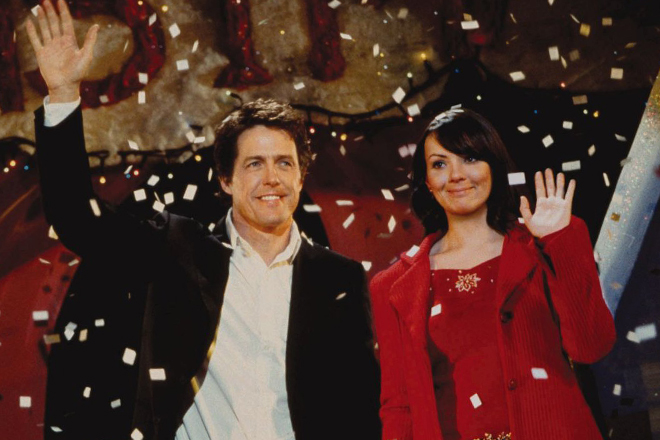
As Prime Minister, David is the most powerful man in the country. By his own admission, politics gets in the way of his love-life, not only commandeering his schedule, but also creating a barrier of power between himself and practically anyone he comes into contact with. Not only does he wield authority over his subordinate Natalie (Martine McCutcheon), he exercises it, having her transferred after witnessing an inappropriate encounter with the U.S. President (Billy Bob Thorton). A holiday card from Natalie expressing affection brings the two back together, and with that the problematic dynamic.

One of the most important aspects of the #MeToo movement is the way in which it’s caused the country to re-evaluate the nuances of consent. David and Natalie are adults. For many, the concept of consenting adults is all that is needed in order to bypass any additional concerns, namely the idea that David possesses the ability to take away Natalie’s job and ruin her life if he chooses. Natalie can’t. However cute their story is shouldn’t take away from the idea that their entire relationship is completely inappropriate.

In another of the film’s workplace romances, Jamie falls in “love” with housekeeper Aurélia despite not being able to speak her language. His effort to learn Portuguese is adorable and picturesque, but fundamentally in service to a misplaced notion of love that lacks foundation. He doesn’t actually know Aurélia. This notion doesn’t seem to factor in at all in his decision to propose to her in a crowded restaurant full of her family, coworkers, and general community. In choosing such a public setting, Jamie creates a dynamic where he alone is in control, either getting his wish or setting her up to be humiliated in a moment that would follow her for the rest of her life. He proceeds with this situation knowing full well that her answer could go either way. In doing so, he put his thumb on the scale, taking away any sense of power Aurélia could hold over her own life at that moment.

Jamie’s situation is paralleled by Sam (Thomas Sangster), who follows the encouragement of his step-father Daniel (Liam Neeson) in attempting to win the heart of his schoolmate Joanna (Olivia Olson). What might otherwise be written off as puppy-love becomes fairly creepy when Sam is encouraged to show up at the airport to profess his love to a girl he doesn’t think even knows his name, skirting security in the process. It’s the kind of act that’s easy to think of as either adorable or fairly creepy depending on how long you think about it.

As for Harry, his workplace misconduct toward Sarah seems to pale in comparison with his own adulterous desires. While it is true that the dynamic between Harry and Mia (Heike Makatsch) is both problematic and highly unrealistic, Mia’s hypersexual conduct is so over the top absurd that it seems like a waste of time to explore whether Harry abused his power by gifting her a necklace, though it is worth noting that unlike David, Harry never meddles with Mia’s employment. Instead, he chooses to meddle in the love life of Sarah, who not-so-subtlety desires fellow employee Karl. His conversation with Sarah is extremely inappropriate, suggesting that she possesses a blatantly obvious urge to be impregnated by Karl that the whole office is aware of.

We don’t really see enough of their office to know if Harry is telling the truth or not when he says that Sarah’s crush is a company-wide open secret, but that notion hardly matters. Such a conversation would be immediate grounds for a lawsuit in the real world, for good reason. That kind of prying behavior from a boss is extremely creepy and creates an untenable work environment for anyone who took umbrage with such nosiness. It’s the kind of invasive harassment that this era is trying to move beyond.

I’m sure there are many who think this analysis is a bunch of politically correct nonsense, stripping a fictional narrative of any sense of joy by overanalyzing it to death. I get that this sentiment exists when people re-evaluate art from the past, but Love Actually exists in a weird state of being both iconic and also not that old. Apart from the primitive cell phones and the notion that someone might give a CD as a Christmas gift, the film could’ve essentially been made today.

Suspension of disbelief is a concept often expected of audiences before sitting down to watch a film. It’s how people can enjoy Star Wars even though we all know that there’s no Millennium Falcon now and there certainly wasn’t one “a long time ago in a galaxy far, far away.” There is an obvious suspension of disbelief required in Love Actually, such as Colin’s (Kris Marshall) success in Wisconsin, but then there’s additional disbelief subtlety expected of the audience. Many of the women in these situations act very promiscuously, almost as if it was a purposeful effort to deflect from these sorts of criticisms. That idea would be a lot more tolerable if the idea of the woman “asking for it” wasn’t such a relic of the past that #MeToo is trying to move beyond. Like it or not, most of the workplace scenes in the film reinforce toxic masculine behavior.

I enjoy Love Actually, despite these criticisms and the immensely immoral behavior of Mark (Andrew Lincoln) in lusting after his best friend’s wife. It is a fun movie with one of the best top-to-bottom casts of any film. It is not, however, immune to criticism. Its depiction of love is a deeply flawed one. No amount of Christmas cheer should negate the fact that almost none of the romances depicted are portraits of healthy consensual affection.