Ian Thomas Malone

Pop Culture Archive

Thursday

14

May 2020

0

COMMENTS

Upload Is a Fun Binge with an Underwhelming Story

Written by , Posted in Blog, Pop Culture, TV Reviews
Humanity has been telling tales of the after-life for as long as storytelling has existed. Amazon’s Upload builds on the seemingly all-encompassing nature of the Internet to provide an alternative form of heaven than the pearly gates. As one might imagine, its depiction of life after death is hardly full of angels and endless happiness.

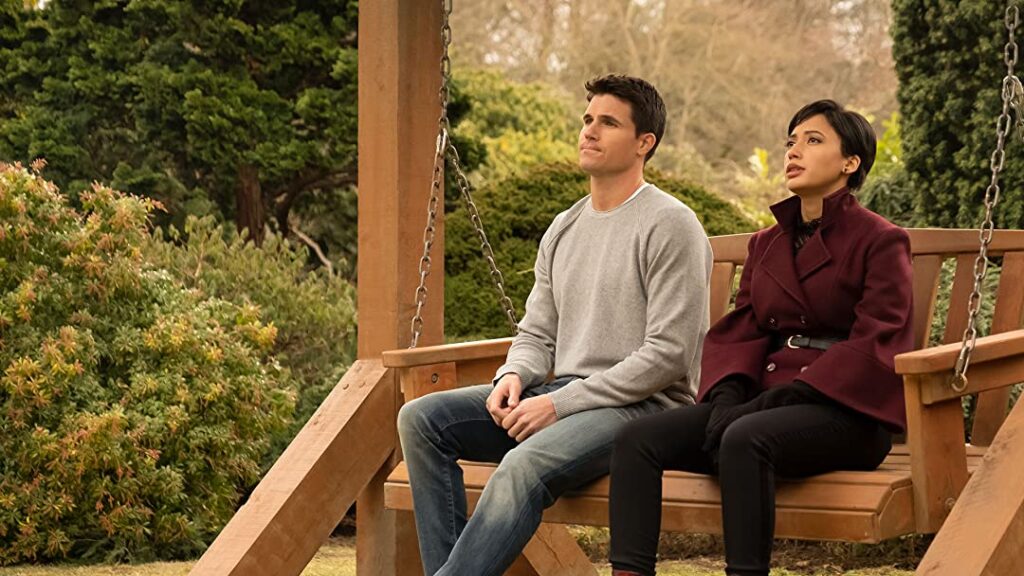
After a tragic accident, Kevin (Robbie Amell) finds himself “uploaded” to the Lakeview community, the afterlife in the form of a digital upscale hotel and spa. The scenery is beautiful, but most of the amenities come with a charge, with real-life “angels” working on hand to make sure residents are happy, and spending plenty of money. Kevin’s purse strings are closely guarded by his still-living girlfriend Ingrid (Allegra Edwards), but he finds comfort in the company of his angel Nora (Andy Allo), toward whom he begins to develop ill-advised feelings.

Upload has fun with its premise, presenting a haunting yet amusing take on the afterlife. Set in 2033, the world-building is pretty solid, rarely letting the narrative get bogged down in exposition. There isn’t a ton of suspension of disbelief required to get on board with its take on the not-so distant future.

Capitalism is the show’s real villain, tormenting the deceased by tying their fortunes to the purse strings of the living. The show has a lot of fun with this concept, though it’s one of the areas where the broader logistical concerns tend to surface. A few episodes handle this dynamic quite well, but it’s an issue that’s always present even when the narrative tries to kick it under the rug.

The first season does waste a fair bit of time on generic romantic plotlines that follow predictable paths. Kevin is a pretty bland protagonist, with Amell doing relatively little to endear his character to the audience. Allo fares better with Nora, the show’s most compelling character, especially when she’s out in the real world.

Refreshingly absent for the most part is the broader moral dilemma of a place like Lakeview. It’s hardly the kind of place one would want to see themselves confined to until the end of time, yet it’s easy to see the surface level appeal. The show never tries to sell its concept to the audience while also not exactly condemning its hellish version of “heaven.”

Upload leaves a lot to be desired on the storytelling front, but the acting and world-building make for a pleasant experience. With the show renewed for a second season, there are issues that will hopefully be addressed in its sophomore effort. While hardly revolutionary, Upload is an easy binge in these chaotic times.
Thursday

14

May 2020

0

COMMENTS

Classic Film: Un Flic

Written by , Posted in Blog, Movie Reviews, Pop Culture

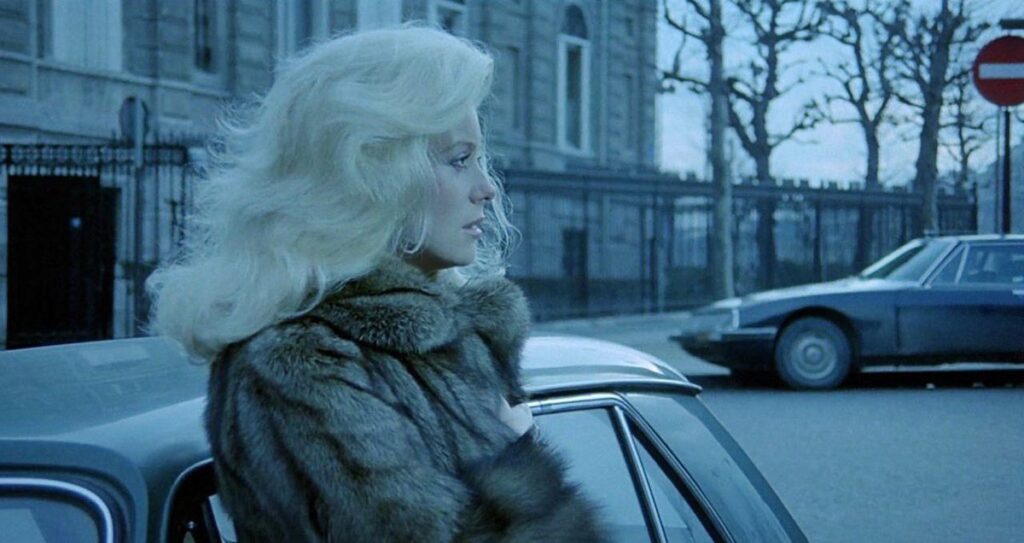
Jean-Pierre Melville’s final film is a tough nut to crack. There are parts of Un Flic that feel oddly undeveloped, the product of a director less concerned with plot than the broader themes the narrative spends its time exploring. For a master of the medium, sometimes that’s okay.

The narrative follows a robbery and its aftermath. Simon (Richard Crenna) leads the gang in their efforts to carry out of their thievery while Detective Coleman (Alain Delon) works the case. At the center of their feud is Cathy (Catherine Deneuve), Simon’s mistress who flirts with Coleman. The story and character relationships often exist on two different planes, simultaneously distant and intimate.

The film’s great triumph is a lengthy heist sequence in the second half, where Simon boards a train via helicopter to rob a rival gang of their heroin. Melville pulls off a fantastic technical feat for a film made in 1972, using minimal dialogue while maintaining an intense level of suspense. For a director making his last feature, Un Flic would be worth a watch just for the craftsmanship.

While the heist sequence is the best part of the film, it does come at a broader cost to the narrative. Stealing heroin from a rival gang has practically nothing to do with Un Flic’s broader story. Taking a twenty-minute detour out of a hundred-minute runtime does hinder the character development quite a bit.

Melville creates a rather interesting dynamic where the film operates largely without a protagonist. Coleman appears too infrequently to fit the bill, a gruff man with practically no personality beyond Delon’s irresistible charm. Simon is sort of like an anti-hero, except Melville doesn’t really provide a reason to root for him.

Some of this is rational is explained through the film’s tagline, “The only feelings mankind has ever inspired in policemen are those of indifference and derision.” Coleman isn’t in pursuit of justice, a man who acts oddly cruel to a transgender woman for no apparent reason. He’s stoic without the obvious desire for justice that drives many detectives in film.

Melville concerns himself with very complex themes in Un Flic while keeping the narrative mostly at the surface. It’s not a particularly deep film, though the kind that’s bound to keep you thinking long after the credits roll. It is not Melville’s best work.

Narratives are tricky beast. There’s only so much time for a director to explore contemplative themes once considerations to story and character are given. Melville skimps on those in Un Flic in favor of headier ambitions. He doesn’t always succeed, but the film is worth watching if only to see a master of the craft at work with his thoughts.


Saturday

9

May 2020

1

COMMENTS

World Cinema: Tomboy

Written by , Posted in Blog, Movie Reviews, Pop Culture

Gender nonconformity in children remains a highly controversial issue in the fight for transgender equality. Supporters of LGBTQ rights are often accused of wishing for the “transing” of children, putting aside the rather obvious point that all transgender adults were at one point, children themselves. Gender-affirming care is a proven method for alleviating gender dysphoria.

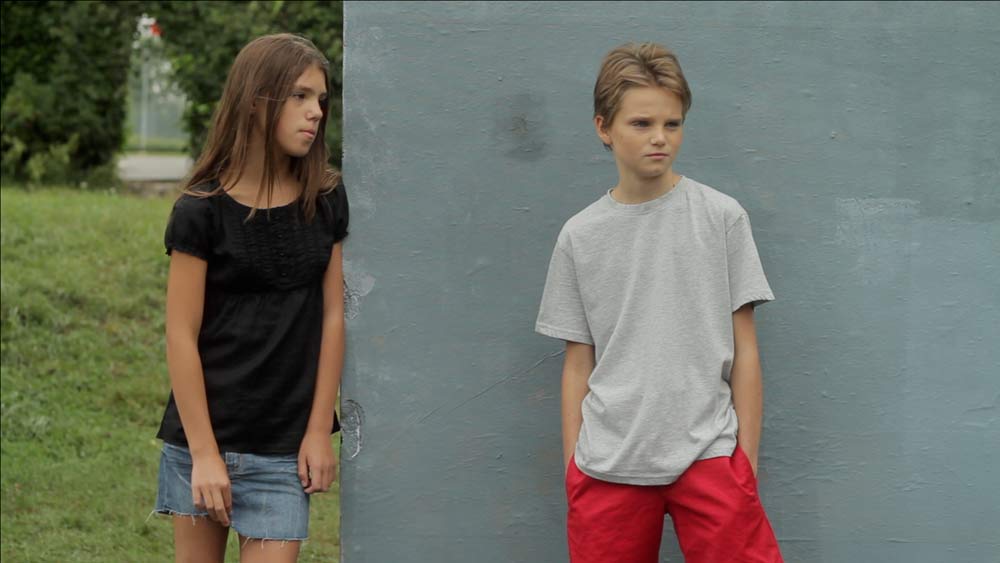
The 2011 film Tomboy features a young ten-year old child, assigned female at birth, named Laure (Zoé Héran) who adopts the identity of Mickäel as he plays with new friends in a small French town. Mickäel might be trans, a point the film leaves unclear. That clarity is not really all that important, as Mickäel would be too young for any kind of treatment other than a social transition, which makes up the bulk of the narrative.

Mickäel spends his summer playing with the local kids in his apartment building, successfully integrating himself into their social framework, even earning the romantic affections of his neighbor Lisa (Jeanne Disson). Mickäel lives a happy life, supported by his six-year-old sister Jeanne (Malonn Lévana) in a highly impressive performance by the young actress.

With school just around the horizon, Mickäel’s secret can’t stay safe forever. Director Céline Sciamma does an excellent job depicting the social dynamics of the young play group, crafting a quite compelling film with minimalist aesthetics. The film works really well for a while without much of a story, powered by some phenomenal acting.

Tomboy falls apart when it comes time to deal with the stakes at hand, an irresponsibly rushed third act that squanders the film’s ample goodwill. Films need conflict, but Sciamma doesn’t seem all that concerned with tackling the issues she presents to her audience so much as she looks eager to wrap the thing up. There’s so much depth to the family construct that goes totally ignored in favor of cheap sequences that play too hard for shock value.

Films obviously don’t need happy endings. Children can experience heartbreak and misery just as anyone else can. Sciamma plays fast and loose with her narrative in such a way that undercuts its beauty. The world is a cruel place, but there should be some semblance of an explanation for depicting such malice on screen. Sciamma throws it out there without bothering to explain or defend her film’s actions.

Whether Mickäel is trans is not really the point, though anyone looking to answer with a definitive no should look no further than a clay appendage inserted into one’s modified swimsuit. The child clearly displayed feelings of gender dysphoria. What comes after that really isn’t the point, as the film only covers brief snippets of Mickäel’s life.

The portion that we do get to see includes a lot of irresponsible parenting, a bizarre narrative decision. Sciamma clearly wants to explore gender diversity, but she’s completely careless in her approach. Tomboy is a well-crafted film, but one devoid of the kind of compassion desperately needed in these types of situations.


Saturday

9

May 2020

0

COMMENTS

Batwoman’s First Season Is a Clunky Ride in Need of Work

Written by , Posted in Blog, Pop Culture, TV Reviews

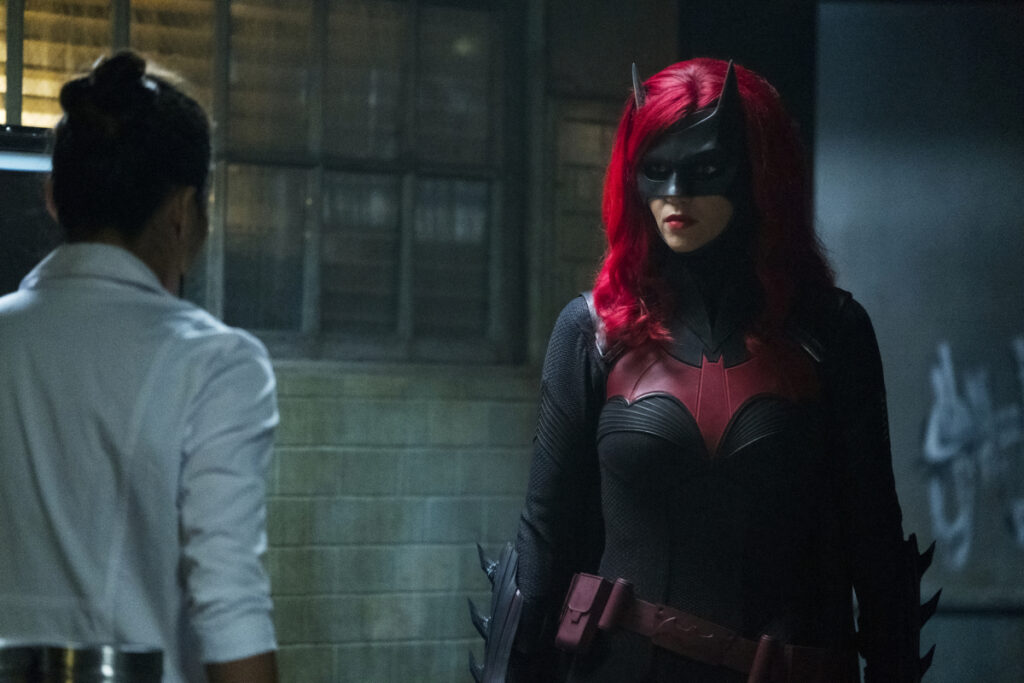
In many ways, Batwoman is the perfect member of the “Bat-fam” to adapt for the small screen. Created in 2006, the comic book version of Kate Kane operates without close to a century of history associated with her cousin Bruce Wayne. Unlike other associates such as Robin or Batgirl, Batwoman has never been the Dark Knight’s sidekick, treated as more of an equal when working alongside the Caped Crusader in arcs such as the post-Rebirth Detective Comics run.

As the marquee film franchise of the DC Comics lore, one would not expect the top tier villains of Gotham to make the kind of regular appearances in Batwoman that holds true for baddies like Lex Luthor or Zoom in the Arrowverse. Kate Kane maintains a healthy degree of independence from Bruce, a smart formula for a weekly television series. Even as Batman’s lengthy absence looms heavily over the narrative, Batwoman has done a fairly good job establishing itself on its own two feet.

Carving an identity independent of Batman is a vital step, but Batwoman has struggled with where to go from there. Like Bruce, Kate is a vigilante driven by tragedy. The reappearance of her long-presumed dead sister Alice, now a maniacal villain, has driven the bulk of the narrative for the show’s first season.

As a character, Alice is an important part of Kate’s story. As a regular presence on a weekly series, Alice is an intensely stifling presence on the narrative. Comic book supporting characters can come and go. Regular cast members need weekly screen time. Rachel Skarsten is one of the more compelling actors on the series, but Batwoman struggles to balance Alice’s arc with that of its titular character.

Ruby Rose hardly helps this dynamic. Her Kate Kane is a reactionary figure, a figure far better suited for a lone wolf than as a leader of a team. The Arrowverse relies on an ensemble formula that clashes with Batwoman’s aesthetics, something that Arrow itself needed time to figure out. Kate doesn’t want to let people in, but of course she’s going to build a group around her. None of this is particularly interesting to watch.

Alice might be Kate’s best sparring partner, but Batwoman’s relationship with her father is the most fascinating of her series’ lore. The show captures the essence of Kate and Jacob’s relationship pretty well, with Dougray Scott softening the rigid comic book character quite a bit. Batwoman desperately needs to figure out the Kane family dynamic, which drowns out practically everything else the show tries to do.

There are a few bright spots for the season. The supporting cast is pretty fun. As Luke Fox and Mary Hamilton, Camrus Johnson and Nicole Kang provide much needed levity, balancing out Rose’s monotonous acting. The show is the perfect vessel to eventually debut Fox’s Batwing for the first time in live action.

Batwoman’s sexuality has been a milestone for LGBTQ superhero representation. The episode “How Queer Everything Is Today!” did a masterful job addressing how a lesbian superhero is both a big deal and something that should also not be as noteworthy as it currently remains. Hopefully in the future this kind of revelation won’t seem like such a big deal, but for now it is most certainly something to celebrate.

Batwoman is a salvageable show, but the first season has been a bumpy ride to say the least. Plenty of series need time to figure themselves out. Of all the shows in the Arrowverse, only The Flash had an inaugural effort that can be safely described as great. Batwoman can be a family drama alongside its other ambitions, but it has to do a better job in balancing its many moving pieces.

Friday

8

May 2020

0

COMMENTS

The Musical Treatment Works Well for a Charming Rebooted Valley Girl

Written by , Posted in Blog, Movie Reviews, Pop Culture

A film like 1983’s Valley Girl seems an obvious choice for the remake treatment. Somewhat complicating that proposition is the idea that practically every 80s homage that’s been crafted in the decades since its release has at least in part borrowed from the classic teen comedy. The 2020 version of Valley Girl is tasked with not only adapting its source material, but also distinguishing itself in a crowded very space.

The bulk of the 2020 Valley Girl is told via flashback, as an older Julie (Alicia Silverstone) fondly reflects on her younger self’s (Jessica Rothe) high school days, hanging out at the mall and practicing aerobics with her friends. With her daughter deciding between an abroad trip to Japan and the boy she’d be leaving behind, the 80s serve as a backdrop for Julie to demonstrate that she’s not as dated as some of the “Valleyspeak” the region popularized.

The big distinguisher between the remake and the original is the presence of many elaborate musical numbers set to covers of 80s classics such “Kids in America” and “I Melt with You.” Choreographed by Mandy Moore, the sequences work pretty well, even though the covers are pretty terrible, the kind of stuff you’d hear on Kidz Bop. The film makes practically no case for why the music should be there, except in the sense that it’s fun to see people dancing in vibrant colors.

A refresher on the derivative nature of the original Valley Girl’s narrative, which borrowed heavily from Romeo & Juliet might be helpful going in to the 2020 version. Remake or not, Julie falling for a guy, Randy (Josh Whitehouse), her parents don’t approve of is a fairly generic plot. Rothe and Whitehouse have pretty good chemistry, a romance that is more satisfactory than compelling.

Putting aside the fact that none of the cast look young enough to be in high school, they’re quite entertaining to watch. As Julie’s friend Stacey, Jessie Ennis gets the most time to shine out of the supporting bunch. Mae Whitman is a bit overqualified as Randy’s bandmate, but makes the most out of her limited screen time.

The big casting disappointment is Logan Paul, tasked with the role of antagonist as Julie’s jock boyfriend Mickey. Paul’s detestable public makes him perfect for the role of loathsome blowhard, but he’s simply not a very good actor. For the most part, Paul fails to make an impression, a missed opportunity for a bit of self-deprecation.

Valley Girl treats the 80s like an Instagram filter, a film without a single drop of originality. An unapologetically fun guilty pleasure that’s pretty perfect for light summer fare. People who actually grew up in the 80s will likely hate the tropes the film traffics in, but it’s pretty clear that this remake is designed more for millennials, the kind of people who knew who Logan Paul was before he started getting in trouble on the news. The presence of Silverstone, a 90s teen icon, probably doesn’t help much either, though she’s very fun in a bit role.

The 80s aesthetic also provides an unintended benefit. Set in an idyllic period before cell phones, Valley Girl doesn’t need to work social media into its narrative. Few films understand that less is more with regard to portraying technology on screen. Valley Girl feels distinctly modern in its delivery, a trait bound to anger nostalgic viewers but one that ends up working pretty well for a young audience. For a film using bright spandex and catchy covers to masquerade as a period piece, Valley Girl is actually a lot of fun.

Thursday

7

May 2020

0

COMMENTS

Classic Film: Orlando

Written by , Posted in Blog, Movie Reviews, Pop Culture

Virginia Woolf’s Orlando carries plenty of natural appeal for transgender people. What’s not to love about a gender-bending aristocrat who travels through time to confront history’s perplexing relationship toward women? Two years before Forrest Gump won plenty of awards using a similar premise, Sally Porter’s Orlando beautifully adapted Woolf’s material for screen.

As the titular Orlando, Tilda Swinton crafts a remarkable performance that tosses the notion of gender right out the window. Pure elegance, she moves about the screen confident in their sense of being, even if Orlando frequently finds themselves a fish out of water. Orlando is a sexual being who defies all notions of sexuality.

Swinton understands that the key to understanding Orlando as a character requires one to strip down every single conceived notion about gender. That kind of process is inherently contradictory, for none of us can discard our frames of reference. The act of trying is the point.

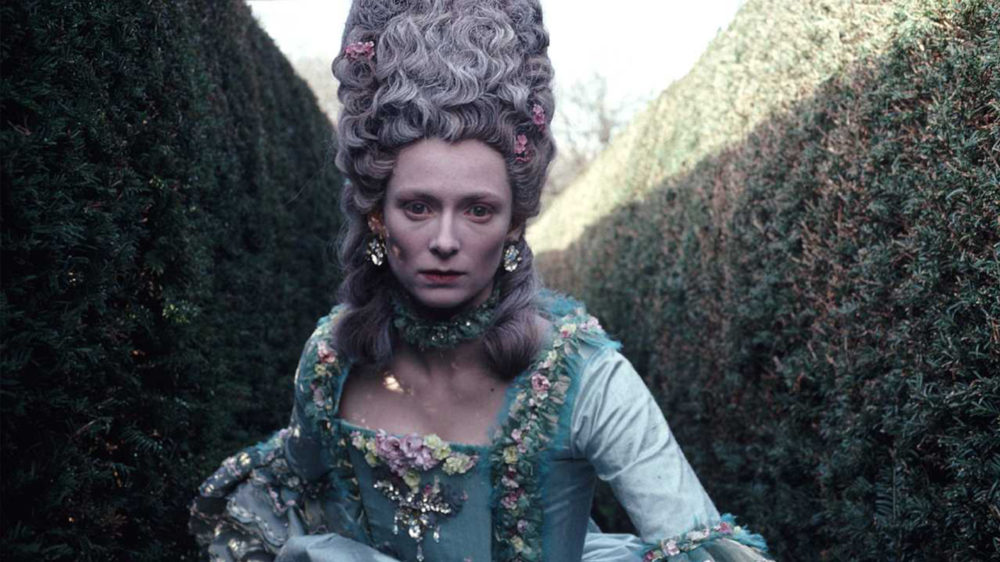
Porter brings Woolf’s imagery alive through the film’s elaborate costumes. The sight of Orlando exquisitely dressed in lace and frills with a palette of foundation, regardless of gender, provides a layer of subtext that the written word simply cannot provide. The aristocracy is a performance, a spectacle to be seen and delighted in.

There’s a line late in the film’s second act where a nude Orlando boldly professes, “Same person. No difference at all. Just a different sex.” The eyes and the mind operate on two separate planes, seemingly in conflict with each other. The point is not to be equal, but to look at an individual beyond the stereotypes to see how women have been denied that basic sense of decency over the course of time.

Orlando is a story about agency. Women in England’s society lacked much to call their own, with little in the eye’s of the law to distinguish the entire sex from that of the deceased. Women were seen as little more as objects, muses to titillate the senses as long as they don’t step out of line. Shelmerdine (Billy Zane) is just about the one man in the film who understands this contradiction, though as a product of the status quo he struggles to introduce a satisfactory resolution that the Lady Orlando faces as a result of her change in sex.

Few films understand the value of gender as a spectacle better than Orlando. The elegant tapestry with which Porter paints is delightful to return to with each viewing. Many of the problems that Woolf first introduced almost a hundred years ago still remain, but the very act of engaging with these complex questions presents some optimism for a world where a person like Orlando could be embraced regardless of their gender.

Wednesday

29

April 2020

0

COMMENTS

Classic Film: So Dark the Night

Written by , Posted in Blog, Movie Reviews, Pop Culture

Nobody likes to be told they’re too old for anything, let alone love. Finality has a way of sucking all the hope out of a soul, leaving little but the regrets of missed opportunities. Humanity needs something to live for.

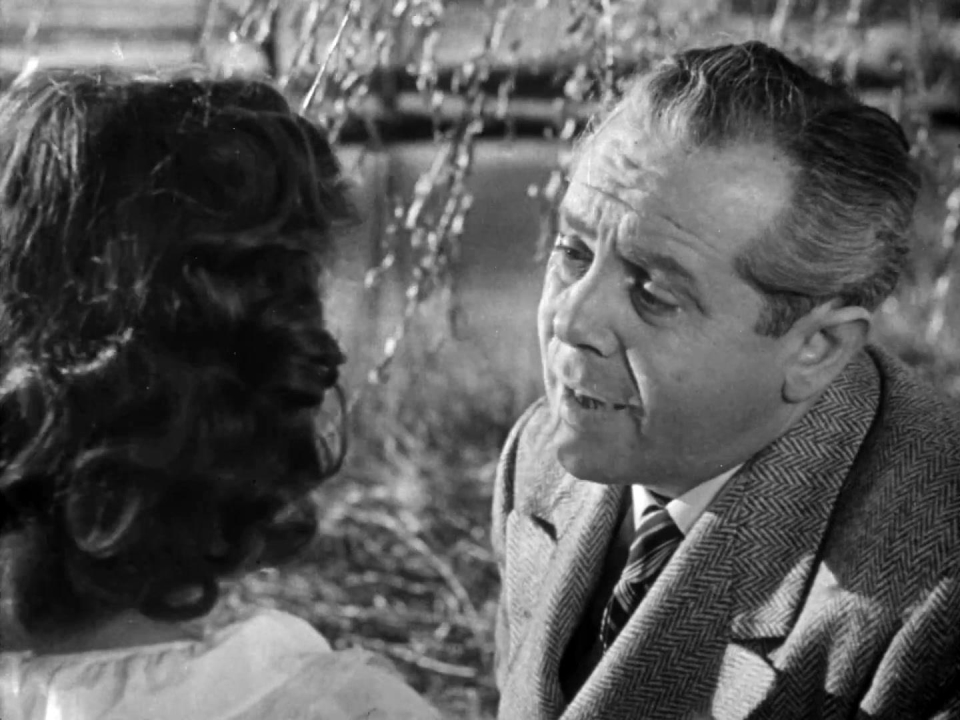
So Dark the Night explores the mindset of Henri Cassin (Steven Geray), an aging Parisian detective on holiday in the countryside, where a young girl Nanette (Micheline Cheirel) becomes infatuated with his talents and sense of worldliness. The sudden death of Nanette and her boyfriend/betrothed wreaks havoc on the small town. Henri’s efforts to uncover the killer lead to shocking discoveries that bring about many questions as to the nature of human consciousness.

Director Joseph H. Lewis does a remarkable job crafting each scene, often relying on uncomfortable camera angles. Many shots are partially obstructed by various points off the inn, creating a sense of claustrophobia as Henri struggles to search for the truth. The audience is frequently made to feel like a fly on the wall from room to room, listening in on intimate conversations.

Geray carries the narrative with his performance as the awkward protagonist. Henri is a strange man, a gentleman with a pleasant demeanor who leaves you feeling more uncomfortable in each passing scene. He’s a hard figure to root for, without leaving any obvious reason why.

So Dark the Night is a brisk noir gem that meticulously builds suspense over the course of its short runtime. There are no subplots. Lewis weaves character development in on the fly, always with his eye on the mystery.

The payoff has grand ambitions in its depiction of mental health, perhaps a bit lofty for 1946. Whether its diagnoses are fair or not, the film presents plenty for its audience to chew on long after the credits have rolled. So Dark the Night is bound to make many uncomfortable, but fans of noir will find plenty to enjoy.

Wednesday

29

April 2020

0

COMMENTS

Clementine Suffers From a Subpar Script and Aimless Narrative

Written by , Posted in Blog, Movie Reviews, Pop Culture

A lake house seems like the perfect place to get away after a bad breakup. Unless your ex happens to own said lake house. Whether or not that’s an inevitable recipe for disaster leaves open soon wiggle room, the kind that Clementine is eager to explore.

Karen (Otmara Marrero), a lesbian in her early thirties, just wants to get away for a while, seeking solitude as she tries to get her affairs in order. Staying at a nearby cabin, the much younger Lana (Sydney Sweeney) seeks companionship, the kind of association born out of a shared sense of isolation. Lana has secrets of her own, but the comforts of solitude offer a kind of deceiving refuge.

Director Lara Gallagher relies almost entirely on her two leads to carry the film. Marrero and Sweeney are competent actresses, but their characters lack the much needed chemistry required to make the story compelling. The narrative loses practically all of its steam as a result.

The script doesn’t do the film any favors either. Gallagher sticks to quiet, minimalistic dialogue that does come across as quite realistic. The trouble with this dynamic lies in where it’s aiming its attentions, often the pseudo-philosophical musings of a stoned teenage girl. Sweeney is more than capable of delivering these lines in a manner that sounds authentic, but she can’t do much to make it sound interesting.

With a reliance on camcorders and landlines, Clementine often feels like a period piece. The absence of cell phones and other distracting forms of technology help heighten the tension, drawing the two leads together in the absence of much else to bide their time. Gallagher does a good job with the film’s aesthetics, an intimate setting where the kind of romance she hopes to kindle could believably take place.

Clementine gets by on the strength of its leads for a while, but the weak script and thin narrative let all of the air out long before the credits roll. There’s a lot to be explored in the realm of gay breakups, which haven’t received much attention from filmmakers. For a while, Gallagher keeps the intrigue up, but it’s not sustainable. Even worse, the third act possesses a plot twist that basically feels like a cheap stunt.

Intrigue isn’t worth much when it’s forced to run on fumes. Clementine is far more boring than it has any right to be. A fascinating premise that’s competently crafted, the film’s script undercuts its potential. A real shame.

Tuesday

28

April 2020

0

COMMENTS

Classic Film: In a Lonely Place

Written by , Posted in Blog, Movie Reviews, Pop Culture

Movies capture brief snippets of their subjects’ lives. Even grand epics have to contend with the reality that each day represents a much larger chunk of time than even the longest feature. In a Lonely Place beautifully presents this dynamic, a narrative that captures the impermanence of romance.

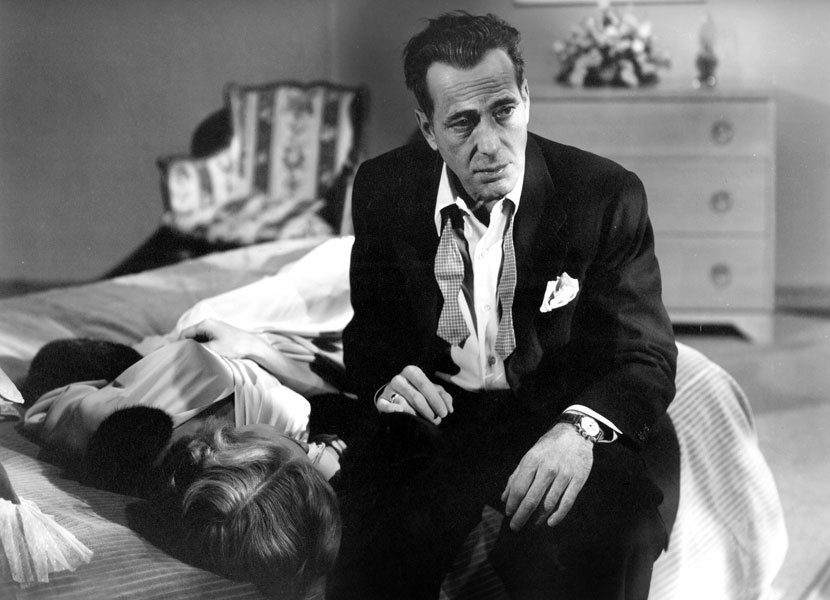
Dixon “Dix” Steele (Humphrey Bogart) is a Hollywood screenwriter with an ego that hardly matches his career. Facing years without a hit, Dix is far too lazy to put in the effort to change his fortunes after being asked to adapt a book, instead relying on a restaurant hat-check worker Mildred (Martha Stewart) to come over and share the details of the book. Mildred is murdered after leaving Dix’s apartment, naturally leading to some suspicion, though neighbor Laurel (Gloria Grahame) is able to provide an adequate alibi for his whereabouts.

The bulk of the narrative focuses on the burgeoning relationship between Dix and Laurel, lovers brought together by tragedy. Dix, shown to have quite the temper, exhibits deteriorating mental health as he remains unable to shake the cloud of murder from his old friend Brub Nicolai (Frank Lovejoy), now working as a detective. Dix is a classic Hollywood blowhard, full of self-importance as his looks and personality attract many to his orbit.

Bogart gives one of the best performances of his career, elevating the odious Dix into a figure of great intellectual depth. He’s a man past his prime, and not completely unaware of that reality. It is an especially frustrating variety of stubborn to wear one’s flaws so blatantly on one’s sleeve.

Grahame is every bit Bogart’s equal, adding a degree of tragedy to In a Lonely Place’s already bleak narrative. She’s able to walk right into the lion’s den, dance with the devil, and still elicit sympathy for having fallen into Dix’s web. It’s a beautiful performance that leaves the audience’s emotions drained by the end.

Moments in Hollywood are fleeting by nature. Plenty of narratives have consumed themselves with this stark reality. It’s a place where dreams go to die, even in success. The happiest of circumstances can produce tragedy.

Set almost entirely in an upscale apartment community, In a Lonely Place often operates like a stage play. There is a great burden placed on the actors to constantly keep the tension alive, aided by a foreboding score. The pacing feels almost real time, capturing the essence of love’s fleeting moments.

In a Lonely Place is a triumph of the noir genre. Bogart captivates even while behaving insufferably, an intoxicating charm that operates in sync with the narrative. For a seventy-year old movie, the film feels as timely as either. Love is all-encompassing, until the point where it isn’t.

Tuesday

28

April 2020

1

COMMENTS

Homeland Ends with a Thud

Written by , Posted in Blog, Pop Culture, TV Reviews

The world has changed quite a bit since Homeland premiered in 2011. The series has had to adapt to a landscape where a completely incompetent executive branch feels less and less outlandish. In the world of alternative facts, fiction has an uphill battle to compete with reality.

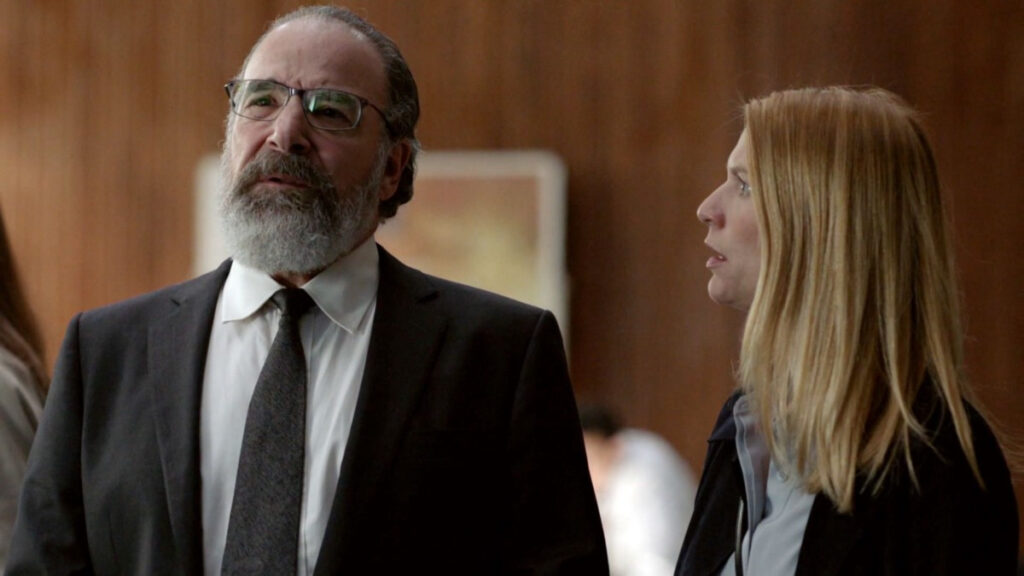
For a show that had its fair share of ups and downs over the course of its eight seasons, Homeland worked best when it focused on its characters. Claire Danes and Mandy Patankin often carried the series, aided by superb supporting players such as Rupert Fiend and F. Murray Abraham. With figures such as Nicholas Brody, Peter Quinn, and Dar Adal long absent from the fold, a final adventure with Carrie Mathison and Saul Berenson seemed like just what the show needed as it prepared for the endgame.

Most of season eight focused on a tug-of-war over a flight recorder of a downed helicopter that killed the presidents of America and Pakistan. Considering that previous seasons have featured hacked pacemakers and CIA car bombs, it does seem fairly radical for the show to feature a mundane explanation for the helicopter crash devoid of terrorism or Russian interference. Carrie’s ability to retrieve the device, irrefutable evidence for a president eager to entertain the counsel of the far-right, meant the difference between war and peace.

Homeland has repeatedly emphasized the power of the individual to change the world. Carrie, Saul, Brody, and Quinn each changed the course of history through their actions. Carrie embodied everything that James Bond has exemplified over his fifty-year tenure. Homeland worked best when Carrie was a kick-ass spy.

Season eight featured a completely unhinged Carrie, not just because of her bipolar disorder that the show often treats like a superpower. Carrie spent most of the season wandering Pakistan, in bed with the Russians, untethered from the confines of American foreign policy. It might have been fun if it wasn’t so aimless.

The pacing for the whole season was completely off, an issue that became far more of a problem as Carrie and Saul returned to America. The season never really felt like it had twelve episodes’ worth of story, but still managed to feel rushed by the end. Worst of all, Homeland pulled the tired trope of the mystery-asset, unbeknownst to Carrie for the duration of the series. Such a secret completely undercuts the relationship between Carrie and Saul that served as the bedrock for the show.

Suspension of disbelief is important for practically all spy narratives. There are little things here and there that Homeland could be forgiven for, such as Saul’s lack of security detail despite being National Security Adviser, especially after the death of a president. The series finale expects the audience to believe that Carrie, currently charged as an accessory to murder of that same president, is staying in Saul’s home without anyone batting an eye. That’s really just the tip of the iceberg for the plot holes, including a UN basement shootout, that become apparent in the absence of substance.

Homeland went out with a whimper, a final season lazily crafted as a betrayal of the show’s key relationship. Carrie didn’t need to go out as the hero or the villain, though one or the other might have been nice. Instead, there’s an aura of indifference that hangs over the head of the protagonist as she leaves America for presumably the last time. Like her daughter Frannie, Carrie’s legacy is largely left forgotten as the series limps toward its final bow.

Homeland was terrible as often as it was great. Eight seasons is a long time to be on the air. Final seasons generally work best when they remind the audience of why they fell in love with the show in the first place. For Homeland, season eight represented all the reasons why this show leaves behind such a complicated legacy.