Ian Thomas Malone

Pop Culture Archive

Thursday

23

April 2020

0

COMMENTS

The Garden Left Behind Is a Compelling Transgender Narrative with Lofty Ambitions

Written by , Posted in Blog, Movie Reviews, Pop Culture

The past few years have seen a push for narratives focusing on the transgender community to strive beyond the misery that has unfortunately dominated our stories. The transgender experience is more than a parade of misfortune, constant harassment and bigotry. Watching The Garden Left Behind, one might not be so sure of that.

Tina (Carlie Guevara) is a transgender woman struggling to support herself and her grandmother (Miriam Cruz) in New York City. Life as an undocumented immigrant presents many unique challenges for her transition, limiting her access to healthcare and job opportunities. Tina has a good support system with her friends, but lingers in a clearly abusive relationship.

Director Flavio Alves deserves a lot of credit for meticulously crafting an authentic trans narrative. There are plenty of actual transgender actors playing the roles, hardly a given in film.   Guevara works wonders with the material, bringing a degree of authenticity desperately needed with the film’s rather wooden script.

The Garden Left Behind suffers from an unclear sense of purpose. The narrative bites off way more than it can chew in a ninety-minute runtime. Broadly, it mostly centers around Tina’s quest to go on hormones, but there are several scenes dedicated to broader trans activism that feel out of place. The film repeatedly makes the mistake of thinking it has to weigh in on every element of the trans experience, often at the expense of Tina’s story.

Alves leaves far too much on the table regarding Tina’s relationship with her grandmother, a loving woman understandably confused by her granddaughter’s transition. This dynamic is needlessly complicated, culminating in a truly bizarre scene between Tina’s grandmother and one of her friends, which should have involved Tina herself given the turn of the narrative.

The film’s third act is an over-the-top nightmare scenario for transgender people, irresponsibly venturing into the territory of trauma porn. Alves plays fast and loose with transphobia, including a lot of pointless slurs that provide little more than shock value. Cisgender audiences may find the constant barrage of misery compelling, but there’s just too much being thrown out all at once.

Compelling performances bolster a lackluster script that plays too hard for shock value. Alves’ film is worth a watch for cisgender people, but trans folk may want to avoid. The Garden Left Behind represents a step forward for trans visibility on screen, but the narrative bites off way more than it can chew.

 

Wednesday

22

April 2020

0

COMMENTS

Classic Film: Donkey Skin

Written by , Posted in Blog, Movie Reviews, Pop Culture

Plenty of fairytales, especially the centuries-old sort, contain plotlines that come across as quite problematic in modern times. Sleeping Beauty saw resolution through a nonconsensual kiss, Cinderella escaped an abusive household through marriage, and the Little Mermaid traded her voice, her agency, to be with a man. Traditional heteronormative storytelling once made it easy to gloss over these decidedly sexist tropes.

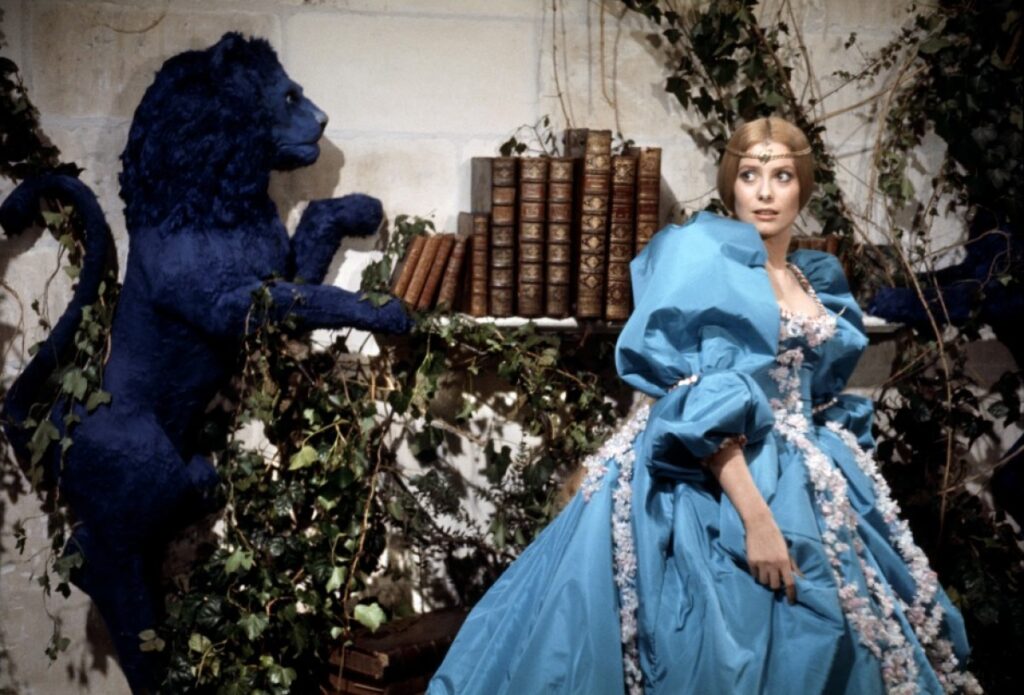
The French tale of Donkeyskin puts other fairytales to shame with its very premise. A princess flees her household after the king decides he wants to marry her, his own daughter, after the death of the queen. The fact that the kingdom earns its wealth through a donkey that defecates gold and jewels plays a natural second fiddle to incest in this scenario. The 1970 film Donkey Skin (French title: Peau d’âne) does not really try to make sense of the narrative, but rather to simply entertain its audience along the way.

As the titular princess “Donkey Skin,” Catherine Deneuve puts forth a captivating effort. Donkey Skin finds herself often lost in the absurdities of her surroundings, but Denevue engages with the terrain in a way that makes it easy for the audience to follow along. It’s a silly kind of story, but one presented with passion and obvious delight.

Director Jacques Demy paints vivid landscapes from the castles to the wilderness where Donkey Skin seeks refuge. The script is serious when it needs to be, but never loses its wit, finding great satire in the fairytale genre as a whole. The film’s musical numbers poke fun at the era, full of vanity and casual cruelty.

The costumes are gorgeous, completely over the top. Each royal character’s wardrobe looks like it was designed to achieve maximum flamboyance, layers upon layers of excess. For a musical comedy, Donkey Skin is a so visually delightful that you could practically enjoy it on mute.

The film has plenty of head scratching plot holes, the product of a script with minimal regard for developing its characters or narrative. The story is content to be pretty boiler-plate, moving along briskly over the course of its ninety-minute runtime. Demy has a firm grasp of pacing, throwing plenty at his audience without lingering in one spot for too long.

Refreshingly absent is any sense of moral purpose. Donkey Skin relishes its lavish costumes and beautiful imagery while keeping its narrative light and fluffy. It’s a charming film that lovingly adapts a bizarre story. Some fairytales find themselves bogged down in complications born of problematic scenarios.

Donkey Skin is the kind of story that’s weird to an extent that you wouldn’t even want to even talk about its core dilemma. Incest is not generally the kind of topic that makes for casually silly material. Demy relishes in presenting the eccentric, crafting the kind of film that can’t help but endear itself to its audience.

Monday

20

April 2020

0

COMMENTS

Better Call Saul Looks to the Endgame

Written by , Posted in Blog, Pop Culture, TV Reviews

Prequels face a unique challenge. A show like Better Call Saul is expected to present some new revelations about Jimmy McGill that justify the show’s existence without too drastically altering the framework of the Breaking Bad character audiences know and love. On top of that, the show has to juggle its own original characters as well as those belonging to its predecessor series.

The early seasons of Better Call Saul are drastically different from the show it is now. Part of that can be laid at the feet of meth/chicken kingpin Gus Fring, given Giancarlo Epsosito’s dominating performances. Fring’s presence facilitated the separation of Jimmy and Mike for several seasons, slicing off a piece of Saul to service the events of Breaking Bad that Jimmy wouldn’t need to be a part of.

Season five has largely been about putting the pieces back together. After last season sidelined Jimmy’s legal career, Goodman is heading full throttle into the world of the cartel. The show has done an excellent job setting up its final season to directly lead in to Breaking Bad, while building off its own strong foundation.

For all the time Better Call Saul dedicates to the meth trade, season five works best when the focus is on Jimmy and Kim. Bob Odenkirk and Rhea Seehorn are marvelous together, painting lines of obvious affection into the common sense desperation that ties the two together. Kim deserves better than Jimmy. The audience knows that, but Wexler sure doesn’t. The character’s absence from Breaking Bad doesn’t exactly bode well for her fate, but the flash-forward black and white introductions to each season offer a glimmer of hope for their relationship after Jimmy’s time at Cinnabon is up.

There are bits and pieces of narrative that hinder season five from fully utilizing its short ten-episode seasons. Howard Hamlin was a pivotal part of the show’s early years. That is very obviously no longer the case, beyond Patrick Fabian’s skills as an actor. Time spent on Hamlin is time that can’t be used for anything else, a tough storyline to justify with so much else going on.

The eighth episode of the season, “Bagman” appears designed to be the series’ version of The Sopranos’ iconic “Pine Barrens” episode. The long takes shot in the blistering heat represent a triumph for the series’ artistic endeavors, the kind of stuff that establishes Saul on equal footing as Breaking Bad. Jimmy isn’t a man destined to become an arch villain like Walter White, but rather broken in a different sense.

It is perplexing to think about “Bagman” existing as part of the same narrative that was once dominated by Jimmy’s feud with his older brother. Chuck’s legacy doesn’t quite loom as large over season five, with its eyes focused more on Breaking Bad. That’s neither a good thing or a bad thing, perhaps most noteworthy because Saul is a prequel destined to be evaluated by its relationship to its source material.

Season five represents a high point for the series as Better Call Saul juggles obligations to its predecessor against its own established lore. Wexler and Fring could easily be given their own series after Saul, an idea that’s both a testament to the series and indicative of its core predicament. There are too many interesting things going on in each season of Saul to adequately capture in a ten episode run. Six seasons is hardly enough to tell this story.

Friday

17

April 2020

0

COMMENTS

The Painted Bird Is a Harrowing Trek Through the Horrors of War

Written by , Posted in Blog, Movie Reviews, Pop Culture

There are more films based on World War II than anyone can reasonably count. Based on a 1965 novel of the same name, The Painted Bird carries with it a certain unspoken understanding of the horrors that took place during that monstrous time. Filmed on 35mm black and white film while utilizing sparse dialogue, director Václav Marhoul possesses a masterful grasp of the unspoken, crafting a quiet, harrowing epic.

The narrative follows a young boy (Petr Kotlar) as he makes his way through war-torn Eastern Europe, trying to return home after the death of his aunt. The boy finds a few kind souls along his journey, but the vast majority of the people he comes across treat him as subhuman, treating him as a slave among plenty of other horrors. Humanity is scarce across the savaged region.

Marhoul divides the film up into segments divided by a character’s name. This approach works quite well for the nearly three-hour runtime, preventing the audience from getting too overwhelmed by all the terrors. The narrative is pretty relentlessly brutal right from the start, sequence after sequence of jaw-dropping imagery that never really lets up.

The boy functions as a reactionary protagonist, spending most of the film responding to the circumstances laid out before him. Kotlar is an excellent young actor, mostly demonstrating the boy’s emotions through nonverbal cues. Hollywood mainstays Stellan Skarsgård and Harvey Keitel pop up briefly, but the film belongs to Kotlar.

The film uses a mix of Slavic, Czech, German, and Russian, but dialogue is deployed in such a way that the narrative almost feels more like a silent film. Full scenes go by with barely any need for subtitles. The landscapes are beautiful, but the black and white cinematography and horrific actions depicted prevent the audience from spending too much time admiring the views.

The Painted Bird does take a bit of time to find its footing, a slow burn content to take its time. The film picks up steam in the second act, having laid out the terms of its narrative in a way that keeps you engaged without constantly guessing what will happen next. Though largely a bleak story, Marhoul finds small slivers of hope in places where you’d least expect to find them.

The runtime is a bit of a liability. Three hours is a long time to spend with a young protagonist who barely speaks, but the length of time helps solidify the hero’s journey, a duration designed to be as epic as his voyage. The narrative is designed to be exhausting, which Marhoul achieves early on. A few of the scenes appear to exist to serve that goal exclusively, a dynamic that’s perhaps a little too demanding on the audience.

The Painted Bird is a fantastic film that journeys to the very bottom of humanity depravity. It is certainly not for everyone, but Marhoul crafted a minimalistic masterpiece that packs an emotional wallop. Few narratives leave you quite as drained by the end, in desperate need of a hug.


Thursday

16

April 2020

2

COMMENTS

Sonic the Hedgehog Undercuts Its Hero by Turning Him into a Generic Bore

Written by , Posted in Blog, Movie Reviews, Pop Culture

Sega built its entire video game empire off the concept of edginess. The company’s “Sega does what Nintendon’t” marketing campaign in the 90s set it apart from the family friendly image of its primary competitor. While much of that contrarian messaging was abandoned by the time Sega left the home console market, fond memories of the Genesis’ mature library live on in the hearts of many gamers.

Sonic the Hedgehog exuded cool from every blue quill in his body. Sega’s mascot wasn’t exactly edgy or risqué, but conducted his ring-collecting business with an aura of hip strikingly absent from Nintendo’s signature Italian plumber. Sonic served as a postmodern icon for what family friendly could mean in the 90s.

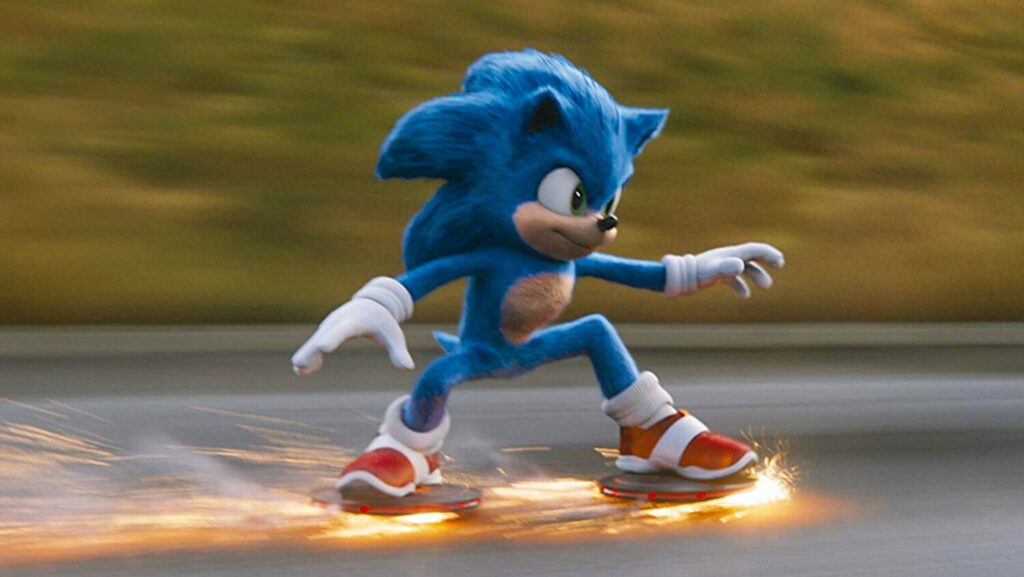
The Sonic present in 2020’s Sonic the Hedgehog is decidedly not cool. He’s not quite a loser, but instead a sad desperate loner with no friends. He lives an isolated life where his only company are comic books and the speed that allows him to play sports by himself. This Sonic is the kind of person you might feel bad for, but also probably wouldn’t want to hang out with either.

Sonic the Hedgehog takes Sega’s standard bearer for the concept of cool and commits the unthinkable. Sonic is boring. He’s not very funny. His interactions with local sheriff Tom (James Marsden) possess the makings of a buddy comedy, but the whole endeavor is too desperate to be enjoyable. The whole ordeal is just plain sad.

As arch nemesis Dr. Robotnik, Jim Carrey supplies most of the film’s laughs. Carrey puts forth a zany, over-the-top effort full of physical comedy reminiscent of his 90s output. It’s vintage Carrey, albeit with a little rust around the edges that becomes more obvious as the film progresses. He’s not exactly phoning his performance in, but maybe gets a little tired of revisiting the past.

The plot is pretty silly standard fare for a children’s movie based on a video game. Sonic travels to San Francisco in search of magic mushrooms to escape from Robotnik, but of course the real treasure are the friends made along the way. The generic morals aren’t exactly a problem, but it’s deeply bland stuff for a character crafted to be the antithesis of the mundane.

Is Sonic the Hedgehog really supposed to be a kid’s movie? The simple answer is yes, but it’s clear the filmmakers intended to play hard toward the 90s nostalgic crowd, many of whom may have kids of their own. Carrey’s presence further solidifies the legacy play, but this Sonic isn’t designed to be pleasing to anyone except for young children.

Sonic the Hedgehog is a pretty depressing experience. There is a temptation to disregard its futilities as the product of adults getting their hopes up for an experience crafted for children, but it doesn’t try very hard to be a good kid’s movie either. Sonic is a cool character. It’s unclear why he needed to be so generic and lame in this narrative. Everyone deserves better.


Thursday

16

April 2020

0

COMMENTS

Teen Titans Go! vs. Teen Titans Is a Loving Victory Lap for the Franchise

Written by , Posted in Blog, Movie Reviews, Pop Culture

Disney used to have an informal “65-episode rule” that applied to practically all of its television series. This approach kept costs down, allowed the company to quickly stockpile a syndication library, and prevented Disney Channel from being overly tied to one program. Obviously there are plenty of exceptions to this rule, but this method was fairly standard practice across much of children’s programming.

The original Teen Titans series ran for 65 episodes from 2003-2006. Cartoon Network earned the ire of many when it cancelled the popular adaptation of the DC Comic’s superhero team. Its 2013 spinoff, Teen Titans Go!, has proved vastly more successful, producing 278 episodes (at half the runtime of the original) so far, along with a feature film adaptation, Teen Titans Go! To the Movies. While far more comedic in nature, the presence of the entire original voice cast gives the spinoff a natural sense of continuity to its predecessor.

Teen Titans Go! vs. Teen Titans is a concept seemingly unimaginable to anyone who grew up watching weekday afternoon and Saturday morning cartoon blocks, full of shows who saw their lifespans cut short at the 65-episode marker. That is the way television used to work. The past rarely returns to the present, except in the form of streaming services that cater to nostalgia.

While nostalgia obviously drives the concept, Teen Titans Go! vs. Teen Titans is not a film that overly relies on the past to drive its narrative. Fans of the original series will find plenty to enjoy in seeing the old interpretations of Robin, Starfire, Raven, Cyborg, and Beast Boy, but the plot anchors itself on much firmer footing. Raven’s father Trigon drives the plot, a compelling father/daughter conflict that works well as a plot that doesn’t need to take up the film’s whole attention.

Teen Titans Go! is hardly a show about actual fighting, but the action sequences in the film are quite fun. The 2003 team work well as the “serious Titans,” serving as the foil to their more cartoonish counterparts. It’s more of the 2013 roster’s movie, fitting given their popularity, but each character gets plenty of time to shine. The voice cast do a great job juggling duel roles.

The film is a shining example of how to please longtime fans without relying too hard on nostalgia. The jokes are well written, enjoyable both for casual viewers and diehard fans of the comics. It’s an inclusive style of comedy that doesn’t overstay its welcome with a lean 77-minute runtime.

Fans of the original series who don’t appreciate the lighthearted tone of Go! might find similar disappointment, but Teen Titans Go! vs. Teen Titans is a very entertaining extra chapter in the Teen Titans chronology. As a film, it’s not quite as full of laughs as its cinematic predecessor, but it’s also playing toward a different objective. The Titans have crafted an impressive television continuity over the past seventeen years. The film plays homage to their legacy while keeping its eyes on the present.


Monday

13

April 2020

0

COMMENTS

Classic Film: The Draughtman’s Contract

Written by , Posted in Blog, Movie Reviews, Pop Culture

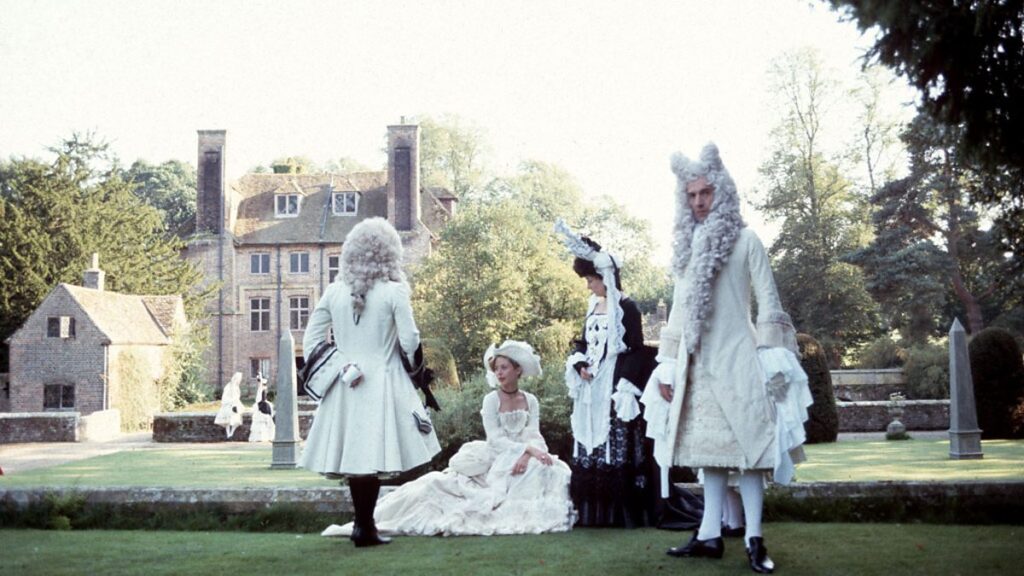
Peter Greenaway’s The Draughtman’s Contract revels in its take on convention, a kind of satire played with such a straight face that it could have been easily based on a nineteenth century novel. Set in the English Wiltshire in the late 1600s, the film follows an artist in his efforts to craft twelve landscapes of a country house. Filled with murder and cuckoldry, the narrative leisurely unloads on its audience, refusing to bend to any conventional understanding of storytelling.

Mr. Neville (Anthony Higgins) is an amusing character, though hardly the sort designed to be much of a protagonist. Neville is very particular about the atmosphere, forcing strict guidelines on the household to avoid parts of the property and certain parts of the day. The Herbert family must cater to Neville’s every whim, including his sexual desires, though the boredom of country life gives the routine an added sense of purpose.

The characters are distant, both in a figurative and literal sense. Greenaway frames most scenes to resemble portraits, rarely adjusting the camera. Without close-ups, the true point of view is hidden, or perhaps left up to the audience. The freedom of interpretation carries a liberating burden, leaving one to decide what matters on their own terms.

The costumes are absolutely delightful. Each character is dressed about as flamboyantly as possible. The excesses of the aristocracy are in full display, a group determined to be measures by the layers and tulle on their bodies. If it’s meant to be parody, Greenaway assures that it’s carried out with as much of a straight face as possible.

Greenaway’s success lies in his ability to be simultaneously distant and welcoming, a charm that buoys the film’s peculiar narrative. Much of the action centers around Neville’s work, but The Draughtman’s Contract isn’t too concerned with his artistic output. It’s a murder mystery that doesn’t care much about resolution. Simply put, it’s a film that gives the audience significant leeway to draw from it whatever they will.

Some may find that approach unwieldy, a film unconcerned with articulating a message or with whether or not its audience can relate to its main character. The Draughtman’s Contract is crafted to force one to think, in the absence of any obvious conclusion. The narrative manages to be compelling while divorced from any necessity to interpret its findings.

Rare are the kinds of stories that exhibit such comfort in the unresolved. Film supplies its audience with brief portraits into their characters’ lives that are implied to carry much grander weight, much like a landscape intends to capture the full essence of its subject. Life is rarely that convenient. More lies beneath the surface, either for people to discover or to be the subject of endless speculation. The Draughtman’s Contract delights in the ways it can manipulate its audience’s emotions both during the film’s runtime and for a good while after.

Friday

10

April 2020

0

COMMENTS

Classic Film: Made in U.S.A.

Written by , Posted in Blog, Movie Reviews, Pop Culture

Some films are so inaccessible that the mind can’t help but gravitate toward the unique particulars of their creation as a way to explore the labyrinth. Shot concurrently with Two or Three Things I Know About Her, it is as if Jean-Luc Godard crafted Made in U.S.A. as a way to break away from what few singular strands of convention were present in the former’s narrative. Based at least in part on The Jugger by Donald E. Westlake and Raymond Chandler’s The Big Sleep, as well as its film adaptation by Howard Hawks, the film found itself exiled from American cinema for decades due to complications surrounding the rights.

Made in U.S.A. can hardly be said to be an adaptation of much of anything. There are odes of crime fiction that draw parallels to Chandler’s work, but Godard doesn’t have plot on his mind. The film essentially functions without a plot, though its narrative is so splintered that it barely appears to function at all.

Anna Karina mostly carries the film as Paula, who encounters her dead lover in a hotel room. Paula interacts with plenty of gangsters. The aura of Walt Disney looms large over the film, a figure at odds with the bleak nature of noir crime. Godard plays around with left and right repeatedly throughout the film, challenging his audience to see outside the binary. If Disney represents one pillar of the industry, with Humphrey Bogart at the other, Godard wishes to float around the clouds above them.

The color scheme of the film is absolutely beautiful. Godard paints with a palette of primary colors, mainly red and blues against a landscape of 60s Paris. For practically that reason alone, the film is worth a watch, if only to enjoy a time period where fashion enjoyed such a radical simplicity.

Made in the U.S.A. is the product of Godard’s efforts to make something that in no way, shape, or form resembles a product. Movies, the kind that Disney still puts out to this day, have beginnings, middles, and ends. Everything in life follows this same pattern, as does Made in U.S.A. from a broader standpoint. The big difference being that the audience is constantly left without the typical narrative tools through which one typically mines enjoyment from the experience.

By venturing too deep into the abstract, Godard relinquishes some of the impact his words might carry when aimed at a more conventional subject. There is plenty of Godard’s anti-war sentiments present in the film’s rather political third act. Paris, France, and life itself bear the burdens of the wars that came before us.

Godard has quite a lot to say about the cyclical nature of life’s establishments, the forces that reign over his political and entertainment realms. Made in U.S.A. often struggles to articulate these messages mostly because it isn’t very interested in letting the audience in on its thought processes. Godard found great successes in most of his other 60s output, but Made in U.S.A. is a satisfying experience for fans of his work looking to see just how deep the rabbit hole goes.

Sunday

5

April 2020

0

COMMENTS

Classic Film: Two or Three Things I Know About Her

Written by , Posted in Blog, Movie Reviews, Pop Culture

A film like Two or Three Things I Know About Her (original French title Deux ou Trois choses que je sais d’elle) retains a certain sense of timelessness by the very nature of its premise. Jean-Luc Godard’s 1967 treatise on consumerism largely functions without a narrative. In the absence of structure, each viewing represents an individualized experience that’s rather difficult to replicate.

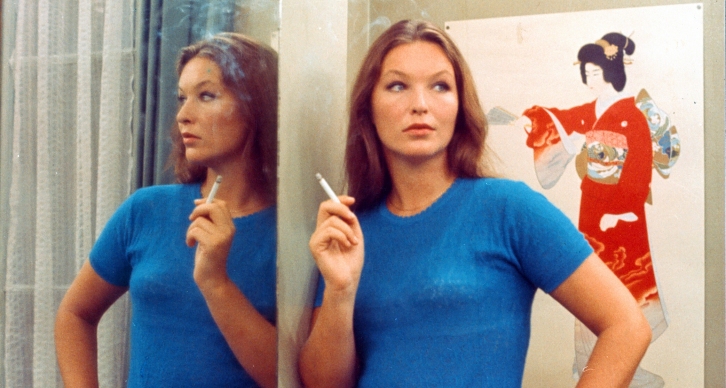
The closest thing the film has to a plot centers around Juliette Jeanson (Marina Vlady) going about her daily life. Juliette’s life is much like many other upper-class women, except for the sex work that she engages in, interspersed with her otherwise mundane existence. Juliette especially comes alive in a series of musings aimed directly at the camera in sequences that feel sort of like breaking the fourth wall.

Godard repeatedly demonstrates a fascination with language throughout the film, identifying it as the house that man lives in, both a vital tool and a limiting asset. We understand each other through our shared ability to communicate. Without it, we have nothing, except Godard isn’t entirely sold on language’s ability to accurately capture moments.

Language describes circumstances with broad strokes. One can describe a person going to a car wash, but the duty of determining what moments deserve illustration is a flawed proposition at best. A moment cannot be fully depicted no matter our efforts or best intentions.

In terms of capturing the essence of a film, narrative helps anchor the audience in the themes that are to be presented. By tossing narrative out of the window, Godard forces the audience to engage with film as a medium purely on his terms. It’s an uncomfortable yet deeply satisfying exercise.

The same holds true for the role of the critic, to provide a review within accepted standards. The critic does not move through a film, line by line, to provide a tracking poll of sorts by which the entire narrative must be judged. Such a practice would be futile if attempted, and unreadable if completed.

If a character turns her head to the left and the narrator tells you it doesn’t matter, does it? It’s there on screen, a fact that tells us little about the overarching answer. If things are significant because they are present, much of what we understand about art must be completely wrong.

Godard displays much contempt for the efforts of advertising to use language to influence society, fearing that their success will eat away at humanity’s ability to interpret meaning. Capitalism reduces the human experiences to numbers and bottom lines, consumption as the goal rather than the means.

Two or Three Things I Know About Her is a very difficult film to engage with. The lack of cohesive narrative constantly forces the audience to be at unease with their own understanding of what’s happening on the screen. It does not, however, skirt the traditional of question of good or bad.

Godard found his success in creating a film that keeps its audience guessing long after the credits have stopped rolling. Entertainment is a secondary concern, but there are ample pleasures to be found in taking the mind for a jog through his absurdist landscape. Two or Three Things I Know About Her is practically impossible to fully understand, but the act of grappling with the material is a delightful exercise.


Thursday

2

April 2020

0

COMMENTS

Tiger King Proves Sometimes Reality Is Better Than the Dream

Written by , Posted in Blog, Pop Culture, TV Reviews

America finds itself in a period desperate for distractions to take our minds off the collective sense of anxiety many of us feel toward the present state of affairs. Cooped up at home, a narrative like Tiger King: Murder, Mayhem, and Madness scratches this itch perfectly, the kind of train wreck you can’t look away from even as every fiber of your being feels dirty for having spent time with its subjects. The best true crime stories are the ones that are too absurd to work as pieces of fiction, with twist after twist designed to completely overload the senses.

At the heart of Tiger King is its titular subject, Joseph Maldonado-Passage, better known as Joe Exotic, a man of poor taste in just about every sense of the word. For years, Joe Exotic reigned over the Greater Wynnewood Exotic Animal Park, a small zoo in Oklahoma. Joe Exotic owned hundreds of tigers, earning the wrath of animal rights activist Carole Baskin, who operates the Big Cat Rescue sanctuary in Florida. Exotic’s efforts to wage war against Baskin left him financially ruined, leading to him attempting to hire a hit man to murder her. A 2018 arrest for those efforts, among other charges, lead to twenty-two-year sentence, which he is currently serving.

Tiger King uses extensive footage filmed over several years, allowing the filmmakers to capture Joe Exotic and all of his antics before he found himself behind bars. Exotic is a natural entertainer of the Trumpian variety, a man perpetually capable of stooping to new lows with his asinine behavior and lust for the spotlight. Much like his zoo, Exotic appeals in the same way as toilet humor, a juvenility perfect for Netflix, where the audience can laugh along without feeling ashamed for their enjoyment.

The seven-part series covers a wide range of topics beyond the Exotic/Baskin feud, itself full of subplots. Fellow tiger enthusiast Bhagavan “Doc” Antle receives an extended profile, a similarly vile character who runs a preserve/harem in South Carolina. Tiger King strikes at the heart of the types of people who engage in the shady business of exotic animals, an expensive endeavor that leads to plenty of abuse, both of the animals and the employees lured to the premises.

A Shakespearian tragedy fitting for this dystopian modern era, Tiger King finds a sense of mesmerizing beauty in its perpetual race down the gutter. Joe Exotic is a truly terrible human being, selfish and vindictive, hardly a suitable protagonist or anti-hero. Likewise, he’s not wholly a villain either, having a kind of weird charm that tugs at the heartstrings, if only for a moment. In Baskin, the show finds a suitable foil, herself an odd character who walks under a perpetual cloud of suspicion after her husband mysteriously vanished in 1997. There are no heroes in Tiger King.

The great triumph of the series lies with its utter lack of moral message. Owning exotic animals is bad, yes, but that’s also something already well-apparent to many viewers in the year 2020. Tiger King isn’t all that concerned with stating the obvious. Instead, the series mostly just focuses on the absurd nature of its narrative. Each episode contains more plot twists than most movies could get away with. It is magnificent entertainment.

To call it a guilty-pleasure almost doesn’t feel right considering all that’s going on in the country. Pleasure is in short supply. Joe Exotic is a seemingly-endless supply of amusement. Tiger King isn’t just must-watch. It’s the perfect narrative for our times.