Ian Thomas Malone

Pop Culture Archive

Sunday

28

June 2020

0

COMMENTS

We Are Freestyle Love Supreme is a compelling origin narrative

Written by , Posted in Blog, Movie Reviews, Pop Culture
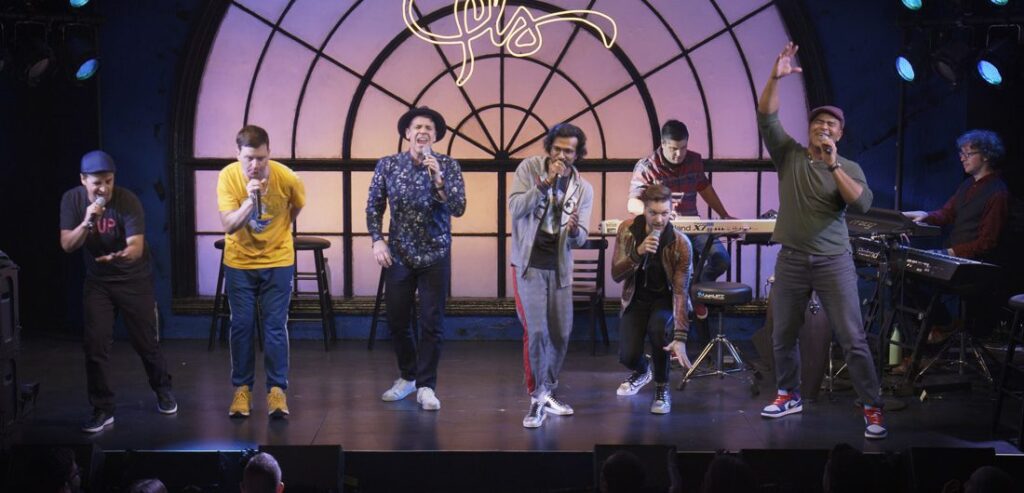
Every superstar has an origin story. “Freestyle Love Supreme,” a comedy hip-hop improv group, brought much of the core group of the Broadway sensation Hamilton together, including Lin-Manuel Miranda, director Thomas Kail, and actor Christopher Jackson. Though many in the group have gone on to massive fame and fortune, the connections forged bring them back together, both as friends and performers. The documentary We Are Freestyle Love Supreme aims to shed light on the group whose members changed the face of Broadway.

Formed in the post-college haze of the core group in the early 00s, Freestyle Love Supreme began as a small project conducted in the basement of the Drama Book Small that eventually enjoyed a Broadway run that concluded earlier this year. Archival footage portrays the group in its early years, performing around the country and in countries such as Scotland.

The documentary is a real treat for Hamilton and Miranda superfans, showcasing the talent in their pre-fame days. It’s rare that college friends maintain such tight bonds into their 40s, but We Are Freestyle Love Supreme is a strong testament to the power of friendship. The documentary convincingly presents the case that without this improv group, there would be no In the Heights or Hamilton.

Part of the trouble with this dynamic though is the simple truth that if there was no Hamilton, there would be no documentary about Freestyle Love Supreme. Director Andrew Fried spends much of the film individually profiling the troupe’s extensive cast, not all of whom achieved superstardom. The relatively equal allotment of screentime is bound to appease the group dynamic, but as a result there are parts of the documentary that are essentially very boring for a general audience, who may be familiar more with Hamilton than the group here.

The documentary does struggle at times to balance the juicier aspects of its narrative with its general apprehension for the kind of conflict that drives storytelling. The third act of the film explores riffs in the group, as well as troupe member Utkarsh Ambudkar’s departure from the role of Aaron Burr in Hamilton after issues with substance abuse. There is a lot of love in the documentary, certainly appropriate for the group’s name.

Is there too much love for a film? Probably not. The group’s infectious energy translates well to the format, even if there is some obvious ego massaging present. We Are Freestyle Love Supreme is not a documentary solely about either Miranda or Hamilton. Though at times Fried struggles to balance the pieces of his story, the film should satisfy Miranda superfans, as well as those seeking to learn more about his meteoric rise.
Thursday

25

June 2020

0

COMMENTS

Welcome to Chechnya is a harrowing look at an underreported human rights atrocity

Written by , Posted in Blog, Movie Reviews, Pop Culture

We live in a time of unparalleled global acceptance of LGBTQ individuals. It has never been easier to be openly gay. The truth of that statement can make it easy to forget just how oppressive some countries are toward their own LGBTQ populations. The documentary Welcome to Chechnya shines a light on a part of the world woefully underreported by the media.

Director David France does an excellent job breaking down the complex political structure in Chechnya, a republic within the Russian Federation. Its leader Ramzan Kadyrov, portrays himself in a similar over-the-top strongman fashion as Vladimir Putin. Kadyrov enjoys great latitude from Putin to carry out human rights abuses due to his stranglehold on the region.

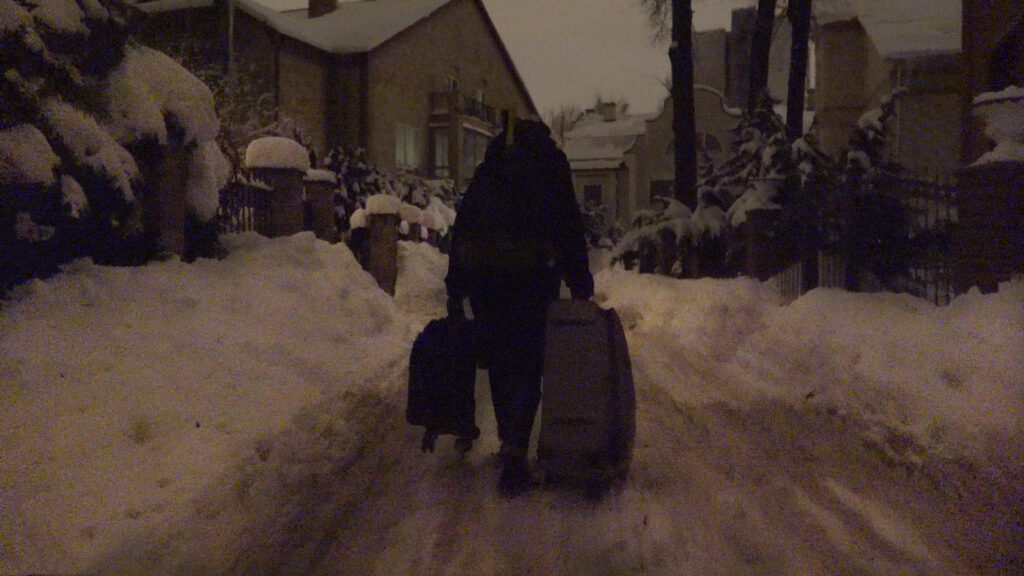
The documentary mostly follows the work of an underground LGBT resistance group, tasked with helping gay, lesbian, and transgender people flee the region. Despite Kadyrov’s statements to the contrary, Chechnya is home to many gay concentration camps, routinely torturing its own citizens merely for being who they are. It’s deeply uncomfortable to watch.

Often utilizing hidden cameras, France gives his audience a front row seat to what life is like behind enemy lines. The film takes great care to present a three-dimensional perspective on its subjects, people who possess many of the same natural desires for companionship and community that we all hold dear, even despite their apocalyptic circumstances.

France is less effective at building a cohesive narrative. The footage he presents is extremely interesting, but as a complete product the documentary appears to be crafted largely on the fly. There are obvious limitations to what anyone could achieve under such circumstances.

The film utilizes a face-swapping technique to protect many of the identities of its subjects. The technology is quite impressive, but the execution leaves a bit to be desired. The face-swapping robs some of the interviews of their potential impact, constricting the body’s ability to express emotion, already exacerbated by the language barrier.

None of the face-swapping drawbacks would be much of an issue if the necessity to protect one of the subjects hadn’t been rendered irrelevant by the events of the film, which turned him into a public figure. France’s approach to that particular reveal made the face-swapping feel like more of a gimmick, obviously not reflective of the circumstances at play. For others, the approach made perfect sense.

Welcome to Chechnya is an important wake-up call to the atrocious human rights violations in Russia, shamefully ignored by the mainstream media. Our president may not care about Putin’s oppressive regime, but decent people will be swayed by France’s powerful documentary. The advances in equality enjoyed in America should not make anyone forget how tough it is to be gay in far too many parts of the world.

Thursday

18

June 2020

0

COMMENTS

Bully. Coward. Victim: The Story of Roy Cohn is an esoteric look at an American monster

Written by , Posted in Blog, Movie Reviews, Pop Culture

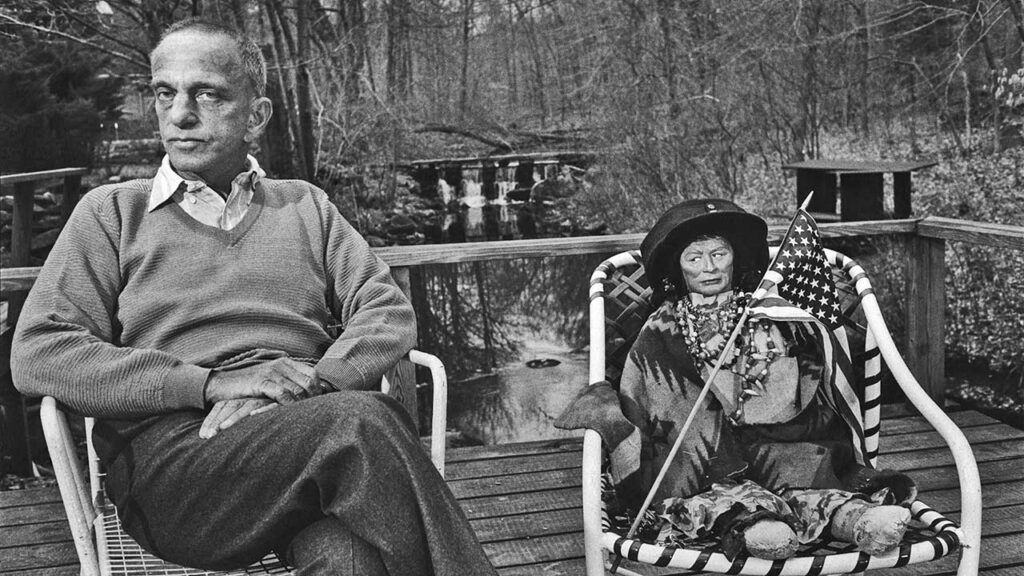
The stain of Roy Cohn may never be fully removed from America. A man who championed Senator Joseph McCarthy’s Red Scare and shepherded Donald Trump through his early days in business, it can be hard to understate his impact on this country. The new documentary Bully. Coward. Victim: The Story of Roy Cohn sheds some light on Cohn’s troubled existence.

Instead of aiming for an overview of Cohn’s life, director Ivy Meeropol focuses her attention on a few aspects of his career and personal interactions. The prosecution of Julius and Ethel Rosenberg, Meeropol’s grandparents, weighs heavy on the narrative. Meeropol’s father Michael is interviewed in the film, providing an intimate perspective to the specific human cost of Cohn’s carnage.

Meeropol also includes interviews with Cohn’s cousins, who hold nothing but disdain for their relative. The intimacy that these interviews suggest is not necessarily reflected in the documentary, but Meeropol’s angle is a valuable one, especially since there are plenty of works about Cohn’s life. It would, however, be easy to watch the film without realizing the relation between Meeropol and her grandparents.

Cohn’s homosexuality frames much of the narrative. Though closeted for his entire life, Cohn’s sexuality was not exactly much of a secret to those who knew him. Meeropol points out the ample hypocrisy present in Cohn’s endless bigotry toward homosexuals, a key figure in the Lavender Scare who repeatedly denied his own HIV diagnosis even in the last few weeks of his life.

The narrative is much more contemplative about Cohn’s life than biographical. Those who know little about Cohn might feel a little lost amidst Meeropol’s scattershot pacing. She’s a director with a singular focus to carve her own niche with regard to her subject. In that regard, she most certainly succeeds.

Trump doesn’t play a very large role in the documentary, though anyone familiar with his combative nature will see obvious parallels in Cohn’s speech patterns. Meeropol includes plenty of interviews that essentially let Cohn speak for himself. His own words are pretty damning, painting the picture of a detestable man.

The documentary hardly humanizes Cohn, with the “victim” in its title referring to a specific event rather than a general sentiment. There is some sympathy to be garnered in his tragic life, but Meeropol hardly endorse this idea. Cohn is repeatedly referred to as “evil” by subjects, though his true villainy hardly needs to be outlined. In that sense, Meeropol is perhaps a bit generous toward Cohn.

Bully. Coward. Victim: The Story of Roy Cohn is a compelling film, albeit one that hardly tries to be the definitive voice on Cohn’s life. Meeropol is a skilled storyteller with a keen sense of emotion. The documentary is a must watch for anyone seeking a deeper understanding of a truly loathsome figure in American history.

Wednesday

17

June 2020

0

COMMENTS

The Ghost of Peter Sellers is a fascinating look at the complications of filmmaking

Written by , Posted in Blog, Movie Reviews, Pop Culture

Peter Sellers was one of the most talented comedic actors in cinematic history. By most accounts, he was a pretty awful person in both his private and professional life. His behavior hindered or derailed many productions. The documentary The Ghost of Peter Sellers examines his effect on the 1973 comedy Ghost in the Noonday Sun.

Both the documentary and its subject film are directed by Peter Medak, providing an intimate perspective on the material. The Ghost of Peter Sellers occupies a fairly unique place in cinematic lore. Medak interviews several people involved with the original film, providing a rare look behind the curtains into the messy world of show business.

Medak’s great triumph lies in his ability to craft a compelling narrative that doesn’t require the audience to have seen Ghost in the Noonday Sun. After watching the documentary, you may not want to. Noonday Sun looks like a complete and utter disaster from both behind that camera and in front of it, but Medak consistently keeps things interesting, examining the Cyprus location and the various geographical issues presented.

The documentary works as both a vanity project and a valuable piece of film history. Medak is pretty open about how the film continues to haunt him, having played a major role in the downturn of his career. The narrative of the documentary essentially follows him on his path to catharsis, retracing the original film’s various disasters. Medak is an affable figure to watch, conversing with his subjects in a way that’s easy to follow.

As the title suggests, Sellers is the film’s true villain. His behavior on set is outlined in great detail, with most of the subjects backing up Medak’s account of the events. One of Sellers’ own daughters is even interviewed, providing further perspective on her troubled father.

Medak does take care to provide a balanced perspective of Sellers, an immensely complicated figure. He includes a few intimate stories of their interactions, the kind of stuff that biopics about Sellers have dramatized for years. There’s a weird sense of affection present that enriches the documentary.

It’s a fair question to wonder how much of the documentary would be different under the steward of a less biased director. Medak is quite open, but he’s also human. He takes responsibility for being the captain of the ship, not blaming everything on Sellers, but it remains difficult to pinpoint how much of his career trajectory was hindered by the film.

The Ghost of Peter Sellers is a real treat of a documentary perfect for Sellers diehards and film aficionados. Medak didn’t have the career he would have liked, directing few feature films after Noonday. It is quite interesting to watch him retrace the footsteps of his career and the shadow that continues to haunt him.

Wednesday

17

June 2020

0

COMMENTS

Babyteeth finds solace in the quiet moments

Written by , Posted in Blog, Movie Reviews, Pop Culture

It can be hard to admit how little control we have over our own feelings of affection. Even harder when confronted with the reality that those around us will choose to love, often with little considerations to practical circumstance. It’s natural for humans to want to possess at least some degree of control over their surroundings.

At its core, Babyteeth is a film about control. Milla (Eliza Scanlen) is a teenager battling cancer who begins a passionate love affair with a slightly older drug dealer Moses (Toby Wallace). Moses has plenty of charm, but hardly possesses the demeanor suited for the particulars of Milla’s situation, a notion hardly lost on Milla’s parents Henry (Ben Mendelsohn) and Anna (Essie Davis). The heart wants what it wants, forcing Milla’s parents to confront their own reservations for the sake of their daughter’s sense of happiness.

Making her feature directorial debut, Shannon Murphy frames Babyteeth almost like a stage play, with the family home in suburban Australia used as the backdrop for this intimate family drama. Murphy has a strong talent for extracting suspense from each scene, keeping the dramatic tension high throughout the narrative. It’s a quiet kind of film, with Murphy’s long takes letting the emotion play out.

The acting is pretty superb. Scanlen does a great job showcasing Milla’s internal struggle between her lust for life and the realities of her illness. Her relationship with Moses follows predictable patterns but feels genuine. Mendelsohn makes great work of the dark material, a father forced out of his own myopic mindset to take care of his daughter.

Youth illness is a very sad topic, hardly the kind of material that needs to be sensationalized. Murphy manages to find a strong balance between the heavy material and the smaller, harder-to-notice joys of life. Milla is sick, but not necessarily unhappy. The film does a great job exploring the simpler joys of life, namely the interactions that make this complex journey worth it in the long run.

The film does run into some pacing issues. With a runtime of just under two hours, there’s a balance between the main narrative of Milla’s illness and the subplots of the other characters that Murphy occasionally struggles to balance. It feels like there’s more to Anna’s story in particular that gets truncated for the sake of the film’s other ambitions. Obviously two hours is a short amount of time to spend with an entire family’s issues, but the allocation of time is a bit bloated in some areas while undeveloped in others.

Babyteeth is occasionally uncomfortable to watch, a strong debut by Murphy that demonstrates her firm grasp on the complexities of human emotion. Life is short, even for the lucky ones. When faced with an uncertain future, the heart makes allowances beyond that which it might typically consider. Tragedy has a weird way of bringing people together, even those once thought diametrically opposed.

Tuesday

9

June 2020

0

COMMENTS

Seahorse Handles Transgender Pregnancy with Grace and Dignity

Written by , Posted in Blog, Movie Reviews, Pop Culture

It would be nice to live in a world where news like Freddy McConnell’s pregnancy wouldn’t make international headlines, leading to a cascade of unfortunate headlines seeking to sensationalize his person life. McConnell, a British transgender man who gave birth to a son in 2018, is an affable individual who understandably shies away from the kind of cringeworthy tabloid coverage that follows him around. Seahorse: The Dad Who Gave Birth seeks to tell his intimate story.

Director Jeanie Finlay captures extensive footage from McConnell’s entire pregnancy. The film does a great job explaining the unique challenges the process presents to trans men. Being off of hormones for any extended period of time is an incredibly taxing endeavor, something that McConnell handles with grace.

The artificial insemination procedures aren’t very different for trans men as for cisgender women, a reality that Finlay highlights quite well. Seahorse presents a refreshingly sober look at pregnancy, a soft-spoken effort to tone down the rhetoric surrounding transgender issues. Much of the film is pretty mundane stuff, but that’s also kind of the point. McConnell isn’t a radical figure. He’s a man who wants a family.

Seahorse does at times struggle with presenting a narrative. Much of the film’s first act centers around McConnell’s relationship with CJ, a masculine-presenting non-binary person, who was initially supposed to co-parent McConnell’s child. CJ exits the narrative early on, leaving Freddy on his own, though with support from his mother among other people.

At a certain point, Finlay stops trying to organize the steps of McConnell’s pregnancy into a cohesive story. The third act suffers from a few meandering sequences that don’t serve any broader narrative. Mundane might be the point, but it’s gets a bit tedious after a while.

Seahorse would likely have benefited from Finlay taking a broader approach to the subject. A quick Google search shows the especially toxic media environment in the UK toward transgender people. None of this is covered in the film, perhaps a missed opportunity to provide some broader context to the audience.

For his part, McConnell expresses a desire to be away from the media spotlight late in the film, a peculiar position for the subject of a documentary to be in. Finlay keeps some understandable distance toward a subject going through an emotionally taxing journey with minimal external support. It is McConnell’s journey more than than that of pregnant transgender men as a whole, a tricky tightrope that many narratives focused on marginalized groups must walk.

Seahorse is a very good film that handles its sensitive subject material with great care. There is the sense that there is plenty left on the table with regard to the subject matter. Perhaps another documentary with broader intentions to capture transphobia in Britain can expand on these themes, but if Seahorse succeeds in its primary objective, the thought might not be there to make another film on this topic.

Thursday

4

June 2020

0

COMMENTS

The Donut King Explores the Origins of a SoCal Institution

Written by , Posted in Blog, Movie Reviews, Pop Culture

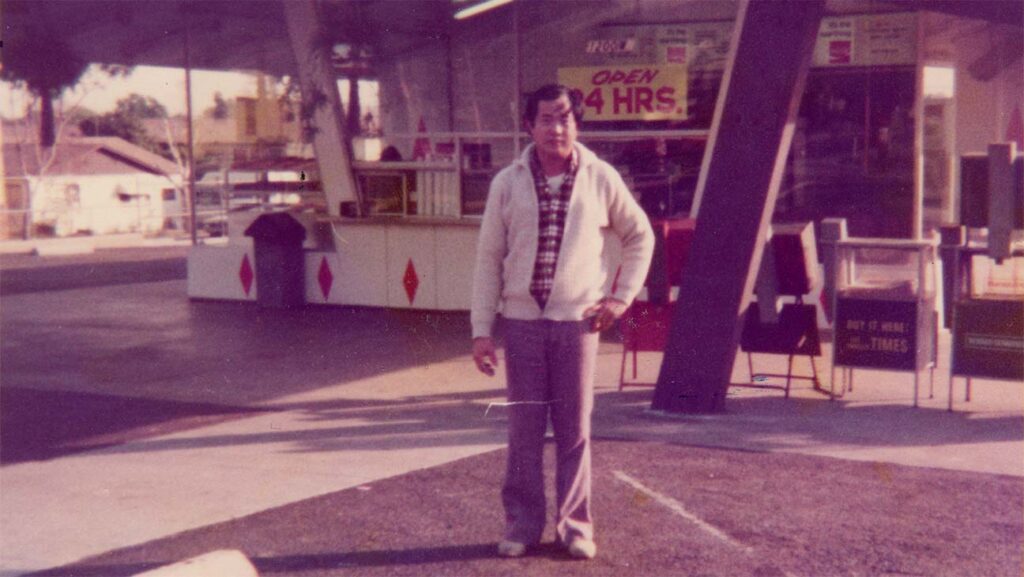
There are plenty of parts of Los Angeles where it’s hard to drive more than five feet without passing a donut shop. SoCal is home to thousands of independent stores selling the iconic American treat. LA’s Cambodian population dominates the donut market, with over 90% market share across the region. The new film The Donut King explores the man who made much of this possible.

The life of Ted Ngoy is a classic example of the American dream. Escaping Cambodia as a young refugee, Ted arrived in SoCal in the mid 70s, seeking a better life for himself and his family. Recognizing the difficulties of raising a large family on a church janitor’s salary, Ted was drawn to the donut trade, which offered high traffic, long operation hours, and good margins.

After a three-month apprenticeship working for the legendary Winchell’s Donuts, Ted went out of his own, opening his own shop. Quickly learning the trade, Ted expanded rapidly through the region, in the process employing hundreds of his Cambodian countrymen. Ted’s deep-fried empire grew so massive that it severely cut into Winchell’s own market share, in the process keeping east-coast leviathan Dunkin Donuts from expanding westward.

Ngoy makes for a compelling subject, a complex man who squandered much of his empire after developing an unhealthy affection for neighboring Las Vegas. He’s very open about his life’s story, giving a personal touch to director Alice Gu’s broader narrative about how the Cambodian population came to dominate the LA donut market. Gu thoroughly unpacks the material, interviewing executives from Winchell’s and Dunkin Donuts to provide a very digestible explainer on all things donuts.

The film’s biggest struggle lies with its runtime. The Donut King almost justifies spending more than ninety minutes on Ngoy and the SoCal donut market, but the film drags pretty hard for a long stretch in the middle. A solid twenty minutes should have been cut to ease the burden on the narrative.

Gu also includes several animated sequences from films and cartoon references donuts. These cutaways help ease the burden on the repetitive landscape for a while, but they grow stale and tiresome as the narrative progresses.. There’s a very good story in The Donut King, but Gu would’ve done well to trim it down a bit.

The Donut King is a touching love letter to an important slice of SoCal culture and a man who lived the American dream. Ngoy has had his ups and downs in life, but he singlehandedly changed the landscape of a vital LA market. Be sure to grab a pink box full of everyone’s favorite treat before watching.

Saturday

16

May 2020

0

COMMENTS

Dead Still Is a Well-Crafted Period Drama with Plenty of Humor

Written by , Posted in Blog, Pop Culture, TV Reviews

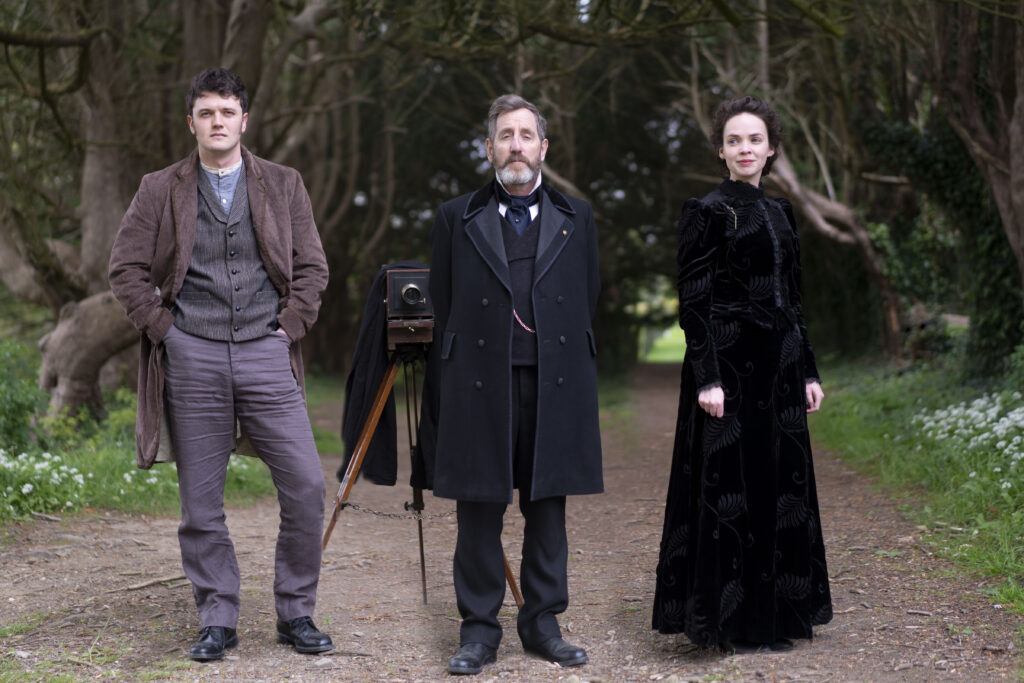
Pictures carry a degree of disposability in the modern era. Selfies on Instagram or Snapchat can disappear into the void not long after they’re taken. Set in Ireland during the 1880s, Acorn TV’s new drama Dead Still captures an era back when photographs were still a valuable commodity, a luxury that few could afford.

The show follows Brock Blennerhasset (Michael Smiley), a memorial photographer who makes his living taking pictures of the recently deceased. A practitioner of the daguerreotype process, which uses steel plates to capture photographs, Blennerhasset finds himself in an era that is rapidly evolving, with cheaper and easier methods hitting the market. Accompanied by his niece, Nancy Vickers (Eileen O’Higgins), and gravedigger-turned-assistant, Conall Molloy (Kerr Logan), Brock goes about his business as a broader conspiracy involving the illicit photograph trade begins to ensnare him.

Dead Still owes its success to the delightful chemistry between Smiley, O’Higgins, and Logan. The three are absolutely marvelous to watch, elevating each other in practically every scene. Smiley brings an understated dry wit to Blennerhasset that’s well complemented by the more affectionate Nancy and Conall. The show makes a compelling case for why they’re drawn to each other, outcasts who find community in their rather peculiar line of work.

O’Higgins often sets the tone for the narrative, working wonders as the show’s sole primary female character. Nancy is maybe a bit more modern than period drama purists might like, but O’Higgins exudes such emotion in each scene that it’s practically impossible not to like the character. Dead Still looks like the kind of show that’s a lot of fun to work on, with a sense of joy that permeates through the screen.

The show finds a good balance between drama and comedy, frequently using humor to lighten the dark aesthetics. Blennerhasset’s coachman Cecil (Jimmy Smallhorne) is quite amusing, though Smallhorne brings a surprising amount of depth to the character. Dead Still makes great use of the Irish landscape, frequently giving the eyes plenty to feast on with its emphasis on old architecture.

The six-episode season mostly utilizes serialized storytelling, though the front half is a bit more self-contained. The narrative bites off a bit more than it can reasonably chew in six episodes, emphasizing world-building and character development over pacing of the narrative. This approach works pretty well, endearing the characters to the audience while leaving plenty of hunger for more. The season could’ve easily gone on for another four episodes.

Dead Still is way more fun than you’d expect from a period drama about photographing the recently deceased. The acting is superb and the production values are top notch. Acorn TV has a gem on its hands, hopefully one that has a second season in the works.

The entire six episode first season was screened for review.

Friday

15

May 2020

0

COMMENTS

Dummy Is a Self-Indulgent Slog That’s Never as Funny as It Wants to Be

Written by , Posted in Blog, Pop Culture, TV Reviews

There are countless shows about people who make shows. Hollywood’s longstanding fascination with itself occasionally produces a gem, but the self-indulgence often comes at a cost. For a show like Quibi’s Dummy, based on creator Cody Heller’s real-life relationship with Dan Harmon, narrative is often substituted for an endless parade of winks at its audience.

Dummy follows the adventures of a fictionalized Heller, played by Anna Kendrick, as she develops a budding friendship with Harmon’s (Donal Logue) sex doll, voiced by Meredith Hagner. The sex doll, which Cody names Barbara, serves as a kind of motivational force for her middling career as a writer. Most of the shortform episodes center around the rapport between Cody and Barbara, functioning kind of like a buddy comedy.

The humor is pretty lazy. There are a few scattered laughs to be had from listening to Barbara’s vulgar antics, but the routine wears thin after the first couple of episodes. Heller writes plenty of surface-level jokes about feminism and the MeToo movement that play too hard for shock value. Absent is any sense of deeper truths uncovered from this line of thinking.

Heller displays a weird fascination with the Bechdel test, producing several painfully pedantic takes on the concept. It’s fairly unclear what she’s trying to say about any of this other than the rather obvious point that women can in fact be bad feminists. These revelations are neither insightful nor amusing.

The Quibi format hardly does Dummy any favors. The first few episodes contain way too many conversations that feel like they’re playing at 1.5 times the normal speed. This might be more forgivable if it wasn’t an artificial mandate for a show that could in theory be as long as it wanted. The back half of the season does mostly rectify this problem.

The episode runtimes don’t exactly provide much time for character development. Kendrick does a satisfactory job as a foil to the zany sex doll, but Heller as a character lacks any sense of depth. She’s an unmotivated writer in LA who never loses sight of the good fortune that’s been handed to her as a result of her romantic partner. It is unclear why anyone would think that this is a good formula for a protagonist.

Dummy grinds its superficial meta humor into the ground, a shallow inside joke packaged as a television series. Even for devoted Harmon fans, it’s unclear who the target demographic for this show really is, besides maybe their extended families. The fact that Heller does seem fairly self-aware only makes the whole experience even more disappointing.

Friday

15

May 2020

0

COMMENTS

Classic Film: For Ever Mozart

Written by , Posted in Blog, Movie Reviews, Pop Culture

Jean-Luc Godard spent much of the 60s crafting experimental films with limited mainstream appeal. Part of the fun of sitting down to watch a Godard is the feeling of experiencing the director grappling with his thoughts in real time. That kind of directorial approach doesn’t always work, but it’s often very entertaining to watch.

Godard’s 60s output possesses the added advantage of being crafted against the backdrop of its era, full of vibrant color schemes and fashion. There’s always plenty for the eyes, even if the mind has no idea what’s going on. In 1997’s For Ever Mozart, Godard returns to his earlier themes, albeit without the joys that buoyed his art at indecipherable moments.

The film is broken up into four parts, each introduced with its own name. One sequence sees actors auditioning for a film, frequently discarded after only uttering a few words. Another shows a hostage situation during the Bosnian war. There is some continuity in the sense that several of the actors appear in multiple parts, but the film hardly possesses anything resembling a narrative. One’s ability to describe things that look like a plot should not be mistaken to imply that there actually is a narrative.

The acting is stifled and bland. None of this can be blamed on the talent themselves, as it is fairly hard to imagine anyone making good work out of a painfully obtuse script with no obvious sense of purpose. There is nowhere for a performer to direct their energy.

Godard is rarely accessible, but For Ever Mozart is little more than foolish ramblings by a director who seems oddly bored by his musings. At some points, it looks like he’s trying to provide a commentary on the value of art. It could be true that art can’t save the world, but to draw that from this film is to give it credit that it woefully does not deserve.

The scenery in the second sequence is pleasant to look at, something to remember. The complete absence of narrative leaves little for the mind to latch onto it after the credits roll. Godard takes a couple swings at philosophical one-liners here and there, but nothing leaves a lasting impression.

For Ever Mozart is a big waste of time for anyone other than diehard Godard fans eager to complete his filmography. Even then, it hardly holds much value. There is no way this film would have been made if it weren’t for the name recognition of its director, a sad reflection on the medium.