Ian Thomas Malone

Pop Culture Archive

Monday

17

August 2020

0

COMMENTS

Solid performances can’t buoy the muddled Tesla

Written by , Posted in Blog, Movie Reviews, Pop Culture

As a director, Michael Almereyda brings the right kind of energy to Tesla, recognizing the pitfalls of the biopic genre. Nikola Tesla is a figure whose contributions to electricity do not receive the widespread credit that others such as Thomas Edison enjoy. Almereyda subverts his subject, offering an irreverent depiction of Tesla that sadly is never quite as fun as it wants to be.

The film jumps around quite a bit through Tesla’s life, presented through the eyes of Anne Morgan (Eve Hewson), who functions both as an ahistorical omniscient narrator and as a figure within the story. Tesla (Ethan Hawke) spends much of the film feuding with Edison (Kyle MacLachlan), though plenty of the time is spent on absurdist antics that hype up its protagonist’s perceived genius.

The acting is quite competent. Hawke plays the mad genius trope well. MacLachlan is a great cold-hearted rival destined to steal Tesla’s thunder. Hewson is cool and collected functioning as the narrator, guiding her audience through the history. There aren’t really any complaints to make, except that none of them really take the ball and run with it. Absent are any truly standout performances that might make the whole experience more memorable.

Hawke’s Tesla is more of an object of the film than its subject. Almereyda is less concerned with exploring Tesla as a person than he is exploring the idea of Tesla. Tesla rolls around on rollerblades, often in sets that look pretty modern, and it’s kind of cute to watch. For a little while.

The idea loses steam as Tesla struggles to present anything except for the blatantly obvious as its findings. Anyone reading a brief description of the film could probably accurately assume that Almereyda wants to present Tesla as an under-appreciated genius. In that regard, Tesla feels very safe as a narrative, despite presenting itself as an outlandish dark comedy.

What’s further unclear is what exactly Almereyda expects his audience to feel about Tesla. History can be corrected in a sense, but the experience isn’t compelling enough to entertain the kind of critical thinking Tesla’s legacy deserves once the credits have rolled. The whole ordeal evokes a shrug, and not much more.

Almereyda’s pitfalls are best represented as the narrative rollerblades toward its climax, using a karaoke sequence of a song that’s been played many times in film, in nearly identical settings. Tesla might be appealing to anyone who’s never seen an artsy movie, but too often it plays notes that have already been deployed in more compelling efforts. Here, it just looks kind of weak.

Tesla fails both as a biopic and as a work of entertainment. The absurdist sequences feel quite bland in the absence of any substance regarding Tesla’s life. Tesla may be a misunderstood genius, but Tesla doesn’t do a good job making anyone care. The whole thing may have worked better as a series of vignettes, with a shorter runtime better masking the absence of substance.
Thursday

13

August 2020

0

COMMENTS

The August Virgin captures the essence of the dog days of summer

Written by , Posted in Blog, Movie Reviews, Pop Culture

August is the perfect month for sappy sentimental feelings. With the last days of summer slipping away and the new beginnings that September brings just around the horizon, it seems like the perfect time for self-evaluation. No matter how stuck in a rut you might feel, August beckons for one to savor the last moments before you’re actually able to do anything about it.

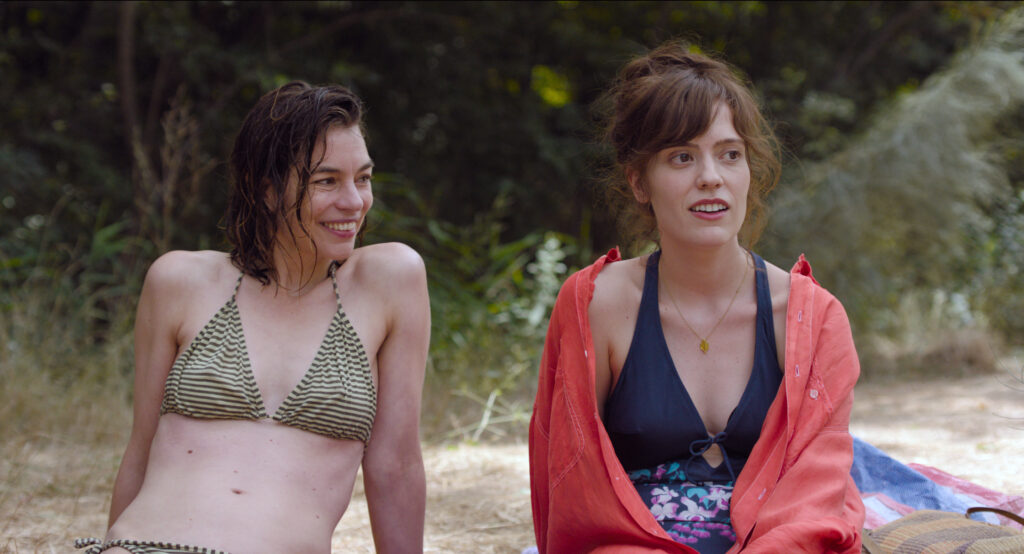
Jonás Trueba’s The August Virgin sets out to capture the spirit of the month, when you’re worried about the future that’s thankfully not quite here yet. Eva (Itsaso Arana) rents out a room in Madrid, melancholic about her early thirties. The city is fairly quiet, perfect for the kinds of random encounters between strangers that you don’t see quite as often at other parts of the year, when people are consumed with their own individual distractions.

Eva doesn’t have a ton of time on her hands to find a new place of residence before September, but August isn’t really about solutions. Instead, Eva wanders, making new friends and enjoying good wine. The future can wait.

Much of the film depicts simple conversations between Eva and the various acquaintances she meets along the way. Arana is a captivating lead, giving an expressive performance that allows the audience to feel Eva’s sense of optimism in real time. She serves as a perfect reminder for the power of stepping outside one’s shell.

Though the film takes place over the course of only a few days, Trueba captures the nature of time as a transient force that alters relationships that we once held dear. Eva reconnects with her sister Olka (Isabelle Stoffel), who’s raising a small child. The bonds of siblings change over time, as hearts expand to make room for the new loved ones in our lives.

The film is perfect for this time of year, a relaxing romp through Madrid that should satisfy those of us who wish we could be similarly traveling. The film doesn’t try to reinvent Eva in a few days, but rather let her out of her shell for a bit. Most of us could use with some more opportunities to step outside our comfort zones.

The film does sputter a bit in its third act, as the narrative heads toward its conclusion. As a month, August represents the end of summer, but the calendar doesn’t necessarily produce the answers that people are looking for. As a film, The August Virgin has a somewhat higher mandate to produce something more tangible for its audience to digest, but it comes across as a little forced.

The August Virgin is a real treat. The runtime is a bit long considering the dialogue heavy narrative, but it’s a great way to spend an afternoon or an evening. This may have been a summer unlike any others, but film still provides the kinds of comforting retreat that’s timely for this part of the year.


Wednesday

5

August 2020

0

COMMENTS

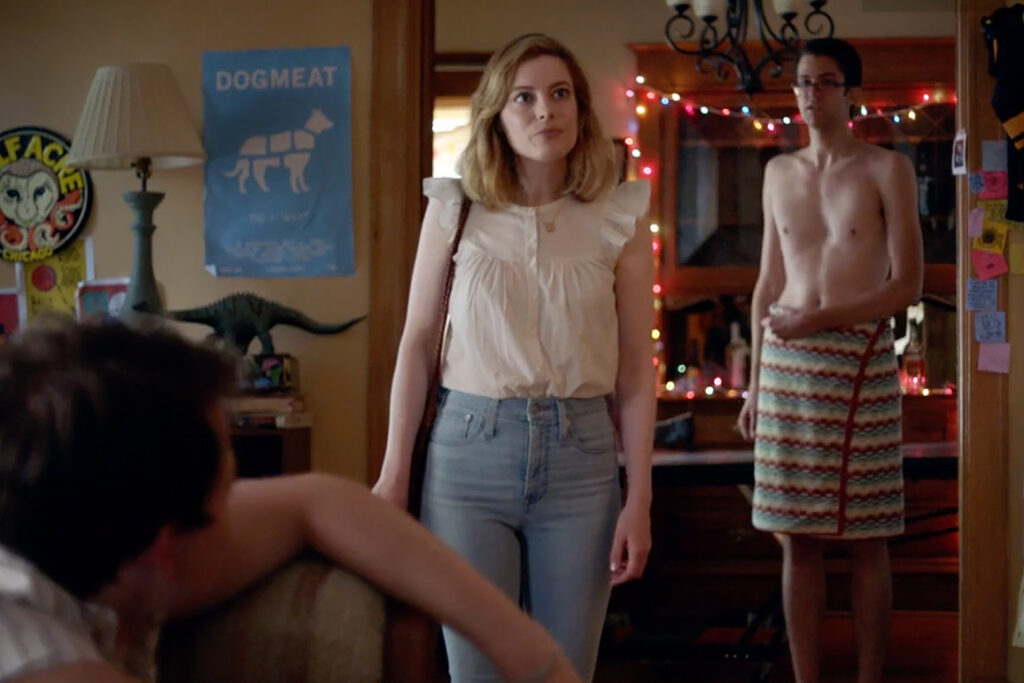
Gillian Jacobs carries I Used to Go Here

Written by , Posted in Blog, Movie Reviews, Pop Culture

Return visits to one’s alma mater can inspire many emotions, particularly those in the arts. Writers dream of the day they get to triumphantly return to their own stomping grounds to deliver a reading that will inspire a whole new crop of college students. That dream obviously rarely translates into reality, something that I Used to Go Here structures itself around.

Kate Conklin (Gillian Jacobs) is a 35-year-old writer about to publish her first novel. The film goes out of its way to make clear that this book is not supposed to be very good. Kate’s tour is cancelled, but she receives an invitation to speak at her alma mater by her old professor David (Jermaine Clement). David is a general sleaze, though generous enough to offer Kate a teaching position, despite not having any form of advance degree, something that would absolutely never happen in real life to anyone with her credentials.

Jacobs carries the entire narrative, making it easy to forgive the film’s otherwise lackluster execution. Kate is sad, but not necessarily a victim. She finds community in the form of the group of college kids who now occupy her old off-campus house, partying stoners with little obvious ambitious. The stakes are low, but it’s still pretty entertaining to watch.

Writing is not a very interesting profession to showcase on screen. Talking about writing often comes across as pompous, a mistake that director/writer Kris Rey repeatedly makes throughout the narrative. There is the sense that Kate was intentionally written to be a complete fool of a writer, but her obvious lack of talent undercuts her ability to function as a protagonist. It’s hard to root for someone who hasn’t presented a compelling case for success.

Where Rey finds more success is in the simple depictions of Kate and her newfound friends, fooling around. It’s hardly the most compelling drama in the world, but the sequences are fun to watch. For a low-stakes narrative, simple time spent with a charming cast can make for a pleasant experience.

The film likely carries the most appeal for fans of Jacobs, but viewers nostalgic for their college years may find something to enjoy in this meandering narrative. I Used to Go Here doesn’t have a lot to say, but it’s entertaining enough to get past the few eye-rolls that this not-so self-aware film has toward its star writer. The publishing industry is often over-glorified, generally at the expense of the material at hand.

Wednesday

5

August 2020

0

COMMENTS

Waiting for the Barbarians is weighed down by a meandering screenplay

Written by , Posted in Blog, Movie Reviews, Pop Culture

Given the current political climate in America, J.M. Coetzee’s 1980 novel Waiting for the Barbarians feels as timely as ever. There has never been a greater public disconnect between society and the police ostensibly there to keep the peace, often instead stoking forces to serve the contrary. Broader national discussions have a tendency to single out the individual merits of those who exist to enforce the law, ignoring the institutional rot that enables injustice.

The film depicts a well-meaning unnamed magistrate (Mark Rylance) of a settlement on the edges of territory called “The Empire.” The local indigenous people live life peacefully, a town where crime is so law that there isn’t even a prison. The stink of colonialism rears its ugly head, but the magistrate is a decent man with genuine concerns for the locals.

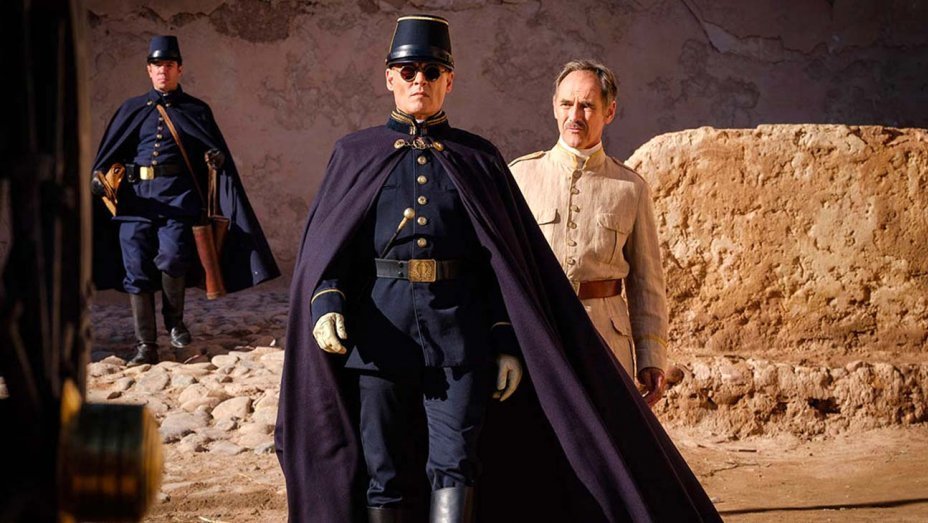
The arrival of Colonel Joll (Johnny Depp), who wears sunglasses that are a marvel in this unidentified period setting, upends the peace that the magistrate has worked so hard to maintain. Joll cares only for The Empire, refusing to acknowledge the dignity of those in the settlement. To him, the magistrate rules with too gentle a touch.

Making his English language feature debut, Ciro Guerra delivers an extremely slow burn that’s rather difficult to penetrate. Penning the screenplay for his own source material, Coetzee provides no favors, too often scripting repetitive bland dialogue. There’s almost no exposition, which isn’t really a problem for the self-explanatory plot but the result presents a weird dynamic. Nothing is very hard to follow, but it is often difficult to parse the point of individual scenes.

The acting is very good. Rylance essentially carries the film on his back, a performance that drastically overshadows the subpar script. Depp, though quite a bit subdued, puts forth a solid effort, one of his better roles in years. As Joll’s operative Officer Mandel, Robert Pattinson delivers a very strong supporting performance in the film’s second half.

Guerra handles the production values quite well, staging his scenes like a stage play. The film uses almost no score, putting extra weight on the dialogue that the screenplay isn’t well-equipped to handle. There is barely an action either, further burdening the narrative that already doesn’t know what to do with its close to two-hour runtime.

The pacing is fairly atrocious, with long periods of time treading over the same territory. Coetzee is one of the best authors of the past hundred years, but he seems to struggle with the transition from prose to screen. There’s a lot here that a book could get away with that just doesn’t work for a film.

Despite Rylance’s best efforts in the lead role, Waiting for the Barbarians falters as a result of its sluggish pacing and meandering screenplay. There are some good scenes here and there, but the narrative consistently fails to piece anything coherent together for any significant amount of time. Guerra crafted a beautiful film, just not a very good one.

Sunday

2

August 2020

0

COMMENTS

CRSHD has nothing to say

Written by , Posted in Blog, Movie Reviews, Pop Culture

College is an experience that constantly requires one to step outside their comfort zone. Trying new things is important, within moderation. That advice is not particularly helpful when it comes to certain perceived rights of passage for students, such as deciding when, or how, to lose one’s virginity.

CRSHD is mostly a film about that cringe-inducing time in young people’s lives. Faced with the end of the semester, Izzy (Isabelle Barber) sees an upcoming “crush party” (sort of like a real life Tinder gathering of people who have already swiped right) as a prime opportunity to do the deed. Izzy plays mostly as a stock character for these sorts of narratives, an awkward girl envious of the ease with which the “popular” girls glide through life.

Existing in the social media age, CRSHD includes many sequences that try to re-enact social media onscreen. Director/writer Emily Cohn handles the aesthetics of these cutaways well, using lighting and animation to depict lively text message conversations. It’s a cute way of framing the narrative, at least for a little while.

The problem with CRSHD lies mostly with its substance. Cohn has nothing new or interesting to say about college life, an anemic narrative riddled with clichés. The text message conversations hint at stereotypes about our hyper-focused digital age, but there’s nothing compelling about Cohn’s findings. For the most part, this film essentially states the obvious.

There are large sections of the film that could function without dialogue. Part of that is a testament to Cohn’s ability to frame scenes, albeit underlying the problems with the screenplay. For better or for worse, you could watch most of the movie on mute and still understand what’s going on.

The acting is pretty serviceable. Barber does an okay job in the lead role, albeit failing to give the audience much of a reason to care about Izzy. Her emotional range extends from indifference to mild sadness, hardly compelling territory for a lead. Deeksha Ketkar and Sadie Scott fare a bit better as Izzy’s friends, but Cohn doesn’t give them much material to work with.

CRSHD doesn’t necessarily need to win tons of points on the originality front. The college genre tends to recycle a lot of the same themes. Freshman year in particular is an awkward time for many, defined by constant doubt over practically every decision.

The trouble with Cohn’s work here is that she’s never quite sure which direction she wants to go, or what she wants to say about this period of college life. There are a lot of minor subplots that take up time, pleasant enough to watch, but don’t really add anything to the broader story. That wouldn’t be much of a problem if the whole experience wasn’t so very bland.

CRSHD is practically impossible to recommend, except maybe to current college kids who are wishing they were back at school. Ninety minutes with this narrative might squash one’s longing a bit. There are pieces of a better movie here and there, but Cohn never pieced them together into something worth watching.


Monday

27

July 2020

1

COMMENTS

Everybody Wants Some!! presents a subtle indictment of nostalgia

Written by , Posted in Blog, Movie Reviews, Pop Culture

Preseason is a magical time to be on a college campus. With classes on the horizon, there are seemingly infinite possibilities for new friends, fresh perspectives, and plenty of parties. Semesters are short, a handful of weeks before holidays and exams take hold.

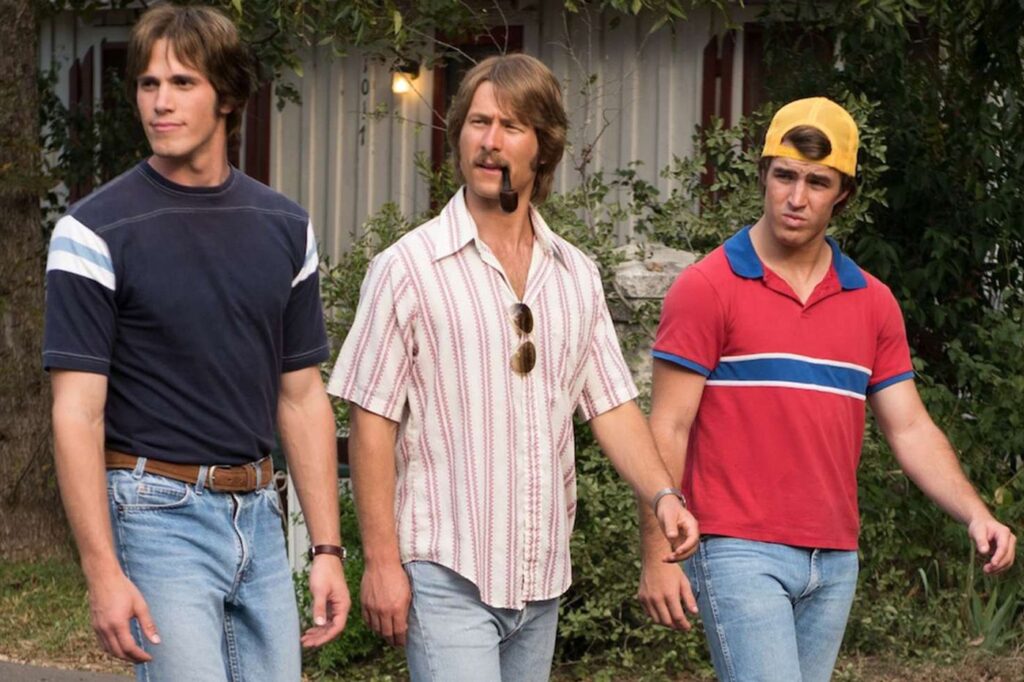
Richard Linklater’s Everybody Wants Some!! focuses its narrative on a three-day stretch before classes start, centered around a college baseball team arriving for preseason in Texas. The team is good, nationally ranked, but Linklater recognizes this period for its finite body of time. These players are on top of the world, a reign unlikely to last past graduation. Fortunately, most of them seem to know it.

Jake (Blake Jenner) is an artsy freshman pitcher, hardly the kind of talent destined for the big leagues. He finds mentorship in the form of Finn (Glen Powell), an upper-classman eager to enjoy life wherever he can. The film spends most of its time capturing brief snippets of the baseball team lounging around, partying, and gradually learning to tolerate each other’s existence.

Linklater’s wandering narrative beautifully captures a finite piece of the college experience. Your friends in August hardly need to be your friends for life. The passion brought out from the freshness of new beginnings doesn’t last forever.

We see little of consequence among the baseball team, a hardcore group bound to possess a few bad apples. Bad apples don’t need to rot in August. Time reveals true colors, but Linklater wielded time to his advantage.

Many narratives, in literature or film, unfold over weeks, months, or even years. Everybody Wants Some!! says what it needs to say in mere days. There is obviously more to the story, as there is more to every story, but Linklater takes comfort in the idea that you don’t need to see all of that to have a good time with these people, over this short period of time.

It would be easy to dismiss Everybody Wants Some!! as the product of an aging director fondly reflecting on his youth. The narrative is one that’s bound to resonate with most with viewers who can relate to the particular experience. Very quietly, Linklater introduced a powerful commentary on nostalgia.

As fun as preseason can be, with an entire ocean of possibilities still ahead, Linklater is careful not to frame these three days as anything more than a very fun time. Moments are born, destined to end. New beginnings give way to new adventures.

Linklater presents more of an indictment of nostalgia than a tribute at its alter, moments to be celebrated without needing to long for their return. The “good old days” can be fun to reflect about, as long as you don’t forget that these aren’t supposed to be the best moments of your life. Better days will come for Jake. It would be very tragic if they didn’t.

Thursday

9

July 2020

0

COMMENTS

Bloody Nose, Empty Pockets is a frustrating masterpiece

Written by , Posted in Blog, Movie Reviews, Pop Culture

For many, bars are places of community. Bars are places to get away from the world. In more extreme cases, bars are more of a home than the place one rests their head at night.

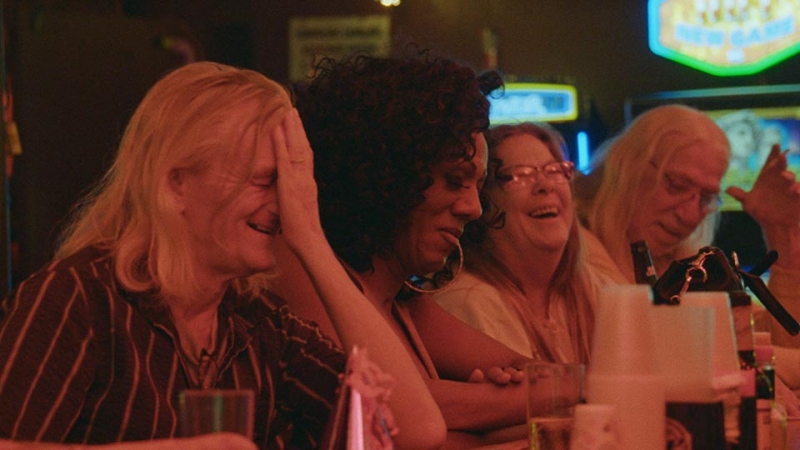
Imagine if that place you treasured so much closed. That is quite literally what Bill & Turner Ross did in their latest film, Bloody Nose, Empty Pockets. Presented as a documentary covering the final day of operation for a bar in Las Vegas called The Roaring Twenties, the Ross brothers skirt the lines between fiction and non-fiction. The documentary is filmed in New Orleans, not Vegas, featuring a bar that is not actually closing.

The Ross brothers frame their film like flies on the wall, capturing conversations between the “patrons.” There is no background given on the bar and only a minor attempt is made to explain why it is “closing.” For the most part, the film is simple conversations between people.

Does the deception actually matter? Surprisingly, not really. Especially in these post-COVID times, there’s something oddly captivating about watching unremarkable people converse in unremarkable ways. Michael the barfly is essentially the film’s “protagonist,” a real-life stage actor who practically says as much late in the narrative.

Perhaps unsurprisingly, the characters get really drunk. The conversations become a little less interesting at that point, especially to sober outside viewers, but the Ross brothers do manage to capture the essence of intoxicated banter. There are points where the drunkenness does reveal a degree of deception, as repeated efforts by one character that he loves another ring hollow. It is not always so convincing in its attempts to portray the bar as one happy family.

People act differently when they’re being filmed. With that in mind, Bloody Nose, Empty Pockets doesn’t really differ from any “documentary,” even if it feels weird to call it that. That’s completely okay. The Ross brothers deserve a lot of credit for their ability to craft a meaningful narrative while completely upending their genre.

Bloody Nose, Empty Pockets is a deeply frustrating film, a genre-defying triumph of humanity. The kind of masterpiece that makes you want to scream. It’s absolutely beautiful.

The film is surely not for everyone, especially those who aren’t fans of feeling tricked. Where the Ross brothers find their greatest success is in their ability to circumvent the kind of criticism there were bound to receive for a stunt like this. It probably shouldn’t have worked, but Bloody Nose, Empty Pockets is such a fascinating gem.

Tuesday

7

July 2020

0

COMMENTS

Relic is a chilling slow burn

Written by , Posted in Blog, Movie Reviews, Pop Culture

For a film like Relic, dementia is a natural fit for the horror genre, a real life terror that anyone familiar with the disease can understand. To lose yourself is bad enough, without all the external considerations of a supernaturally charged terror. Set in an eerie house in Australia, Relic stakes out its territory in the kind of frights that naturally creep up on you, because in a way, they could.

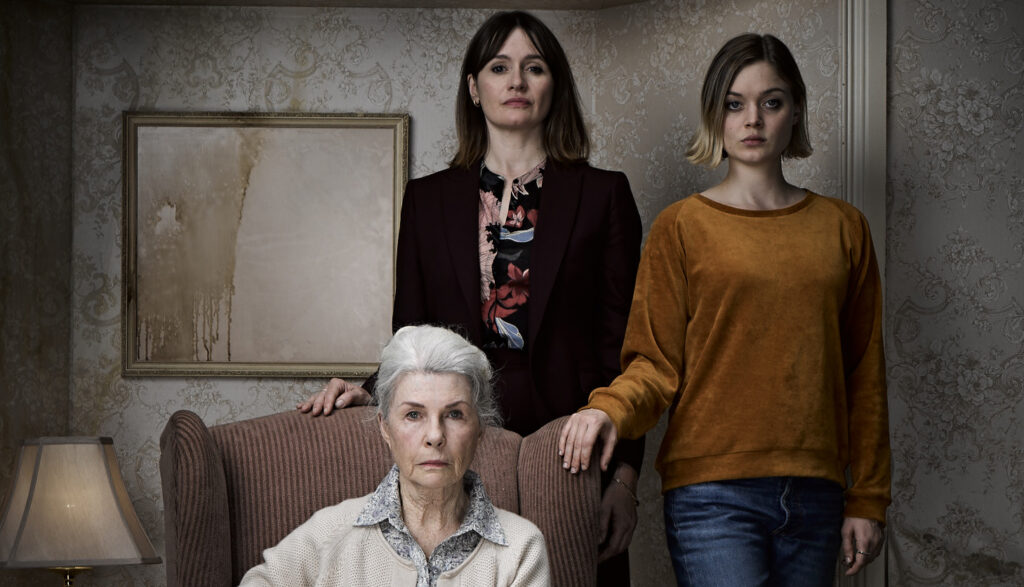
The film follows Kay (Emily Mortimer) and her daughter Sam (Bella Heathcote) and they check in on Kay’s mother Edna (Robyn Nevin), an elderly woman suffering from dementia living alone in a dreary home. Edna has been missing for a few days, though reappears unexpectedly without much of a clue where she’s been. The house holds secrets of both a personal nature and those of the more supernatural variety.

The acting is superb. Nevin steals the show as Edna, a resilient woman reluctant to be treated like an invalid. She’s stubborn while still being sympathetic, a kind of persistent pride that lingers even in the face of her illness. Mortimer and Heathcote are quite good as well, layering the horror in a compelling family drama.

Making her directorial debut in addition to writing duties, Natalie Erika James crafts a rich narrative that moves at a careful pace. James frames her shots in a way that lets the house itself function as a character in its own right, a kind of claustrophobic environment that reeks of decay, the perfect setting for a horror film. James makes great use of the lighting, dim, creepy, and bleak.

Relic is a meticulously crafted slow burn. James has a superb sense of pacing that keeps tensions high. The film essentially divides itself into three acts, making quick work of its runtime of just under 90 minutes. You feel like every scene serves a specific purpose, without the need to explain every last detail.

As a horror film, Relic falls more under the category of creepy than outright scary. It’s the kind of narrative that crawls under your skin more than making you jump out of it. James has made a bit of an esoteric type of film, one that encourages critical thinking well after the credits have stopped rolling.

Relic is a breath of fresh air in the genre. In the past, it may have seemed absurd for a film to give such a meaty role to an elderly woman like Nevin. The female-led production produced a well-crafted delight for horror fans, one that’s perfect for today’s shelter-at-home climate.

Monday

6

July 2020

0

COMMENTS

Money Plane is a complete disaster

Written by , Posted in Blog, Movie Reviews, Pop Culture

There is no single element that a film needs to fit the broad definition of “good.” Trainwrecks like The Room and Sharknado are entertaining despite the absence of competent acting, writing, or directing. Bad can in fact be, good.

Fitting for its setting, Money Plane circles around the runway of this territory. Written and directed by Andrew Lawrence, youngest of the Lawrence brothers trio, the film firmly squares itself in B movie territory, albeit with an impressive roster of recognizable faces, including Adam Copeland, Kelsey Grammer, Denise Richards, Thomas Jane, as well as Andrew’s brothers Joey and Matthew.

The film centers around the efforts of Jack Reese (Copeland) and his team to rob the titular “money plane,” an aircraft of debauchery for high-stakes gamblers. Reese follows the orders of Darius Grouch the 3rd, also known as “The Rumble” (Grammer), who blackmails him by threatening his wife, Sarah (Richards). The film mostly centers itself around the heist, both on the plane and through some action sequences on the ground.

Money Plane is sunk mostly through two major issues. Copeland is absolutely terrible in the lead role. He isn’t a bad actor, as his time on Vikings and as Edge in the WWE have shown, but he looks absolutely bored out of his mind in the film. Copeland delivers a wooden, muted performance that’s painful to watch. His obvious disdain for the role can’t help but permeate to the audience.

The other big issue lies with the script. Lawrence is an abysmal writer with no ability to craft dialogue that any human being would actually say. Too many sequences come across as so bizarre that you actually feel uncomfortable watching, as if a five-year-old wrote the script based off how he might think grown-ups talk when he’s not in the room.

The script may not have been as big of a problem if Copeland wasn’t so bad in the lead role. Grammer and Lawrence’s brothers fare much better, putting forth outlandish performances that are among the film’s only highlights. One can forgive the low budget nature of the set, a supposedly luxury plane featuring a poker table that looks like it was purchased at Walmart (complete with cup holders), but if the lead actor isn’t having any fun, it’s hard to care.

Money Plane could have been a fun disaster of a film, but Copeland’s obvious boredom sucks all the air out of the cockpit. Lawrence assembled a moderately compelling cast, but the film is too much of a mess to make for a pleasant ride. A tragic shame.


Tuesday

30

June 2020

0

COMMENTS

Catherine Deneuve and Juliette Binoche are spectacular in The Truth

Written by , Posted in Blog, Movie Reviews, Pop Culture

Conflict, especially of the family variety, has a tendency to produce widely different interpretations of the events in question. The Truth (original French title: La Vérité) centers its narrative around a mother-daughter relationship, one that never tries to play its drama down the middle. Truth is more complicated than mere matters of right and wrong.

Fabienne (Catherine Deneuve) is an accomplished French actress in the twilight of her career. Her daughter Lumir (Juliette Binoche) comes to visit from America for the launch of her mother’s memoirs, filled with the kinds of fiction that Fabienne made a career of depicting on screen. Lumir is filled with grievances toward her mother, exacerbated by the stalled acting career of her husband Hank (Ethan Hawke).

Rarely interested in revisiting the past with her daughter, Fabienne instead concerns herself with feelings of resentment toward Manon (Manon Clavel), her much younger costar in her latest film. Manon reminds Fabienne of herself and her stardom, now fading, bringing a sense of introspection that those with big egos tend not to enjoy. Manon is less of a rival than an all-too-obvious indicator of the fleeting power of age.

Deneuve is in peak form, portraying Fabienne with an overwhelming sense of gravitas perfect for the narrative. The Truth is the rare film about fame that works. Deneuve isn’t just playing a superstar, she is one, honing in on the pains of time in a heartbreakingly authentic fashion. Fabienne is an awful person, yet the audience can feel for a woman who’s obviously struggling to grapple with the consequences of her life’s decisions.

Binoche brings plenty of nuance to Lumir, perfectly illustrating the complicated relationships that many children feel toward their parents. She gives deference to Fabienne without rewriting history, revisting old scars not to reopen old wounds, but to try and heal. Director Hirokazu Kore-eda clearly recognizes the assets he has in his two female leads, crafting scenes that let them duke it out in minimalistic settings.

Kore-eda relishes the messy emotions that families can bring out of each other. The sad moments in The Truth are often buoyed by humor, a fantastic script. At times, it feels like watching a stageplay and at others like you’ve walked in on a family feud.

Kore-eda has a gift for presenting conflicting perspectives while recognizing the almost-irrelevant nature of conclusions. Human relationships are not finite entities. Closure is a concept often deceptively deployed in film, for endings hardly exist in quite the same manner in reality.

The film juggles its many subplots pretty well. As Hank, Hawke isn’t given much to do, a role that isn’t quite reflective of his starpower, but fitting for a narrative that focuses the bulk of its attention on its mother-daughter dynamic. More Hawke would probably not be too helpful for the story at hand.

The Truth is a powerful narrative reflective of the talent involved. Kore-eda is one of the best directors currently working. Deneuve and Binoche both put forth two of the best performances of their storied careers. Fans of cinema will certainly want to check this one out.