Ian Thomas Malone

Movie Reviews Archive

Friday

21

June 2019

0

COMMENTS

Toy Story 4 Is Another Heartfelt Pixar Gem

Written by , Posted in Blog, Movie Reviews

Few moments in children’s cinema have been as soul-crushingly devastating as the ending of Toy Story 3, where a college-bound Andy passes on his beloved toys to Bonnie for a new generation of adventures. Whether or not that scene should have marked the end of the franchise contrasts with the notion that the series is unlikely to top that level of emotional resonance on the tearjerker scale. Of course, there’s no inherent reason for Woody, Buzz, and co. to be limited to just three movies, beyond the sense of sentimentality that’s been such a strong anchor for the franchise since its debut in 1995.

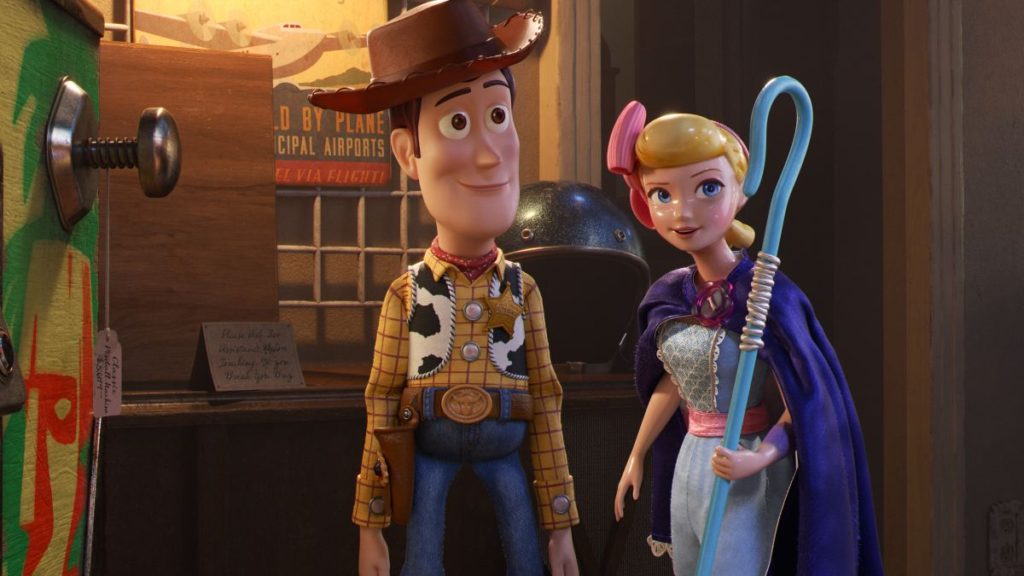
Toy Story 4 reigns in its pontification on the meaning of being a toy a bit. Philosophy is still a predominant force driving the narrative, as Bonnie’s new arts and crafts creation Forky straddles the line between child’s plaything and literal garbage. Forky’s diminished sense of self-worth presents a broader question as to the continued purpose for Woody, who tries his best to remain a pivotal piece of Bonnie’s life.

Complicating matters is the return of Bo Peep, Molly’s nightlight and Woody’s love interest for the first two films. Bo has been living life as an abandoned toy, fending for herself and her flock in the absence of a child to care for. The cruel world has been unforgiving to the porcelain Bo, but her continued resiliency sheds light on an unexplored reality for the Toy Story universe. Life goes on.

Absent from Toy Story 4 is the sense of comradery that has defined the series. Hamm, Rex, Slinky, Jesse, Bullseye, and the Potato Heads have been largely relegated to cameo roles alongside Bonnie’s other toys. There’s plenty of humor to be found in the film, but the lack of one-liners from the original gang is certainly disappointing for lifelong fans of the franchise. Forky has a lot of funny lines, delivered by a perfectly cast Tony Hale, but he also sucks up a lot of the attention as the main force driving the narrative. For better or for worse, Buzz Lightyear spends most of the film playing second fiddle to a plastic fork.

Toy Story 4 functions as an enjoyable standalone adventure while serving as a worthwhile epilogue to the series. The series has always been Woody’s story first and foremost, but the seminal cowboy projects much of his anxiety in service to others. Here, Woody is allowed to be a bit more introspective as to the way he’s lived his life. Love is not a linear objective, but life has its trajectories that all of us must adapt to.

It’s a cold reality to admit that there’s a world out there beyond play time. It’s easy to relate to the toys in Toy Story because none of us want to envision a life spent sitting in a box in the attic. For many, we fear growing up because it means we have to say goodbye to the comforts and securities we’ve know. There’s always a tomorrow to be had, even in a dusty antique store.

Toy Story 4 isn’t as much of a tearjerker as its predecessors, but the franchise retains a powerful grasp on the emotions of its audience. Growing up is often sad, but that doesn’t need to be a bad thing. As someone who was about the same age as Bonnie when the original Toy Story came out, these movies will always possess the ability to turn me into a nostalgic weeping mess, but that’s not a bad thing. It’s good to feel, to know that even when life is sad, things will be okay.
Friday

7

June 2019

0

COMMENTS

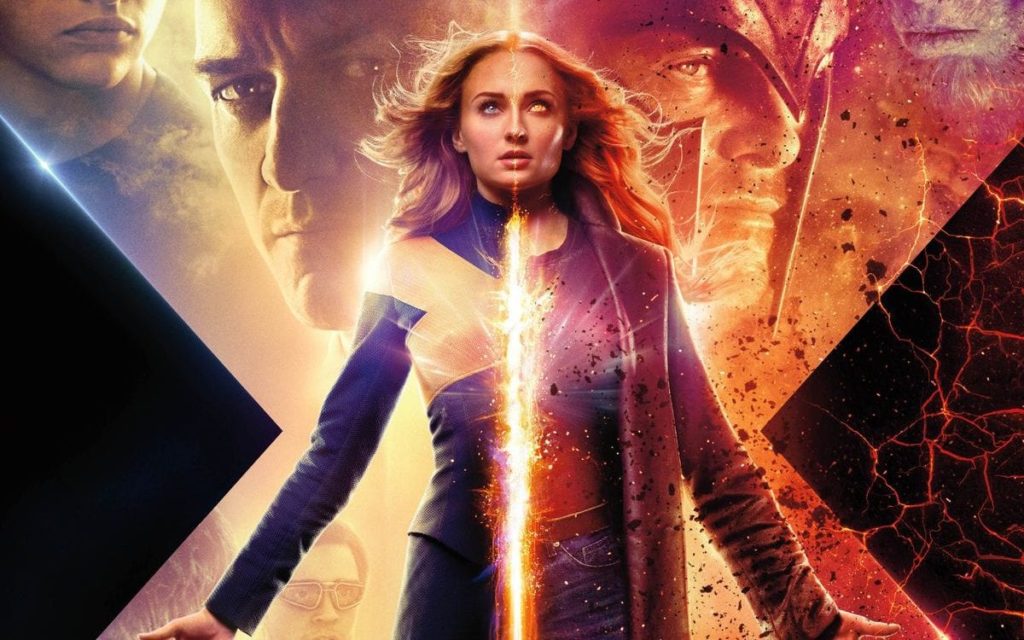
Dark Phoenix Is an Enjoyable, Flawed Sendoff for the X-Men

Written by , Posted in Blog, Movie Reviews, Pop Culture

For all the ways that 2011’s X-Men: First Class represented a fresh start for the superhero franchise that helped establish the genre as a cinematic powerhouse, the series never really let go of its roots. The majority of the principal cast of the original trilogy returned for 2014’s Days of Future Past, which also served as their do-over sendoff following the lackluster reception to 2006’s The Last Stand. Hugh Jackman’s Wolverine remained a major part of the franchise, starring in his own trilogy in addition to cameo appearances in both First Class and 2016’s Apocalypse. Deadpool, a character first played by Ryan Reynolds in 2009’s poorly received X-Men Origins: Wolverine, existed ostensibly in both worlds, while shattering the fourth wall in just about every way imaginable.

The X-Men franchise’s timeline is such a splintered mess that it’s hard to call the James McAvoy/Jennifer Lawrence/Michael Fassbender-lead team a reboot, a prequel, or even a second generation. Like Days of Future Past, Dark Phoenix set out to clean up the mess that was The Last Stand, while serving as a farewell to Fox era before Disney takes over the reins. Deadpool is likely going to be only remaining tie to the franchise that first began in 2000, assuming his R-rated humor has a place in Disney’s family-friendly world.

Dark Phoenix is not a film particularly concerned with serving as the finale for nearly twenty years of history. The film is the first with the name X-Men in the title not to feature an appearance from Wolverine. Only four actors from First Class remain, McAvoy, Lawrence, Fassbender, and Nicholas Hoult. Many of the X-Men in Dark Phoenix, including Sophie Turner’s Jean Grey, only made their debut in the previous film. The lackluster reception to Apocalypse further complicates the idea that this current iteration of the team is capable of meeting the broader expectations that the franchise’s extensive history has created.

The best it could hope to achieve is a satisfying send off to the four characters who have carried this chapter of the franchise. McAvoy, Lawrence, Fassbender, and Hoult all get their moments to reflect on their journey, even if Dark Phoenix’s broader narrative isn’t really about wrapping up the X-Men. It’s a film about Jean Grey that’s only sort of about Jean Grey. Part of this reflects the reality of Turner’s late entrance into the series, as The Last Stand’s attempt at the storyline featured Famke Janssen, whose earlier take on the character had played a pivotal role on the team up to that point.

The audience simply hasn’t had enough time with Turner’s Grey for the character to feel all that compelling. At times the film feels like it’s relying too hard on the audience’s familiarity with either the character or Turner as an actress, spending little time presenting a case for why we should care about this iteration of the powerful mutant. With obligations to wrap up the franchise, this approach is hardly a bad idea, but the film’s emotional core at times feels completely all over the place.

The narrative ends up working pretty well as a film. The action scenes are quite enjoyable, giving each mutant a chance to work their magic one last time. Jessica Chastain gives a compelling performance as Vuk, the leader of the alien race the D’Bari, who seek to harness the power of the Phoenix after the force destroyed their homeworld. At times, Vuk feels a bit too obligatory as an antagonist, but the film’s preoccupation with X-Men’s own sense of morality is a better use of its time.

At times, the film frames Charles Xavier as its true villain for using his school as a farm system for broader political motivations, a mildly awkward heel turn for McAvoy that doesn’t feel entirely earned given the arc of the character for the past few films. The humans vs. mutants dynamic remains present, but isn’t the true focus of the narrative. Casting Xavier as a manipulator is a means to an end, which is certainly fitting given that this is in fact, the end.

With a runtime of just under two hours, Dark Phoenix moves at a brisk pace considering all it needed to accomplish. The film presents a self-contained narrative while simultaneously wrapping up the franchise’s extensive history. It juggles all of that surprisingly well, with an excellent final act that brings everything all together.

The biggest letdown of the recent X-Men era has been the poor handling of Evan Peter’s Quicksilver, who looked poised to be the breakout star of the franchise after his excellent debut in Days of Future Past. Quicksilver never reached the high of that beautifully shot kitchen sequence set to the music of Jim Croce’s “Time in a Bottle,” and only plays a minimal role in Dark Phoenix. Under different circumstances, Peters might have had a solo outing in the role plus another installment in the main franchise, but Disney’s acquisition of Fox called for this to be the end of the line.

Dark Phoenix was not particularly well-equipped to be the finale for close to two decades of franchise lore, but it makes the most of its truncated circumstances. We barely know these iterations of Jean, Cyclops, Nightcrawler, and Storm. It’s hardly this film’s fault that the franchise is headed into hibernation before an eventual reboot into the MCU. It’s an awkward goodbye, but an enjoyable movie. McAvoy, Lawrence, Fassbender, and Hoult all deserve better, but they made the most of an imperfect situation.

Monday

3

June 2019

0

COMMENTS

Godzilla: King of the Monsters Has Too Much Going On

Written by , Posted in Blog, Movie Reviews, Pop Culture

Decades before massively interconnected universes took hold in American cinema, Godzilla roamed the earth fighting whatever titan parent company Toho could throw at him. Since 1954, the King of the Monsters has battled King Kong, Frankenstein, Mothra and a whole litany of creatures who have spawned plenty of spin-off films of their home. The idea of Legendary Pictures doing a MonsterVerse that includes Godzilla makes plenty of sense, a natural trajectory for the character.

The execution of this broader universe created some unfortunate trouble for Godzilla: King of the Monsters, a direct sequel to 2014’s Godzilla. Five years is a long time to wait between installments, especially when so few of the human characters returned. As a character, Godzilla needs no introduction, but King of the Monsters largely relies on the fallout of the last movie.

Newcomers Drs. Mark and Emma Russell, played by Kyle Chandler and Vera Farmiga, are essentially retconned into the latter portion of the first film, having lost their son in the 2014 attack. The real-world fallout from Godzilla’s last romp through civilization weighs heavily on King of the Monsters, as the characters ponder the morality of what to do with such magnificent yet destructive creatures. Ken Watanabe, Sally Hawkins, and David Strathairn reprise their earlier roles, fighting to understand humanity’s role in circumstances beyond our control.

The trouble with having the earlier film play such a prominent role in the narrative is that the film never really seems clear on what it wants to be, too overstuffed with strands of plot to form anything cohesive. Millie Bobby Brown, who plays the Russell’s only surviving child Madison, gives an energetic performance that often feels out of place given everything else going on. Charles Dance’s villainous Alan Jonah finds himself in a similar role, an awkward antagonist that the film doesn’t seem to have much time for.

The ties to the earlier film do serve some useful narrative purposes, allowing the film to get going without much need for world building. Watanabe’s Dr. Ishirō Serizawa is given a few moments to shine, delivering some emotionally resonant scenes that are undoubtedly enhanced by his prior appearance. Between Serizawa and his team of researchers and military personnel, it’s hard to see why the Russell family was needed for the narrative. As a result, the film feels overstuffed with human characters, quite problematic for a film featuring multiple monsters.

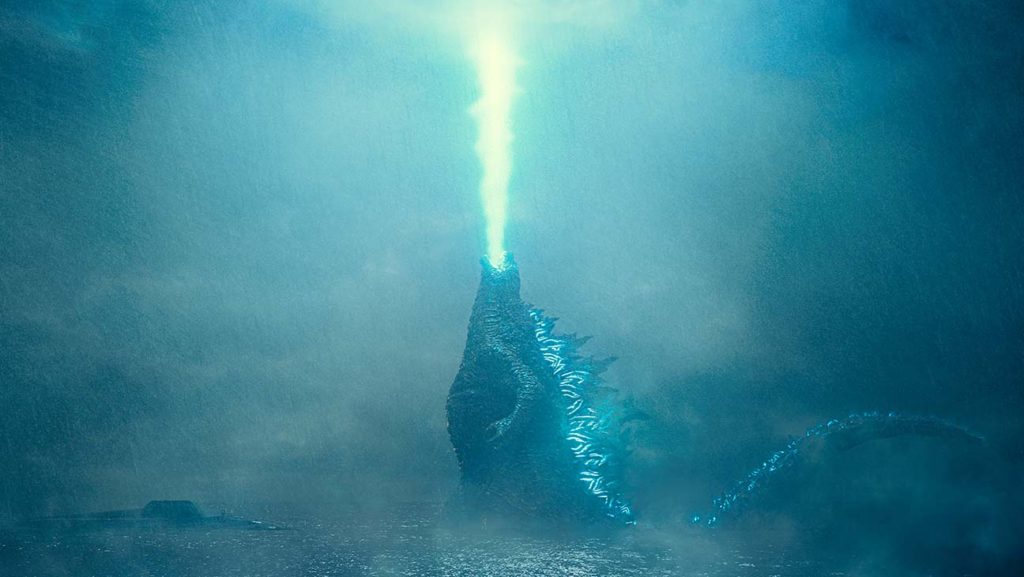
Godzilla feels surprisingly diminished in his own movie. Much of the focus is given to Ghidorah, understandable given the monster’s role as the villain, but the title character barely gets a moment to shine. There’s simply too much going on for anybody in the film to stand out.

The action scenes are well-crafted, but there’s too few of them for a film with a runtime of over two hours. The script has a few timely bits of humor, but the dialogue is pretty clichéd and boring. The film didn’t need to do much to create an entertaining experience, but muddled the waters with an overstuffed narrative that failed to leave any kind of lasting impression.

The film spends a bit too much time setting up next year’s Godzilla vs. Kong. While every entry in an interconnected universe naturally needs to set up the next installment, the best teasers tend to be either subtle or at the end of the narrative. King of the Monsters includes numerous mentions of Skull Island throughout the film, a puzzling decision considering the amount of creatures already present in the narrative. Instead of making the audience excited for the next film, the end result makes one feel a bit disappointed that King Kong didn’t make his entrance in this one.

Godzilla: King of the Monsters clutters its narrative with too many loose strands of plot while failing to let its title character shine. None of these iconic monsters needed grand introductions to a public who’s known about them for decades. An enjoyable experience would’ve sufficed. Unfortunately, this film tried to do too much, crumbling under its own excess.

Sunday

26

May 2019

0

COMMENTS

Strong Lead Performances Can’t Redeem Aladdin’s Empty Existence

Written by , Posted in Blog, Movie Reviews, Pop Culture

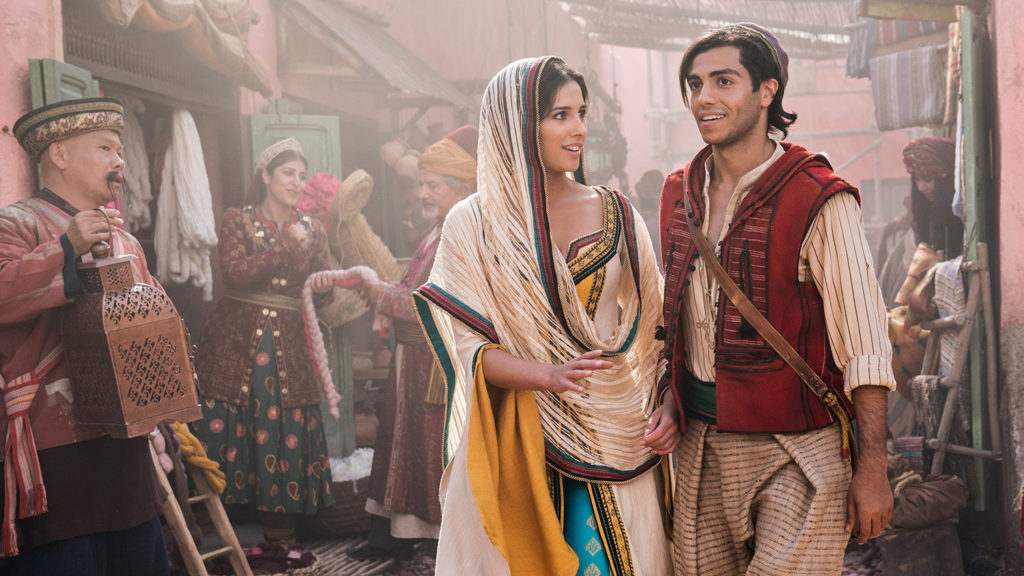
The frequency with which Disney live-action remakes are hitting the theatre can make it easy to forget that the process of creating them requires vastly different individual mandates for each film. A film like the original animated Dumbo only ran for a little over an hour, leaving plenty of room for a live-action adaptation to make its own mark on the material. The animated Aladdin however clocks in at ninety-minutes, a feature-length film in its own right. Guy Ritchie’s live-action adaptation had the tall order of capturing all the key plot moments from its animated predecessor while also giving its own cast enough time to shine.

Ritchie’s Aladdin is bolstered by three very strong performances from its lead actors. Mena Massoud and Naomi Scott are eminently charming in the roles of Aladdin and Jasmine. The two have a lot of natural chemistry and give welcoming performances that have the audience rooting for their characters by the end of the first musical number. So far Maleficient is the only live-action adaptation to receive a sequel, but I’d actually really like to revisit Massoud and Scott’s interpretations of the characters in a follow-up.

As the Genie, Will Smith had an impossible task in following the late great Robin Williams, whose take on the character remains one of the most iconic voice acting performances of all time. Smith does a great job in differentiating the two, crafting a character completely different from his animated predecessor. Smith’s Genie is less zany and far less in your face, but he’s still an empathetic figure capable of delivering plenty of laughs.

While Massoud, Scott, and Smith all do an admirable job bringing classic characters to life, the film moves far too quickly to give any of them a chance to breathe. Despite the fast pacing, the film feels like quite a slog with a two-hour runtime. The performances bring their own magic to the table, but there’s only so much Ritchie can do with his film’s organic moments while also serving the narrative of its predecessor.

Jafar might be one of the most memorable villains in Disney history, but Ritchie, unfortunately, diminishes his larger-than-life presence in the live-action film. Marwan Kenzari does a serviceable job playing the character, but he never gets a moment to shine. We learn nothing new about Jafar’s motives and there’s no song featuring the character. He’s the only character who feels smaller in the real world, reduced to merely a narrative obligation.

Ritchie’s Aladdin struggles to find its own voice while constantly serving the narrative of its source material. Like Smith’s Genie, Scott’s Jasmine is a totally different character than her animated counterpart, but the scenes that highlight her personality often feel clunky when mashed together in between recreations of iconic scenes from the original. As a result, the film feels far more derivative than it should, stifling its own sense of originality while trying to juggle too much.

The musical numbers are often entertaining, but perhaps predictably fail to recreate the sense of awe and wonder put forth in the original. The audience knows what’s coming. Ritchie should know that, but he doesn’t do much to trying and recapture any luster. The film is at times far too content to pale in comparison to the original.

Making matters worse is the fact that the strict adherence to the plot of the animated original constantly reminds the audience of how much time is left in the film. The two-hour runtime is far too long for something that predictable. It’s rarely outright boring, but the slower scenes aren’t helped at all by the familiarity of it all.

Aladdin is occasionally entertaining, but the film fails to stand out in any meaningful way. The actors put forth an admirable effort, but they’re not allowed enough opportunities to truly stand out. There are times when the film feels like it’s trying to do too much, but the result is that it feels like it accomplished nothing at all by the time the credits start to roll. Young children might be wowed by the impressive scenery, but the overall experience is regrettably empty.


Wednesday

15

May 2019

0

COMMENTS

Booksmart Is a Hilarious Coming of Age Comedy That Packs an Emotional Punch

Written by , Posted in Blog, Movie Reviews, Pop Culture

High school graduation presents the template for a rite of passage, the informal end of childhood. The uncertainty of college life without all of one’s childhood friends is scary, a disruption of the long-held status quo. The occasion is ripe for adaptation because it provides America’s youth with a unifying sense of journey, something most of us who grew up in this country have commonly experienced.

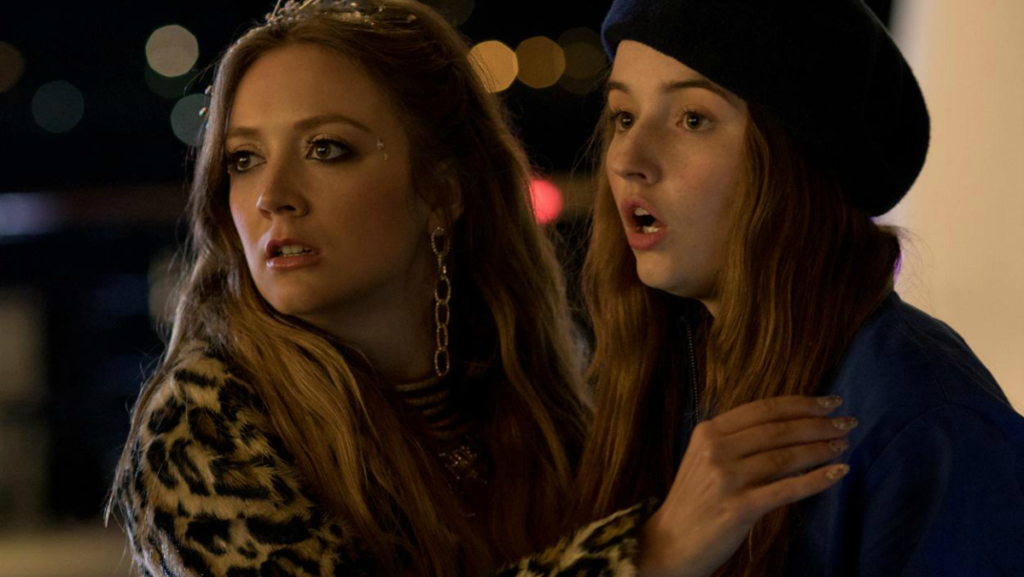
Booksmart is a film about accepting change. Amy and Molly are two childhood friends who have done just about everything together, putting their broader social lives aside to encourage each other to pursue academic excellence. Such persistence pays off on the college admissions front, but the high school experience cannot be measured in grades alone. The night before graduation the two set out to hit one last milestone, to attend a high school party.

The highlight of the film is without a doubt the natural chemistry between lead actresses Kaitlyn Dever and Beanie Feldstein. The two are perfect together, presenting the kind of relationship right off that bat that most television shows would need a full season to establish. The ease with which their friendship permeates through the screen accentuates the narrative’s emotional resonance, making it easy for the audience to see themselves at the heart of the film’s conflict.

Olivia Wilde puts forth a strong showing behind the camera in her directorial debut, often framing her scenes in a way that brings out the subtleties in her actors’ performances. Like many adaptations of high school, Booksmart presents a fairly absurd depiction of adolescent life where students live out their wildest Snapchat fantasies, but Wilde keeps even her most outlandish scenes grounded in relatable drama. There are many laugh out loud moments, but the script ensures a certain emotional staying power beyond the humor.

The film takes a careful approach to LGBTQ issues. Amy is gay, a trait that isn’t treated as a point of debate or amusement by any of the other characters. Her storyline has its cringe-worthy moments, but those are crafted out of the awkward nature of adolescence rather than as a product of her sexuality. Amy is treated just like any other character, something that might seem weird to point out if it weren’t for the fact that so few similar depictions of LGBTQ youth exist in American cinema.

For a film that takes place over a twenty-four-hour window, Booksmart does an excellent job in presenting its characters as fully fleshed out individuals, even its rather extensive supporting cast. Billie Lourd and Skylar Gisondo, in particular, portray gag characters that still have depth beyond the humor they’re ostensibly around to provide. High school films can often get by on the sheer reliability of their narratives, but Booksmart stands out for its extensive investment in the journey of its subjects.

Booksmart manages to be the funniest high school comedy in years while never losing sight of its powerful emotional core. Olivia Wilde’s first feature film as a director is a powerful showcase of her talents. Few films are capable of making an audience cringe in one moment and cry in the next, but Booksmart possesses a firm grasp of the messy, often hilarious nature of growing up.

Sunday

12

May 2019

0

COMMENTS

Pokemon: Detective Pikachu Lets a Convoluted Narrative Detract from an Entertaining Experience

Written by , Posted in Blog, Movie Reviews, Pop Culture

A live-action adaptation of the massively popular Pokémon franchise always carried a degree of inevitability, with the question of plot serving as perhaps the largest looming question. The main video game series and the anime based on it both carry the same general objectives in catching and battling Pokémon. Deploying a similar storyline for a live-action movie could have been tricky to pull off, as the sight of adorable monsters beating each other up certainly presents the possibility of being quite upsetting to watch, especially for young children.

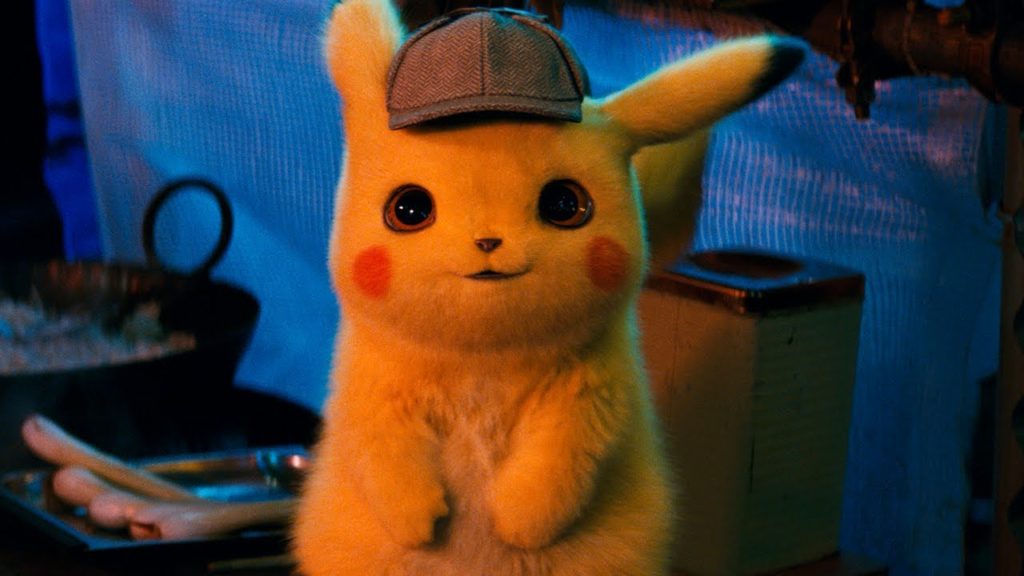
The decision to center Pokémon: Detective Pikachu around a mystery sidesteps this issue, largely taking action out of the main narrative. Ryan Reynolds’ Pikachu is less an electrically-charged rodent than a wise-cracking one, better for laughs than battle. Reynolds is rather amusing in the title role, but such humor feels weirdly out of place in the world of Rime City, far better suited for his other massively popular role in Deadpool.

As a buddy cop movie, Pokémon: Detective Pikachu functions quite well. Justice Smith gives a compelling performance as Tim Goodman, a young man trying to find a place in a world that’s let him down far too often. The narrative doesn’t give Tim that many moments to shine, leaving his overall arc feeling a little clichéd, but the film has much bigger issues than that.

The film takes a remarkably convoluted approach to handling the matter of Pikachu’s ability to talk. As a general rule, Pokémon and humans can’t communicate with each other, but fans of the series will know that there are a few exceptions, most notably in the anime where Meowth talks practically every episode. An unexplained talking Pikachu would not have been much of a plot hole, but the film followed that notion down the rabbit hole to its own detriment.

The mystery at the core of Detective Pikachu is uncomfortable to say the least. Buddy cop movies are less about the destination than the camaraderie enjoyed along the journey, but that’s also assuming that the end goal doesn’t fundamentally change the way you perceive the adventure itself. For some, suspension of disbelief may be enough to sidestep the issues presented, but there still remains the sense that the film opted for a needlessly weird twist that was bound to be divisive.

As funny as Reynolds is throughout the film, after a while, it starts to feel like the film is using his humor as a crutch in the absence of a deeper narrative purpose. At times he feels completely irrelevant to the plot, sounding more like a commentary track than an integral part of the story, which is itself a product of the film opting for a far more complex plot that it needed. Reynolds’ Pikachu is too much of a good thing, never building on an amusing foundation until a clunky attempt to establish some sense of narrative payoff in the third act.

Pokémon: Detective Pikachu could have easily made for an entertaining experience without having much of a story. Adorable creatures and Ryan Reynolds are a match made in heaven, but the film unnecessarily burdened itself with a bizarre plot that totally undercuts the movie. Fans of Pokémon will undoubtedly find much to love in seeing all the beautiful CGI, but the experience as a whole leaves a lot to be desired.

Thursday

2

May 2019

0

COMMENTS

Knock Down the House Is a Powerful Showcase of Democracy in Action

Written by , Posted in Blog, Movie Reviews, Pop Culture, Reviews

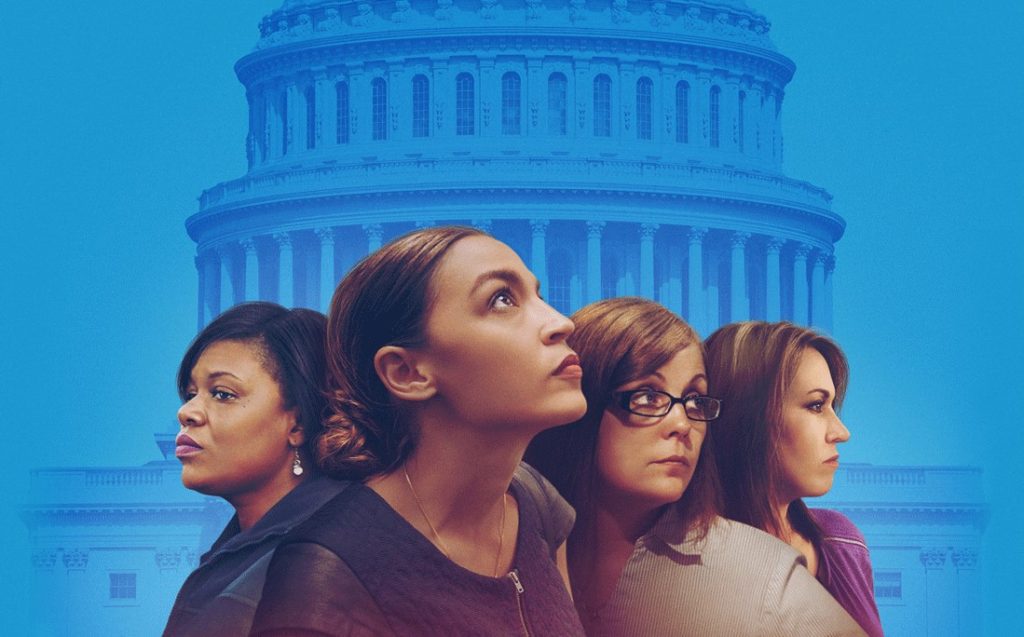
A documentary like Knock Down the House faces two narrative challenges that can be difficult to overcome in a ninety-minute runtime. Showcasing four separate women putting up primary campaigns against incumbent Democrats, the film has to not only tell multiple stories, but ones with widely known outcomes. It should hardly be a surprise to anyone that Alexandria Ocasio-Cortez went on to beat incumbent Congressman Joe Crowley.

One of the appeals of political documentaries is the behind the scenes perspective they provide, a chance to know the candidates beyond their cable news appearances. The grassroots nature of the four campaigns highlighted in Knock Down the House gave the documentary a much more intimate feel than films focused on larger efforts by established candidates. Without massive staffs or even office buildings, the film spotlights each of the candidates’ best assets, namely being themselves.

Amy Viela, Cori Bush, and Paula Jean Swearengin came up short in their efforts to unseat their Democrat incumbents. Bush and Swearengin both managed to pull in over 30% of the primary vote, very impressive totals for unknown grassroots campaigns running against established politicians with all the benefits that entail. The documentary showcases their individual motivations for getting in the race, women with deep emotional stakes at play to change a system that isn’t working for too many Americans.

Knock Down the House does a great job explaining the many roadblocks put into place to impede primary challengers, a system that makes it about as a difficult as possible to even get on the ballot. There are a few scenes highlighting the work of groups like Justice Democrats and Brand New Congress, grassroots organizations seeking to recruit and support candidates for office. All the stereotypical notions of polished politicians are thrown out the window in favor of real people seeking to create real change.

Unsurprisingly, the documentary spends much of its time on Alexandria Ocasio-Cortez, whose successful campaign has captivated the nation for much of the past year. The footage from her campaign presents a stunning contrast between grassroots efforts and the establishment, frequently painting Crowley as out of touch, representing a district he no longer even called home. AOC fans might have enjoyed a documentary completely dedicated to her meteoric rise, but the film makes great use of all its subjects to present Washington as out of touch with the nation at large.

Refreshingly absent from the bulk of the narrative is the man in the White House. For all the media attention that Trump gets, much of America simply doesn’t care about his Twitter feed. Even in deep red West Virginia, Swearengin’s campaign focuses on the bread and butter issues affecting her state and not as a referendum on his every move. AOC also goes out of her way to criticize Crowley’s Trump-heavy campaign literature, reframing the “us vs. them” debate in a context better suited to her community.

Knock Down the House is an uplifting documentary that highlights the power of democracy in action. Only one of the film’s four subjects managed to win her race, but their efforts offer more than just inspiration to future candidates. Democracy isn’t always fair, but it’s always worth fighting for.

Monday

29

April 2019

0

COMMENTS

War and Peace Remains One of Cinema’s Crowning Achievements

Written by , Posted in Blog, Movie Reviews, Pop Culture

There are many ways for a reader to approach a massive text such as War and Peace, but I tend to recommend the method I used. By shooting for a hundred pages a days and accepting that I’d often miss that mark, I made it through Tolstoy’s magnum opus in eighteen days. The chance to see the remastered four-part Sergei Bondarchuk version screened in its entirety on a single day appealed to me as someone who got through War and Peace through total immersion in the material. The story is not so much consumed as absorbed, an adventure that’s never truly over because the characters feel too real to ever fully fade from memory.

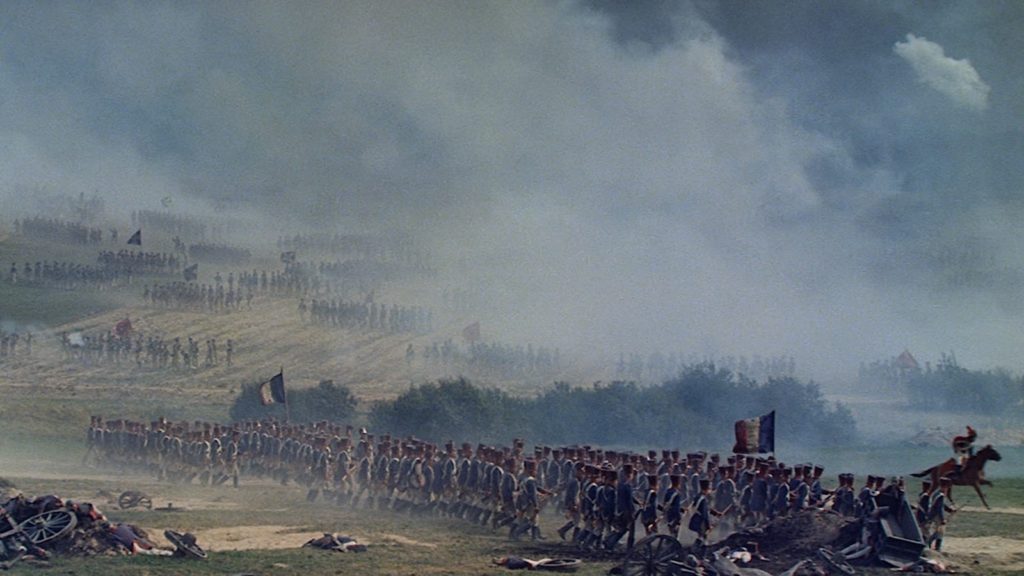
The seven-hour runtime covers a surprisingly small portion of Tolstoy’s epic, instead concentrating its attention on the major events throughout the text. Appropriately titled, the four parts largely center around Count Pierre Bezukhov, Prince Andrei Bolkonsky, Countess Natasha Rostov, as well as the War of 1812, which takes up much of the book’s second half. As a result, the philosophical journeys that Pierre and Andrei embark on are considerably condensed, and the stories of supporting characters such as Princess Marya Bolkonskaya, Count Nikolai Rostov, Sonya, Denisov, and Antole Kuragin receive only minimal attention. While it’d take a few seasons of a TV show to adequately cover all the major plotpoints of the book, it is certainly interesting to see that even one of the world’s longest films can’t fully encapsulate one of history’s longest celebrated novels.

The film itself is nothing short of a masterpiece. The sets are gorgeous and elaborate, from the grand balls to the expansive battlefields. The actors give immersive performances that highlight the personal growth of their characters over the few years of the narrative. Not only does Bonarchuk direct all four parts, he also plays a lead role as Pierre, bringing out the complexities of the good-hearted buffoon trying to make the most of circumstances seemingly always beyond his control.

While Pierre’s coming of age story is the most palpable of the three leads, Prince Andrei’s journey is a far more reserved transformation as he grapples with the beliefs he’s grown up with, rejecting the grand ambitions instilled by his father. Vyacheslav Tikhonov manages to capture the essence of Andrei’s journey without the benefit of the narrator’s eloquent depiction of his internal struggle. Film Andrei is undoubtedly less likable than his book counterpart, but Tikhonov puts so much emotion into his performance that you can’t help but feel compelled by his journey.

Having the least to do with war of the three major characters, Natasha doesn’t get as much screen time in War and Peace, but Ludmila Savelyeva gives perhaps the most compelling performance of the entire film. Her Natasha is so vibrant and full of life, contrasting tragically with the horrors that war brought to the characters’ doorsteps. Savelyeva brings out in the innocence in Natasha, grasping to understand why her vision of the future had to be senselessly altered by acts seemingly contradictory to human nature.

As much as War and Peace embodies the very definition of the word epic, the film is often at its most powerful in the quieter moments. Singular events are not as important as the broader effect that follows, something continually on display as Pierre, Andrei, and Natasha try to make sense of the world around them. Beautifully showcasing rural Russia, the film often uses its lush scenery to highlight the contemplative thoughts of the narrator. Tolstoy’s commentary throughout the book serves essentially as a character in its own right, and the film does a good job incorporating the spirit of the text’s broader philosophy into its overarching narrative. So much happens in seven hours, but Bondarchuk constantly makes sure that his viewers have the time to fully take it all in.

The restoration is absolutely beautiful. The film is crisp and clear, as if it was plucked out of time only yesterday. Up on the big screen, it evokes just about every emotion the human soul is capable of experiencing over the course of its runtime, an adventure that, while tiring, never letting go of one’s attention.

The 2019 remastered version of War and Peace offers a singular cinematic experience, a profoundly moving theatrical tour de force. Seven hours might be a lot of time to commit to sitting in a single seat, but there’s simply nothing else like it out there. This restoration carefully enhances one of the greatest films in history, an adventure well-worth making the time to see on the big screen.

Saturday

27

April 2019

0

COMMENTS

Tater Tot & Patton Is a Moving Exercise in Indie Minimalism

Written by , Posted in Blog, Movie Reviews, Pop Culture

The indie genre has developed quite a few clichés over the past few decades. The subject of grief often meets its match by the two-pronged approach of quirky love interests and a mellow score. Tater Tot & Patton exhibits much of the typical fare you’d expect from the indie genre, but the film finds a quiet sense of grace in its minimalistic narrative.

Tater Tot & Patton starts off in that same manner as many indie films. A millennial is sent to live in a small country town to find that things are not quite as glamorous as big city living. Andie, aka Tater Tot, can’t find cell service, Wi-Fi, or even a fresh vegetable. Turns out South Dakota doesn’t share all that much in common with Los Angeles.

Her uncle Erwin, aka Patton, is a simple man. He likes beer. He doesn’t like technology and certainly doesn’t understand why a young woman wouldn’t want to eat baked beans for every meal. His wife is in the hospital, leaving Erwin and Andie on their own to deal with each other in spite of their differences and their addictions.

Most of the film is set on Erwin’s farm, with the interactions between Erwin and Andie making up the bulk of the narrative. Jessica Rothe and Bates Wilder each give compelling performances in the title roles, keeping things interesting throughout the ninety-minute runtime. Despite having only two other characters with actual names, you never really get tired of Tater Tot & Patton’s interactions. The two actors work very well together and director/screenwriter Andrew Kightlinger made a smart decision to largely let them handle the narrative.

Kightlinger also makes great use of the South Dakota setting, using the natural beauty of the sparse locations as a perfect companion for his minimalist cast. We don’t get a ton of insight for what’s driving Andie’s demons, but it’s easy to feel for her frustration with being out in the middle of nowhere with no sense of forward motion. Kightlinger’s obvious affection for the state shows, highlighting it in the narrative without forcing any of the typical clichés the media likes to toss around regarding the Midwest.

There are, however, plenty of other clichés in the narrative. While the lead actors give strong performances, there’s little either can do to change the simple fact that they’re essentially playing stock characters from any run of the mill indie movie. Andie is a self-centered millennial seemingly lost without her phone and Erwin is pretty much that emotionally detached awkward uncle no one wants to sit next to at Thanksgiving dinner. There’s also the weird sense of destiny that brought these two damaged people together to “fix” each other that’s certainly been played out by countless other films.

Despite a few narrative issues, Tater Tot & Patton is certainly worth a watch if you’re a fan of indie movies. It hardly breaks new ground in the genre, the film sustains itself off two strong lead performances and stellar production values. Too many movies try to overstuff their runtimes, but Tater Tot & Patton finds power in the quiet moments, perhaps a timely movie for an era where everyone seems to be moving a mile a minute.

Saturday

27

April 2019

2

COMMENTS

Avengers: Endgame Sends the First Era of the MCU off with a Bang

Written by , Posted in Blog, Movie Reviews, Pop Culture

Even with a three-hour runtime, Avengers: Endgame set out with goals that seemed impossible to accomplish within a single film. The twenty-second installment in the Marvel Cinematic Universe had to provide satisfactory conclusions for not only the storyline left unfinished with last year’s Infinity War, but also the broader Infinity Saga arc as well as those belonging to many of the original Avengers. This film was the moment the whole connected universe spent over a decade building toward.

With those intentions in mind, Endgame gives the most attention to the heroes that built the franchise. Captain America, Iron Man, Thor, the Hulk, Black Widow, and the recently returned Hawkeye all get plenty of moments to shine. This being the end of the era, departures were certainly expected, and Endgame functions well as a conclusion to their narratives without necessarily forcing any arbitrary reunions.

As for the snap, well, no spoilers on that front. With the programming announcements for the upcoming Disney+ service and trailers for Spider-man: Far From Home all over the internet, it shouldn’t come as much of a surprise to hear that the characters expected to lead the MCU going forward aren’t necessarily going to remain dust. Endgame isn’t their movie, though.

As promised at the end of Infinity War, Thanos does return. The purple menace plays an unexpected role in Endgame, not as ever-present as he was the last time around, but the film deploys him in a way that will seem especially fitting to longtime MCU fans. A movie with a title like Endgame wouldn’t feel complete without an epic battle for the ages, and the film includes many of the franchise’s best action sequences.

Perhaps the most impressive thing about Endgame is the way it managed to incorporate so many elements from its twenty-one predecessors. There have been dozens of lists highlighting which movies are important for casual fans who haven’t seen them all, but Endgame has some throwbacks to some ones that many have written off as unnecessary to watch. That’s not to say that you need to go back and watch all the ones you’ve missed in order to follow along, but hardcore MCU viewers will be rewarded with numerous throwbacks.

The three-hour runtime is a challenge to one’s bladder, but the movie itself flies by in the blink of an eye, or perhaps more appropriately, the snap of the finger. The pacing isn’t quite as frantic as Infinity War, which had to juggle a much larger cast, but there’s surprisingly little downtime. If anything, the film could have actually benefited from a few more quiet scenes with the original Avengers, but it’s hard to say that Endgame didn’t make the most of every minute.

Endgame is a spectacular conclusion to the Marvel Cinematic Universe’s first era. The notion of such a complex story spread out over twenty-two films is pretty impressive, but Endgame ups the ante by serving as a fitting ending to just about every corner of that connected franchise. The MCU will live on with plenty of superheroes around to carry the torch, but it’s hard to imagine anything coming close to the sheer magnitude of Endgame’s ambitions.