Ian Thomas Malone

Pop Culture Archive

Monday

19

August 2019

0

COMMENTS

Balancing a Large Roster of Villains, Batman: Hush Offers an Entertaining Mystery

Written by , Posted in Blog, Movie Reviews, Pop Culture
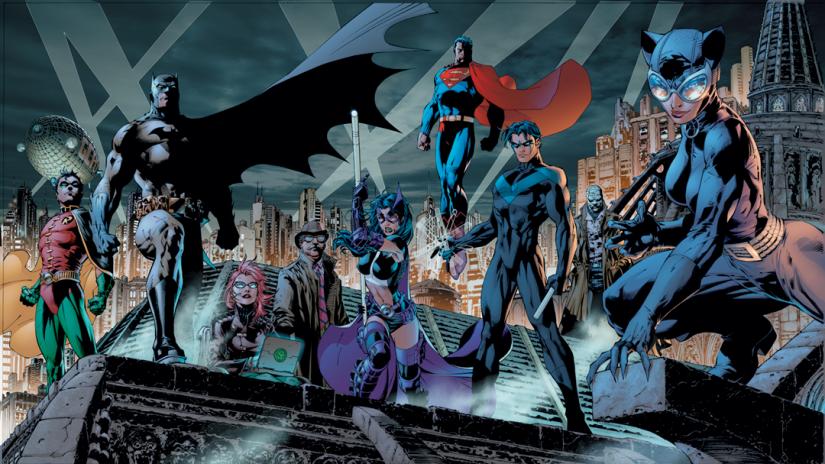
Like its source material, Batman: Hush has a lot of characters to juggle, featuring many of the Caped Crusader’s most well-known foes. Adapting the popular story arc presents many challenges for a film with a run time of just under ninety minutes, throwing everything and the kitchen sink at its audience. Juggling its many pieces quite well, Batman: Hush is another strong showing for the DC Animated Movie Universe.

The basic plot follows Bruce Wayne’s relationships with Selina Kyle, aka Catwoman, and childhood friend Thomas Elliot as he attempts to take a night off from crime-fighting. A recent crime wave makes a vacation impossible, leading to a nasty fall for the Dark Knight. An effort to get to the bottom of the chaos leads Batman to a mysterious figure called Hush, who seems to know far too much about Bruce’s identity.

True to its hero’s roots, Hush has the feel of a detective story, with mystery lurking at every turn. The pacing is top-notch, introducing plenty of villains quickly without making anything feel rushed. The quick runtime leads to some plot points being cut, but the film covers quite a bit of ground. Perhaps most impressive was the way it manages to include Superman without making the whole sequence feel like sensory overload.

Much of the film, particularly the relationship between Wayne and Kyle, serves as a broader commentary on prevalent themes throughout Batman’s long and storied history. There is a certain challenge presented in even attempting to explore the idea of Wayne settling down, as the audience knows this won’t happen, but the film manages to explore this dynamic with grace. It’s easy to get lost in lore that’s been around for decades, but Hush never bites off more than it can chew.

As expected, the voice cast is spectacular. Jason O’Mara plays a nuanced Batman, working well off Jennifer Morrison’s Catwoman. There are perhaps points where you wonder how Kyle doesn’t recognize Bruce’s voice in the suit, but the suspension of disbelief has often asked this of superhero films.

While the film juggles its many villains quite well, Batman’s sidekicks look a bit superfluous throughout Hush. Batgirl is largely reduced to a cameo, but the film never seems quite sure what to do with Nightwing, who’s consistently present without being particularly important. Seeing the two on the sidelines isn’t a particularly big deal, but their presence is a bit distracting relative to their roles in the narrative.

Batman: Hush is a very fun film that explores the franchise without ever feeling like a “greatest hits” piece. The large cast of villains serves their purpose, aiding to the well-crafted detective story. The film possesses an introspective lens without relying on nostalgia for emotional resonance. As summer winds down, Hush is the perfect comfort food for fans of the franchise, full of warm feelings that remind you why people still care about Bruce Wayne.
 

Monday

19

August 2019

0

COMMENTS

Good Boys Captures The Essence of Youth Alongside Plenty of Laughs

Written by , Posted in Blog, Movie Reviews, Pop Culture

Middle school is a challenging time for many in the United States. Puberty and all its associated hormonal changes bring out a lot of conflicting emotions. Childhood friends naturally grow apart as each pursues their own individual interests. The urge to grow up constantly conflicts with the desire for things to stay the same, an often contradictory and certainly confusing era.

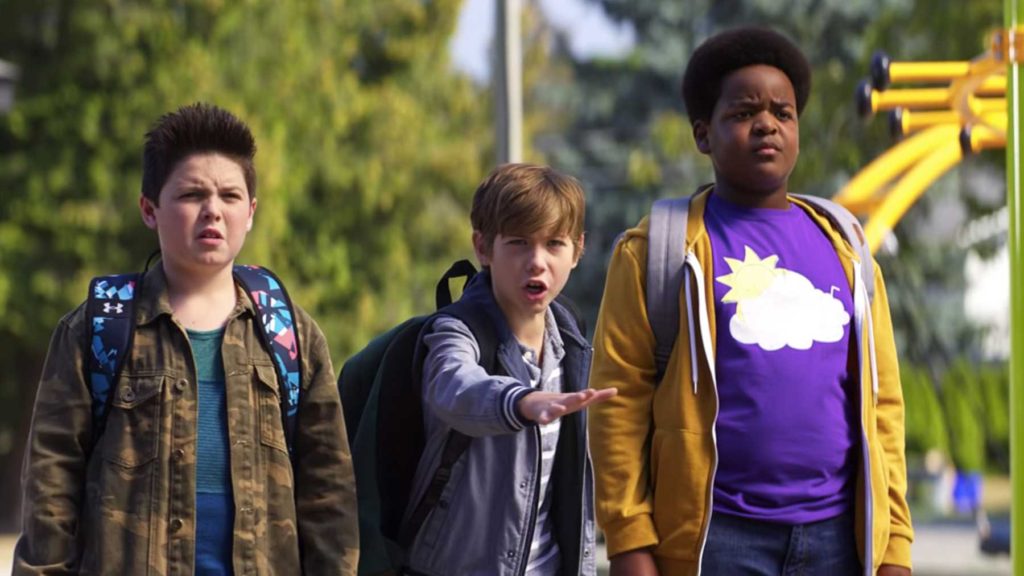
Good Boys is more of a film about friendship than aging, understanding the intertwined relationship between the two. Max (Jacob Tremblay), Thor (Brady Noon), and Lucas (Keith L. Williams) have been friends for their entire lives, referring to their small clique as “The Bean Bag Boys.” The beginning of middle school threatens the status quo, as each of the boys possess different interests that could potentially tear their trio apart.

A drone borrowed from Max’s father (Will Forte) sends the boys on a quest to avoid punishment after disobeying orders not to play with the expensive toy. The subsequent adventure stays within the confines of the ages of the leads, often diving into the realm of absurd without being unrealistic. The digital age has opened up plenty of less than age-appropriate doors for pre-teens.

The film is wildly profane for a narrative anchored by children. The kids frequently swear and find themselves in plenty of sexually-explicitly scenarios, willfully ignorant of their surroundings. Shock value makes up a lot of the humor, but the writing and acting are quite strong, allowing for plenty of laugh-out-loud moments that don’t rely strictly on cringe comedy.

For some, the crude humor coming out of the mouths of children might be too much. The child actors have an uncanny sense of comedic timing for jokes meant to sail right over their characters’ heads. Some of the laughs come from their obliviousness to the situations, but they’re not there to be the butt of the gags. There’s a level of deadpan comedy present that becomes oddly endearing after a while.

Plenty of its moments are absurdist in nature, but the narrative never loses sight of reality. Kids these days are exposed to quite of a lot of horrifying imagery that makes plenty of us happy to have grown up in an era before the Internet. There are plenty of hilarious moments born out of watching the children react to situations that maybe shouldn’t feel as normal to us as adults as they often do.

Lurking beneath all the inappropriate jokes is a layer of warmth to the narrative. For all the situations that the boys don’t understand, the three do possess a level of recognition for the transient nature of this stage in their lives. They’re best friends, for now, completely unsure of what the future will hold.

Good Boys couples its mature humor with themes that resonate for audiences of all ages, even those that need adult supervision to see the film. Growing up is scary. The film tackles the sensation of aging in a mature manner while maintaining a sense of optimism.

Few films manage to be simultaneously hilarious and heartfelt. Powered by an excellent script and some top-notch performances from its young leads, Good Boys is a late summer hit. Children might be a little horrified by some of the scenarios, but the life lessons presented are well worth a few unsavory conversations after the credits roll.


Sunday

11

August 2019

0

COMMENTS

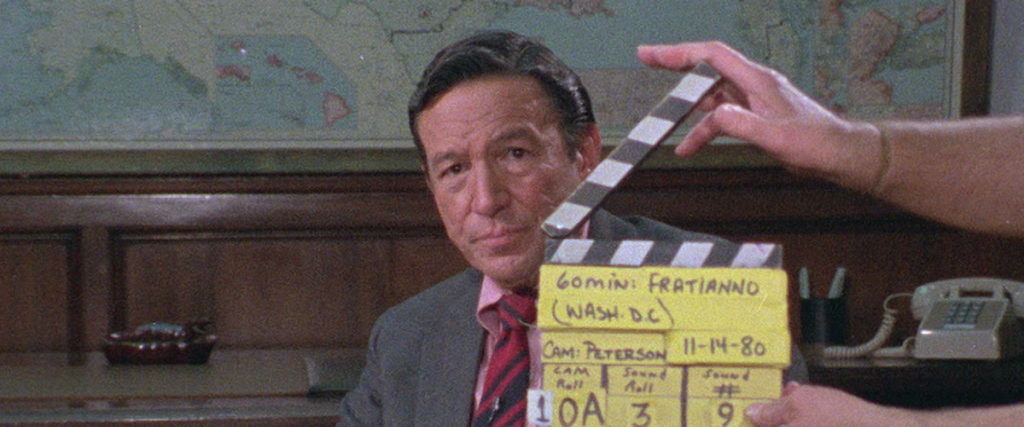
Mike Wallace Is Here Presents a Compelling Portrait of a Legendary Figure in Television News

Written by , Posted in Blog, Movie Reviews, Pop Culture

Television transformed the role of the free press in countless ways. Newsmagazine programs blended the idea of information with entertainment, with forceful presenters such as Mike Wallace developing a keen sense of interview style that provided much enjoyment for an audience, if not the subject. Mike Wallace Is Here chronicles the life and legacy of one of America’s most consequential journalists.

The film covers a wide scope of Wallace’s long career, from his early days in showbusiness through the end of his time on 60 Minutes. Wallace wore many hats in his career, acting as a radio presenter and on-camera pitchman among others, providing some fascinating insight into how television developed in its infancy. Wallace’s Night Beat set the tempo for his adversarial interviewing style, asking tough questions that translated well to an audience watching at home.

Presented entirely through archival footage, without any narration or contemporary interviews, the film largely lets its subject, who died in 2012, speak for himself. The use of footage of Wallace being interviewed, particularly by fellow 60 Minutes pioneer Morley Safer, allows director Avi Belkin to dive into territory he would otherwise be unable to explore. Wallace feels alive and well throughout the documentary, aided by Belkin’s soft-handed approach.

The use of archival footage also allows the film to thoroughly assess Wallace’s legacy without any of the over the top platitudes that are often showered upon the deceased. Wallace was an immensely important figure in television journalism, whose impact is still being felt to this day. The film explores the ways he shaped his field without drawing unnecessary lines to the present. It’s easy to see Wallace’s approach alive and well in the way that President Trump paints the media as his enemy, but this film isn’t about the present.

Belkin doesn’t shy away from the critical lens. Wallace was a flawed man who often went too hard on his interviewees and was often an absentee father. Oftentimes, he struggled when asked the kinds of questions he favored in practically every interview. The film handles his struggles with depression with grace. Belkin presents his subject as thoroughly human, while never losing sight of the immense legacy he left behind.

Mike Wallace Is Here is a timely film, exploring the past to offer plenty of commentary on the present. Wallace changed the way people engage with the news. The film manages to be a touching tribute that honors both Wallace and his signature adversarial approach.

Tuesday

6

August 2019

1

COMMENTS

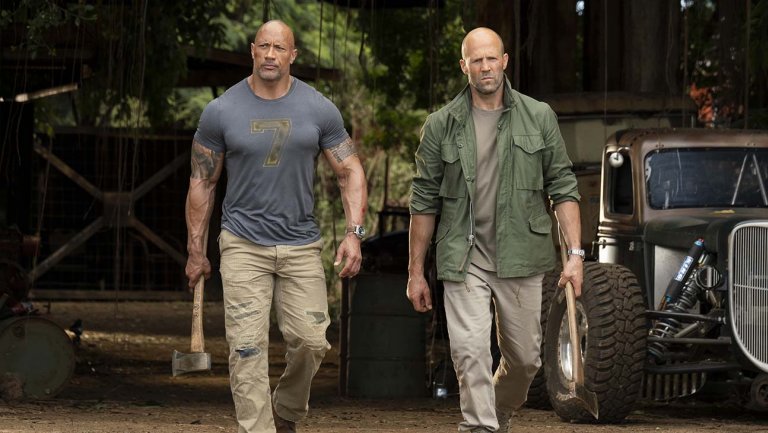
Fast & Furious Presents: Hobbs & Shaw Is Entertaining Summer Fun

Written by , Posted in Blog, Movie Reviews, Pop Culture

If you removed the “Fast & Furious Presents” label from Hobbs & Shaw before showing the film to a person who had only seen 2001’s The Fast and the Furious, there’s a good chance they would never suspect the two were connected. The original entry in the long-running franchise focused primarily on car racing, with actual crime serving as more of a vehicle to drive the plot than anything else. Nowadays it would seem odd if the narrative didn’t include saving the world.

As its title suggests, Hobbs & Shaw focuses on Luke Hobbs & Deckard Shaw, who originally entered the series as the villains for the fifth and seventh entries, respectively. After both enjoyed turns on the good side, the two find themselves working together to stop a super virus from wiping out humanity. Neither character particularly likes the other, creating an interesting buddy cop-esque dynamic throughout the film.

Dwayne Johnson and Jason Statham are two of the most well-known action stars currently performing. The two have a natural chemistry that works well for the humor-laced narrative. Vanessa Kirby balances out the dynamic as Deckard’s sister Hattie, an MI6 agent infected with the virus. The plot follows the three of them for most of the film, as they try to figure out how to get the virus out of Hattie before it falls into the hands of Brixton Lore (Idris Elba), a cyber-enhanced super soldier hell-bent on destroying the world.

The film continues the celebration of excess that has defined the Fast & Furious franchise since its fifth entry. There are countless explosions and reality-defying stunts. Elba essentially plays a riff on The Terminator, a notion not lost on the film. The plot calls for a heavy helping of suspension of disbelief, the kind of narrative where it’s best not to overthink anything, or everything.

Hobbs & Shaw never loses sight of the escapism it exists to provide. The characters have fun the whole time, keeping with the series’ emphasis on family. Deckard and Luke aren’t really there to be friends, but they manage to work together without anything feeling artificial.

The film’s biggest detriment is its runtime. Clocking in at a little over two hours, the narrative is stretched about as far as it could go. Part of this issue stems from the fact that the narrative blatantly goes out of its way to give The Rock and Statham equal time for just about every scene where they don’t appear together. Such a balance was probably not necessary for a franchise that usually needs to juggle several other leads, as a result feeling a bit more relaxed from the get-go.

Few films have felt more at home in the month of August, where the dog days of summer welcome the kind of excess Hobbs & Shaw offers in abundance. This franchise has come a long way from its street racing roots. One does naturally wonder how many more times this team can save the world. For a series that’s owned excess with such grace, that question sure doesn’t provide itself with an easy answer.

Saturday

27

July 2019

0

COMMENTS

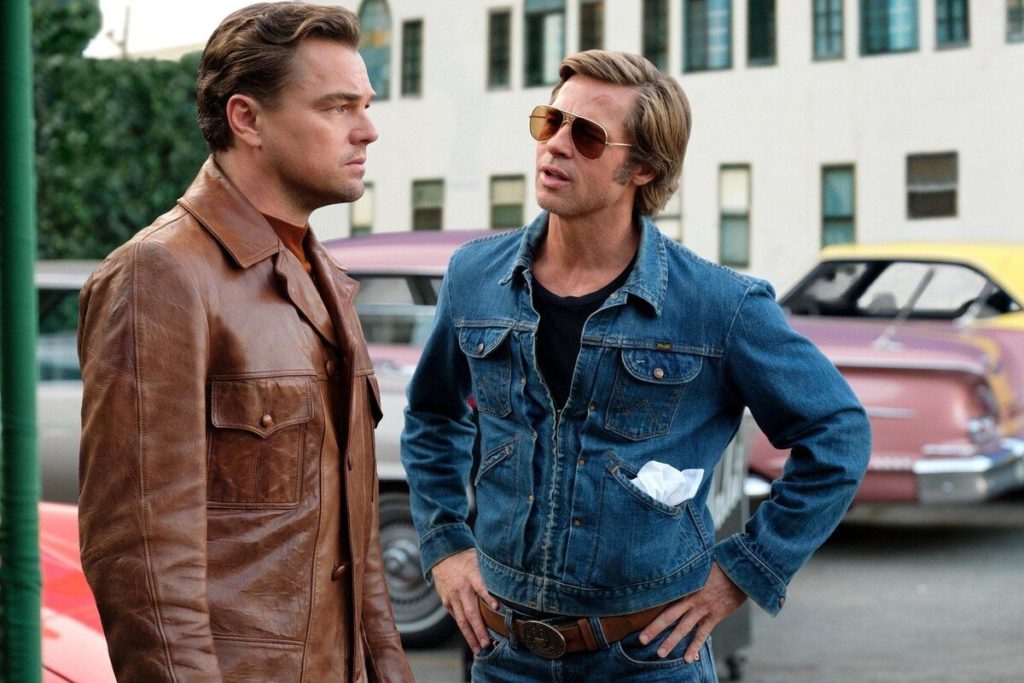
Once Upon a Time in Hollywood Is an Entertaining, Overstuffed Tribute to Showbiz

Written by , Posted in Blog, Movie Reviews, Pop Culture

Hollywood has a certain affection for films about its own lore. As a city that welcomes so many, myself included, Los Angeles is an easy city to dream about. The very notion of living here is itself a part of the fantasy, opportunities seemingly lurking around every corner.

This city has been very good to Quentin Tarantino, one of the few bonafide superstar directors capable of drawing crowds to the theatre just with his own name. Once Upon a Time in Hollywood is his love letter to Los Angeles, a film so occupied with its location that it barely felt the need for much of a narrative. Tarantino is too busy soaking in the nostalgia of an era gone by to concern his script with the notion of a plot.

Rick Dalton (Leonardo DiCaprio) is a washed-up Western actor who failed to make the transition from TV to film, back in a day when that distinction mattered. He can’t get his stunt double Cliff Booth (Brad Pitt) much work, instead keeping him employed as his personal assistant. The two are a good fit for each other, mostly getting by on the laurels of their glory days.

Dalton and Booth’s occasionally separate narratives make up two-thirds of the narrative, mostly leaving Sharon Tate (Margot Robbie) with the remainder. Tate isn’t given much to work with, a seemingly intentional calculation. Robbie plays the young starlet with a kind of energy that makes her role in the film clear without a ton of dialogue.

The film blends fact and fiction quite effectively, constantly challenging the audience’s perception of reality. Dalton appears to largely be a composite of Steve McQueen and Burt Reynolds, with some nodes of Clint Eastwood. Tate, a real-life victim of the Manson family’s killing spree, is also very much a figure of Tarantino’s fantasy. This isn’t a biopic, even though plenty of Hollywood icons show up throughout the film.

Tarantino soaks in each scene in his film with a runtime of two hours and forty minutes. There are plenty of sequences that don’t really play any larger narrative purpose, contemplative moments that are perhaps a bit too self-indulgent. The cinematography is beautiful, showcasing the beautiful sets that faithfully recreate the era.

Perpetually present is the sense that Dalton serves as a commentary on the current state of Hollywood. Tarantino, DiCaprio, and Pitt are in many ways A-list stars of a different era, before superheroes and franchises took over the box office. To his credit, Tarantino doesn’t write Dalton as particularly sympathetic, a man too consumed with his own fading stardom to see the immense fortunes he’s been afforded.

Putting aside the notion that this film is little more than an aging director’s nostalgia-powered vanity project, it’s a lot of fun to watch. Tarantino is clearly having a blast, as are most of its star-studded cast. At many points, the film feels like watching a rich man perform karaoke at his fiftieth birthday party, prolonging a fun event with unnecessary interludes. It is a well-crafted movie that is too long for its own good, the kind of narrative that doesn’t seem poised to stand up to repeat viewing. Tarantino showcases the skills he’s refined over the years, along with a lack of restraint that longevity often affords.

Friday

26

July 2019

0

COMMENTS

The Cure – Anniversary 1978-2018 Live in Hyde Park Celebrates Forty Years of Gothic Rock Excellence

Written by , Posted in Blog, Movie Reviews, Pop Culture

The timeless angst that The Cure has expressed in their music over the years can make it easy to forget just how long this band has been around. Few groups last long enough to put on a fortieth anniversary concert, let alone an extravagant production in front of tens of thousands of fans. The Cure – Anniversary 1978-2018 Live in Hyde Park London captures the magic for those who didn’t get a chance to be there in person.

The film showcases the immense energy that Robert Smith still brings to the stage after all these years. His voice hasn’t lost any of its range, remarkable for a performer who’s been at it for decades. While he often lets Reeves Gabrels perform most of the guitar work while he’s singing, Smith still showcases his skills, perhaps most memorably on the intro “Pictures of You.”

A highlight of the film is the way the band takes on plenty of hits from their early years. The lightning-fast pace of songs like “Play For Today,” Boys Don’t Cry,” and “Jumping Someone Else’s Train” is a bit slowed down, but the band brings plenty of energy to these renditions. Time has softened a bit of the melancholy from more downbeat albums such as Disintegration, which is featured extensively throughout the set.

The Cure is undoubtedly a different band than the one that excited audiences in the early 80s, but the two-hour-plus performance demonstrates their commitment to playing their hearts out. Plenty of other older groups are perfectly content to go out on stage and play a muted greatest hits set aiming to evoke nostalgia from its audience. The Cure plays like a band ready to excite the crowd for the present with plenty left in the tank.

As a film, Live in Hyde Park London does leave a bit to be desired. Director Tim Pope, whose work with The Cure spans almost their entire career, does an excellent job making a massive larger than life event feel intimate. The film captures the extent of the crowd, but the audio and camera angles create the sense that the group is performing exclusively for the audience in their living room.

As the film’s name suggests, the fortieth anniversary is a big deal. Being just a concert film that solely presents the music, Live in Hyde Park London falls a bit sort in conveying the magnitude of the event. There’s no interviews or backstage clips from Smith reflecting on such an achievement. The music may speak for itself, but it’s certainly not the only voice the audience would want to hear.

The great achievement of Live in Hyde Park London is how little it makes you wonder about the future of the band. A fortieth anniversary celebration naturally draws one’s attention to the simple fact that there won’t be many more of these momentous milestones left to celebrate. The way The Cure plays suggests differently. The band is still at the top of its game, a group still able to evoke wonder and awe, not simply memories of better days. These days are pretty great.

Tuesday

23

July 2019

0

COMMENTS

Veronica Mars Shows Its Story Can Look Forward While Its Characters Linger in the Past

Written by , Posted in Blog, Pop Culture, TV Reviews

The television landscape has changed quite a bit since Veronica Mars made its debut in 2004. Its first network, UPN, hasn’t been around for more than a decade. Its current home, Hulu, didn’t exist yet, as cable networks were only just starting to focus on original programming, let alone streaming. The quirky high school detective show felt like a breath of fresh air, taking on the youthful territory of rival network The WB with an adult sense of maturity.

Like practically all high school dramas, Veronica Mars experienced some growing pains after graduation. The UPN/WB merger left plenty of shows fighting for space on The CW, which cancelled Mars after its third season, the first overall on the new network. The show’s cult fanbase has ensured that its legacy has lived on, first in a 2014 film of the same name, and now a fourth season of eight episodes.

The fourth season follows its predecessors’ lead in having one big mystery, but the shortened episode order leaves this case as the predominant narrative. The early years let the cases unfold over the course of a twenty-two-episode arc, allowing plenty of time for character development and other various subplots. This season manages the balance between mystery and character, but its execution leaves a lot to be desired.

Plenty of Veronica Mars characters return over the course of the fourth season, but only Veronica (Kristen Bell), Keith (Enrico Colatoni), and Logan (Jason Dohring) remain at the heart of the narrative. Trouble is, the show doesn’t really have anything new to say about Veronica’s relationship with either man. There’s still plenty of witty banter between Veronica and Keith, but Logan mostly mopes around while on leave from the Navy.

The “will they/won’t they” relationship between Logan and Veronica existed at the heart of the show’s narrative for its entire run. Season four maintains the status quo to its own detriment, pursuing this well-trodden turf at the expense of any other kind of character development. For all the ways this season managed to put high school in the past, the melodrama between two grown adults feels like misplaced nostalgia.

The mystery at the heart of the season involves the bombing of several Spring Break destinations across Neptune. Patton Oswalt and J.K. Simmons stand out as newcomers Penn Epner, a pizza delivery guy and amateur sleuth solver, and Clyde Pickett, an ex-con serving as a fixer for Dick Casablancas Sr. The mystery has plenty of twists and turns, serving as the season’s primary focus without feeling overly drawn out.

To its credit, season four hardly lives in the shadows of what came before it. Old Veronica Mars characters return infrequently, almost always with purpose. Fan favorites such as series regulars Wallace (Percy Daggs III), Weevil (Francis Capra), and Dick (Ryan Hansen) aren’t around much, consistent with the passage of time since these characters would have played natural roles in each other’s lives. The show demonstrates a sense of maturity for not picking the low hanging fruit of forcing these people together to recapture the good old days.

Season four exists in a state of limbo, a revival that doesn’t cling to the past while not being overly committed to the idea of a future for Veronica Mars either. High school is over. The show knows that, but what comes next remains oddly up in the air. As a revival, this kind of makes sense since no one really knows what the future will hold for the series, but the narrative doesn’t face the same obligations.

Veronica Mars is still a fun show to watch. It’s decidedly less fun than it used to be. Thoughts of its theme song’s refrain, “we used to be friends,” remain ever-present. We all have memories of days gone by. Television possesses the ability to bring those dreams alive again, but some of the magic is lost when wishful thinking becomes reality.

Friday

19

July 2019

0

COMMENTS

The Lion King Is a Disappointing Remake Stuck In the Shadows Of Its Predecessor

Written by , Posted in Blog, Movie Reviews, Pop Culture

Necessity is a problematic concept with regard to filmmaking. The very idea of asking if a film “needs” to be made opens up a can of worms that can be applied to countless new movies made each year. It’s not as if there has to be an answer either. If a property is valuable, studios look to capitalize on their assets, whether it be in the form of a sequel, reboot, or this latest trend of making live-action adaptations of beloved animated classics.

The original version of The Lion King may have been the best film of the Disney Renaissance. The animation was stunning, the cast was top-notch, and the film was a joy to watch from start to finish. By evoking nodes of Hamlet, the plot added a layer of complexity that plenty of children’s films avoid, instead sticking to more conventional storytelling, the kind of stuff you find in fairytales. Its release in 1994 felt like an important achievement in filmmaking, a high in traditional animation that likely hasn’t been topped to this day.

With that impressive legacy in mind, it’s hard to see what 2019’s The Lion King was trying to achieve. Jon Favreau’s live-action remake is more of less completely tethered to its 1994 source material, though the film itself is about thirty minutes longer. The script hits many of the same notes, with only a few noteworthy deviations.

The photorealistic animation does the script no favors. Unsurprisingly, these animals are far less expressive than their traditionally animated counterparts. The audience is left watching characters deliver lines that everyone knows are coming in a way that lets all the air out. Obviously, these computer images aren’t actual actors, but they still look kind of bored to be there.

Part of what made the 1994 version of The Lion King feel larger than life was the way the musical sequences felt married to the colorful imagery on the screen. The characters performed in grandiose sequences, with the overpowering orchestral numbers daring to overload the senses. Everything felt larger than life.

For the 2019 version of The Lion King, too many of the sequences came across as joyless, almost obligatory in nature. The sound editing does the music no favors, at times feeling more like background music than anything else. It doesn’t help that actors like John Oliver aren’t particularly good singers, and the film doesn’t follow its predecessor’s lead in bringing on additional actors to help with the singing.

The voice acting isn’t really the film’s biggest problem, but The Lion King as a story isn’t particularly conducive to maximizing the talents of an all-star cast. Donald Glover and Beyoncé are fun to watch as the adult Simba and Nala, but that doesn’t change the fact that they don’t appear until the third act. The film does its best to capitalize on the amusing banter between Billy Eichner’s Timon and Seth Rogen’s Pumbaa, but the narrative is too much of a shot-for-shot remake up to that point that it’s hard to see their efforts as anything other than a welcome distraction.

The Lion King overhunts the terrain of its predecessor, a lifeless remake that inhabits the shadowlands of nostalgia. Director Jon Favreau brought something new to the table with his 2016 remake of The Jungle Book. Here, there’s nothing but the memory of one of Disney’s crowning achievements. Films shouldn’t need mandates to exist, but The Lion King never tries to be more than a shell of its predecessor.

Monday

15

July 2019

0

COMMENTS

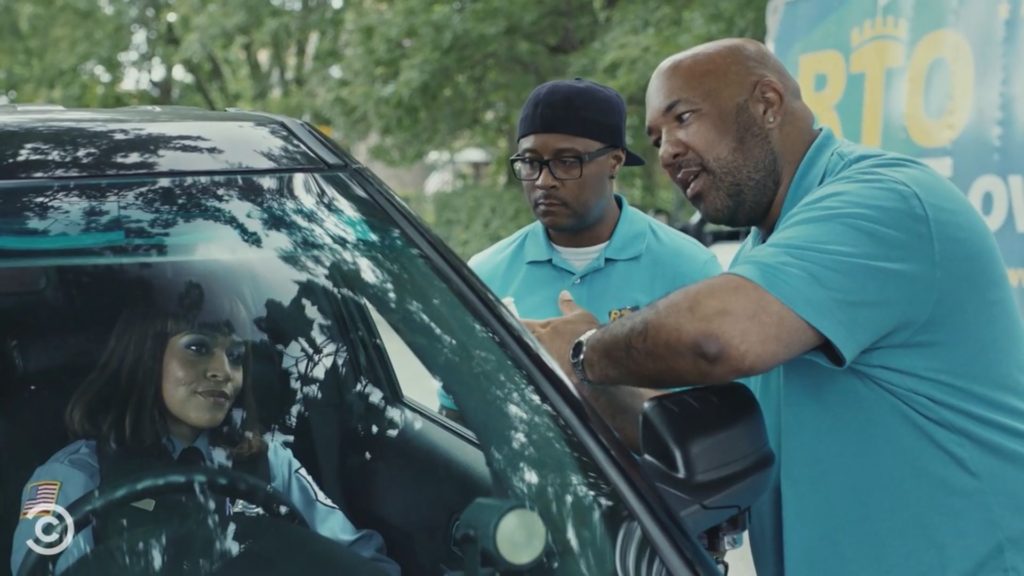
South Side Is the Funniest New Show of 2019

Written by , Posted in Blog, Pop Culture, TV Reviews

Plenty of great sitcoms have made their settings feel like characters in their own narratives. It’s hard to think of Cheers or Seinfeld without the culture of Boston or New York coming to mind, putting aside the inconvenient fact that both shows were filmed in Los Angeles. With Comedy Central’s new show South Side, from Late Night with Jimmy Fallon alumni Bashir Salahuddin, Diallo Riddle and Michael Bliedenl, Chicago lies at the forefront of the narrative. Filmed entirely on location, using actors who grew up in the city, the show delivers laughs at a mile a minute against a backdrop that puts the audience at the heart of the narrative.

South Side features an ensemble cast of predominantly black actors, using the local appliance rental store Rent-T-Own as its primary setting. Salahuddin’s brother Sultan stars as Simon, a recent community college graduate looking for more upward mobility than life as a repo man. Kareme Young co-stars as Kareem, similarly looking for a better life, especially since his brother Quincy (played by Kareme’s real-life brother Quincy Young), serves as Rent-T-Own’s manager, constantly struggling to encourage a semblance of professionalism amongst his uninspired staff.

Chandra Russell is perhaps the show’s breakout star as Sergeant Turner, a police officer constantly unsure of whether to do good or take care of herself in the process. Alongside Bashir Salahuddin’s “Officer Goodnight” the two cops are absolutely hilarious to watch as they skirt ethical lines, taking sides on disputes over Xbox repossessions and Air Jordans that give plenty of food for thought well after you’re finished laughing.

The writing on South Side is absolutely superb. Salahuddin and Riddle have the rare ability to sneak nail-biting jokes into dialogue when you least expect it, the kind of comedic timing that’s intertwined into the plot rather than as a throwaway gag. They find humor in just about every subject, from child-support disputes to Coretta Scott King.

The narrative finds the sweet spot between episodic and serialized across its first season. You don’t necessarily need to watch every episode in order to follow along, but there’s plenty of references that reward those who do. Much of the plots are presented almost like vignettes, but there is a sense of character growth as the show progresses. These characters are here to make you laugh, but the actors engage with them in a way that brings out a level of authenticity you don’t necessarily expect from most sitcoms.

Perhaps the greatest triumph of South Side is the way it feels culturally relevant without being overly political. Police corruption, racial injustice, and income inequality are hardly conventional comedic topics, but the show presents them in a humorous fashion that never feels like it’s making light of the broader issues. National politics are left out entirely, instead focusing in on the struggles of Chicago that have existed for decades. This is a show about the South Side by people who grew up there, presented in a fashion that’s quite accessible for an audience that may not be very familiar with the local culture.

South Side is the funniest new show of 2019. Each episode has more laugh out loud moments than plenty of other comedies manage in an entire season. The writing and acting are spectacular. Salahuddin and Riddle’s love letter to their community is the must-watch show of the summer.

Friday

12

July 2019

1

COMMENTS

Wonder Explores the Unique Challenges Presented to Gender Diverse Youth

Written by , Posted in Blog, Movie Reviews, Pop Culture

Being a gender diverse kid is often a lonely experience. One’s inner sense of self constantly clashes with an outside world that reinforces the idea that there’s something wrong with being different. The changing times can hopefully alleviate some of that rather needless turmoil that too many of us have lived through, but Javier Molina’s new short-film Wonder reminds us of the challenges that too many children still have to face.

Sammy (Benji Siegel) is a young boy growing up in the hood, surrounded by the rigid gender structure that has little place for anything other than strict adherence to traditional masculinity. Sammy wants to be Wonder Woman for Halloween, but his interactions with his peers demonstrate that such a path is perilous to walk.

His father Frank (Gabriel Furman) is a typical blue-collar “man’s man,” able to talk sports and the needs of boys entering puberty, but not necessarily the nuances of gender identity. Like Sammy, Frank lives in a world that doesn’t give that subject much thought beyond thinking that anyone who would buck gender norms must be sick in the head. It’s not so much prejudice as it is a more viscerally charged form of indifference.

In many ways, Wonder is a film crafted more for people like Frank than Sammy, parents who never in a million years expected to be presented with a gender diverse child. Parents don’t always get it right on the first try. Without dismissing the angst that rejection, even of the reflexive variety, can cause, life isn’t a one and done game. What matters is the long term sense of acceptance for a child who is just as scared as their parents.

The triumph of Wonder comes from the way it handles a complex subject with a sixteen-minute runtime. This isn’t a portrait of Sammy’s life, but a snapshot of a pivotal moment. It does so with immense grace, though its continued use of homophobic slurs perhaps steps on its broader message late in its narrative. Acceptance is hardly universal, but a parent’s love can make the cold world a little less daunting.