Ian Thomas Malone

Monday

23

June 2014

2

COMMENTS

Orange is the New Black Searches for Balance Between Plot and Character Development

Written by , Posted in Blog, Pop Culture

Is it possible for Orange is the New Black to simultaneously be one of the best shows on TV and overrated? Season two of the prison comedy-drama solidified the show’s status as Netflix’ flagship program. The hype was certainly big, which isn’t very surprising considering the complete lack of anything else happening on TV in the month of June. But does it deliver?

This season takes much of the focus away from Chapman. The acting has always been OINTB’s strongest attribute and the cast rarely misses a beat. Kate Mulgrew and newcomer Lorraine Toussaint are responsible for the season’s meatiest moments while other characters make the most of their more limited screen time.

While the cast excels with whatever they’re given, the show suffers from a lack of direction. There are plenty of plotlines, but none of them feel as developed as they could be. Flashbacks and unnecessary scenes involving Jason Biggs, the show’s sole rotten egg performer, waste precious screen time that could be better dispersed elsewhere. Chapman’s breakup with Larry was a perfect opportunity to get rid of Biggs and yet the show missed a perfect opportunity to shed the 90s has been. There’s no good reason to keep him on the show when other characters are given nothing to do for the whole season.

The show also doesn’t utilize its ensemble cast to its full potential. For the most part, they’re completely separated from one another by individual plotline with very little overlap. The quirk feels a bit toned down when the characters are separated from one another and that’s not necessarily a good thing.

The season as a whole feels a bit incomplete when it’s all said and done. Most storylines are left unresolved and the payoffs are less rewarding than they should be. It’s okay for OINTB to put its focus on character more than plot, but the balance is a bit lacking. The flashbacks aren’t needed in every episode anymore and the show would do well to recognize that. The same problem plagued Lost in its later years when the flashbacks were no longer necessary. Format changes are okay.

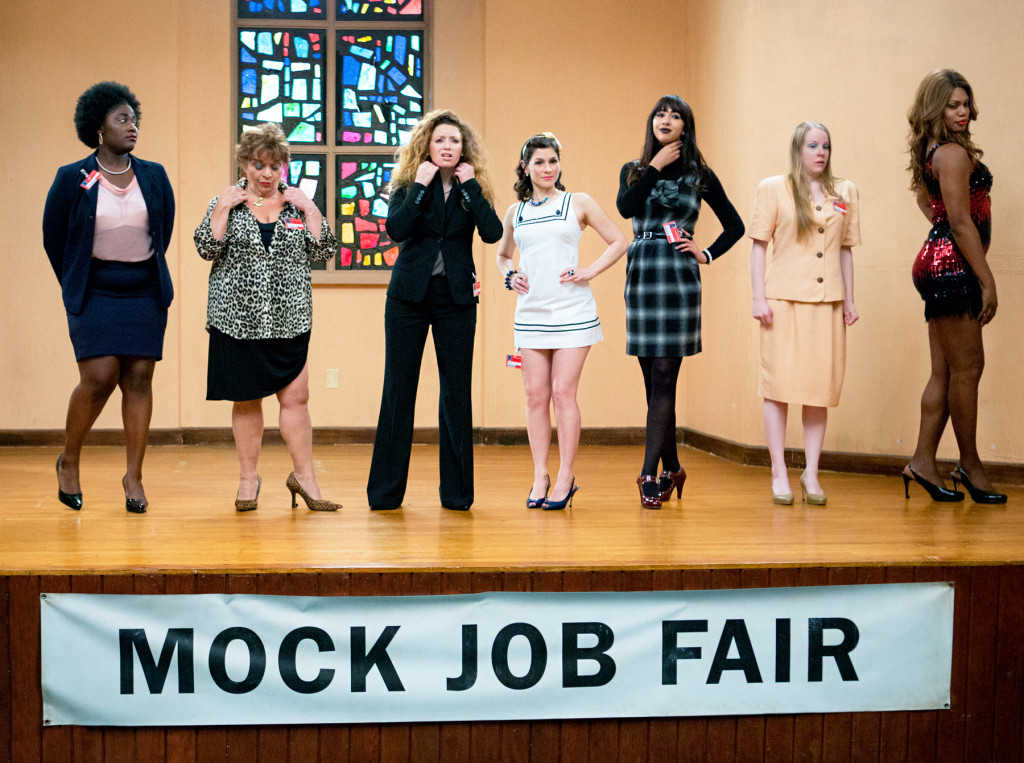
The wasted time affects the season’s most interesting storyline involving contraband smuggling and the subsequent power struggle between Mulgrew, Toussaint, and Selenis Leyva. The plotline is never dull, but it never reaches its full potential either. Hints are made that it could have prison wide ramifications, which would be the natural progression and yet the show hesitates to make this the center of attention. It feels like a slightly extended subplot that is naturally the big attention grabber as it’s the easiest talking point.

Chapman’s storyline is the biggest mess of them all. She starts off the season being duped by Alex, then paints herself as some kind of badass, followed by a highly unrealistic/unnecessary furlough, and finally settles for some Stockholm syndrome. Fun right?

Season two is often a mess and yet it’s a fun mess. The cast is a treat to watch and the concept lends itself well to binge watching. It’s no different from having regrets about eating a pint of ice cream in one sitting though no matter how fun it is. The acting is immensely satisfying, but you’re bound to question what it was all for.

The bar in theory should’ve been raised for this season coming off such a successful debut. It delivers on the acting front, but when it comes to creating a season with a beginning, middle, and end, the show fails to figure out how to make it all come together. That’s the problem with a show that only airs new episodes one day a year. You burn through the episodes fairly fast without stopping to examine the flavor.

Which is fun, but it isn’t the greatest thing since sliced bread (or Phish Food, whichever came first). OINTB is a very enjoyable program, but much of its praise should be taken in context. It doesn’t need to be better than anything else on TV, because the competition is hibernating when it comes out. The show entered itself for Emmy consideration as a comedy, a move that’s been tried by hour-long comedy-dramas like Desperate Housewives, Ugly Betty, and Glee to mixed results. I’d be surprised if the show didn’t win Best Supporting Actress for either Mulgrew or Uzo Aduba, but voters have been reluctant to reward dramatic series for exploring genre loopholes.

This post has been oddly hard on a season that I did enjoy, but it’s somewhat unsatisfying when you consider the lack of growth that the show took in its sophomore offering. That’s hardly the slump that many other shows have struggled with, but it does preclude it from true contention as TV’s best program. OINTB is a show that settles for the status quo because the status quo works without trying to see if things could be better.

Monday

16

June 2014

2

COMMENTS

Toronto Needs to Find a New Home for the Argonauts Soon

Written by , Posted in Blog, Social Issues

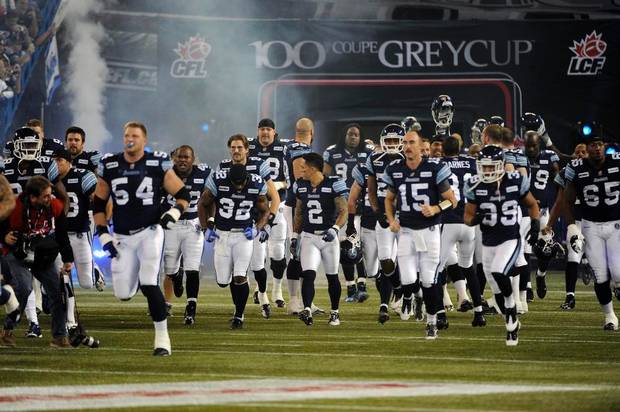
It’s a good time to be a CFL fan. With the new collective bargaining agreement ratified, the notion of a strike is safely squashed. Preseason games have started and the Ottawa Redblacks play their first regular season game in just a few weeks. The vast majority of the league has seen new stadiums or renovations help modernize the sport. Things are going well.

Except for the Argos.

One of the first things I noticed when I visited Rogers Centre to see the Blue Jays play was that the rafters were devoid of any reference to the stadium’s cotenant. The gift shop also lacked any Argonauts merchandise. Given the scarcity of Argos’ memorabilia in the States as well as the city of Toronto as a whole, I was disappointed that Rogers is purging its association with the football team years before its lease is up.

The Argos find themselves in a precarious position with their stadium woes. Rogers Centre will be shifting to an all grass field to accommodate the Blue Jays in a few years. Given most baseball players’ disdain for turf fields, this move is certainly a smart one for baseball. It is however, unfortunate, that the move was not made in conjunction with a permanent location for the Argos, who will not be able to play on the grass field.

A deal with BMO Field, the home of MLS’ Toronto F.C., was expected to happen before the project hit a snag with funding. The proposed changes would expand BMO Field’s regular capacity by 5,000 seats for soccer and potentially 40,000 for football, concerts, and other noteworthy events. Given TFC’s popularity, this seemed like a win/win for everyone involved.

The project’s cancellation creates a big mess and one that doesn’t appear to have an answer. The BMO Field funding issue means that a separate stadium built exclusively for the Argos would be highly implausible. The University of Toronto’s Varsity Stadium isn’t big enough to accommodate professional football. There aren’t really any spare stadiums lying around, especially now that Maple Leaf Gardens is a grocery store. BMO Field is pretty much the only option.

Canadian football is never going to be as popular in Toronto as it is in other cities. Toronto has plenty of other sporting/entertainment options to ensure that Argos fans will never get behind their team in quite the same fashion as Roughriders’ fans. And that’s okay.

What isn’t okay is the notion that the Argos might not have a home in Toronto in just a few years. While their lease with Rogers doesn’t expire until 2017, this is a problem that needs to be dealt with now. Construction isn’t exactly an easy thing to do.

The CFL doesn’t need the Argonauts to be the most popular team in the league, but a league with Canadian in its title shouldn’t have a team in the country’s most populous city as its black sheep either. The CFL should be embarrassed that a fan cannot find a single piece of Argos merchandise in the city of Toronto. The Argonauts are the only team in the league with a new stadium or a serious renovation in the past five years.

The Rogers Centre lease situation is nothing out of the blue and yet nothing has been fixed. The CFL, the Argos, and the city of Toronto should all be embarrassed about that as well. The league has dealt with threats to its prosperity admirably and it should treat the Argos stadium issue with the same level of importance as the player’s unrest over the collective bargaining. Keeping up appearances is important.

BMO Field is the solution. Ontario needs to iron out the problems in the funding for the expansion of the field. Finding $120 million is easier said than done, but an outdoor field would do wonders for the Argos and might actually elevate them to actual relevance in the city of Toronto. The CFL should do everything it can to keep Canadian football in Toronto.

Sunday

8

June 2014

1

COMMENTS

The Case for Strong Belwas

Written by , Posted in Blog, Game of Thrones

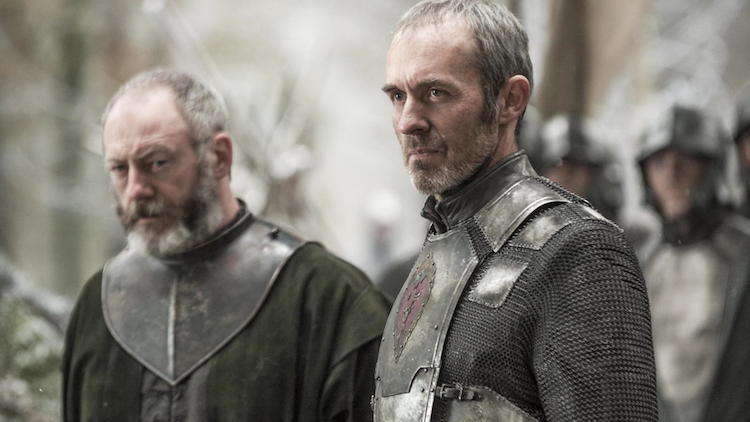
As Ser Jorah took his leave from the service of Daenerys Targaryen, I found myself weeping for a reason unrelated to the fate of the exiled knight. With Grey Worm’s expanded storyline to include a peculiar and implausible romance with Missandei, it’s clear that the show has deviated from the books in an effort to expand the appeal of Daenerys’ supporting characters. Which makes the exclusion of one of her most interesting companions all the more puzzling.

In the Song of Ice and Fire books, Strong Belwas is clearly one of Daenerys’ better retainers. The massive eunuch former gladiator provides comic relief in a storyline that’s often desperate for it. And yet the show excludes him even though its elevated the humor in characters such as The Hound and Bronn.

The problem is that the show didn’t have a natural point for Strong Belwas to enter the fray. In the books, Strong Belwas arrives in Quarth in season two along with Ser Barristan, who is disguised as his squire. It’s hard to fault the show for doing away with Ser Barristan’s disguise given that it’s rather unnecessary in the grand scheme of things and would be hard to pull off on television. Introducing Strong Belwas alongside Ser Grandfather wouldn’t have been impossible, but it wasn’t entirely necessary either. Remember, the books have much more downtime with the Targaryen plotline than the show does.

That doesn’t mean that Strong Belwas couldn’t join the show at any given point. His association with Illyrio Mopantis gives him a fair bit of leeway to join the show far later than he did in the books. The show could simply have him come at the bequest of Mopantis. This of course could easily be worked into the show next season when Tyrion Lannister makes his escape from King’s Landing.

The big reason I think that the show doesn’t want Strong Belwas around is that he’s a eunuch. The show has two eunuchs already and has explored the horrors of that practice with Varys and Grey Worm. Strong Belwas is largely a comedic relief character who mostly wants to eat and kill things. He doesn’t care about being a eunuch. The show would care though.

The show has cut back on the importance of Daenerys’ party as a whole. Her Dothraki bloodriders and Brown Ben Plumm are absent from her storylines, choosing instead to focus on Ser Jorah, Ser Barristan, Grey Worm, and Daario Naharis. Given the fact that the show has limited time to devote to Daenerys, this isn’t surprising and it isn’t necessarily a bad thing either.

Strong Belwas isn’t a character who needs a lot of time devoted to his development. In the books, he doesn’t do much that isn’t involved with the aforementioned gluttony and lust to commit homicide. He doesn’t have a lot of depth. And yet, he’s a fan favorite.

It’s unclear as to how much of a void Ser Jorah’s departure really creates. But his absence is one less character involved with Daenerys that we care about. Given the slow pace of her story for the foreseeable future, it’s hard to argue that he wouldn’t have improved her storyline.

Deviations from the source material are to be expected, but those deviations should serve to improve the experience as it’s translated to screen. Excluding a beloved fan favorite doesn’t serve anyone. There’s simply no reason not to utilize the talents of Strong Belwas on Game of Thrones. The mother of dragons knows it and so do we the people.

Friday

6

June 2014

0

COMMENTS

Dunkin Donuts’ Blueberry Cobbler is Delicious, but Bad at Being a Donut

Written by , Posted in Blog, Social Issues

Dunkin Donuts has made some questionable decisions over the past few years. It’s understandable that the company would want to expand into the sandwich market as there’s clearly a demand for it, but products like the Eggs Benedict Sandwich (complete will Hollandaise flavor) and the Tuna Salad on a Croissant don’t seem like the kind of things Fred the Baker would’ve gotten up extra early to make. The rapid fluctuating lunch menu suggests that there are some growing pains with that whole plan.

Dunkin still excels at their two main areas of interest. The coffee and donuts are consistently good provided you don’t order them at 11 o’clock at night. The donuts might be freeze-dried, but alas, these are things I simply cannot care about.

Every now and then, Dunks decides to tamper with its donut lineup. Most of the time, these new creations are about as short lived as AfterMASH, Qwikster, or a Kardashian marriage, but you’ve got to give them credit for trying. I’ll give them more credit for the new blueberry cobbler donut.

The blueberry cobbler donut is simply delicious. The filling to donut ratio is perfect, the frosting tastes like something you’d find on a birthday cake, and the cinnamon streusel topping is both decorative and flavorful. This donut does everything right. Problem is, something doesn’t feel right about the blueberry cobbler donut.

Donuts are versatile pastries. They can be breakfast, dessert, or a snack. The problem with the blueberry cobbler donut is that is tastes too good. It’s overloading and excessive, even though it’s a fine balance of donut, filling, frosting, and streusel. It won and yet it lost.

The blueberry cobbler donut should strictly be viewed as a dessert item for fear of inducing a food coma. You can’t possibly expect to be productive after consuming it. The same cannot be said for a chocolate frosted, glazed, or even a jelly donut. The donut sugar rush is supposed to aid you, but this isn’t a rush. It’s an avalanche.

Which presents the question, what good is this donut? It tastes great, but it’s a dessert served at a place you don’t go to for dessert. Going to Dunkin after dinner is a surefire way to get a subpar donut. If it was served at ice cream parlors, that’s one thing. But the blueberry cobbler donut is served at a coffee shop.

This donut is a treat without a function. It might taste better than the other donuts, but you wouldn’t pick it over them. Those other donuts know how to be donuts. The blueberry cobbler donut doesn’t.

A bakery might want to adapt this concept into a pastry people might bring to dinner parties. People don’t bring Dunkin Donuts to dinner parties though. Dunkin Donuts doesn’t serve cannolis, cakes, and pies for a reason. People don’t go to Dunks to be overwhelmed by pastries. Ambition doesn’t always lead to success, even if everything goes right. Such is the tragedy of the blueberry cobbler donut.


Tuesday

3

June 2014

3

COMMENTS

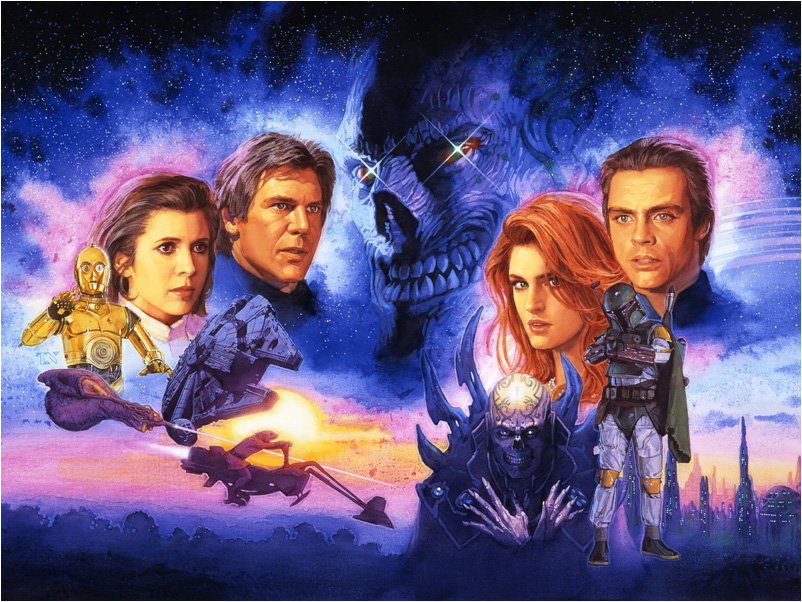
Getting Rid of the Star Wars Expanded Universe Sort of Matters

Written by , Posted in Blog, Pop Culture, Star Wars

Ever since it was announced that Disney would purchase Lucasfilm in 2012 with the intention of creating more Star Wars films, it was only a matter of time before something drastic changed within the Star Wars canon. The Star Wars Expanded Universe has played a big role in the lasting popularity of the franchise and is far more beloved to many fans than the prequel trilogy or the Clone Wars TV series. When Disney announced in late April that the EU would be rebooted in conjunction with the seventh film’s release in 2015, reception was expectedly mixed.

Timothy Zahn’s Grand Admiral Thrawn Trilogy is widely considered to be the EU’s finest work and was the catalyst that gave credibility to the medium. Since then, there have been well over a hundred entries into the EU with varying degrees of popularity. In addition to Zahn, writers like R.A. Salvatore and Michael A. Stackpole contributed noteworthy works that kept the EU’s popularity up in the time since Heir to the Empire made the New York Times’ Bestseller List. .

The fact that there were hundreds of entries into the EU perfectly highlights the main reason why something needed to happen. Lucasbooks has taken its own continuity very seriously, employing fact checkers well versed in the canon to help writers with their own entries. Outside of those fact checkers, I can’t imagine there are that many who possess a full spectrum of knowledge on all of these books. There’s no reason to expect future films to adhere to continuity so strict that no one would be able to catch deviations in the first place.

More importantly, the popularity of the EU has been on the decline for over a decade now. The New Jedi Order series began with the killing of Chewbacca in an odd matter that’s even confusing to explain coming from someone who actually read Vector Prime. That started a sequence of events that lead to the killing off of many of the EU’s most cherished characters including Anakin Solo, Mara Jade, and finally Jacen Solo who turned into a Sith Lord in a manner that served to emulate his grandfather’s decline.

The EU had nowhere left to go and with dozens of entries that were widely panned, it didn’t made sense to keep that timeline in the fold. Comic books do this all the time. Rebooting the EU might be frustrating, but it needed to happen.

It didn’t need to happen in a way that erased the entire universe though. We don’t know many of the details surrounding the seventh film, but it’s safe to say that Mara Jade and the Solo children will not be in it. Chewbacca is alive again, but the message was sent that the EU no longer matters moving forward. That could be a mistake.

The EU worked. More importantly, the prequel trilogy didn’t work. It’s one thing to reboot what happened, but by going in a completely different direction, Disney is failing to capitalize on what could’ve been a smart goodwill gesture to the fans. Choosing to ignore it completely disregards the fact that the EU kept the franchise alive at a time when nothing else was going on.

If Star Wars: VII is a bomb, you can bet that people will point the finger at the decision to ignore plotlines which were readily available and proven to be more successful than Jar Jar Binks and the midichlorians. As they should. Only time will tell us the full extent of the ramifications of flushing the EU away like Taco Bell twenty minutes after it’s been eaten.

I don’t mourn the loss of the EU. Rebooting the series to a time where the Yuuhan Vong and Darth Caedus never happened is fine by me. The EU gave fans more than twenty years of material to read. Anyone who has gone through all of that material is probably ready for some new books to read. Whether or not that’s the new Star Wars books is up to them.

J.J. Abrams’ new film will face a ton of scrutiny. The idea that there could be a new Star Wars film every year for the rest of eternity all but guarantees that somewhere down the road there will be a valid reason to bash the series. Rebooting the EU isn’t necessarily one of them, but wiping away so many cherished storylines and characters isn’t a great idea either.

Monday

2

June 2014

0

COMMENTS

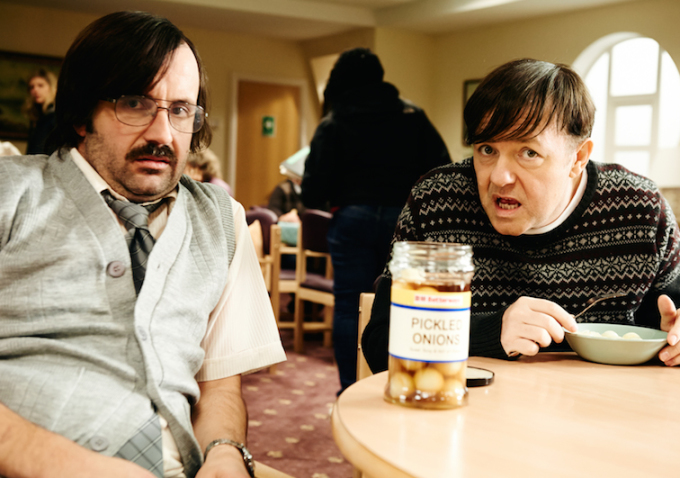
Netflix’ Derek Continues to Be TV’s Oddest Offering

Written by , Posted in Blog, Pop Culture

The first season of Netflix’ Derek was a peculiar one. Largely marketed as a comedy, the new offering from Ricky Gervais largely steered away from the material commonly found in all of his other series. Derek’s tone was much darker than anyone could’ve expected from the co-creator of The Office, Extras, An Idiot Abroad, and Life’s Too Short. While the results were mixed, a strong season finale had me excited about the prospect of another season.

The biggest problem with Derek is that it doesn’t appear to have much of an idea of what it wants to be. Season one had a few funny moments, but this was a drama that also wanted to explore the meaning of life. The fact that Gervais was channeling existentialism while portraying a seemingly mentally handicapped character oddly reminiscent of Father Dougal from Father Ted made matters complicated. Season two does a good job of fleshing out Derek’s character to a point where he finally makes some sense, but it doesn’t do a great job of following up on his growth from the season one finale.

Season two doesn’t really go anywhere. The six episodes are largely dedicated to exploring the main cast with minimal involvement from the actual residents of the old age home. Karl Pilkington, who plays the handyman/bus driver Dougie, departs after the first episode and the show suffers without his wit, but the rest of the cast steps up in his absence. The acting is elevated drastically in season two and the strong performances provide perhaps the best reason to watch the show.

There’s too much of the same in season two. This season dedicates more time to character than plot, but the destination is exactly the same. Each character is a flawed mess trying to make it through the hard road called life, but we knew that already. Life season one, there’s an episode that stands above the rest, but the majority of the season is largely forgettable. Familiar themes repeat themselves and the characters are mostly restricted to one notable event a season. With a collective run time of a little more than two hours, that’s not exactly surprising. Derek has more of an ensemble cast than any of Gervais’ other shows, which leads to an elevated feeling of inconclusiveness when the season abruptly ends. Though it’s hard to call brevity a deterrent, as I don’t think I could put up with a full season of the show.

It’s hard to imagine where Derek will fit in when it comes time to evaluate Gervais’ career as a whole. As of now, it makes more sense to compare it to Stephen Merchant’s first solo effort, Hello Ladies, which was a far more disappointing effort that received the boot from HBO after eight episodes. Derek represents a transitional series for Gervais, where he steps away from the pitiable narcissists roles in favor of more developed, if not equally flawed, characters.

Does that make it worth watching? Yes and no. If you’re a fan of Gervais’ other work or British television, then the simple answer is yes. Derek is the kind of show that needs its viewers to drop all preconceived notions of what it’s supposed to be. It doesn’t know and in small doses, that’s okay. But it’s a show with quality acting and enough tearjerker moments to merit its brief run time.

Season two struggles to deliver on the good will garnered from the season one finale. There’s a few new things to say, but the season as a whole feels like it didn’t need to happen. There’s been no news on the future of Derek, but it’s hard to imagine that there won’t be at least a wrap up special. Whether or not that’s a good thing remains to be seen.

Derek is a drama that people want to think is a comedy that’s also largely a meandering mess with a few heartfelt flashes of brilliance. That’s hardly a glowing recommendation, but I think it’s certainly worth watching. Ricky Gervais used Derek to grow as a performer and I had fun watching him work

Wednesday

28

May 2014

2

COMMENTS

2014: The Year Jeopardy! Embraced Continuity

Written by , Posted in Blog, Pop Culture

Between the Battle of the Decades Tournament and the 11 and (as of this article) 17 game win streaks of Arthur Chu and Julia Collins, Jeopardy! has quietly entered its most significant eras in the show’s long and storied history. Each of these events on their own would likely stand out as the most noteworthy event of the year for the venerable quiz show. What’s even more impressive is that these three events all happened at the same time.

While the Battle of the Decades started in February, the tournament was not completed until just a few weeks ago. In that time, nearly every noteworthy contestant of the Alex Trebek era returned in what could very well be the most exciting tournament in the entire history of the show. Though a major part of Jeopardy!’s appeal is that the show is largely the same from episode to episode, the Tournament finals were clearly something special as Brad Rutter, Ken Jennings, and Roger Craig delivered a match for the ages.

It was hard to really miss the tournament in the weeks in between as there were plenty of exciting things going on in regular play. Arthur Chu’s extreme use of the Forrest Bounce, a tactic named for champion Chuck Forrest that involves jumping around the board to throw off opponents, and his large Daily Double bets made him easily the most controversial contestant since Ken Jennings. Chu’s reign was so controversial that it attained more press coverage than the tournament itself.

While Chu lost on March 12th, before the Battle of the Decades reached its quarterfinals, Julia Collins insured that there would be another memorable regular contestant before the tournament was concluded. Collins’ active streak seems like a long time, largely because it is in fact a long time. But since she won her first game on April 21st, those seventeen games have been stretched a lot longer as Brad Rutter won his two million before Collins even made history as longest running female Jeopardy! champion. Collins style couldn’t be more different than Chu’s, but her conservative approach has served her well. Collins is quick with the buzzer and rarely gets Daily Doubles wrong, allowing her to achieve runaways without taking big risks.

It’s hard to believe that since February, nearly every person who has made an impact on Jeopardy! has either been back on the show or made a name for themselves in that time. Aside from David Madden, every major champion came back for the Battle of the Decades while Chu and Collins wrote their own chapters in the Jeopardy! history book. For a show that isn’t known for its continuity, we’ve been flooded with memorable characters for a few months now.

There aren’t that many truly memorable Jeopardy! contestants and yet we’ve seen nearly all of them this year. This span could very well be the most exciting time in the entire history of the show. Unless the expand the number of podiums, we won’t see Rutter, Jennings, Craig, Chu, and Collins all in one game. Even if we did, we wouldn’t likely return to regular play to see another long streak continue when it was over.

Sure there’s purists who would prefer that old five game limit, but the fact that the streaks of players like Jennings, Chu, and Collins happen so infrequently makes them special. We’re closer to the end of the Trebek era than the beginning, which is only natural when a person has been occupying the same job for thirty years. But what isn’t natural is for a decades old show to surprise viewers with a surprisingly memorable time period that will be remembered for years to come.When Collins loses, things will likely go back to normal. It seems weird that we’ll be without a memorable contestant for the first time since snow littered the northeast, but that’s a big reason why Jeopardy! has been such an institution.

Tuesday

27

May 2014

4

COMMENTS

X-Men: Days of Future Past and the Unimportance of Film Continuity

Written by , Posted in Blog, Pop Culture

As impressive as the Marvel Cinematic Universe has been from both a critical and financial standpoint, the evolution of superhero movies does present some risks. Both the X-Men film franchise, which is owned by Fox and therefore is separate from the movies connected to The Avengers, and the DC film universe have followed in Disney’s footsteps of moving away from stand-alone films in favor of franchises with large connected plotlines. In theory, this is pretty smart. If end credit scenes and brief cameos can draw fans to films they might not otherwise be incline to see, then why not? More movies, more money.

X-Men: Days of Future Past took one of Marvel’s most endeared story lines and used it to connect the cast’s of the original trilogy with the cast of X-Men: First Class, which was a deceivingly ambitious effort given the star power involved. With so many Oscar winners and nominees amongst the principal cast, the stakes were high to deliver a top-notch story that correctly utilized the talent involved. With a run time of a little over two hours, an equal division of screen time would’ve certainly come at the cost of the story.

Thankfully, this was something that director Bryan Singer was aware of. While this story called for both casts, the true meat of the film belongs to the newer cast. It’s nice to see Patrick Stewart, Ian McKellen, Halle Berry, Ellen Page and Anna Paquin all back in the roles that brought this franchise to the big screen, but James McAvoy, Michael Fassbender, Jennifer Lawrence, and Nicholas Hoult are the future and rightfully took point on the film. Hugh Jackman excelled in his role as a mediator between the two generations without stealing all the spotlight. Wolverine might be a fan favorite, but coming off his second solo film, it was smart not to give him all the attention.

The film also deserves credit for choosing to ignore the blatant plot continuity problems brought forth by X-Men: The Last Stand and X-Men Origins: Wolverine, by far the franchise’s two weakest entries. Old Professor X is back from the dead and the world is in shambles. Why? Who knows and more importantly, who cares?

The biggest problem with a shared universe is the inherent obligation to explain the significance of the other films. This gets you more time with characters who would be in fewer movies without a shared universe, but it comes at a cost. Thor: The Dark World had its moments, but it also felt weighed down by a necessity to intentionally distance itself from The Avengers.

X-Men Days of Future Past chose to only make references to the past films when the plot called for it. The result is a film that’s allowed to embrace the fact that it’s a movie and not a TV show. Part of the reason that this particular film could get away with this is because its source material ignored such problems and also received critical acclaim, but it’s something that other franchise should think about.

Shared universes can take you out of the movie. I’m sure I’m not alone in wondering where Iron Man was when Thor was duking it out with the alien guy in The Dark World. That’s not a big problem now, but more movies in the future means more pressure on these films to make an effort to be conscious of their surroundings. Distractions in film are far more problematic than in television.

Days of Future Past had a story to tell and nothing got in the way of that. A summary of the events leading to the dystopian world that the original cast found themselves in could’ve added half an hour to the story. The majority of Paquin’s scenes were cut which suggests that Singer knew that there could be too much of a good thing. Rogue was a good character, but it’s hard to believe that her presence was missed by anyone other than die-hard fans of True Blood.

The success of Days of Future Past calls into question the importance of film continuity when it comes to superhero films. The cameos and the end credit scenes are nice, but as the phases of the MCU evolve, so will the need to adjust to accommodate the ever-growing universe. In a genre known for excess, it would be wise to exercise some restraint on that front. References are fun as long as they don’t alienate those who choose to take a pass on questionable choices like the upcoming Ant-Man.

X-Men: Apocalypse will feature the new cast with no expected involvement from the cast of the original trilogy, even Wolverine though a cameo would not be surprising. It remains to be seen how the new film will address Days of Future Past, but it certainly doesn’t need to. I hope it doesn’t.

In creating complex superhero worlds, we can easily forget what these films are. Silly action movies. That doesn’t mean they need to be devoid of any artistic value, but that value should be derived from the film and not from a cameo from a different superhero or an end credit scene, which teases a different movie. Days of Future Past worked because it lived in the moment, albeit in a moment that fluctuated in time. Those moments didn’t always make sense, but that’s okay. Superhero movies don’t always need to make sense, but they do need to be entertaining.

Thursday

22

May 2014

1

COMMENTS

The Troubles of Book to Screen in Game Of Thrones

Written by , Posted in Blog, Game of Thrones

As a bibliophile and a TV/film fanatic, I’ve always tried to curtail my expectations for adaptation of books I enjoy. It’s always been my belief that a good adaptation tries to capture the essence of a book rather than mimic it. Blade Runner is a good example of this. The film bears little resemblance to Philip K. Dick’s novella, Do Androids Dream of Electric Sheep? but is excellent in its own right.

When it comes to George R. R. Martin’s epic Song of Ice and Fire, ten hours is simply not enough time to cover everything. More importantly, it would be foolish to even try even if more time was allotted. The show does cover most of the main points with min
or deviations, but that will likely change and the show progresses, even without taking into consideration that the final two books haven’t even been written yet.

There are many differences between TV and books, but the most important with regards to Game of Thrones is pacing. For a series that has hundreds of characters that covers thousands of pages, there’s a lot of downtime in A Song of Ice and Fire. We see this particularly with Daenerys Targaryen, who is given relatively little to do compared to the rest of the series’ major characters. The TV cannot have a character who sits around all season and thus deviation is required. We saw this in season two with the captured dragon plot in Quarth. People can criticize it for not being in the books, but without it we’d be left with a character who mostly roamed around with nothing to do all season.

The pacing also becomes increasingly more confusing with the fourth and fifth books, which take place over roughly the same amount of time and introduce several new POV characters. While the books can get away with this, keeping in mind that neither book received the kind of critical acclaim that the first three received, a TV show can’t. Television doesn’t just one day decide that the lead isn’t the lead anymore.

This requires the show to move certain plotlines along faster than the books do. Theon Grejoy is elevated to POV character in A Clash of Kings, only to disappear for the next two books before becoming important again inA Dance With Dragons. Game of Thrones can’t get away with this. If the producers tried to tell Alfie Allen that his character would be gone for two years, he would go find other work. Further more, people would naturally lose interest.

That’s part of what makes Game of Thrones such a groundbreaking show. Both the books and the show clearly have the Starks as the main protagonists when the story begins. The Starks are responsible for six of the eight POV characters (not counting the prologue) of A Game of Thrones, yet only three of the fourteen in A Dance With Dragons. The books show an increased effort to explore their depth and from the looks of season four, the show does as well.

As the depth expands, so will the deviation. For characters like Theon, Brienne, and Daenerys, we’re starting to get close to where they are in the series as a whole rather than just where they left off in A Storm of Swords.That’s going to anger some fan purists, who want a strict adaptation of the series. But it shouldn’t, especially since the show is going to catch up with the books sooner rather than later.

Game of Thrones should make plot decisions that work for the show and not strictly because that’s the way things happened in the book. Performances from actors like Charles Dance, Diana Rigg, and Richard Madden elevated their character’s significance and that’s not necessarily a bad thing. Robb Stark may not have been a POV character, but it’s hard to argue that he isn’t a more interesting character to watch than his brother Bran.

The big advantage of having POV characters is that the reader is given access to the inner thoughts of a wide spread of characters. We get to see what the Starks and the Lannisters are thinking. In TV, we only get to see what they do. That’s not to say that the POV system isn’t without flaws either. Characters like Sansa are often passive characters in specific scenes between non-POV characters. We have to view these scenes through a biased source. The show doesn’t have those limitations.

The biggest problems with deviations occur when they don’t work. Talisa Stark wasn’t a figure of controversy, but Jamie’s rape of Cersei was a whole different story. While, “it didn’t happen in the book,” is far from the only point of objection to the latter scene, things like that are when the differences between book and show are fully exposed.

While personally, I’ll almost always prefer the book to the screen adaptation, I don’t make a comparison between the two a deciding factor. Book purists should avoid the show entirely, because anger at something for not limiting itself strictly to the confines of what came before it isn’t really fair. Books, movies, and television are all very different mediums that don’t flawlessly translate into one another and that’s okay.

Thursday

15

May 2014

1

COMMENTS

Community is Gone and That’s Okay

Written by , Posted in Blog, Pop Culture

The rise in original programming from cable and online providers has stripped May Upfront’s of much of its significance. It’s hard to get excited for fall TV when summer TV has gotten so good. The Upfront’s still serve as a time of mourning for the shows that won’t be returning next season. Cancellations aren’t as noteworthy as they used to be because the bar has been lowered and any show that achieves any amount of buzz typically gets more time to prove itself than it might have just a few years ago.

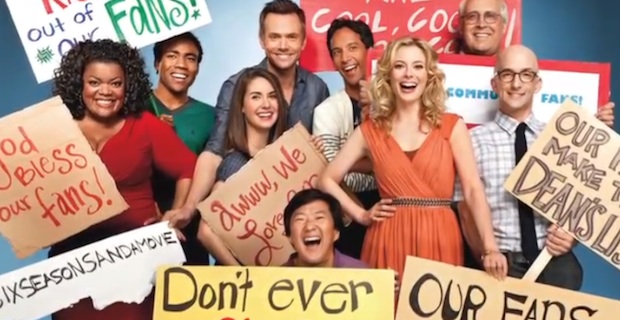
Looking at it that way, the cancellation of Community really isn’t that sad. This was a show that never belonged on network TV in the first place and yet the fans kept it alive for five seasons. It might have fallen short of the #sixseasonsandamovie campaign that played a big part in NBC’s decision to keep it around, but I don’t see failure in that.

There are a couple important factors working against Community’s favor. The fact that the show is produced by Sony meant that NBC wasn’t getting a big slice on the revenue from other streams. The show was a big hit on Hulu, but that’s something that doesn’t mean all that much since Sony and NBC would have to share the not as important as you’d think earnings brought in by the online service. Once its ratings started to slip, the show was in serious trouble.

The end of season’s three and four brought disaster that also could have sunk the show. Season three saw the departure of creator and showrunner Dan Harmon. While that’s fairly common with older shows as the creators leave to form new shows, the fact that he left on bad terms and the show wasn’t doing very well was more than concerning. Season four saw the departure of Chevy Chase as well as the announcement that Donald Glover would leave just a few episodes into season five. With both ratings and critical acclaim dwindling with a subpar season four, it is somewhat surprising that the show was even renewed at all.

Which is what makes its cancellation sour. Harmon came back for season five and it looked like Community was in the clear to get its six seasons (though the movie was always a tremendous longshot). The show did lose half a point in the 18-49 demo, which might have been the straw that broke the camel’s back. This show should never have made it to season five in the first place, which propelled the aspirations to get to season six.

Creatively, it looks like the show made its peace this season. Glover’s farewell should go down as one of the most touching cast departures of all time. The show handled the decimation of the study group admirably and made up for season four. The saving of Greendale was significant because it represented the long shot that was this show to begin with.

An immediate revival on a different network looks very unlikely. People have cited Netflix and USA’s revivals of Arrested Development and Cougar Town without considering the fact that both were saved to bring attention to shifts in programming for both networks, a point that has now been accomplished. This is a point that doomed Happy Endings, which was in a better position having only aired three seasons before ABC gave it the axe. Community is an expensive show produced by a company that doesn’t own any channels of its own. There’s little reason for any network to pick it up.

That doesn’t mean that we’ve seen the last of Community. HBO’s recent revival of The Comeback shows that literally anything in possible. The Comeback had a small cult following and lasted one season nine years ago. All this means for Community is that if it came back, it would not be the most farfetched revival ever. But that day may never come and if it does it might look like Arrested Development’s terrible season four (or Community’s season four for that matter). I for one am not a big fan of revivals.

Community’s story is a beautiful tale of fan devotion, which set some important precedents for network TV. Five seasons is a very good run for a show that faced impeding doom more than once. Whether or not it comes back ten years down the road will do little to change its legacy. #sixseasonsandamovie was an idea. Five seasons is a reality and a pretty good one at that.