Ian Thomas Malone

Pop Culture Archive

Saturday

28

November 2020

1

COMMENTS

The Mandalorian Season 2 Review: Chapter 13

Written by , Posted in Blog, Pop Culture, Star Wars, TV Reviews
There is a reason none of the Marvel characters from the Netflix series made appearances in Avengers: Endgame, a film with a finale designed to cap off a historic era in film connectivity. Popular as they may be, the inclusion of such characters presents some problems for a global audience that may have no idea who these people are. The hardcore fans are left with a natural degree of wanting for scenarios that would have been so incredible to see up on the big screen.

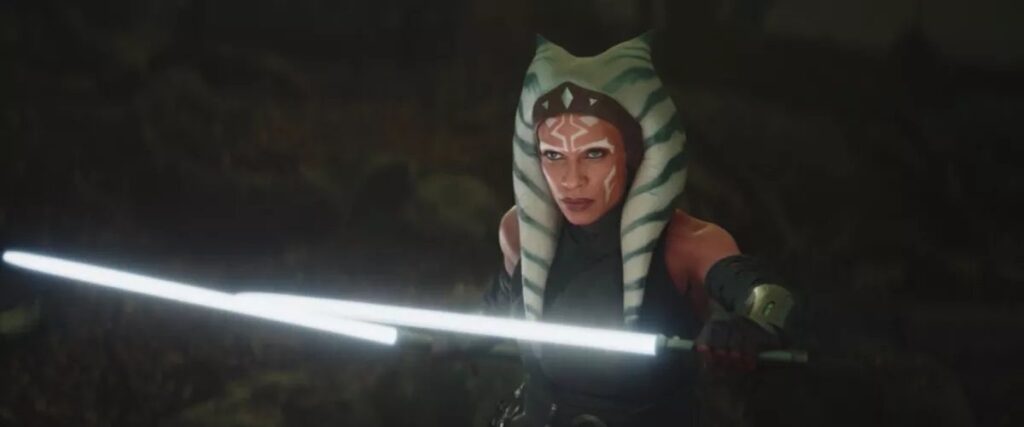
Ahsoka Tano is the breakout star of the popular animated series Star Wars: The Clone Wars and Star Wars: Rebels, the former of which carried the torch for the fandom as it transitioned from the post-Revenge of the Sith Lucas era to its current home at Disney. There was a period of time where Ahsoka Tano was the best Star Wars creation of the 21st century, a sentiment countless Clone Wars fans undoubtedly still hold.

Tano’s appearance in The Mandalorian has been rumored since the show’s inception, a naturally tantalizing prospect for many. The logistics of her inclusion presented the showrunners with some of the same hurdles that the Marvel universe experienced with how to include a popular character in a global phenomenon that has plenty of fans who have never heard of her. Thankfully, Star Wars vet Dave Filoni rose to the task with near flawless execution.

The arrival on Corvus gave The Mandalorian a much needed reprieve from the piles of rocks on Tatooine and Nevarro, but also a chance to move the narrative forward in a game-changing fashion. This season has been about Mando delivering Baby Yoda to a Jedi. Given the show’s often glacier-slow pacing and affection for filler subplots, it might have been reasonable to assume that this might happen sometime at the end of the season.

Instead, we get a fan favorite character and a name for the Child. Grogu is not a good name. Yoda and Yaddle (the latter of which’s legacy was apparently forgotten by Tano, who presumably arrived at the Jedi Temple a little while after her death) are much better names. Grogu is the kind of cringy name that flies in the face of how adorable this fella is.

The action sequences were predictable phenomenal. Mando’s quest to find Ahsoka at the behest of former Empire leader Morgan Elsbeth was a tad perfunctory, but this episode had too much going on to be bogged down in narrative mechanics.

The audience could be forgiven for some eye-rolls at the timeline that Ahsoka provided for Grogu’s residence at the Jedi Temple. The little guy seems to understand Mando better this season, but he’s still basically a baby with a one-track mind for snacks. Are we really supposed to believe that he was trained at the Temple during the era of the prequels when he was 1/5th his current age?

Obviously Ahsoka is not going to train Grogu. That would require The Mandalorian to either lose its best asset or for the show to do a sharp pivot away from its title character. Neither Ahsoka nor Grogu popped up in the sequel trilogy, apart from the former’s brief vocal cameo in The Rise of Skywalker along with all the other Jedi who gave Rey a pep talk.

Rosario Dawson handled the fan favorite character quite well. Perhaps the highlight of the episode was when Ahsoka Tano reflected on her former master Anakin Skywalker in her refusal to train Grogu. Jedi are supposed to be trained at a young age to prevent outside attachments. Mando is for all intents and purposes Grogu’s father.

Mando can never succeed in his mission because it would mean the end of the series. In order to satisfy the viewers, the show is throwing out fan favorite mentions like Grand Admiral Thrawn and the planet Tython to keep things interesting. With the way “The Jedi” played out, longtime fans may get a bit antsy for more franchise reveals that probably won’t be coming anytime soon.

The only point that didn’t really work was Ahsoka Tano’s battle with Elsbeth. The whole nature of Tano’s efforts to make it seem like she killed Mando was a bit pointless, but seeing the skilled dual-wielding Jedi struggle to fight a woman wielding a beskar spear seemed very silly. Tano could’ve jerked the spear away with a single motion of the force. The fact that she didn’t gives fans a bit more satisfying of an action scene, but this sequence was silly enough to begin with.

Mando and Grogu will almost certainly not arrive on Tython with only three episodes left of the season, especially with Moff Gideon tracking the Razor Crest. Chapter 13 was the best episode of the series, striking a perfect balance between casual viewers and Star Wars superfans. This wasn’t just good television, but a perfect roadmap for a franchise to use with regard to exploring its own ethos. The Mandalorian is pretty great when it’s just performing as “The Baby Yoda show,” but there’s so much more for the series to explore.

Be sure to check out Estradiol Illusions’ Mandalorian recaps!
Saturday

21

November 2020

0

COMMENTS

The Mandalorian Season Two Recap: Chapter Twelve

Written by , Posted in Blog, Pop Culture, Star Wars, TV Reviews

Nevarro is not a very interesting planet, too much of a Tatooine clone in a way that’s only exacerbated by the existence of Jakku. There are seemingly countless planets for The Mandalorian to explore, but so far the show has followed the Star Trek model of prioritizing places that piles of rocks. Piles of rocks make for easy reusable set pieces.

The Mandalorian has very few recurring characters, let alone ones who are friendly to Mando and Baby Yoda. Greef Karga and Cara Dune are about it among the living. By practically every measure of conventional television storytelling, it makes sense that they’d pop up in season two, even if the plot might be better off with heading into new territory.

Mando’s arrival to Nevarro was a bit awkward, featuring some pretty wooden dialogue between Mando, Cara, and Greef. The Mandalorian has never been much for exposition, but a scene or two with Mando laying out the stakes of the season felt needed in this briskly paced episode. It’s always fun to see Carl Weathers again, who also directed this episode, but the writing hardly did his character any favors this time around.

As often happens with The Mandalorian, the action sequences are used to cover up the rushed exposition and clunky dialogue. The return of the unnamed Mythrol (Horatio Sanz) who Mando first captured in the show’s very first episode was a fun callback, though Greef and Cara’s unnecessary meanness toward him in the Imperial base was a bit much. Yelling at a guy to hurry up the second he started pushing buttons on a control system is hardly proper manners!

The first half of the episode made no effort to present the mission to blow up the Imperials as anything more than filler. Things took a completely unexpected turnaround when the team discovered that Moff Gideon had been using the base for genetic experiments. Putting aside the sly reference to midichlorians, the whole sequence served to give this detour real stakes in the show’s lore.

The action sequences were unsurprisingly spectacular. To some extent, the Stormtrooper cannon fodder is getting a little stale, but the sets are so fun to look at that it’s hard to care. The Trexler Marauder ship battle between the speeder bikes and the Tie Fighters was one of the highlights of the whole series, something that could have easily been showcased in a feature film.

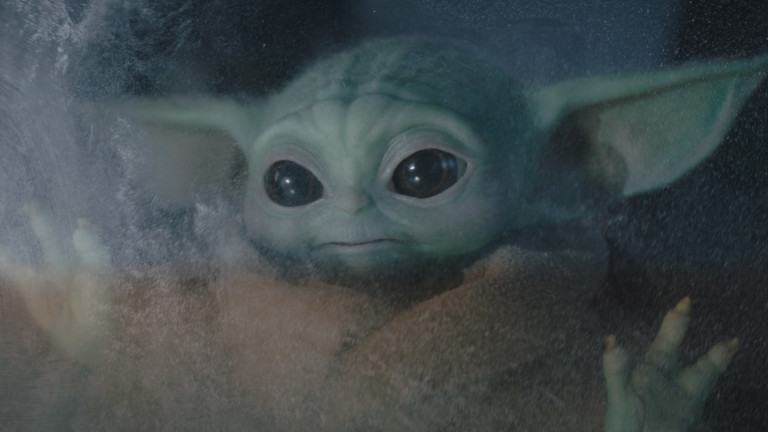
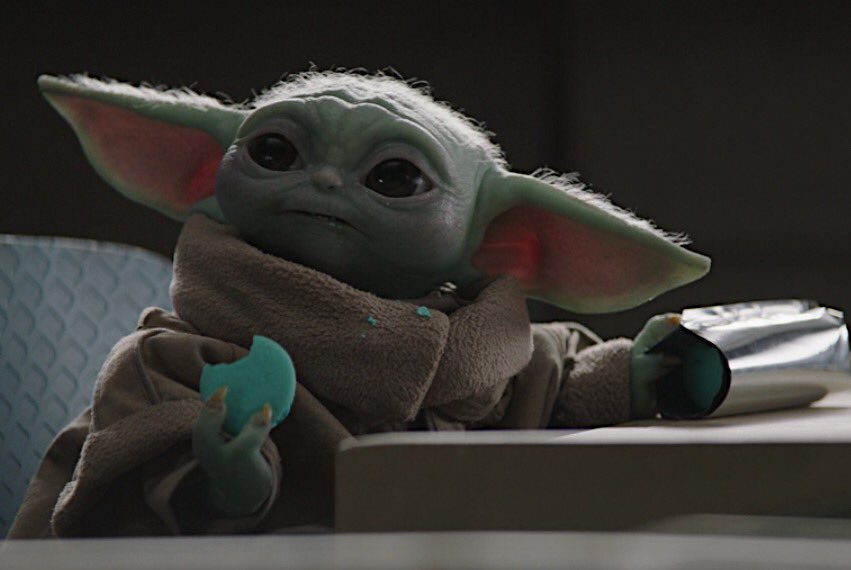
One of the big questions I had heading into the season was how hard the show would try and capitalize on Baby Yoda’s status as one of the cutest fictional characters in the world. Baby Yoda being dropped in a classroom only to steal a student’s blue macarons is the kind of sequence that pretty much solely exists for memes. The little fella has a one-track mind when it comes to food, and it’s pretty much the most adorable thing in Star Wars history. He may not be a very good ship engineer, but he’s got a career waiting for him on The Food Network when this is all over.

The return of Captain Carson Teva, last seen leaving the ice planet in his X-wing instead of helping Mando fix his ship, hints at a broader role for the New Republic. The Outer Rim has historically been a problematic area for both Imperial and Republic control, though Greef and Cara seem to be keeping Nevarro in relatively good shape. As a series, The Mandalorian hasn’t spent a ton of time trying to bridge the gap between The Return of the Jedi and The Force Awakens.

 It seems unlikely that Mando will want to be a part of any broader conflict between the remnants of the Empire and the New Republic, exacerbated by the show’s fairly slow pace. The show does a good job presenting its adventures as existing in the larger canon without getting anyone’s expectations up. The Empire is tracking the Razor Crest, hinting that perhaps the broader New Republic will get involved after all.

Chapter 12 recovered nicely after a bumpy first act, putting forth some of the series’ best action scenes. One could be forgiven for an eye-roll at the return to Nevarro given how much this season has dragged its feet already. With four episodes left to go, hopefully the show will stop taking detours. For now, it’s still some of the best entertainment television has to offer.

Be sure to listen to Estradiol Illusions’ Mandalorian recaps!
Friday

20

November 2020

0

COMMENTS

The Crown returns to form on the coattails of its most celebrated Princess

Written by , Posted in Blog, Pop Culture, TV Reviews

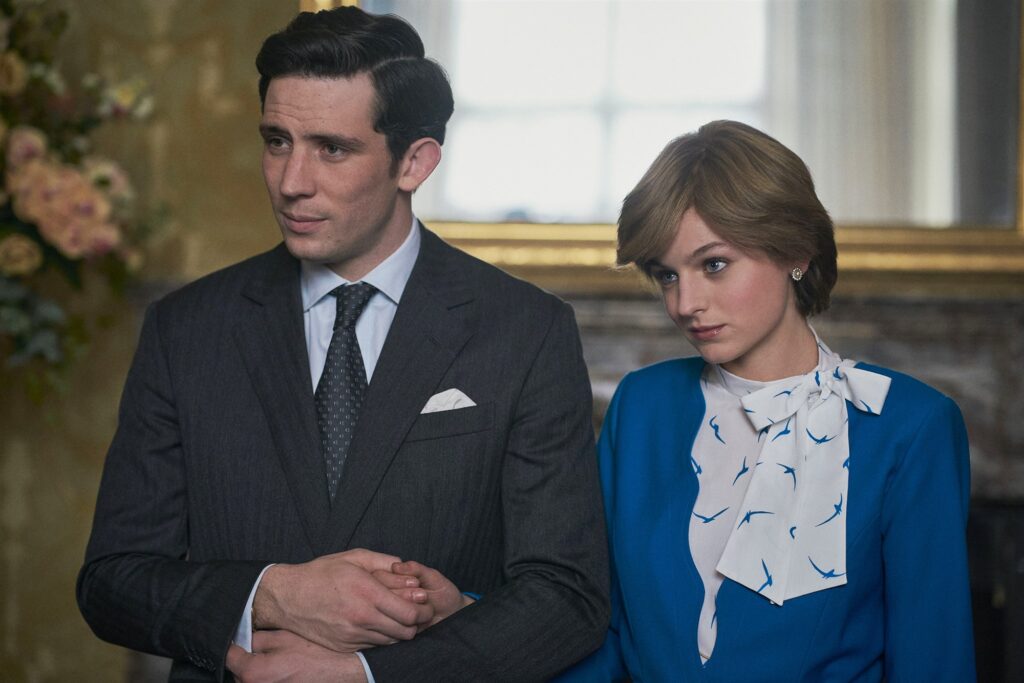
There is perhaps no greater moment of excitement for fans of The Crown than the arrival of Princess Diana. Four seasons in to a planned six-season run (briefly reduced to five before returning to its original course), Diana represents a turning point for the series, where period drama increasingly encroaches upon our modern era. As the Royal Family today endures controversies surrounding Megxit and Prince Andrew’s choice of friends, Diana’s popularity endures.

Surrounded by an exceptional cast including Olivia Colman, Helena Bonham Carter, and Tobias Menzies, Emma Corrin captivates as the young Princess of Wales. Corrin’s performance illustrates the complexities of Diana’s position both as an outsider to the Royal Family and as a figure who became a global sensation. Diana is a singular figure in modern culture. Corrin handles that immensely daunting task with nuance and grace.

Fellow season four newcomer Gillian Anderson takes on a similarly daunting task as Margaret Thatcher, in many ways the inverse of Diana for the purposes of The Crown. Thatcher is among the most hated politicians of the modern era, posing difficulties for a fictional depiction that’s bound to try and humanize the Iron Lady. Anderson is wonderful, occasionally bringing out those moments in the viewer where one’s emotions are tied up in an uncomfortable display of sympathy toward a figure known for her absence of humanity.

Season three often suffered from a lack of urgency to make the most of its ten episodes. Season four by comparison often has too much to do. Diana’s rise takes up much of the early episodes, intertwined with the Queen’s relationship with Thatcher. The Crown has always emphasized episodic storytelling within its broader narrative, but season four simply has better stories to tell. There’s nothing comparable to last year, when a whole episode was wasted on Prince Philip being fascinated with the moon.

Ten episodes is not a lot of time to spend on a group of individuals as complex and fascinating as the Royal Family. Prince Philip and Princesses Anne and Margaret see their roles greatly diminished, a necessary decision made in service to the season’s more compelling narratives. The Queen Mother (Marion Bailey) continues to be woefully ignored, a fascinating figure done a great disservice by The Crown.

Colman is finally given a chance to shine. Season three often sidelined the Queen in favor of the actions around her. Between conflicts with Thatcher and her responsibilities as a mother, the Queen has plenty to do this time around.

In many ways, Prince Charles is the true antagonist of the season, more so than Thatcher. Josh O’Connor does a fabulous job as the dour Prince of Wales, perpetually sulking over his marital problems and jealous of Diana’s enormous popularity. The Crown is hardly fair to the future King of England, who is depicted as fairly lazy and selfish. Stories need heroes and villains.

The Crown is not a documentary. Biopics almost always take large creative liberties with their subjects. Many articles are popping up over the inaccuracies of the events depicted, a fair correction of the record. One might feel a natural degree of sympathy toward how someone like the Duchess of Cornwall might feel at being seen as a vicious adulterer uncaring toward the mental wellbeing of a national icon. As bleak as it sounds, that shouldn’t really override the primary objective of The Crown, to produce compelling television.

Diana’s arrival gives The Crown a chance to recapture the magic of spectacle. Few series evoke a sense of awe and wonder quite like Morgan’s Royal Family fantasies. Historians can balk at the creative liberties all they want, but this is one of the most exciting shows on television. Truth need not be as important.


Saturday

14

November 2020

1

COMMENTS

The Mandalorian Season Two Recap: Chapter Eleven

Written by , Posted in Blog, Pop Culture, Star Wars, TV Reviews

Would Mando be better off simply traveling to various planets asking locals in their bars for help finding Jedi? Maybe he should stand on a table holding Baby Yoda up, yelling, “Does anyone know where this kid came from?” That’s basically where we’re at.

Last episode saw the Razor Crest almost destroyed because Mando needed to travel at sub-light to protect Frog Lady’s eggs. The reason beyond this dangerous missions was supposed to be that Frog Lady’s husband had valuable information as to where Mando could find other helmet-wearers like him. Mando will likely spend the rest of his days picking spider webs out of his ship in service to this vital step in his journey.

Upon arriving at the water-heavy planet Trask, almost destroying what’s left of the ship in the process, Mr. Frog Lady does have a big reveal. He points at a bar. That’s it. That’s the information Mando almost died for. A glorified chowder recommendation.

Mando would have been much better off simply asking the X-wing pilots if they knew of any Jedi. They probably do. None of this is nitpicking. This season has yet to supply a reason for its broader quest to find other Mandalorians.

Mando finds some leads while Baby Yoda chows down on octopus chowder. Mr. Frog Lady didn’t exactly give the best intel, as the Quarren fishing boat was less interested in helping Mando than acquiring his armor. Baby Yoda’s floating bassinet apparently doesn’t float over water.

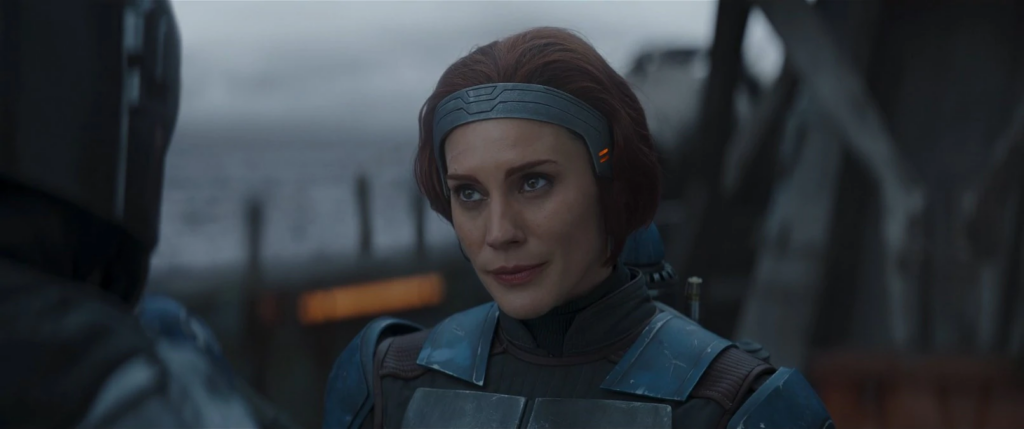
Part of the beauty of The Mandalorian is that it’s clearly crafted by people who love Star Wars. The series isn’t constructed in a way that forces anyone to watch animated shows like The Clone Wars or Rebels, while rewarding those that do. Seeing Bo-Katan in live-action is amazing, especially with Katee Sackoff reprising her role from the animated series.

Unlike Mando, Bo-Katan and her buddies are free to remove their helmets. While fitting in line with their animated appearances, seeing helmet-less Mandalorians is also valuable for the audience. People like to see faces and the expressions worn on them. This dynamic also allows the show to explore Mando’s core belief, one that would naturally sound pretty radical to any casual viewer.

Bo-Katan suggests that Mando is a Child of the Watch, essentially a Mando-extremist cult that broke off from the rest of Mandalore’s society. Mando doesn’t have a ton of time to process this information before the rest of the 35-minute episode’s action scenes need to take place, but this is a valuable question for the show to explore over the course of its run. Ideally, we the viewer may like to envision a scenario where Mando settles down, able to look at his adopted son with his own eyes.

Speaking of Baby Yoda, thankfully the little guy didn’t eat any more of Frog Lady’s eggs. It’s kind of ridiculous that Mando would ask her to babysit considering his snacking habits last episode, but it’s not like he has a ton of friends, on Trask or elsewhere. Kuiil would have been a great traveling babysitter. I miss him.

The action scenes aboard the Gozanti-class Imperial cruiser were great. It was super fun to see TV veteran Titus Welliver as the ship captain, who sadly died before he got a chance to have some tea. Obviously the other Mandalorians weren’t interested in raiding the ship for blasters, or other weapons.

Great to see the return of Moff Gideon. Giancarlo Esposito is fabulous in everything he’s in. Darksaber is one of the big questions of this season, one that I suspect the show won’t be in too big of a rush to address. Fun episodes like this make the destination less important than the journey.

Mando’s quest to find other Mandos did prove fruitful. After quoting Hillary Clinton’s “Stronger Together” slogan from her 2016 campaign, Bo-Katan tells Mando to head to Calodan to find Ahsoka Tano, another fan favorite. He probably could have stumbled upon that tidbit without having to travel by sublight to Trask, but here we are.

“The Heiress” demonstrates the show’s keen ability to simultaneously satisfy casual fans and Star Wars diehards. The Mandalorian rarely suffers when it drags its feet, but this episode moved the plot forward in a way that’s been lacking from this season’s first two installments. We’re almost at the halfway marker, as much as it feels like things just got started. Boba Fett may not come back until the end of the season, if at all. For now, that hardly seems to matter.

For more of Ian’s Mandalorian analysis, be sure to check out Estradiol Illusion’s weekly recaps

Thursday

12

November 2020

0

COMMENTS

76 Days provides a front row seat to the early days of the coronavirus

Written by , Posted in Blog, Movie Reviews, Pop Culture

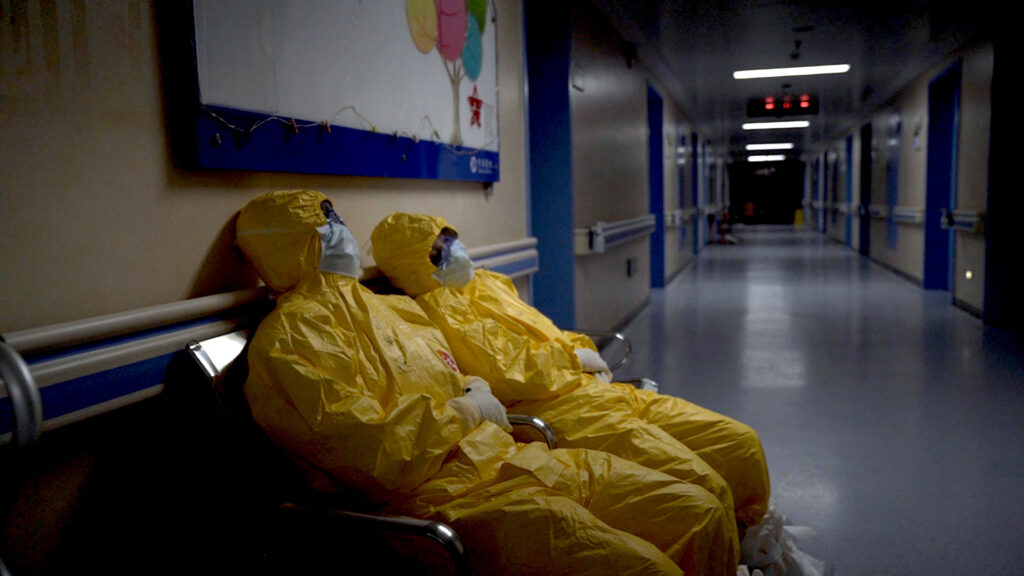
The coronavirus has fundamentally changed life on earth for practically every country. The film 76 Days provides a front-row seat into the heart Wuhan hospitals from February to April, as the rest of the world began to grapple with what we were all about to face. The result is often jarring to watch, an important reminder of the stakes at hand across our planet.

Directors Hao Wu, Weixi Chen, and a third collaborator credited as anonymous to protect their identity, present a narrative at the heart of the action, shot mostly within the contamination zones at four separate hospitals. The doctors and nurses, all decked out in head-to-toe protective equipment, are clearly under siege, doing the best they can to handle these unknown and chaotic circumstances. The directors do a fabulous job framing each scene, camera angles that make you feel like you’re in the room with the patients and staff.

The fear and anxiety are palpable in the air with every moment. Many of the doctors do not exactly have the best bedside manner, perfectly understandable given the stakes at hand. We’ve known all along that the doctors and nurses are the heroes of this global pandemic, but 76 Days gives them a chance to be seen as people. Like the rest of us, many of them are scared, doing their best under enormous pressure. There is great power in their resilience.

While the filmmakers take a mostly hands-off approach to the narrative, there are a few strands that come together to form a cohesive story. An elderly patient receives a great deal of focus, growing restless under the strict demands of the hospital. A film like 76 Days hardly needs to spend much time presenting protagonists to root for, but the filmmaker’s approach gives an added sense of depth to the material. This isn’t just a living history, but a story of people caught in the whirlwind.

Perhaps most striking is the similarities between some of the patients and the broader American fatigue that many feel toward the virus. Everyone is tired of COVID, from mask-wearing to not being able to see your loved ones. 76 Days is a powerful wake up call to anyone not taking this pandemic seriously, a gut-wrenching display of the stakes at hand.

76 Days is often very difficult to watch. The pain and suffering rarely lets up, though it’s clear that the filmmakers are aware of this tonal dynamic. There are points for hope. The history of the coronavirus is not fully written yet, but 76 Days does a hell of a job presenting the early weeks of this global nightmare.

Thursday

12

November 2020

0

COMMENTS

Assassins is a riveting real-life thriller

Written by , Posted in Blog, Movie Reviews, Pop Culture

A failed attempt to visit Tokyo Disneyland changed the course of history on the Korean peninsula. A simple desire to spend some time at the happiest place on earth cost Kim Jong-nam the chance to lead North Korea as Supreme Leader, which instead was handed to his younger half-brother Kim Jong-un after the death of their father Kim Jong-il, and later his life. The documentary Assassins chronicles Kim’s highly publicized assassination at a Malaysian airport in broad daylight, and the tragic aftermath that ensnared the unwitting perpetrators.

Director Ryan White masterfully breaks down the complex mechanics of North Korean politics and the Malaysian justice system in a fascinating thriller. The North Korean government is widely believed to have been behind the assassination, manipulating two separate women into dousing Kim with the highly deadly chemical VX under the guise of being performers in a prank show. While the North Koreans who orchestrated the murder quickly escaped, Siti Aisyah and Doan Thi Huoung almost found themselves executed for their role in the international firestorm.

Much of Assassins centers around the legal defense of both women, Aisyah from Indonesia and Huoung from Vietnam. Neither girl knew each other, both seeking a chance at stardom not unlike many online influencers. With so many different countries involved in the saga, White does a great job making sure his audience doesn’t get lost in the chaos.

Though the subject matter is serious, the legal defense teams often keep things upbeat for the audience. The pacing feels more in line with a political thriller than a typical documentary, heightening the suspense for a subject whose outcome anyone could find out with a simple google search. White ensures the journey is just as interesting as the destinations.

Kim Jong-un’s “love affair” with Donald Trump has been the subject of wide mockery by many. Though many docs succumb to the temptations of dedicating too much time to Trump, White keeps mentions of our soon-to-be former president to a minimum. Having almost certainly ordered the hit on his brother, Chairman Kim is an important factor, but this isn’t fully his story. Assassins juggles its many pieces quite well.

North Korea is a tough nut to crack for anyone, even U.S. intelligence. Assassins is a welcoming doc for anyone, even if you know nothing about the hermit kingdom. Kim Jong-un lends himself well to mockery, but White never loses sight of the monster at hand. At times, the trial drags a bit, perhaps serving as too much of a play-by-play, but this doc is a must watch for anyone looking to learn more about this elusive part of the world.

Wednesday

11

November 2020

0

COMMENTS

Seduced breaks down the complexities of NXIVM’s vast web

Written by , Posted in Blog, Pop Culture, TV Reviews

The saga of NXIVM is endlessly fascinating, a web of mostly detestable figures running a pyramid scheme in Albany, New York. Occasionally lost in the jokes about Keith Raniere’s bullshit is the trail of victims he left in his wake. There are the Mark Vicente’s and the Sarah Edmonson’s of the story, whose own culpability remains a puzzling question. The India Oxenberg’s of the story are perhaps even more complex, women who were indoctrinated at young ages to become sex slaves and cogs in the scheme’s vast machine.

Much of HBO’s The Vow was filmed in real time as former NXIVM members worked to take Raniere down, culminating in his 2018 arrest alongside several other key figures. A major storyline of The Vow centered around actress Catherine Oxenberg’s efforts to save her daughter India from the cult’s clutches. STARZ’s Seduced: Inside the NXIVM Cult picks up where season one of The Vow left off, presenting India’s story in her own words for the first time.

Seduced offers a superb primer into the world of cults, expertly breaking down the mechanics behind Raniere’s long grift. Several expert psychologists provide simple explanations for the ways that Raniere was able to build such a vast empire while mostly recycling nonsense from self-help gurus and Scientology. Like its bizarre name, NXIVM can be pretty confusing at first, but Seduced peels back the layers of the bullshit.

Raniere ruined countless people, both psychologically and financially. Part of NXIVM’s effectiveness was the way in which the organization was able to entrap its members by making many culpable themselves. The lines between victim and perpetrator can be blurred. India was a sex slave to Smallville actress Allison Mack, but India herself had slaves of her own. By including interviews with some of the prosecutors, Seduced works to clean up what will always be a messy picture. There are no easy answers here.

Seduced is a succinct series, presented over four episodes. The show is ostensibly India’s narrative, while including accounts from other DOS victims that help provide a clearer picture of the destruction Raniere caused. There is some slight overlap with content explored in The Vow, but Raniere’s insistence on recording practically every interaction ensures that there’s plenty of new material here.

India’s interviews are often challenging to watch. Persistent is the sense that she’s still clearly working through all of this. Maybe Seduced would be better off waiting for a bit longer to present her story, but maybe India simply wants to get on with her life. The brief amount of time between Raniere’s arrest and the arrival of NXIVM-related content is perhaps too short a period for much introspection, a dynamic exacerbated by the fact that many of the subjects only narrowly avoided prosecution. This is messy stuff.

India’s time in Albany gave her a much better front row seat to the actions of key players such as Nancy Salzman, Mack, and Raniere than The Vow was able to present. The web is complex, hardly the subject than any series would be able to tackle in only a handful of episodes. Seduced clearly has the better claim to casual viewers, supplying the broad details of what makes NXIVM so captivating while limiting the time spent down the various rabbit holes.

NXIVM is among the weirder true crime stories in recent memory, involving numerous Hollywood figures, ginger ale heiresses, and the Dalai Lama among countless others. It’s not hard to see why this saga is so fascinating to many. India is a young woman who went through the trauma of a lifetime in her early twenties. Seduced presents her story in a way that horrifies while also providing some hope that this unfortunate mess won’t define the rest of her life. NXIVM’s victims deserve a chance to turn the page.

Saturday

7

November 2020

0

COMMENTS

The Mandalorian Season Two Review: Chapter Ten

Written by , Posted in Blog, Pop Culture, TV Reviews

Big reveals like last episode’s Boba Fett cameo naturally create a sense of anticipation that The Mandalorian is obviously not in any rush to address. For the most part the show does a pretty good job with episodic storytelling, delivering quality television in a way that makes you okay with the fact that the big questions aren’t going to be answered any time soon. Elaborate action sequences and short episode runtimes don’t leave a ton of time for narrative.

Episode Two, “The Passenger,” does not care about story. The pieces of this episode feel like puzzle pieces that were jammed together out of place, reverse engineered to justify a giant spider sequence. This is by far the clunkiest narrative of The Mandalorian thus far. Frog Lady (literally the name listed on the show’s IMDB) is nothing more than a plot device.

The episode starts off with a fairly impressive action sequence on the outskirts of Tatooine, involving a failed attempt to ransom Baby Yoda for Mando’s jet pack. Baby Yoda’s cutest moment in the episode came early, delivering a sly glance of approval toward his adopted dad’s antics. Obviously the bandits were not going to get away with stealing Mando’s toys.

We run into Peli Motto at the famed Mos Eisley cantina, playing sabacc with a giant ant, a not-so-subtle nod to episode director Peyton Reed, who helmed both Ant-Man movies. Peli’s scenes last episode were fairly rushed and perfunctory. Here, Amy Sedaris works her charm with a bit more screen time, albeit in an exposition-heavy sequence that almost immediately got right to the chase.

I’ve been thinking a lot about Mando’s early conversations with Greef Karga. Carl Weathers was given plenty of time to make his character shine, providing a valuable ally for Mando to interact with. This show doesn’t have a ton of recurring characters.

Peli is given a fraction of the time that Greef received, while essentially aiming to serve in a similar function. Peli got a few lines of rushed banter in before neatly advancing the plot, the kind of fast pacing you’d see on an episode of Law & Order. Can’t she have a moment to breathe?

The bigger issue with this whole dynamic is that the show has yet to make a case for why the audience should care about Mando’s quest to find other Mandalorians. The mission feels like an obligatory plot device, a notion in line with the amount of time it’s received these past few episodes. The show doesn’t need to solve this narrative right away, but it would be nice if The Mandalorian at least made an attempt to explain the importance of this season’s broader arc.

Detours can be fun. Seeing New Republic x-wings is fun. This episode had excellent action sequences, but time and time again it failed miserably on the narrative front. The sub-light travel mandate was only sort of convincingly explained, a slight step up from Frog Lady using pieces of the mercenary droid Q9-0 from last year’s sixth episode to communicate.

The weakest scene by far involved Frog Lady trying to guilt Mando into saving her eggs while the Razor Crest sat on an unstable pile of ice chunks with a giant hole in its hull. Are we really supposed to care about these eggs when Baby Yoda has been repeatedly chomping on them? Did Frog Lady notice what the little guy was doing, even after she’d saved his life?

Baby Yoda is cute and all, but the show too often tried to play it both ways with the eggs, using them for humor but also as an emotional anchor propelling Mando to care about Frog Lady. The spider sequence was fun to watch if you don’t think too hard about why it took Mando so long to use his flamethrower. Assuming these spiders fear fire like most arachnids, Mando could’ve easily kept them away from the ship.

The follow up scene with the New Republic pilots similarly fell flat. Maybe they had time to learn Mando’s noble history while flying around looking for the Razor Crest enough to not want to arrest him, though it’s unclear why they wouldn’t help him fix his ship. That hole looked pretty bad, though maybe not as big an issue as when the Jawas stripped his whole ship in the second episode of last season.

The stellar action sequences weren’t enough to make up for the cringeworthy nature of practically every scene involving dialogue. A strong contender for worst episode of the whole show. Bad Mandalorian is still fun Mandalorian, but this show is capable of better than this clunky plotting and bad writing. It’s hard to give filler a pass when it is this poorly assembled.

Be sure to check out Estradiol Illusions’ Mandalorian podcast recaps!

Thursday

5

November 2020

0

COMMENTS

18 to Party never quite finds its voice

Written by , Posted in Blog, Movie Reviews, Pop Culture

There are countless think-pieces written each day about the effects of social media on our broader mental health, particularly our country’s children. Boredom as we once understood the concept is essentially a thing of the past, with seemingly limitless entertainment options at any given time. Set in the early 80s, 18 to Party centers its narrative around the mundane interactions between eighth graders as they wait for something to happen.

The film is almost entirely shot behind a fairly mundane looking small-town nightclub, with the kids understanding that their youth places them relatively low on the social totem pole. Most of the kids are just happy to be somewhere, even if the whole setting looks pretty bleak and depressing. Director/screenwriter Jeff Roda presents a minimalist narrative, an obvious homage to the youth-centered films of the 80s, through the filter of a Waiting for Godot-style plot.

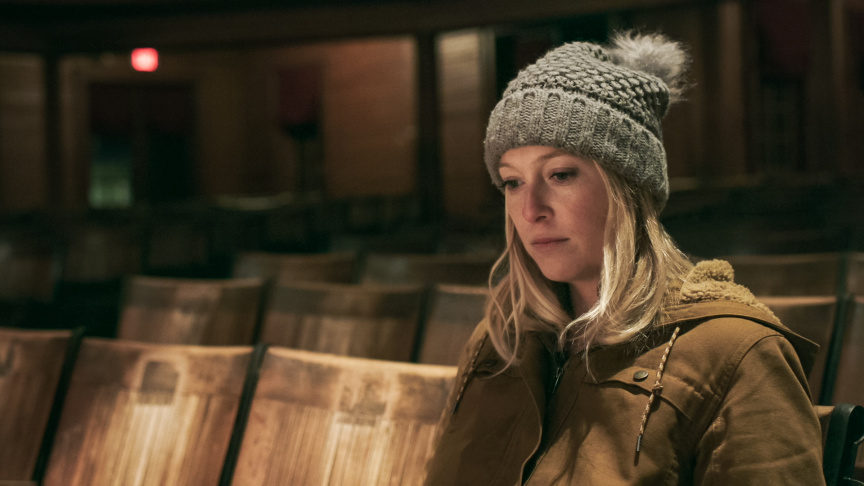
Roda’s screenplay is the film’s biggest liability. It’s neither funny nor endearing. The kids have fairly mundane conversations that might be relatable to some extent on a surface level. One of the more developed plotlines centers around one of the kids struggling to decide whether he wants to do theatre, the activity potentially existing in conflict with his soccer schedule.

18 to Party features a very young cast, unlike many films in the 80s which relied on actors in their 20s to play teenagers. For the most part, the kids are pretty good, trying their best to inject emotion into Roda’s fairly lifeless screenplay.

As a director, Roda really doesn’t do his actors any favors. The film makes frequent use of long takes, leading to many scenarios where the actors look pretty confused with what they’re supposed to be doing. Roda doesn’t actually give them anything to do. Often, they look bored, a sentiment the audience could certainly share.

The inconsistent approach to pacing produces inconsistent results. The meandering narrative might have worked with a better script, but the whole dynamic falls apart in the third act when Roda decides to throw in some heavy stuff. Recent suicides in the town are mentioned throughout the film, but Roda ramps things up for one particular scene that falls pretty flat without any consistent attempt at a build-up.

Roda has a particular affection for the word “faggot,” inserted liberally into one of the film’s more dramatic scenes, wielding it as a crutch. To an extent, one can understand a writer’s desire to achieve “authenticity” by using a slur that kids used then and still use now. At the same time, you have to wonder if anyone would have noticed if he’d simply omitted it altogether.

Whatever case could be made for throwing around a word like that is practically beside the point. Roda doesn’t use it well, instead just hurling it at the audience over and over again in a scene that completely misses its mark. Much like the rest of 18 to Party, it’s lazy.

18 to Party is a thoroughly lackluster endeavor. Roda’s awful screenplay deflates any value from this derivative half-baked homage. Even at eighty minutes, the whole ordeal feels too long. Roda clearly loves 80s culture, but he brings nothing new to the table here.

Saturday

31

October 2020

2

COMMENTS

The Mandalorian Season Two Review: Chapter Nine

Written by , Posted in Blog, Pop Culture, Star Wars, TV Reviews

As The Mandalorian progressed through its first season, the question of narrative constantly presented itself. The show has existed in the fairly uncommon middle-ground between serialization and episodic, most often preferring the advantages of self-contained storytelling over a broader long-game. The season one finale suggested a turning of the page of sorts for the series, with the titular character embarking on a specific quest to reunite the beloved Baby Yoda with his own kind.

That held true for about ten minutes into the episode, until Mando found reason to return, yet again, to Tatooine. For all the endless possibilities out there in the galaxy, this same pile of rocks seems to be the only place that matters. Tatooine certainly does matter, for throwback references such as the return of A New Hope’s R5-D4 and his bad motivator. Between Tatooine, Nevarro, and Jakku, Star Wars certainly loves its shades of the same desert aesthetic.

Episode one is essentially a retread of season one’s fourth episode, both centering on villages coming together to defeat a giant big-bad. The Krayt dragon is another figure of franchise lore, the figure who Obi-Wan impersonated with a loud shriek to scare off the Tusken Raiders back in the first movie. The Mandalorian brought to life an abstract idea that has existed in fan theories for decades.

The CGI-crafted menace was pretty impressive, putting aside the obvious Dune comparisons. Tatooine has always been compared to Dune, but Tatooine didn’t have its own sandworm before (Sarlacc doesn’t really count since they stay in their pits). Dune comparisons surfaced again with talk of water feuds between the village of Mos Pelgo and the Sand People. At least there wasn’t any talk of the spice!

As the Marshal, Timothy Olyphant was pretty perfect, channeling his roles in Deadwood and Justified. Show creator Jon Favreau, pulling writing and directing duties on the episode, also threw in a nice touch with fellow Deadwood alum W. Earl Brown turning up as the Weequay barkeep, giving Mos Pelgo the feel of a frontier mining town. Olyphant was a bit more Raylan Givens than Seth Bullock, his obvious joy radiating in every scene.

Olyphant’s exuberant performance as book creation Cobb Vanth was enough to carry the episode, otherwise relatively light on its cutest asset. Seeing Vanth in the Boba Fett armor practically overshadowed the episode’s biggest reveal at the end, with Temuera Morrison returning to the franchise, portraying the adult Boba without his helmet for the first time. In theory, Morrison could be playing one of thousands of Jango Fett clones, but it’d be pretty shocking if it wasn’t the most famous wearer of Mandalorian armor.

Neither Boba nor Jango are actually Mandalorians themselves, a point of great fan interest over the years which should make for a pretty interesting showdown later on in the series. As far as Mando’s primary quest this episode goes, it’s a little weak to have him roaming around looking for others of his kind. Especially if that quest continues to take Mando and Baby Yoda back to familiar territory.

One aspect of the episode that didn’t really work was the return of Amy Sedaris as Peli Motto. Sedaris brought a lot of comedic charm last season, but her interactions in this episode felt rushed and perfunctory. For a nostalgia-heavy episode, I’m not sure we needed much nostalgia for last year. The writing simply didn’t give Sedaris anywhere to go.

The action scenes were extremely solid, if not a bit obligatory. There’s plenty to love watching Mando slay a dragon alongside Timothy Olyphant and celebrating with a big cut of Krayt steak for Baby Yoda to eat when he’s not chowing down on nuggies. I’m sure we all could’ve used a few more adorable moments from the little fella who took a backseat role this episode, the perfect antidote to 2020.

Olyphant’s exuberant performance carried an episode that was otherwise a bit too comfortable in familiar territory. Maybe the nostalgia will run out at some point, though the return of Boba Fett suggests that probably won’t be for a while. Endless callbacks didn’t exactly turn out so well for The Rise of Skywalker, but The Mandalorian has faired much better in this regard.

To some extent, one might want to expect a bit more out of a show that was nominated for the Emmy’s top prize. The Mandalorian is often better described as great entertainment rather than prestige drama, not the kind of fare that traditionally competes for Best Drama. As long as the show keeps putting out enjoyable episodes like this premiere, the long-game and serialization questions won’t matter all that much. We’ve seen this story before, but it’s a pretty good story.

Programming note: Estradiol Illusions will be featuring weekly podcast reviews for the show. Episodes will release either Saturday or Sunday after each new show. Thank you for reading!