Ian Thomas Malone

Sunday

12

April 2015

0

COMMENTS

Game of Thrones Season 5 Recap: Episode 1

Written by , Posted in Blog, Game of Thrones, Pop Culture

This recap features analysis from a devoted book fan. Spoilers will largely be kept to comparisons between the show and the books within the episodes themselves, but if you hate spoilers you should probably not read these articles. I encourage you to subscribe so you never miss a recap. Thank you for reading. 

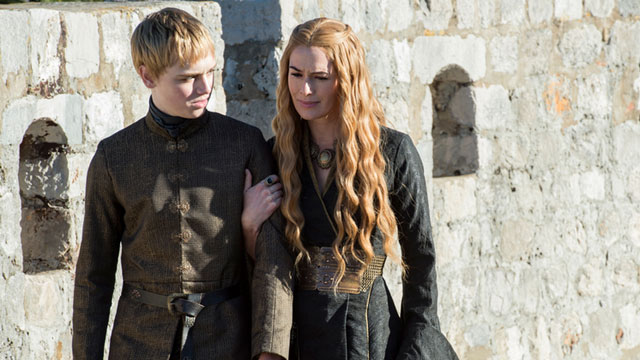
For all the talk of how different this season would be from the books, the episode got off to a start that pretty much paid homage to A Feast for Crows. One of AFFC’s strongest attributes is the intimate look it gives the reader into Cersei’s thoughts/backstory, as it’s the first book to feature her as a POV character. The flashback with Maggy the Frog is certainly foretelling of things to come for the Queen Regent.

This episode largely played catch-up, setting up the plots for the season. GOT premieres and finales are tricky as they generally involve the entire cast, which makes screen time problematic. Balance wasn’t much of a problem as the episode allotted a fair amount of time to just about everyone.

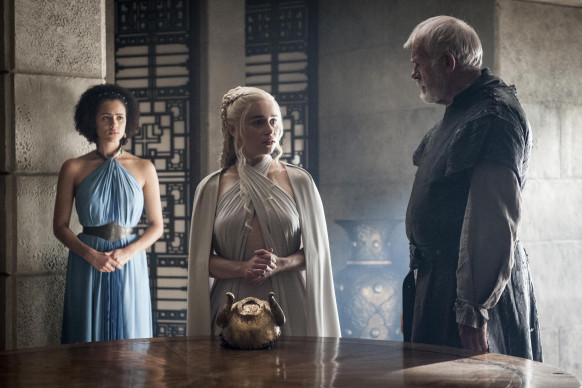
I particularly enjoyed the Varys/Tyrion scenes. Varys disappears from the tail end of A Storm of Swords all the way until the epilogue of A Dance With Dragons and it would have been a waste for the show to abandon him for that length of time. My mouth did salivate a bit at the thought of future Varys/Daenerys scenes.

I haven’t written at all about my thoughts on scrapping (f)Aegon from the show, largely because I approve of it. The last thing this show needs is more characters and this season will already introduce Dorne and the rest of House Martell. Condensing Tyrion’s long and problematic voyage to Dany seems to be in the best interest of the show.

The Castle Black plotline also seems to be accelerating rather rapidly. Parts of it aren’t caught up to A Storm of Swords while others are well into A Dance With Dragons. By the time Mance was “burned alive” in the books, Jon had already been elected Lord Commander of the Night’s Watch. That plot was hinted at, but played a backseat role to Stannis’ need for more troops. I did find it odd that the idea of legitimizing Jon Snow wasn’t brought up, though I imagine that’s coming fairly soon.

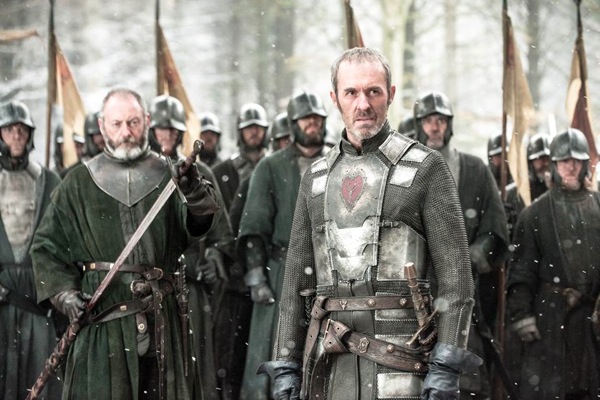
Like many, I’ve criticized the show’s handling of Stannis, who’s affectionately known as Stannis the Mannis to many. Stannis and Jon develop a mutual respect for each other in ADWD that makes the often quite boring Wall chapters far more enjoyable in the books. The potential bromance will undoubtedly be called in question after Jon mercy killed Mance, though it’s unclear whether the show will follow the books with what happens to The King Beyond the Wall.

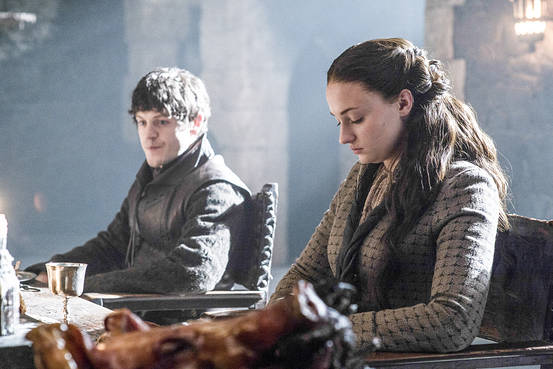
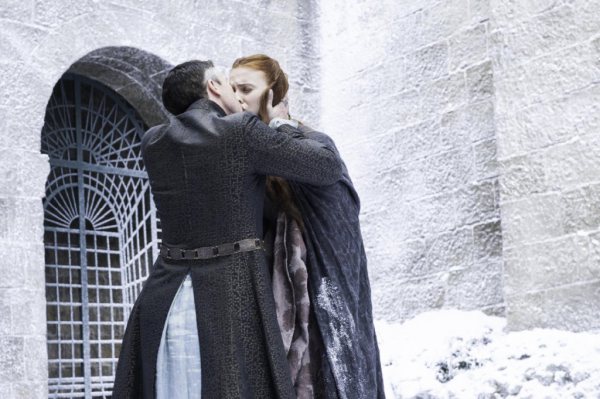
The Littlefinger scheming is also very interesting and so different from the books that comparing the two almost seems silly. I sort of gathered that they could be heading to Essos, which makes me wonder if Littlefinger will head to the Braavos to consult with the Iron Bank or try to throw in with Dany. I really liked the way that Sansa has grown as a character, treating him like more of an equal than a protector.

Dany’s plotline was mostly like the books, though I detest the show’s love affair with Grey Worm, who isn’t really all that interesting in the books. A certain large eunuch by the name of Strong Belwas would have been useful when the fighting pits were brought up. I can’t be the only book fan who thought of nothing but him during those scenes.

The pacing of the King’s Landing plotline was pretty flawless. The show took its time setting up the inevitable Cersei/Jaime conflict and the reintroduction of Kevan and Lancel Lannister without biting off more than it could chew. I also like that it kept the Mountain/Qyburn stuff for another episode, though I’m sure viewers are wondering what is up with Frakenstrong.

It remains to be seen what Brienne is going to do with herself, though I wouldn’t be surprised to see her involved with Sansa in some way if for any other reason than she doesn’t appear to have anything else to do. This was a strong opening episode that did everything it needed to do to set up the season. The changes were welcomed as they all appear to work toward translating the often uneven plot progressions of AFFC/ADWD to television. As a fairly hardcore fan of the books, I didn’t have a problem with any of it, though I am concerned that the show will try to villainize Stannis, who will soon turn his full attention to the Bolton’s, who are the actual bad guys in the North. Well, them and the White Walkers.

Saturday

11

April 2015

0

COMMENTS

Varys and the Importance of Hedging Your Bets

Written by , Posted in Blog, Game of Thrones, Pop Culture

This article contains spoilers for all five books. Though the upcoming season will deviate quite a bit from the books, there are some spoilers that could impact your enjoyment of the show if you hate spoilers. Proceed with caution. Also, I’ll be doing Game of Thrones recaps every Monday that focus on the relationship between the books and the shows so please subscribe if you are interested.

 While Varys is known as Game of Thrones’ most notorious schemer, both to the characters and the audience (Littlefinger is more trusted by the former than the latter), he loses a bit of his mystique by the epilogue of A Dance with Dragons, where he reveals his plans to a dying Kevan Lannister. I don’t mean to suggest that he’s not interesting anymore, but seeing his plan out in the open puts him a bit behind other manipulators such as Littlefinger, Olenna Redwyne, Marwyn, Doran Martell, and Mance Rayder in terms of intrigue. We know Varys’ plan. We don’t really know any of theirs.

With the knowledge that Varys wants to put (f)Aegon on the throne along with his decision to off Kevan and Pycelle in order to prevent them for cleaning Cersei’s mess, we can pretty much piece together why he disappeared after A Storm of Swords. Varys needed to create chaos in King’s Landing. Having accomplished that, sticking around only served to put him at unnecessary risk. Cersei would presumably rely on him or blame him for Tywin’s death/Tyrion’s escape, which put him in the position of either having to help Cersei at the cost of his own agenda or risk his life for not doing so.

There is one decision that doesn’t make much sense if Varys’ plan is to put Aegon and not Daenerys’ on the throne. Why send Ser Barristan to Dany if Aegon is the real objective? It seems to serve no purpose other than to make a potential enemy stronger.

Now the whole Barristan to Dany story isn’t 100% clear, but we know that Varys’ planted his dismissal in Cersei’s mind and then Illyrio Mopantis, Varys’ BFF, took care of getting Ser Grandfather, along with Strong Belwas, to Qarth to take Dany back to Pentos, which of course ended up not working at all. If Barristan knows that Varys has any involvement, he’s kept quiet. Chances are, he doesn’t know that Varys was behind all of this.

Why am I sure of that? In A Storm of Swords, Stannis tells Davos, “Ser Barristan once told me that King Aerys’ rot began with Varys” (Davos IV). Pretty damning right? There’s also the fact that Barristan knows that Ser Jorah is spying on Dany for Varys, adding another element of distrust. It’s hard to believe that Barristan, bold as he may be, would get involved in any plan spearheaded by the eunuch. That doesn’t mean that Varys doesn’t see value in having Barristan in the picture.

We know that Barristan came up with the idea to go to Dany on his own. It’s not really clear whether Illyrio found him in Pentos or if it was the other way around, but we do know that Barristan agreed to disguise himself as Arstan Whitebeard, a shady thing for a man of honor to do.

His logic for doing so is also kind of suspicious. Barristan claims that he adopted a pseudonym because Ser Jorah was spying on her for Varys and this sort of adds up. Though Jorah had stopped spying by A Storm of Swords, Ser Barristan wouldn’t have known this and probably would have been mistrustful of double agents, whether it be Varys or Jorah. Jorah was also pretty obnoxious to him for their entire boat ride. It seems as though the real reason could be that Illyrio and Varys viewed Jorah as expendable at that point and that they were better off without him and his weird lust for Dany, though Barristan could have been acting on his own accord. 

Which explains how they got Ser Barristan there, but it doesn’t really explain why. The answer to that is simple. I don’t think Barristan would’ve believed that Aegon was really Aegon, since there would have been no way of explaining that without involving Varys, who he doesn’t trust. The only way to get value out of the old knight was to help him get to a destination he was already determined to go to anyway.

The problem is that sending Barristan to Dany only strengthens her, which could become problematic for Varys when the time came to make moves with Aegon. It would be a shame for Aegon and the Golden Company to take the Iron Throne in the midst of all the chaos, only to have Dany, her dragons, and her Unsullied arrive to take it away. So why would Varys strengthen a potential enemy?

Varys, possibly more than anyone else, knows that plans go wrong all the time and there’s only so much he can do about it. There’s about a hundred different things that could go wrong with having two hotheaded Targaryen children running around Essos over the course of a few years. Angry Dothraki, angry stonemen, angry Qarth warlocks, slavers, and that’s only people problems. There’s ships sinking, pale mare, starvation, and plenty of other natural factors that Varys can’t do anything about.

What he can do is hedge his bets. In a perfect world, Varys has Aegon on the throne. Maybe he’s married to Dany, but one would think that a marriage to one of the great houses would a better idea, which doesn’t leave room for Dany at all. But that’s a perfect world and not one Varys lives in.

We’ve seen Varys forced to alter his plans before. He didn’t want the War of the Five Kings to happen at all and he would’ve had to clear out of King’s Landing completely if Stannis had taken the thrones. Varys has shown his prowess at gathering intelligence and long term planning, but he isn’t infallible.

Dany might be a problem for him eventually or she might be his only shot if something happens to Aegon, which at this point is a pretty realistic possibility. With that in mind, having a renowned knight like Ser Barristan protecting her makes perfect sense. The game of thrones is a gamble and problems will always arise. Having two Targaryens is better than one, for now at least.


Tuesday

7

April 2015

7

COMMENTS

Character Study: Sir Richard Carlisle

Written by , Posted in Blog, Downton Abbey, Pop Culture

It’s not particularly hard to see why season two of Downton Abbey is often considered the best. The World War One plotline was perfectly executed and gave the show a feeling of being more than just a soap opera about rich people’s problems (not that there’s anything wrong with that). It wouldn’t be fair to solely credit the plotline for this delightfulness as the new characters played an important role in the success of the season.

At first glance, it’s easy to write off Sir Richard Carlisle as purely villainous. He certainly ended his season long arc as the bad guy. When you look at the newspaper mogul’s tenure as a whole, you see that there was more to him than just his perpetual rudeness.

Iain Glen was tasked with a difficult job in portraying Sir Richard. Julian Fellowes never tried very hard to convince the viewers that Sir Richard actually stood a shot at taking Mary away from Downton. His proposal to Lady Mary ranks among the least romantic courtships in the history of television and most of the characters expressed doubt that Mary would actually go through with marrying him.

Sir Richard was a necessary evil. It was important to prolong the inevitable marriage of Mary and Matthew. This is how television works. With that in mind, it could’ve been easy to not care about Sir Richard as it was always clear that he wasn’t going to be around for very long.

It seems kind of surprising that Sir Richard proposed in episode two, his first appearance, and managed to hang around for the whole season in a completely loveless engagement (though Sir Richard was absent for episodes three and four). Early on, he proved his use by tracking down Vera Bates and saving Mary from public embarrassment had the first Mrs. Bates revealed her transgressions with the Turkish gentleman.

The difficulty with Sir Richard was that he needed to not be sympathetic to prevent the audience side from siding with him over Mary or from too closely resembling Lavinia Swire, who was conveniently killed, off allowing Matthew to save face with the viewers. Mary herself isn’t particularly likable. Sir Richard needed to be more despicable than her, but not excessively tedious to the point that he wouldn’t be able to hang around for the duration of the season. This balance was no easy task.

When you think about it, Sir Richard’s crimes weren’t really all that bad. He had some shady business with the Swire’s early on and his attempt at spying on Lady Mary was foolish, but neither act should really condemn him as a character. It was pretty clear that Mary did not love him and we weren’t really given an alternative motive for his failed efforts to recruit Anna for some espionage other than a genuine desire to please his fiancé.

It was perfectly reasonable of Sir Richard to be concerned about Mary’s proximity to Matthew. She once loved Matthew but she never loved Sir Richard. If you were in Sir Richard’s shoes, wouldn’t you be a tad concerned about your fiancé hanging around her ex?

Carlisle’s big crimes were that he was rude and that nobody liked him. Other than that, he was perfectly respectable and a great fit for Lady Mary. Sir Richard’s status as a self-made man likely made him respectable to many viewers, which is a testament to Fellowes’ writing. It would have been easy to create a villainous character for Mary to fool around with for a season before finally giving in to her love of Matthew, but the more challenging route paid off.

Instead, Sir Richard was given depth. Iain Glen has a knack for playing sketchy knights (he also plays Ser Jorah on Game of Thrones, another man who lusts after a girl he can’t have) and with Sir Richard, he portrayed a character who had a clear and finite purpose, but was surprisingly entertaining to watch.

I suspect that Fellowes had Sir Richard in mind when he created the character of Miss Sarah Bunting. Like Sir Richard, Miss Bunting was an odious character who clearly wasn’t going to be around for very long, but that didn’t mean that she wasn’t given depth and a couple redeeming qualities. Perhaps they would’ve been perfect for each other.

Sir Richard came and played his part on a show he was never going to be part of for very long. To some, he might be a character that you love to hate or just plain hate without any love at all (like his relationship with Mary). As for me, I liked him. He was perfect for Mary, but that’s not what was best for the show.

Next on Character Study, we’ll look at Ally McBeal’s Ling Woo 

Friday

3

April 2015

1

COMMENTS

Authenticity Sets Outlander Apart From Other Historical Dramas

Written by , Posted in Blog, Pop Culture

Like many, I was skeptical of Outlander when Starz announced it was picking up the series. The comparisons to Game of Thrones were inevitable, though Diana Gabaldon’s time traveling historical romance series bears little in common with George R.R. Martin’s A Song of Ice and Fire. Starz could’ve easily tried to make itself another Spartacus, which wouldn’t have been fair to the source material.

We’re in a pretty unique era for fantasy dramas and period pieces with Outlander having its feet in both genres. Probably the only valid comparison between Outlander and Game of Thrones is that they’re both fantasy shows where fantasy isn’t a predominant driving force in the narrative. Time travel sets the plot of Outlander in motion, but it’s hardly a show about time travel just as Game of Thrones is more of a political story than one about dragons, white walkers, and faceless men (also worth noting that Gabaldon and Martin have appeared in two anthologies together, one of which was edited by Martin).

In retrospect, it was foolish to have ever doubted Ronald D. Moore, who managed to take a cheesy Star Wars knock off and remake it into one of the greatest shows of the 21st century with Battlestar Galactica. Moore pays all due respect to Outlander’s source material as he did with BSG, all whilst creating a show that sets itself apart from a very crowded field.

Outlander is a beautiful show to watch. The scenery almost plays like an infomercial for Scotland’s tourism department, filming on locations that really make you feel like you’re in the 1700s. Though only about half of the principal cast are Scottish, the accents could fool just about anyone.

The other thing that really sets Outlander apart is the reservation with which it handles its freedom as a premium cable show. It could have all the sex, gore, and foul language it wants and yet it’s pretty tame by cable standards. Moore knows that while those can be used to draw attention to a show, you don’t have to have nudity in every episode to make a compelling drama.

We’re living in a great time for shows like Outlander. The fact that the show is drawing plenty of hype when Game of Thrones’ own return come just a week after is a testament to its quality. Many of the posters advertising the show have a picture of Jamie along with the phrase “some like it Scot.” Very rarely does an advertisement hit its mark with such accuracy.

Monday

23

March 2015

3

COMMENTS

House of Cards’ Lackluster Third Season Exposes Flaws in Netflix’s Business Model

Written by , Posted in Blog

If House of Cards was airing on television, it’d be about a fourth of the way through its season. It can be hard to believe it’s only been a month since the entire third season premiered on Netflix. There’s a good explanation for this.

It wasn’t very good.

This article isn’t intended to be a review, but I’d just like to highlight a couple reasons why I hated this season. It wasn’t fun at all. Frank’s manipulations weren’t clever and the infrequency of his inner monologues damaged his relationship with the viewers. Everything about Doug was terrible and the same is true for most of what Claire was up to (including the bizarre hair color changes).

Of course opinions are subjective, but what isn’t up for debate is the fact that no one is really talking about House of Cards anymore besides a few blog sites that have staggered the reviews. To a certain extent, this shouldn’t be a complete surprise. There aren’t any new episodes. All of them came out on the same day. Problem is that previous seasons of HOC as well as Orange is the New Black did get plenty of buzz weeks after they came out.

The reasoning for this is simple. Word got out that this season was crap quickly. Shows tend not to get as much buzz when the reviews aren’t so hot.

Netflix spends tens of millions on shows like House of Cards for one reason. Buzz. Original content garners attention and gets subscribers. That’s why Netflix doesn’t just fill its library with Cheers and Magnum P.I., which come at a fraction of the cost of original programming.

It stands to reason that Netflix’s number one objective should be to protect its buzz in order to maximize its return for an expensive show like HOC. Debuting all the episodes at once caters to the binge-watching crowd and creates a day which in the television world can belong solely to House of Cards.

That’s it.

Think about the buzz breakdown of a typical cable show. Unless it’s a blockbuster like Game of Thrones or The Walking Dead, you get buzz for the first few weeks and then it naturally tapers off when other shows either start or finish their seasons. The buzz returns when the finale rolls around even if it’s been a lackluster season.

House of Cards got some buzz. Now it’s mostly gone. It’s hardly ridiculous to suggest that this wouldn’t have been the case if Netflix had aired the episodes one at a time rather than all at once.

This would have also protected the show from criticism for much longer. It would’ve been unfair to call the entire season lackluster based off the first few episodes. Because of Netflix’ model, we can write off the season days after it comes out. That’s not particularly great for Netflix.

Is it a problem? Maybe. Netflix doesn’t release views for its shows and even then, comparing it to the rest of television would be difficult.

When House of Cards first premiered, its model was praised as the wave of the future for TV. Three years later, I think it’s safe to say that while it certainly has a place in the grand scheme of television, it’s far from perfect.

While presenting viewers with the option to binge watch straight from the get-go is unique, it doesn’t really need to change anyone’s viewing habits. People can still watch an episode a week and if Netflix released them one at a time, you could still wait until all of them were out before starting. This really isn’t that revolutionary.

Netflix wants to maintain viewers yearlong. Last month, they had two powerhouse shows in HOC and OITNB. Now they have one. It stands to reason that HOC could reclaim this status next year and that season 4 will be inherently talked about, but it still doesn’t change the fact that Netflix is really only front-page news for two days out the year. HBO can top that number by a wide margin with Game of Thrones alone.

Binge-watching might be greater for many viewers, but it’s hard to say it’s really great for the networks themselves. When seasons are great, buzz can be maintained. As we’ve seen with season 3 of HOC, buzz can fizzle out pretty fast. I wouldn’t call that a great business model at all.

Sunday

15

March 2015

3

COMMENTS

Character Study: Robert California

Written by , Posted in Blog, features, Pop Culture

This is a new feature on the site where I talk about television characters that join shows after they’ve already premiered. These can be ones with starring roles or recurring characters just so long as they weren’t there from the beginning. To nominate a character, please use the comment section.

Many critics wanted The Office to end with Steve Carell’s departure in season seven. I was not among them. The supporting cast was talented enough to survive the loss of its lead. Furthermore, Michael Scott had run his course as a character and was holding back the rest of the ensemble. How many more seasons could be predominated by episodes revolving around Michael’s obliviousness or lack of social life?

James Spader was the one silver lining in the otherwise disastrous season seven finale. I liked the concept behind “Search Committee,” but it was too disjointed and failed to live up to the hype it received for its star studded line up of guests. Seeing Warren Buffet and Ray Romano was nice, but Spader’s Robert California was the only character who truly looked like he belonged at the helm of Dunder Mifflin Scranton (of the rest, only Will Arnett and Catherine Tate were courted by NBC. Arnett was unavailable due to obligations to Up All Night, which was cancelled soon afterwards. Tate didn’t test well with American audiences, though she would join the cast halfway through season eight).

Bringing Spader on board was a no brainer. His energy was completely different from Carrell and he well positioned to bring life back into The Office. Except for one problem.

He wasn’t made Regional Manager.

The Robert California that showed up in the season eight premiere “The List” was much different than the enigma we saw in “Search Committee.” He lacked the domineering nature that Spader appeared to be channeling from his earlier film Secretary. Part of this made sense. While California carried a few scenes with that act in “Search Committee,” he would need to tone it down a bit to get through a twenty four episode season.

Problem was, the toned down Robert didn’t really last. His eccentricities started to pop up, but they weren’t really mesmerizing at all and bore little resemblance to the character’s first appearance. Seeing Robert try to start an office orgy in “Pool Party” was just weird.

This is where the choice to make Robert CEO came to hurt the show. For all intents and purposes, Andy Bernard replaced Michael Scott. Robert California came aboard as an additional Creed Bratton, only with a spot in the opening credits. He wasn’t always involved in the action. Most of the time, he was just there, being creepy.

There were also times where he wasn’t even in the episode at all. California was absent from “Lotto” and then missed a five-episode stretch from “Jury Duty” to “Test the Store.” By the time he’d come back for good, it was the beginning of the end as his war with Andy started, which would ultimately lead to his departure.

It was never clear California what was supposed to do. The dominating man who left Gabe, Jim, and Toby speechless in his interview was gone. In his place was a drifter who wanted to fool around distracting the office.

Andy’s failures as manager exacerbated the problem. It’s not hard to see why NBC wanted Helms for the job as his success with The Hangover mirrored Carrell’s with The 40 Year Old Virgin, but his character was better suited for a supporting role. Andy was already a polarizing character, but this made him almost universally deplorable.

California on the other hand, could’ve maintained the office’s feng shui as manager. He didn’t necessarily have to be the lead that Carrell was, but the confusing nature of his presence often threw off the whole show. Later comments by Paul Lieberstein suggest that California’s arc was only supposed to last one season.

That just leaves one question. What was the arc? In terms of plot, nothing really happened until the season’s penultimate episode “Turf War,” when Robert started acting erratic and Sabre’s money problems became apparent. Andy rushed in with David Wallace and California slithered away. That’s sort of it.

Failed potential seems to accurately summarize Spader’s time on the show. Which is a shame. Boston Legal is one of my favorite shows of all time. Spader is getting rave reviews for The Blacklist and will be the villain in the upcoming Avengers movie. All this tells you is that it season eight didn’t have to be terrible.

It’s clear that Spader was only sort of committed to the role, which sunk it right from the get go. Season eight could’ve blown a few of the previous seasons out of the water. It didn’t, mostly because the talent involved simply decided not to.

Thursday

12

March 2015

0

COMMENTS

The Advantages of Deviation for Game of Thrones

Written by , Posted in Blog, Game of Thrones, Pop Culture

Since the recent trailer releases for the season five of Game of Thrones, I’ve been asked how I feel about the show taking creative liberties from the books. The footage seems to suggest a stronger deviation than there has been in the past, but this is hardly new. Just ask Ros and Talisa Stark.

A Feast for Crows gets a lot of hate. That’s not that surprising. Tyrion, Daenerys, Stannis, Bran (okay, not a big loss), Hodor (much bigger loss), Theon/Reek, Strong Belwas, and Benjen Stark are all absent while Jon Snow only gets a small cameo in Ser Piggy’s first POV chapter. Perhaps more importantly, there isn’t really a climax that makes up for all the missing major characters.

Which is a shame because AFFC is a fascinating read filled with character development and clues for what lies ahead. Personally, I prefer it to A Dance with Dragons, which also suffers from a slow moving plot and lack of climax, but contains all the characters that get featured on the cover of Entertainment Weekly. I wouldn’t call it the best in the series by any means, but I think it’s the one that benefits the most from a second read.

As a complete work, it’s basically unfilmable as far as Game of Thrones is concerned, along the same lines as Dune Messiah (or the whole Dune series for that matter). You can’t have a season where the action highlights are summed up by Brienne’s brief skirmishes, Samwell banging Gilly, and Myrcella losing her ear. Combining it with the early parts of A Dance with Dragons doesn’t really change this all that much.

Deviations must be made. The masses want action. You can’t have major characters wandering around, doing nothing, or simply not there at all for large chunks of time (I’ve covered this in previous articles as well). That’s not how TV works.

Game of Thrones has to forge its own path. It can’t do justice to the Northern Conspiracy or the Dornish/Tyrell/Greyjoy/Illyrio/Citadel Master Plans. We can’t speculate on who poisoned the locusts (without Strong Belwas, there’s no one to eat them anyway). If we’re lucky, we’ll get more Ser Pounce. For that, I am grateful.

As an author, my loyalties will always lie with the written word over the spoken word. It’s important to not only acknowledge these two as separate mediums, but to also not hold the latter accountable for deciding to do things a bit differently. There are tens of millions of fans of Game of Thrones. There are not tens of millions of fans who can tell you all the regions of Westeros (which isn’t that difficult).

I roll my eyes when magazines like Entertainment Weekly talk about the battle for the throne and only mention Tyrion, Jon, Arya, and Daenerys as if this is really what it’s all been about. They’re doing that for the masses. Fine, even if it comes as a slight to a certain one true king.

What’s important is to not let the deviations interfere with your enjoyment of the show. This is a high budget production with hundreds of talented people working both behind the camera and in front of it. Including George R.R. Martin himself.

It’s true that not all deviations are created equal. The show should be faulted for ones that don’t work. We should not however, fault the show for making changes solely on the grounds that it’s different from the books. That isn’t fair.

There is the problem of the finale, which will almost certainly come before A Dream of Spring or an eighth book, which I think is likely to happen. I can’t really say that’s not going to be a problem because I don’t know. This is pretty unprecedented as far as screen adaptations go. I imagine this is something that GRRM has thought about once or twice.

That’s a problem for another year. Until then, I’m going to enjoy Game of Thrones and do my best to keep my inner ASOIAF geek at bay. If I had a gold dragon for every time something was changed in the upcoming season, I’d be richer than the Iron Bank of Braavos. To say that time and time again would grow more annoying than Joer Mormont’s raven demanding corn and it would also be ignoring the fact that deviation is fundamentally in the best interest of the realm (Earth).

I will be doing recaps of the upcoming season. To ensure you never miss one, I encourage to subscribe by putting your e-mail address in the “Free Candy” form on the right. Also, I’d like to thank all of you who helped make A Trip Down Reality Lane a bestseller in metaphysical fiction and thank you for reading!

Sunday

8

March 2015

0

COMMENTS

Downton Abbey Should Call It Quits After Season Six

Written by , Posted in Blog, Downton Abbey, Pop Culture

I’ve been re-watching old Downton Abbey episodes quite a bit lately. This is partially because I’ve been in a bit of a rut with new shows, but also because DA is one of my all time favorites (surprise, surprise). With all the talk of Maggie Smith leaving after next season, I thought it would be a good time to chime in with my own thoughts.

People have been quick to challenge the legitimacy of the sources, but I’d be pretty shocked if it wasn’t true. The Dowager Countess is quite old. Maggie Smith makes comments about this all the time. It would be comical to keep her character around for another two season, especially when you consider that DA typically jumps ahead a few years with each season.

While the Dowager plays more of a secondary role, she’s easily the show’s signature character. Lady Violet’s witticisms and facials reactions to the threats on the status quo for the aristocracy are a major reason why the show stands above all the other period dramas in terms of popularity. The cast has seen a significant overhaul in its five seasons, but to lose a core character this late in the show’s run would be hard to stomach. Which is why it should not outlive her.

Downton Abbey is frequently referred to as a soap opera, mostly because of its often melodramatic storylines. It’s important to note that while many of the plots are silly, DA plot progression is the polar opposite of a typical soap opera. DA is all about change whereas soap operas fight to preserve the status quo.

It’s no secret that DA has been on a downward slide for some time. The death of Matthew is often blamed for this, which I’ve explored in previous articles. From a critical perspective, one could argue that season one was the high point (Metacritic supports this, though its hardly unanimous elsewhere). I’d personally go with season two, though that’s not really a knock on season three. World War One was just more interesting than guilt, death, and prison.

It would be unfair to criticize season four for the inevitable scrambling that came as a result of Matthew’s death, but there have been three plotlines that have dragged on for the two seasons with shoddy resolutions: Mary’s courtship, Tom’s departure (if you subscribe to the belief that he’s not actually leaving the show), and Mr. Green’s death. I wasn’t in love with the Edith pregnancy storyline, but at least it wrapped itself up.

The common strands that tied seasons four and five closer together than any other two seasons presents an interesting question for the future. What now? With most of the servants preparing for their retirements, it feels like the end is nigh.

Most shows aren’t designed to go on forever, especially British ones which are often known for their brevity. Six seasons isn’t necessarily the standard run, but it’s not uncommon either. When shows go on longer, it’s often at the insistence of the network and almost always decline further in quality.

This has already happened with Downton. Season five might have been better than season four, but it doesn’t come close to the first three. That doesn’t mean that a final season can’t be spectacular.

Final seasons often give shows a resurgence, as they allow the creators the ability to wrap things up rather than string them along. Downton’s relatively short seasons give Fellowes the chance to accomplish this along with a few new plots.

Think about what a season seven would look like. Rose is already gone, though we can probably expect her in an episode or two. If this is it for the Dowager, then who’s supposed to make their dinners interesting? With Carson’s advanced aged, who’s going to serve them?

Furthermore, two more seasons brings them dangerously close to World War Two. Fellowes has said repeatedly that the show would not cover it and it isn’t exactly equipped to handle it with no males eligible to serve except for possibly George Crawley, who we don’t even really know, assuming Robert, Thomas, Carson, and Molesley are all too old to enlist.

Downton Abbey set out to tell a story about post Edwardian life for the aristocrats who desperately tried to cling on to their old traditions. It’s accomplished that and in doing so, has become a worldwide phenomenon. That doesn’t change the fact that the story has been told.

I for one, want Downton to go out with a bang. I don’t think it can do that in two seasons. That might have worked if Fellowes hadn’t started preparing for the end halfway through season five, but he didn’t. Just because it could be dragged out for another two seasons doesn’t mean that it should.

Wednesday

4

March 2015

10

COMMENTS

Coldhands, Quaithe, and the Nature of Identity

Written by , Posted in Blog, Game of Thrones, Pop Culture

While much of George R. R. Martin’s A Song of Ice and Fire status as a worldwide phenomenon is attributed to the popularity of HBO’s Game of Thrones, it’s important to remember that these books were hugely successful years before the show was even conceived. A Feast For Crows debuted at number one on the New York Times Best Seller List, joining a club of fantasy novels with more exclusive membership than those who have pitched a perfect game or played James Bond. It’s not hard to see why.

The depth of this series is deeper than the crypts of Winterfell. Martin has woven an intricate puzzle that’s been the subject of countless articles, videos, and cocktail party conversation (I can attest to that final one). Re-reading the series is almost like reading a whole new series when you realize how much you’ve missed the first time around.

Identity has always been at the core of ASOIAF. Jon Snow’s parentage is the series’ most popular mystery. Even fans of the show who haven’t opened the books know about R + L = J. Martin’s use of the POV device allows him to shroud plot progression as much as he likes, which provides mystery at nearly every corner if you dig deep enough.

This also allows characters to mask their identities to the reader. On some occasions, Martin provides enough evidence to piece the puzzle together. The Gravedigger is probably Sandor Clegane and the Oldtown novice Alleras is probably Sarella Sand. On the flipside, Aegon Targaryen is probably not Aegon Targaryen (my guess is he’s a Blackfyre, though that’s a subject for another article).

A probably completely intended consequence of this is that it leads one to question the identity of many characters that Martin may not necessarily shove in the reader’s face quite like the Gravedigger. The overall depth of the series coupled with the long wait for The Winds of Winter has lead to countless theories that will likely be proven untrue. Once someone is somebody else, than anyone could be anyone else. The best example of this is Howland Reed as the High Septon, which is sort of explainable as Reed is a complete enigma, but lacks common sense from a story standpoint.

My two favorite mystery characters are Coldhands and Quaithe. I doubt not a coincidence that these two are linked to the stories of ice and fire respectively. Though they both make multiple appearances in the books, we know next to nothing about who these two might actually be and more importantly, what their agendas are.

It’s pretty clear that Coldhands used to be a man of the Night’s Watch. What’s also pretty clear is that he isn’t anyone from the books. Leaf eliminated Benjen Stark, Will, and Waymar Royce, when she said “they killed him long ago.”

This leaves The Night’s King as the only possibly person of note, but I wouldn’t use process of elimination to name him Coldhands. If Coldhands had bore some affection toward Houses Flint, Umber, Magnar Bolton, Norrey, Woodfoot, or Stark (putting aside what he did for Bran) then the notion would have some credibility. He doesn’t and further more, it seems unlikely that The Night’s King would act as a henchman to the three eyed crow, who’s significantly younger.

My personal theory is that if Coldhands is someone from the books, it’ll be revealed through a future Dunk & Egg novella. Bloodraven is mentioned almost excessively (like Tyrion’s waddling) in the first three and GRRM has said there will be at least eight D&Es. Bloodraven had a pretty loyal following, along with many of his Raven’s Teeth, accompany him to The Wall and his disappearance was clouded in mystery. If a future D&E novella features an elk riding follower of Lord Rivers, then I think we can pretty sure who it was.

Quaithe is a whole different story. We know she’s a shadowbinder from Asshai and that’s about it. She somehow has enough pull in Quarth to be part of Dany’s welcoming committee, but she urges her to get out of there as soon as possible. Quaithe’s agenda doesn’t appear linked to any of the other factions in the city. She gives Dany cryptic advice and appears to her via some weird sorcery.

The two leading theories are that she’s either Ashara Dayne or Shiera Seastar. Unlike Coldhands, neither of these candidates can really be eliminated. Like Bloodraven, Shiera is also mentioned prominently in the D&E novellas as a lover of Lord Rivers. She’s also mentioned as having an eye defect, which could be an explanation for why Quaithe wears a mask. Applying the same logic that Coldhands could be from a future D&E, it stands to reason that Quaithe could be as well. This would further tie the two character together as Coldhands, a henchman of Bloodraven, would be helping on the ice front while Quaithe aids Dany with the fire portion of the story.

There is some logic to suggest that Quaithe is neither of them. Ser Barristan frequently mentions Ashara Dayne, reaffirming her importance, but he doesn’t have anything to do with Quaithe even though he’s in close proximity to Dany for much of her story. Shiera Seastar makes sense from the angle that if Aegon is a Blackfyre, she’d naturally hate him as Bloodraven’s lover, who was a major player in the Blackfyre Rebellion. Quaithe warns against “the mummer’s dragon,” but not anymore than she warns against anyone else.

An important question to consider is what exactly changes if Coldhands’ or Quaithe’s identities are revealed? While Quaithe’s identity is likely more important than Coldhands’ is, it doesn’t mean she still isn’t a cryptic crazy woman. Further more, identifying her as Shiera Seastar does next to nothing for the majority of ASOIAF’s fanbase who haven’t read Dunk & Egg. This isn’t necessarily a compelling reason, but it’s something to consider.

ASOIAF is messy. That’s why it’s so fun to write about and why it has a rabid fan base who still engage with the series despite the long gaps between books. Our appetites are tamed a little bit by the novellas, sample chapters, and The World of Ice and Fire, but this is a feast for crows compared to The Winds of Winter.

We shouldn’t forget that there are errors. Tyrion has acrobatic skills early on in A Game of Thrones that disappear and there are a few inconsistencies in the appendixes. This shouldn’t be held against Martin, but it also goes to show that not every single word in this massive epic series serves to play into the bigger picture.

Some mysteries don’t get solved. I’ve done this with my own writing. The narrator of A Trip Down Reality Lane lacks a name. That’s just a secret that isn’t getting revealed. When it comes to ASOIAF, we can be sure that there’s plenty that won’t get answered, which will ensure the series’ popularity long after all of us have passed (and hopefully not come back as Lady Stoneheart). We aren’t going to get all the answers.

Coldhands can just be Coldhands and Quaithe can just be Quaithe. I’ve provided a few possible reasons why they are in fact secret identities, but there isn’t really any compelling motives for why this needs to be the case. ASOIAF is in many ways, a massive jigsaw puzzle. We can put together many of the pieces, but we’re probably not going to get all the answers. There’s nothing wrong with that.


Friday

27

February 2015

0

COMMENTS

Kanye West Should Not Be Blamed For Stealing Beck’s Spotlight

Written by , Posted in Blog, Pop Culture, Social Issues

Kanye West apologized to Beck on Twitter last night. Why? Most likely because the story was dying. Maybe he was sincere. I doubt it, but that’s hardly the point.

The point is, he shouldn’t be blamed. Yes, you’re reading that right.

He shouldn’t be blamed, not because he’s a sociopath or suffers from too extreme a case of crippling narcissism to tell right or wrong, but because he did what was expected of him by the National Academy of Recording Arts and Sciences. He wasn’t up for any awards since he didn’t have a new album out. He has a length track record of behaving poorly at awards shows.

So why was he there? More importantly, why was he in a position to steal the spotlight away from the most important award of the night? Shouldn’t he have been kept away to ensure the integrity of the night stayed intact?

He was there because no one cares about the Grammys. People do care about Kanye West. Insert him into the equation and then suddenly, people care about the Grammys. Simple, right?

Many people were horrified by his actions, as they were when he cut into Taylor Swift’s acceptance speech back in 2009 at the MTV Video Awards. He also did it back in 2006 at the MTV Europe Music Awards. He loves to behave poorly at these things and people love to watch it.

That’s why the blame shouldn’t fall on Kanye for this latest media circus. Blame the Grammys for orchestrating this publicity stunt. They took no measures to prevent the inevitable.

Fool me once, shame on you. Fool me twice, shame on me. Fool me a hundred more time, who’s really to blame?

Not Kanye West.

The man is doing his job. He generates buzz. His wife is better at that than most people who have ever walked this earth. Good for them.

If you’re truly angry by this, I suggest a new course of action. Stop caring. The Grammys are stupid. They represent a fraction of the recording industry, a point accurately reflected in the award show’s dismal ratings. If people cared, they wouldn’t need Kanye.

The Grammys got free buzz weeks after the show all whilst allowing Kanye to take the fall. This isn’t right. They let him prance on stage to do his bit knowing exactly what would happen and they’re the ones who should be blamed. Kanye West is a brilliant marketer whose actions demonstrated his complete dominance over mainstream media. Beck was the unfortunate casualty, but I doubt his fans really care. I know I don’t.