Ian Thomas Malone

Pop Culture Archive

Wednesday

21

December 2016

1

COMMENTS

Rectify Goes Out On Its Own Terms

Written by , Posted in Blog, Pop Culture

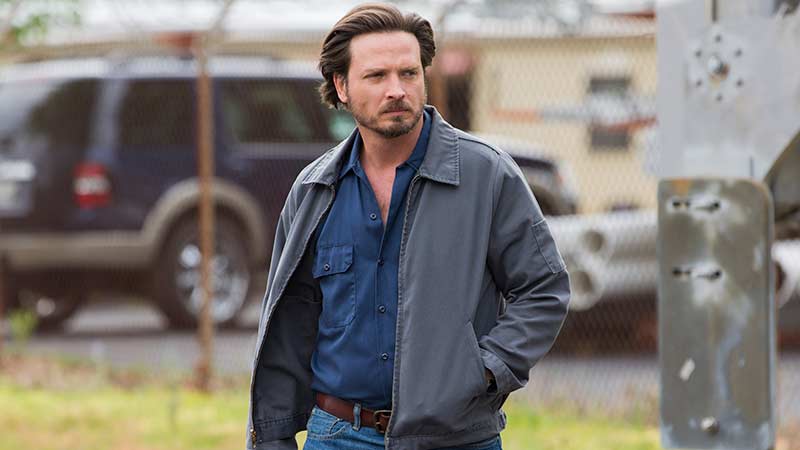
The question of Daniel Holden’s innocence has always been Rectify’s low hanging fruit. If Sundance’s first original drama aired on network TV, the ads every week would feature variations of “did he do it?” along with some gripping music and a voiceover, but creator Ray McKinnon never made that the focal point of his masterpiece. In the week leading up to Rectify’s finale, I got the sense that we weren’t going to get any definitive closure. The four seasons we spent with Daniel remind us that life doesn’t work like that. Thankfully, the finale didn’t tell us anything different.

It’s easy to forget that the entirety of the show takes places over a few short months. The circumstances surrounding Daniel’s life barely change over the course of the series. He’s on the road to recovery and probable exoneration, but that’s about it thirty episodes later. Rectify’s pacing is a true marvel, moving at a glacier slow speed but with such precision that it’s easy to forget just how little time has passed, though for a show about a man who spent nineteen yeas in solitary confinement, it feels oddly fitting.

Part of the beauty of Rectify is that we’ll never know if Daniel really did it or not. The show supplied enough details to suggest Chris Nelms killed Hanna Dean, but never fully lets its lead off the hook. Daniel himself claimed to not remember in the season opener, understandable considering he was on mushrooms that night. Most shows would be ripped apart for not definitively revealing the killer, but Rectify managed to frame its narrative so that it almost would have been a cop out to supply the answer.

That’s also really not what Rectify was ever about. As Daniel put it in the finale, an exoneration would be only good for an occasional visit home, plus any future Google searches by artsy companions. He won’t get his years back. Some people in Paulie will always think he did it. Rectify never tried to trick its audience into thinking otherwise.

I didn’t think the season finale was the best episode of the season. I’m glad it didn’t try to be. There were so many deeply moving scenes throughout the season that you almost couldn’t imagine that there were any heartstrings left to tug. Of course Rectify managed to find a few, but the goodbyes offered in the final episode ended on a happier note than what we’ve come to expect from the show over the years.

Rectify’s conclusion had all the makings of a proper TV finale set through the lens of one of the most unique shows ever to air. We got to see familiar faces one last time, without the kind of shock scene that would have felt out of place. The best TV finales are the ones that remind you why you loved the show to begin with. The final dream sequence offered the only kind of conclusion Rectify could offer, bringing the show to an end knowing full well that Daniel Holden’s story is far from over.

Few shows demonstrate such mastery of the craft. Like The Wire before it, Rectify won no major awards and never achieved a sizable following while it was on the air. Both are fairly unwelcoming in their brutally honest deliveries, which rarely spare punches to their characters. Hopefully history will rectify Rectify’s standing in this so-called “golden age of television,” but until then we can rest easy knowing what a fantastic piece of art we got to enjoy.

Monday

19

December 2016

1

COMMENTS

Rogue One Sets A Strong Template for Standalone Star Wars Films

Written by , Posted in Blog, Pop Culture, Star Wars

We live in a post-film era for big blockbusters. Being an entertaining, self-contained, couple hours of fun isn’t enough anymore as franchises work their own larger continuities into the mix to keep fans coming to the theatres. While criticized for being a largely derivative film, The Force Awakens was praised for setting up the franchise for future annual offerings. As a standalone film, Rogue One demonstrates what a movie can be without the weight of obligation.

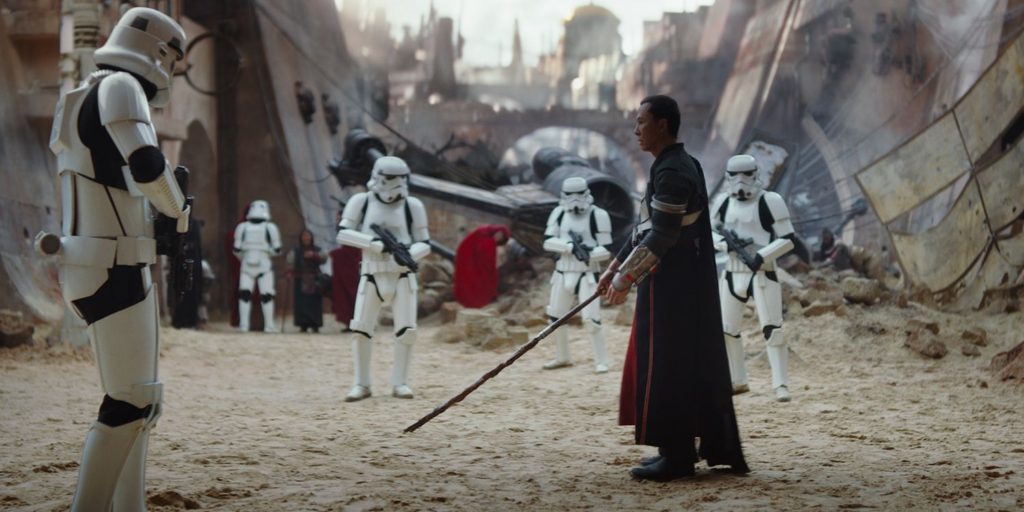
Rogue One takes place during the long eighteen year period between Revenge of the Sith and A New Hope, enough for General Motti to remark, “your sad devotion to that ancient religion,” in the latter film. There’s a few familiar faces in the supporting cast, but the leads are complete unknowns. The presence of rebels not related to the Skywalker/Solo/Kenobi/Binks clans was rather refreshing as the mind tends to focus on the film itself rather than the potential parentages of the characters. Felicity Jones and Diego Luna captivate in the leading roles, never once suggesting that the two may be related or that one owned a droid built by the other’s father.

The film moves at a rapid pace, taking little time to explain who its characters are. You probably won’t remember most of their names. There is a natural inclination to knock the film for giving the audience little reason to get behind the characters, except the film’s standalone nature and lean 133 minute runtime stand in direct contrast to most action films these days. Rogue One doesn’t have the luxury of spending the entire film setting up future entries for its characters and it’s better off for not trying. I liked the characters enough to care if they survived various explosions. Isn’t that enough?

Which isn’t to say that it’s a perfect film. The cast is a little bloated and the story relies heavily on dramatic clichés to advance the plot. I’d care more, but I was having too much fun watching a movie that wasn’t trying to be a different movie or sell me on the next one.

The idea of standalone Star Wars films has existed since the Caravan of Courage/Battle for Endor duology back in the 80s. The world George Lucas created offers endless storytelling possibilities, which made J.J. Abrams’ decision to remake A New Hope and The Force Awakens incredibly frustrating. Rogue One doesn’t deviate quite as far from the original films as the Ewok movies, but certainly demonstrates what the franchise is capable of when separated from its beloved characters.

Rogue One succeeded for many of the same reasons as the original. It offered satisfying escapism with breathtaking special effects. It pays homage to its predecessors, offering numerous easter eggs for dedicated fans that don’t take away from the enjoyment of those who don’t even know what the Ewok movies even are. It doesn’t shoot for the stars, but one has to wonder if any film is going to in the Disney era. If this is as good as it gets, I’ll take it, as long as there aren’t any post-credit scenes.

Friday

25

November 2016

0

COMMENTS

Why Does Gilmore Girls Have a Monopoly on WB Nostalgia?

Written by , Posted in Blog, Pop Culture

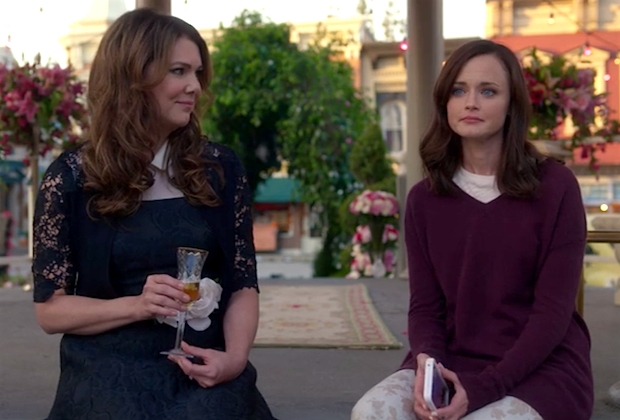
Netflix offered millions of people a sanctuary from the Black Friday madness with the return of Gilmore Girls. The four episode limited revival has captured the interest of the pop culture world, bringing back the nostalgia of late 90s/early 00s WB programming. In an age with endless televisions offerings, both past and present, available to the consumer, it can be easy to forget that there once was a time when channels themselves were relevant at all, let alone ones that catered to a younger demographic.

With remakes and reboots popping up all over TV, it shouldn’t be surprising that Netflix wanted to book a return ticket to Stars Hollow. Gilmore Girls’ arrival to Netflix, relatively late to the streaming game in October 2014, garnered the kind of media attention that most current shows would kill for. What is perhaps surprising, is that Gilmore Girls is the only WB program to receive a revival in a world where Dynasty, Magnum P.I., and Prison Break are all being brought back to life. For a brief four month period, NBC wanted to capture the nostalgia of Coach before realizing that no one else did. So why is Gilmore Girls the only one of Michigan J. Frog’s offerings to return to millennial laptops, cell phones, and Apple TVs?

Gilmore Girls began its run right at the heart of WB’s love affair with the American youth. The show premiered in 2000, when Dawson’s Creek, 7th Heaven, Buffy the Vampire Slayer, Felicity were plastered all over the covers of teen magazines and the insides of high school lockers. As far as ratings success goes, Gilmore Girls maintained a comfortable viewership relative to the rest of the network, but consistently lagged behind 7th Heaven and Smallville with ratings comparable to Buffy and Everwood.

When you think about one sentence that fully encapsulates all the feels of The WB, is there any better the the opening lines, “I don’t want to wait, for our lives to be over,” bringing images of a quaint North Carolinian town to mind? I don’t think so. I wouldn’t hold your breath waiting for a Dawson’s Creek revival either. Poor Grams.

While ratings are nearly irrelevant in the year 2016 and shouldn’t be used as a barometer for the quality of a show, they do remind us that Gilmore Girls wasn’t even close to being the flagship program on the WB. It ended unremarkably in 2006 after a one season run on The CW without creator and writer extraordinaire Amy Sherman-Palladino. The unsatisfying ending serves as a potential explanation for the desire to seek additional episodes, but no such treatment has been given to Charmed, which fell victim to massive budget cuts in its ninth and final season. Joss Whedon directed two of the highest grossing movies of all time, yet there’s been almost no talk of any Buffy or Angel continuation.

Gilmore Girls remains on an island, or perhaps in a diner of its own in WB lore. With podcasts like “Gilmore Guys” breathing new life into the fandom years after its demise, there’s no doubt that the show maintains a cult status with its viewers that most shows would kill for. There’s little question that the show’s writing was among the best on TV even if the Emmys refused to acknowledge it. The show’s fast paced dialogue, filled with pop culture references, practically forces repeat viewing. It could be that Gilmore Girls is the only WB show to get a revival because it was the best show on the network. Problem is that doesn’t really explain the legions of revivals while plenty of other popular and beloved programs remain dormant. Is anyone really angling for another season of The Wire?

Melissa McCarthy’s recent A-list success is obviously part of the equation, but I hesitate to give it too much credit. Sookie may have been Lorelai’s best friend, but was still a supporting character on a similar level as Lane or Paris. McCarthy’s cameo is important to recapturing the magic of the show, but hardly a driving force in A Year in the Life.

The varying success of other WB stars fail to shed any consistent light on the lack of appeal for other shows either. Michelle Williams, Katie Holmes, Jessica Biel, Keri Russell, David Boreanaz, Alyson Hannigan and Emily VanCamp have all either been in big budget movies or hit series, but James van der Beek has, so far, been the only former WB star to try to cash in on his old nostalgic value. Putting aside 7th Heaven’s soiled reputation in the wake of Stephen Collins’ transformation from beloved father to pedophile, it does seem odd that no network or streaming service hasn’t tried to tap into the former magic of the WB besides Gilmore Girls.

We’ve seen plenty of articles and studies on pop culture’s recent obsession with nostalgia. South Park captured it best with its “member berries” that use nostalgic references to give characters warm feelings of security. The past itself is less important than the idea of returning to a simpler time.

The world of Stars Hollow gave Gilmore Girls a unique leg up in this regard. Every episode takes you to a special place filled with all the warm feelings of community and beloved culture. The WB gave teens a sense that someone out there was on their side. Gilmore Girls possessed a degree of separation with its emphasis on family and the town itself.

An image of Joey Potter climbing through Dawson Leery’s bedroom window might look a little creepy in the year 2016. The idea of Felicity as a grad student or college professor seems a bit odd, regardless of hairstyle. What would the Camdens have to lecture their kids about in a world with legalized pot? Stars Hollow survives because the idea is timeless in a world where the doors opened by technology often lead to divisiveness and isolation. The best revivals are the ones that don’t just recapture the magic, but bring something new to the table as well. For much of The WB’s roster, nostalgia is probably best left in the past.

Wednesday

3

August 2016

0

COMMENTS

Star Trek Beyond Is As Entertaining As Skeptics Feared It Would Be

Written by , Posted in Blog, Pop Culture

The fans who raised concerns over Star Trek Beyond’s action packed, Beastie Boys fueled trailer had a point. The comparisons to the Fast and the Furious franchise were warranted even before considering that director Justin Lin helmed four installments, overseeing the series’ shift away from car racing into buddy action films. Vin Diesel would have look more appropriate in Beyond than Patrick Stewart or Kate Mulgrew. The problem for those critical of the trailer is that while they weren’t wrong to point out the franchise’s shift in direction, the result is the single best thing to happen to Trek since Seven of Nine’s introduction to Voyager back in 1997.

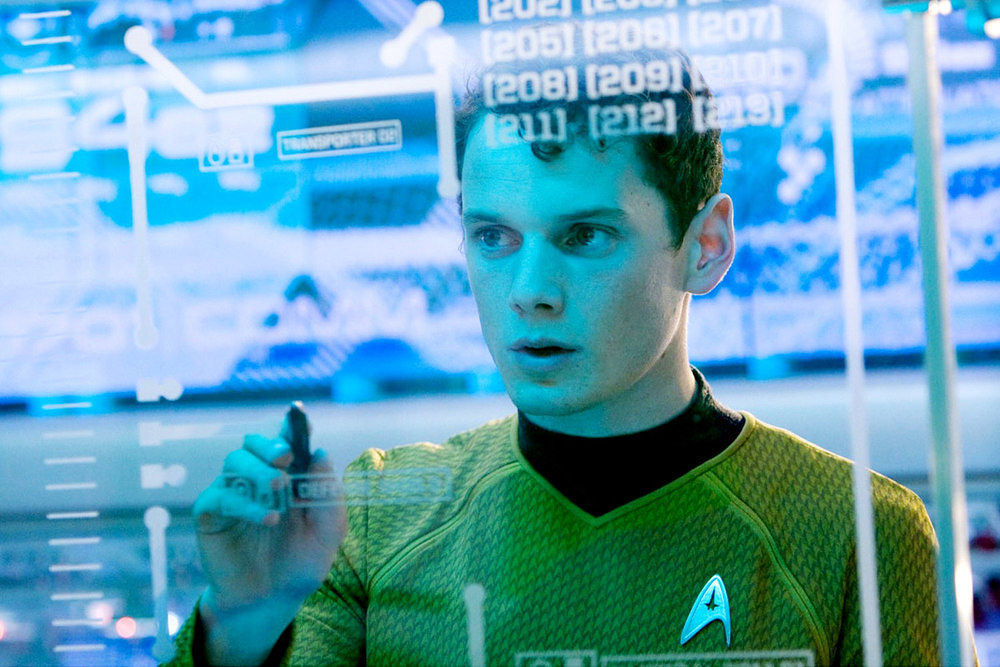
Funny thing is, I can’t really find a spot where the fast pacing, sharp writing, and overall strong performance from the cast would have been improved by longwinded technobabble exchanges or impassioned debates on the Prime Directive. Lin took Trek and made it his own, but it’s still Trek. Giving Simon Pegg control of the script proved genius as he brought his comic wit and fan’s perspective, giving Leonard Nimoy one of the most heartfelt tributes I’ve seen in fiction, giving me great optimism for how Anton Yelchin’s unfortunate death will be handled.

Beyond succeeds because it knows where to concentrate its phaser fire. The plot is about as forgettable as The Final Frontier or Insurrection, certainly no whales, but that’s not necessarily a bad thing. The film wastes none of its two hour run time, knowing when enough is enough. My only real complaint is that Idris Elba is largely wasted in the role of Krall. Having been highly underwhelmed by Benedict Cumberbatch’s go as Khan in Into Darkness, I’m not sure more Krall would have been a good thing, but it’s always at least a bit of a shame to see a talent like Elba underutilized.

It’s rare to see a blockbuster film, let alone one that’s part of a franchise, to not suffer under the weight of its perceived obligations to its universe. My main criticism of Star Wars: The Force Awakens, Batman V. Superman, various films in the Marvel Cinematic Universe is that they spend too much time worrying about the bigger picture of the franchise that they don’t put enough focus on being entertaining films. A cameo from an older cast member or from the upcoming Discovery series would have been fun, but I’d rather not have either than suffer an unnecessary subplot designed to “connect” individual works together. Beyond is a pleasant throwback to the days where movies dedicated themselves to satisfying the audience sitting right in front of them rather than those who complain in coffee shops, comic book stores, or the internet.

The film is fun. That’s about all there is that needs saying. Those who were bothered by the trailer probably won’t like the film, but the trailer was inaccurate in at least one regard. Beyond has a lot of heart for a movie that’s mostly focused on explosions.

The new Star Trek films have different obligations than the earlier films, which were continuations of television series featuring characters the audience had ample opportunity to get to know. We’ll never know Pine’s Kirk as well as Shatner’s. Every few years we get to have a couple hours of fun with these characters. For Trek fans who haven’t had the luxury of a Trek series on TV in over a decade (at least until January), resistance to Lin’s different style is, well, logical. As an ardent Deep Space Nine fanatic and a fan of the other series, I welcomed Trek’s decision to boldly go where no captain had gone before, even if it that involves going into the Fast and the Furious’ quadrant.

Monday

20

June 2016

0

COMMENTS

Game of Thrones Season 6 Recap: Episode 9

Written by , Posted in Blog, Game of Thrones, Pop Culture

This recap features analysis from a devoted book fan. As the show has largely deviated from the books I’m not sure how much this matters, but if you hate spoilers you should probably not read these articles. I encourage you to subscribe so you never miss a recap. Thank you for reading.

Episode nine has become the most anticipated episode of the season for Game of Thrones fans.While it was clear that this episode was going to follow the Blackwater/Castle Black route more than the Ned’s beheading/Red Wedding, this is essentially the first major battle in the series where the outcome wasn’t revealed in the books.

I say that instead of “the first major battle where we didn’t know the outcome,” because it was pretty obvious. Littlefinger ex machina was always going to show up to save the day. That said, the battle was superb and easily the show’s most impressive action sequence.

Sansa’s role especially had an aura of inevitability to it. There isn’t really any logical way she’d be able to go find Littlefinger in time. I wasn’t particularly bothered by this lapse in plausibility, but I’d be remiss in my duties not to mention it.

Melisandre’s whereabouts was unclear for much of the season. I actually originally thought she’d headed south, only to see her hanging out by herself with the main forces. Her scene with Jon was important because it reintroduced the fact that Jon died and was brought back to life. The show doesn’t really do a lot with the Azor Ahai or The Prince that was Promised theories, but his revival shouldn’t be treated as an afterthought either.

Ramsey’s best line of the episode was when he mentioned that Jon was a Night’s Watch deserter. This is an elephant in the room that no one who wasn’t at Castle Black for his revival should ignore. I was disappointed that Lyanna Mormont didn’t bring it up two episodes ago.

Don’t love Rickon’s death. Many, myself included, figured he’d be Lord of Winterfell at the end of the series. The show doesn’t invalidate this, but he was still essentially just treated as a prop, which I don’t love. Clearly the show wants to position Sansa to have the clear claim, not a bad thing now that Ramsey is dead. I just didn’t love how a member of the Stark family was killed in such a nonchalant manner. We should care, but we also weren’t given any time to build a relationship with Rickon.

My only real complaint about the battle was the mountain of dead bodies. Who had time to stack all the dead people on top of each other? Wun Wun looked pretty busy being shot by arrows. Poor guy.

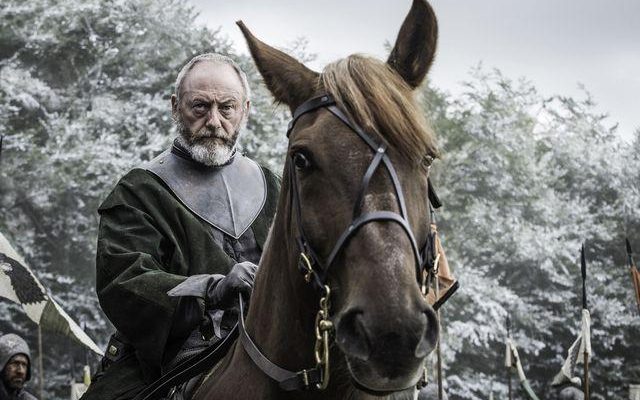
MVP of the battle: Wun Wun. Runner up: Davos, for doing his best. What are the odds that stag would still be in the snow? I thought winter was coming…

Where was Ghost? Did he desert Jon? Or did they not have the budget for a wolf scene?

Not that it really matters given the insignificance of House Arryn at this point in the show, but it’s interesting to note that House Arryn, one of the four main houses that lead Robert’s Rebellion, came to the aid of House Stark after sitting out the War of the Five Kings. Brings everything full circle.

I don’t really have a clue what’s next for the North. The Sansa/LF/Jon/Tormund dynamic is quite odd without considering what will happen if/when Brienne comes back. I suspect she’ll run into Lady Stoneheart next episode so this likely won’t happen. Odds are, the Winterfell gang will be limited to just a scene or two that sets up next season.

Unlike “Blackwater” and “The Watchers on the Wall,” this episode had other plots, albeit a single one, besides the battle itself. I liked that Dany got some screen time as she’s been sidelined for a few episodes now. Meereen is being wrapped up with the slaver’s defeated and Yara and Reek there to transport Dany to Westeros.

The mentioning of the Mad King was interesting. Yes, he was crazy and horrible. There are people in Westeros that miss him, considering Joffrey’s reign and all the war that followed. I don’t love Dany going around saying how awful her dad was. She hardly listened to Ser Barristan and Jorah’s criticism of him in the books. You can dislike your family, but mentioning it in public is a little declassee.

The final thing I’d note is that it’s hard to really get invested in what will happen in King’s Landing since it’ll be invalidated by Dany’s impending arrival anyway. This episode did an excellent job with the Northern plotline, which could have easily suffered the same sentiments, not only from Dany but also the White Walkers. Meereen suffered as a plotline as the culture of inevitability set in. Hopefully Dany arrives in Westeros quickly to set the stage for what’s to come. At this point, that’s really all we should care about.

Monday

13

June 2016

0

COMMENTS

Game of Thrones Season 6 Recap: Episode 8

Written by , Posted in Blog, Game of Thrones, Pop Culture

This recap features analysis from a devoted book fan. As the show has largely deviated from the books I’m not sure how much this matters, but if you hate spoilers you should probably not read these articles. I encourage you to subscribe so you never miss a recap. Thank you for reading.

I wonder how many people could receive multiple stab wounds to the vital organs region and still be able to run through a city in a Jason Bourne style chase? The morality surrounding Arya’s decision to leave the House of Black and White is essentially black and white. Jaqen took Arya in when she had nowhere else to go and trained her. In return, she broke the rules several times and abandoned him. As viewers and fans, we can be excited for Arya’s return to Westeros, but I think it’s important to acknowledge that she’s essentially defaulting on her student loans.

Many fans asked me about the potential “Jaqen as Arya” or “Waif is Arya” Fight Club twist this past week. Given Jaqen’s emotional ties to Arya, I didn’t want to rule it out. Their lackluster final scene certainly makes me wish that had actually happened.

Also, it was very rude of Arya to criticize Lady Crane’s soup. Being stabbed is no excuse to skirt one’s manners!

Could have done without the finger in butthole joke. Still hesitant to judge The Hound’s return until we see more. Under normal circumstances, I’d praise a potential alliance with the Brotherhood Without Banners given the need to give The Hound something to do. Problem is, the show didn’t need to give him anything to do. He could have just stayed dead.

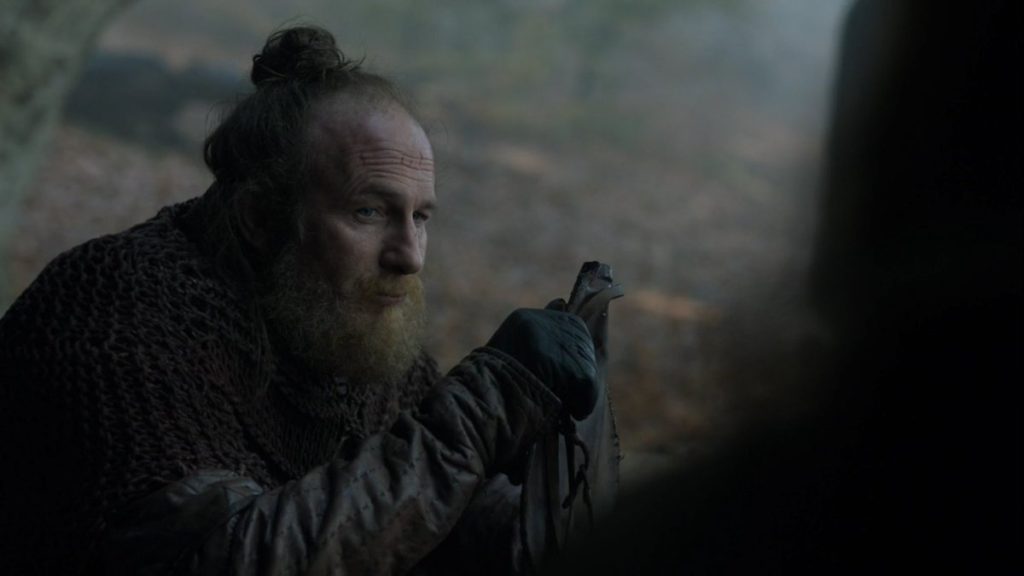
The rapport between the Hound/Beric/Thoros (who rocked an awesome top knot) were pretty great. I wasn’t a big fan of the evil turn of the BWB last week and it seemed odd to see them completely reverse course an episode later, especially considering we haven’t seen them since season three. I also found it interesting that Beric knew about the White Walkers. As we saw with Lord Tarly, most of Westeros is either skeptical or unaware of the problems north of the Wall. Unless Thoros’ powers extend beyond reviving Beric and having great hair, I’m not sure who would have told them. Rumors of a Lady Stoneheart appearance have increased over the past few weeks. I’m not sure that would be a great thing for the show, but I also don’t think there’s a single book fan out there, myself included, who wouldn’t want to see it.

Once again Varys and Tyrion, the most famous dwarf in the world, are walking around without guards. I suspect Varys will be on his way to kill Kevan and Pycelle, something I naively suggested could happen last season, though Varys never made it to Meereen in the books as he was backing (f)Aegon.

Varys’ heartfelt goodbye with Tyrion was a good scene, but also helped remind us just how wasted Peter Dinklage has been this season. The show has tried to made light of how awkward the Tyrion/Missandei/Grey Worm dynamic is, but self-awareness isn’t really an excuse. Meereen as a whole has been very weak this season.

I received a few questions about the rumor that Cersei and Qyburn discussed in the throne room. My best bet is that it had to do with Margaery’s insincere piety. A more fun show answer would be whether or not Lancel confessed to his part in Robert’s death and Cersei’s incestuous infidelity, but I’m not holding out hope. Or maybe the Sand Snakes will reappear… I hope not.

Interesting that both The Hound and The Mountain had gratuitously violent scenes. I’ve always hated the idea of Cleganebowl, but that certainly looked like a plus for that theory. While The Mountain/Frankenstrong has been a more than adequate bodyguard, if I were Cersei, I’d definitely beef up security given the absence of trial by combat.

Jaime’s scenes were my favorite of the episode. It is important to note the change in power dynamic between Cersei and Jaime from the books to the show. In the books, Jaime, still a member of the Kingsguard, leaves King’s Landing because he won’t serve as Hand. At this point in A Feast for Crows, Cersei has near complete authority over KL.

This distinction is important as it sort of undercut the Brienne/Jaime relationship. Here in the show, Jaime is still completely in love with Cersei. The absence of Lady Stoneheart (for now) removes the need for Jaime to rescue Brienne, robbing fans of their much desired courtship, even if it would have created a weird Brienne/Tormund/Jaime/Cersei love square.

Pod and Bronn’s scene was also quite fun. A nice throwback to the days when the show didn’t take itself so seriously.

Poor Edmure. At least Jaime accurately laid out the situation. I would note that the idea of “good guys” and “bad guys” is much more ambiguous in the books. Stark loyalists might feel some loyalty to Edmure, but he’s always been portrayed as weak in the show and has been absent since I was in college (season three). The books make it easier to choose whom to root for, but the Jaime/Edmure dynamic was certainly fun to watch.

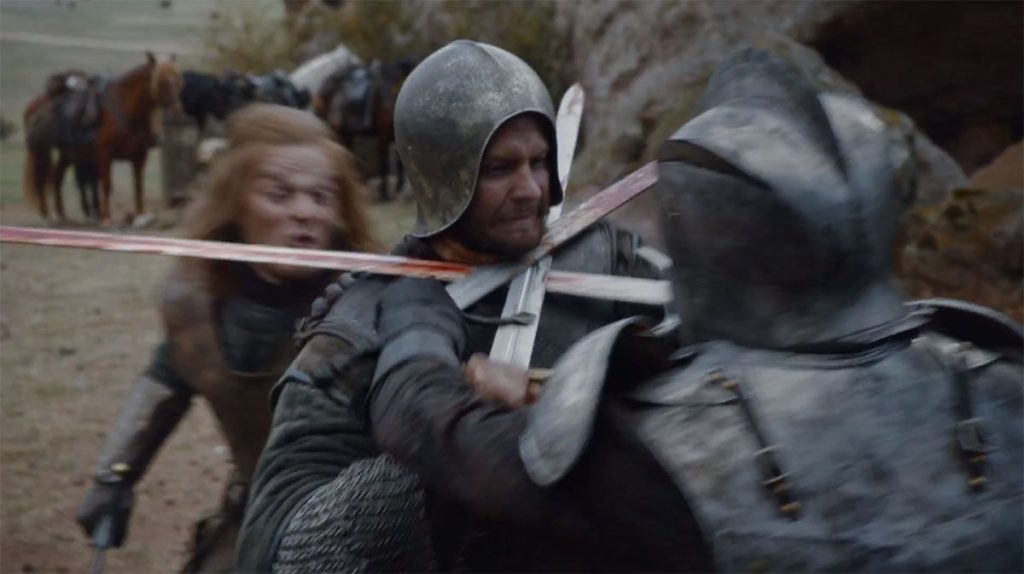
The Blackfish was completely butchered. His desire to defend Riverrun at all costs clashed with the book’s interpretation of the character as the Blackfish spent much of his life in the Vale with Lysa, though that wasn’t depicted in the show. The Blackfish also doesn’t really care about the Stark branch of the family, and has a particular distrust of Jon through Catelyn which also wasn’t depicted in the show.

It just seems odd that he’d pick a senseless death in the name of a good swordfight over fighting for his kin. Brienne’s escape also seems odd. She went there to recruit the Tully forces, something that wasn’t necessarily rendered void by Edmure’s surrendering of the castle. Couldn’t she have theoretically asked to have Edmure lead the Tully forces for Sansa? Oh well.

Where is Melisandre? Looking for Gendry?

Dany is back in Meereen. The pacing of her plotline has been pretty puzzling, though sensible I guess considering the bigger picture. I’ve said this before, but Meereen as a whole this season really made me wish they hadn’t killed off Ser Barristan, who is still alive in the books. Would have certainly given Tyrion some more characters to work with.

That’s it for this week. No Sansa, Jon, Reek, Yara, Bran, Showhands, or Hot Pie. See you next week!

Monday

9

May 2016

0

COMMENTS

Game of Thrones Season 6 Recap: Episode 3

Written by , Posted in Blog, Game of Thrones, Pop Culture

This recap features analysis from a devoted book fan. As the show has largely deviated from the books I’m not sure how much this matters, but if you hate spoilers you should probably not read these articles. I encourage you to subscribe so you never miss a recap. Thank you for reading. 

The title of this episode, “Oathbreaker” is important as it’s just about the only defense that can be offered for Jon Snow’s desertion from the Night’s Watch. Many fans, including myself, expected Jon to leave the order, with the justification being that his death released him from his vows through the second line of the oath, “it shall not end until my death.” Trouble is, not only was this reasoning nowhere to be found, it was kind of irrelevant at that point.

The show could still reference the vows and it probably should, but that defense became moot the second Jon used his status as Lord Commander to execute Ser Alliser, Ollie, and the other conspirators. Jon’s death is an acceptable loophole, but he didn’t use it. He just resigned, breaking his oaths. This signals a big change in Jon’s character which should be very interesting to watch moving forward.

Samwell is back… The only reason I’m even remotely interested is because his father, Randyll Tarly, is one of the best tertiary characters in the books. What will be interesting to see is how the show handles the fact that becoming a maester takes years, which Sam doesn’t really have. I don’t expect to see Archmaester Marwyn in the show, but that would be very exciting as well.

Despite the great sword fighting, I was not a fan of the Tower of Joy. This is a major event in the books that was almost treated like a throwaway. While I understand show fans who aren’t familiar with the books aren’t going to have the same reaction, this is still a crucial element on a certain someone’s parentage. Howland Reed was also just kind of tossed in there like it was nothing.

In defense on the show, there are advantages to covering this flashback stuff through Bran’s dreams. In the books, we see glimpses of The Tower of Joy through Ned’s perspective in the first book, often through fever dreams. Obviously the show can’t do that with Ned dead and all, and it wouldn’t have made sense to do it back in season one. It just didn’t feel as important as it should have.

I’m not in love with the Dany storyline, mostly because I don’t think it’s necessary to add in the bit about the Khals needing to decide whether or not she can stay. The dialogue was a little weak, a common problem throughout most of the episode. I do suspect that Dany will use that opportunity to unite the Dothraki behind her cause, which forgives this current lackluster elements of the plotline.

Meereen improved slightly. Varys actually did something and to top it all off, there were actually guards present! You know who didn’t do anything? Grey Worm! The show even acknowledged how boring he is. If only the four amigos could go on a field trip somewhere. Maybe to Asshai? A man can dream.

Part of my dislike of the Meereen plotline comes from knowing that the show can’t really get into the huge war with Yunkai like the books, which makes Tyrion’s presence in Meereen a bit of a waste. I also hated how the show expects us to believe that the Unsullied are capable of fighting a war after how weak they were made to look all last season. It’s just lazy.

King’s Landing continues to be a mess, even with the return of Olenna Tyrell. Diana Rigg is a superb actress, but the whole plotline lacks any clear direction. The returns of Kevan Lannister, Pycelle (finally!), and Qyburn was nice and all, but still made me wonder why none of them seem too particularly concerned with how dismal the current state of affairs are, even though their combined forces could easily wipe out the Faith Militant.

I loved how the show made Qyburn look human with the “little birds,” who can’t talk in the books and are unwaveringly loyal to Varys, even after he left. Qyburn’s motives are one of the great mysteries of the later books and the show is doing a great job with a fairly minor character. It’ll be interesting to see how good he is at Varys’ job, which I’m hesitant to fully label “Master of Whispers” just yet.

Ser Gregor being called Ser Gregor was interesting. In the books, he’s known as Ser Robert Strong, with his true identity serving as a matter of speculation. I’m pretty okay with the switch as Ser Gregor being dead was crucial to the alliance with Dorne, something that doesn’t really matter here.

The show impressed me by adhering to its own continuity quite well at the meeting of the small council regarding whether or not Jaime rightfully had a seat on it. In the books, the Lord Commander always has a seat, but Ser Barristan was not present at the meetings in season one, nor was Jaime when he became Lord Commander, though he was rarely in KL for any of them.

The question of the seat does undercut the decision to dismiss Ser Barristan back in season one. If the Lord Commander doesn’t automatically get a small council seat, why did Jaime even need to be LC at all? That decision, along with appointing Tywin as Hand and Janos Slynt to the small council was all part of Cersei’s power play. Jaime still sort of fits into that, but definitely not as well.

Arya continues to quietly be one of the show’s better storylines. The plotline doesn’t take up a ton of time in the books and this is likely a case of less is more in the show as well, which is hard to do with a character as popular as Arya. The pacing has been superb. I imagine there was a bit of foreshadowing with the mention of The Hound, who is pretty much confirmed to be The Gravedigger in the books.

The Bolton/Umber scene was the worst of the season. Just awful. I get that the Greatjon hasn’t been around since season one and show viewers don’t care about him, but are we supposed to believe that “Lord Umber” is stupid enough to go to Winterfell and insult a known psychopath while asking for his help even though he wouldn’t bend the knee? None of that was even remotely believable, including discovering Rickon Stark and choosing to deliver him to Ramsey. I’d say poor Shaggydog, but it’s probably for the best that he isn’t involved in such a ridiculous plotline. Call it euthanasia.

Finally, I’d like to acknowledge how great a character Ser Alliser was in the show. His plot progression was almost completely different from the books, as he was not at the Battle of Castle Black and did not participate in the mutiny, but Owen Teale did an excellent job portraying him. And now his watch has ended!

That’s it for this week. Still no Littlefinger, even though he was in the “previously on.” I do think that this season is a significant step up from the last one. There’s a bit going on that makes no sense, but it’s been good fun. Just a reminder, I do live video recaps on my Facebook page after each episode. See you next week.


Wednesday

20

April 2016

0

COMMENTS

AC/DC, Guns N’ Roses, and Coachella

Written by , Posted in Blog, Pop Culture

Like many, I took the news that Axl Rose is joining AC/DC for their upcoming tour with a mixture of disbelief and indifference. The thought of an old tired man joining an old tired band would have been very exciting twenty years ago, but having seen both of them in concert, I wasn’t exactly looking to spend any sum of money to watch that presumed mess. Then Coachella happened.

Axl’s health was a big question mark heading into day two of the three-day music festival. When I saw GNR back in 2006, Axl needed numerous breaks to rest his voice, relying on numerous solos from his nine-piece band as well as a guest appearance from Sebastian Bach to make it through the set. Fast forward ten years, the only things that changed were Axl’s hair (no more dreadlocks) and his new throne, on loan from Dave Grohl after he broke his foot performing a warm up show in Vegas. The thought of a seated Axl may have raised expectations, as the weight of expectations fell totally on Slash, whose status as an elite performer has never been called into question.

At the risk of sounding sarcastic, I really do hope that Axl considers staying in his chair. It did wonders for his performance. Without the pressures to move five or ten feet in one direction, Axl’s voice didn’t just hold up. He sounded near perfect as the band made its way through their hits (and some of Chinese Democracy).

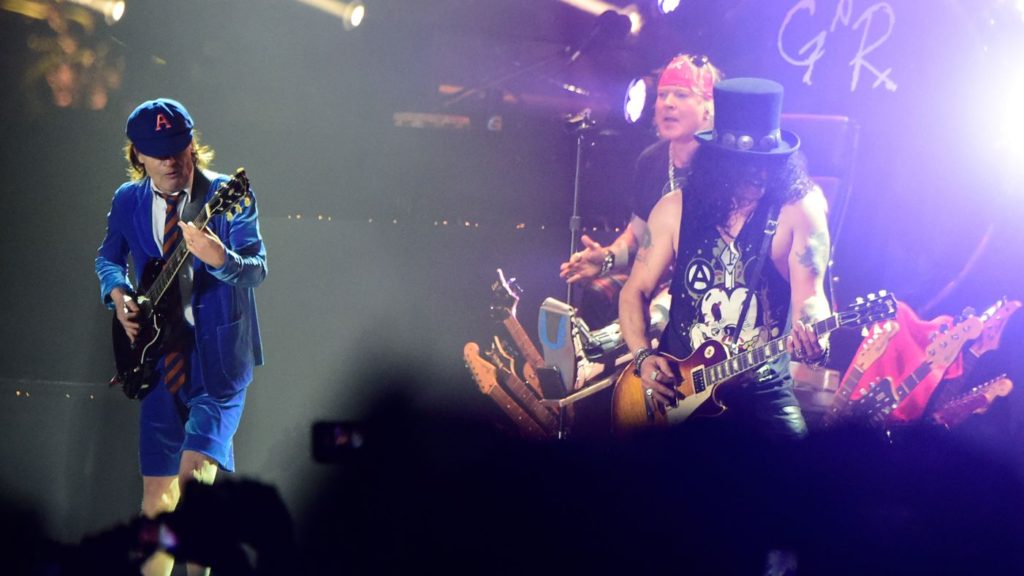
Given that I’d heard the news that Axl was joining AC/DC just a few hours prior to their set and that the band was ones of last year’s headlining acts, I wasn’t too surprised to see Angus Young appear on stage in his signature schoolboy outfit with his new lead singer. The thought of Slash and Angus Young, two of my all time favorite guitarists, performing together would’ve made fifteen year old Ian scream louder than Axl as he sang “Whole Lotta Rosie” while the two rock legends shredded away.

Angus’ performance at Coachella during those two songs was enough to make me a believer in this new era of AC/DC. I don’t blame fans for criticizing the decision to carry on after Brian Johnson announced he could no longer perform due to complications with his hearing. In the past two years, the band has lost founding Malcolm Young to dementia and Phil Rudd to house arrest for having drugs and threatening to kill someone. With 3/5th’s of the band’s core lineup out of commission, no one would blame Angus for calling it a day. In fact, plenty of people are blaming him for choosing not to.

I won’t be after Coachella. I’m not quite sure where the Angus Young who sprinted around on stage like he was warming up for the Boston Marathon came from. But I’m happy he’s here.

It’s been twenty-six years since AC/DC released The Razor’s Edge, the last time the band has done anything remotely memorable. Since then, they’ve only done four major tours, counting the unfinished Rock or Bust, which should finish this June. Despite the band’s long tenure, Angus is only sixty-one, which is the fact that everyone needs to take into consideration when trying to understand why Axl Rose is now in the band.

Guns N’ Roses is similar in the sense that they also haven’t done much since the early 90s. Though GNR is a younger band, Axl is only seven years younger than Angus, a fact worth mentioning since Angus himself is five years younger than Cliff Williams, the only other member of AC/DC to be in the band for longer than ten minutes. While it’s important to note that AC/DC’s dormancy was self-imposed as the band took time off while GNR completely imploded, one important similarity remains.

Angus Young and Axl Rose are two aging musicians who are still capable of delivering first-rate performances. Sure Axl needs rest and a chair, but his voice holds up. I don’t know if that will be true over the course of an actual tour, but that’s a question for another day. Time isn’t on their side, but both appear willing and capable to make the most of what they’ve got left to give.

Coachella’s Angus showed that he’s up to the challenge of performing with an aged singer. He’ll need to solo quite a bit to give Axl the rest he needs (please bring the chair on tour), but it can certainly be done in a dignified manner that doesn’t subtract from the show. I saw on Angus on stage that wanted to push himself as he reaches the twilight era of his career. As David Bowie’s Blackstar showed us, the final act doesn’t have to be a bore.

Fans should be skeptical of an Axl Rose-fronted AC/DC. Axl has no one to blame for his reputation than himself. But don’t count this band out. The music might live forever, but what’s going on right now with these two veteran bands is special. Most importantly, it actually sounds good. I don’t expect new albums that sound even 10% as good as Highway to Hell or Appetite for Destruction, but if this is as good as it gets, count me in.

Tuesday

12

April 2016

0

COMMENTS

Fear The Walking Dead and the Crisis of Character

Written by , Posted in Blog, Pop Culture

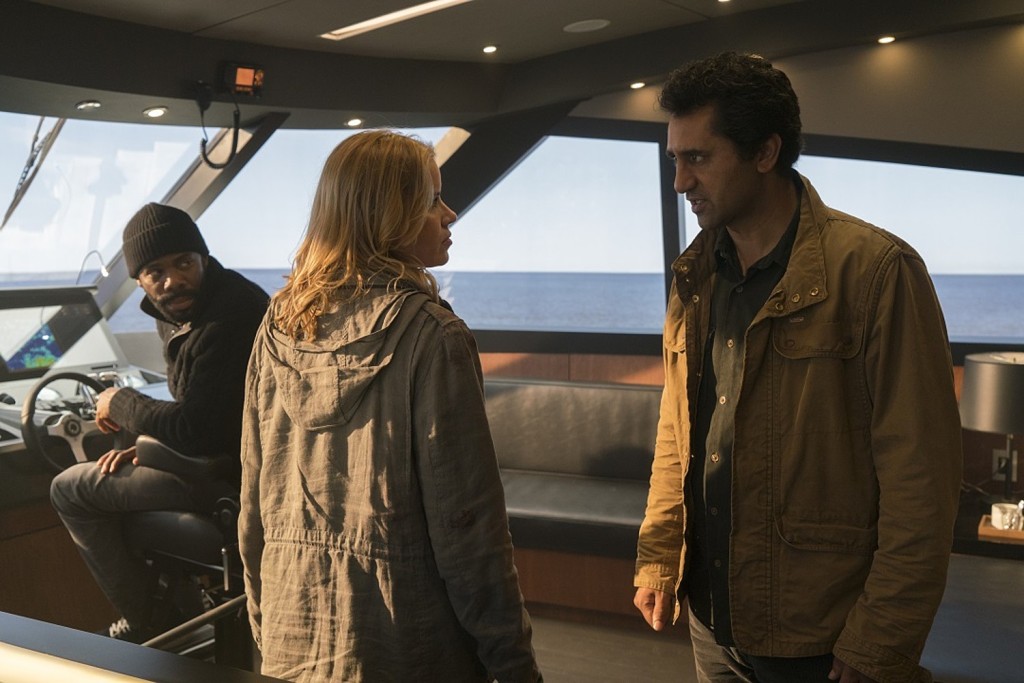
As someone who considers himself a casual fan of The Walking Dead, I looked forward to Fear the Walking Dead for two reasons. The cast of the flagship show has grown too large and the plot too convoluted for a show that only produces sixteen episodes a year. Fear offered a simpler approach to the zombie genre.

The trouble with a zombie show that focuses more on character than action is that it needs to actually have compelling characters. For Fear, this shouldn’t inherently be a problem as it doesn’t need to allocate screen time to dozens of characters, but having time to build relationships with characters doesn’t necessarily make them likable or even compelling.

The first episode of Fear offered next to nothing positive for anyone other than perhaps the diehard fans who stick around for Talking Dead. Only two characters stood out as remotely interesting, Salazar and Strand, with two more, Madison and Nick, that I only care about because I like the actors who play them (Kim Dickens and Frank Dillane, the son of Game of Thrones’ Stephen Dillane).

Fear fails because it makes the wrong assumption that its characters have to be tethered to a Rick-like sense of altruism that’s more than a little tired six years into the franchise. I assume someone involved with the creative felt the need to have Madison express a desire to help the refugees on the boat as The Abigail sailed on. As new a show as Fear is, we’re past that kind of nonsense, which benefits Strand as a character who thinks logically. Fear makes the mistake of pitting someone against Strand’s position, which might be natural as far as storylines go, but we don’t need that and more importantly, we don’t want it.

If the reports that this season will spend much of its time on water are to be believed, Fear’s season two is shaping up to look at lot like Herschel’s farm. In other words, boring. The boat might be more fun than the farm, but we don’t have Rick, Glen, Dale, Shane, Carol, Maggie, or T-Dog to keep us entertained. The hints of a Strand/Madison/Salazar conflict offer a flicker of hope for this season, but the downside of that is that it stands to reason that one of them will die, leaving us short a compelling character.

Granted, it seems unfair to completely write off the show. Season six of TWD bears little resemblance to season two. The only problem is that season two wasn’t really bad on its own. It dragged on at times and pales in comparison to every other season, but it wasn’t terrible TV. Beyond that, it always had the comics to show us that better times were just on the horizon.

Here, I don’t know. I’m not sure how much I care. Water zombies are fun, but plodding melodrama can be better found elsewhere. If Fear wants to be a character centric drama, it better work on its characters who for the most part, have less interesting personalities than the creatures chasing them around.

Tuesday

5

April 2016

0

COMMENTS

Halt and Catch Fire Redefines the Second Season Shake-up

Written by , Posted in Blog, Pop Culture

Sophomore slumps are fairly common in television both with good shows and not so good ones. It makes sense if you think about how much more time is fundamentally spent creating a first season than every subsequent one. After all, the first season is the one that determines if a show exists at all. No network would order a show that didn’t at least sound good until season four.

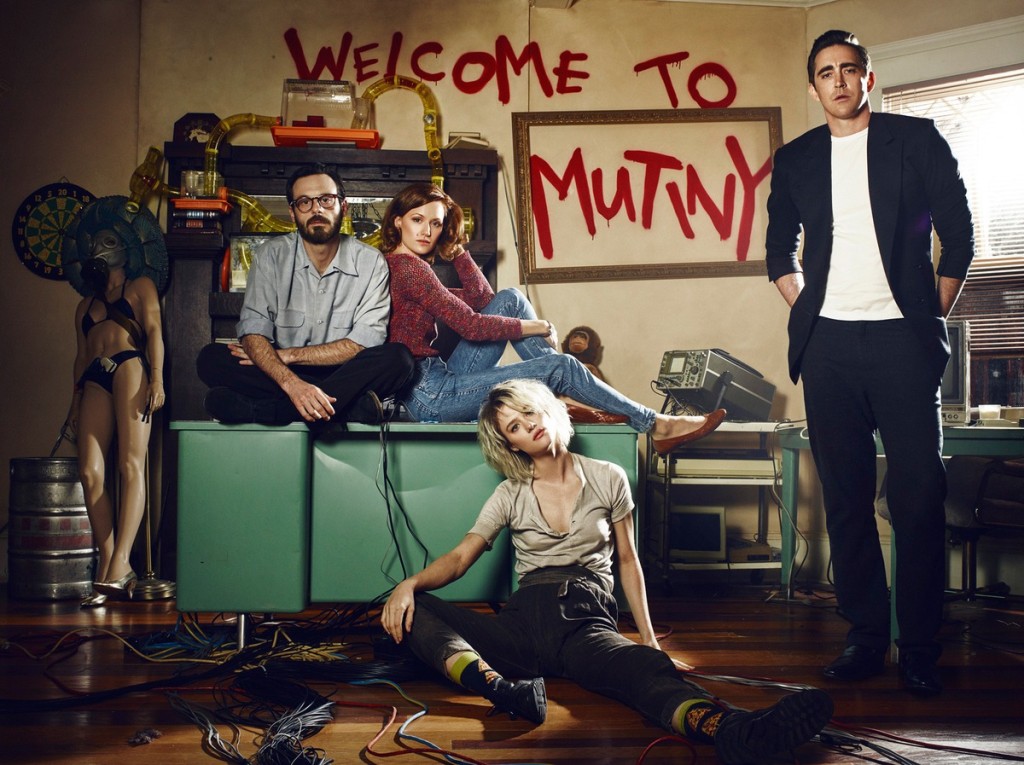
When Halt and Catch Fires second season started off with the main cast splintered off in four different directions, I couldn’t help but feel like this was familiar territory. It’s hardly uncommon for TV shows to separate their casts during finales, only to reunite them a few episodes into the following season. As season two progressed, I realized that bringing back the status quo wasn’t something HaCF particularly cared about. The cast stayed apart and the results were shocking. The show upped the ante and quietly became one of the best on television.

Much like the tech industry itself, HaCF is a show that’s constantly changing as it figures out what it’s supposed to be. Season one was completely powered by the trio of Lee Pace, Scoot McNairy, and Mackenzie Davis, with the cast mostly serving as interesting supplementary parts. Three episodes into season two, I found myself wondering why Toby Huss, who portrays former Cardiff executive John Bosworth, was still on the show. It’s not uncommon for characters to linger after they’ve served their purpose, which is how Bosworth usually looked hanging around the Mutiny headquarters. While he wasn’t given much screen time, Huss took every minute he was given and turned his character’s arc into perhaps the most heartfelt story of season two.

HaCF took a big risk in sidelining its lead actor for the majority of the season. Season one was about building the Giant. Season two was about Mutiny and for the most part, Joe McMillan had little to do with it. He didn’t have much to do at all besides clash with his stepfather, played by James Cromwell in a subtle yet powerful performance. As someone who first checked out the show because of Pace’s involvement, I was surprised at how okay I was with his backseat role in the season.

Season two belongs to MacKenzie Davis and Kerry Bishé. Start-ups are chaotic and long hours often lead to short fuses. In Mutiny’s case, the fuses were short with both the characters and their office space, a cramped frat house filled with twenty-something programmers.

While season one had a fairly linear arc, season two was more of a blend. The characters took the front seat and rolled with it, allowing the chaos to heighten the viewer’s experience. HaCF is the perfect binge show because the lines between episodes become blurred to the point where you really don’t want to stop watching when the credits roll. Ten episode seasons make it easier to have almost no filler, a formula that AMC has also used for Better Call Saul.

Unfortunately and unsurprisingly, HaCF has a significantly smaller following than Saul. Strong critical support gave the show a third season, which could very well be the last if ratings don’t improve. That would be quite a shame as HaCF is one of the most original and entertaining shows on TV. Season two was a masterpiece and even if future seasons take a step back, they’ll still be better than the vast majority of what’s currently on the air.