Ian Thomas Malone

Movie Reviews Archive

Sunday

17

February 2019

0

COMMENTS

Dead Ant Is a Weirdly Endearing B-Movie Triumph

Written by , Posted in Blog, Movie Reviews, Pop Culture
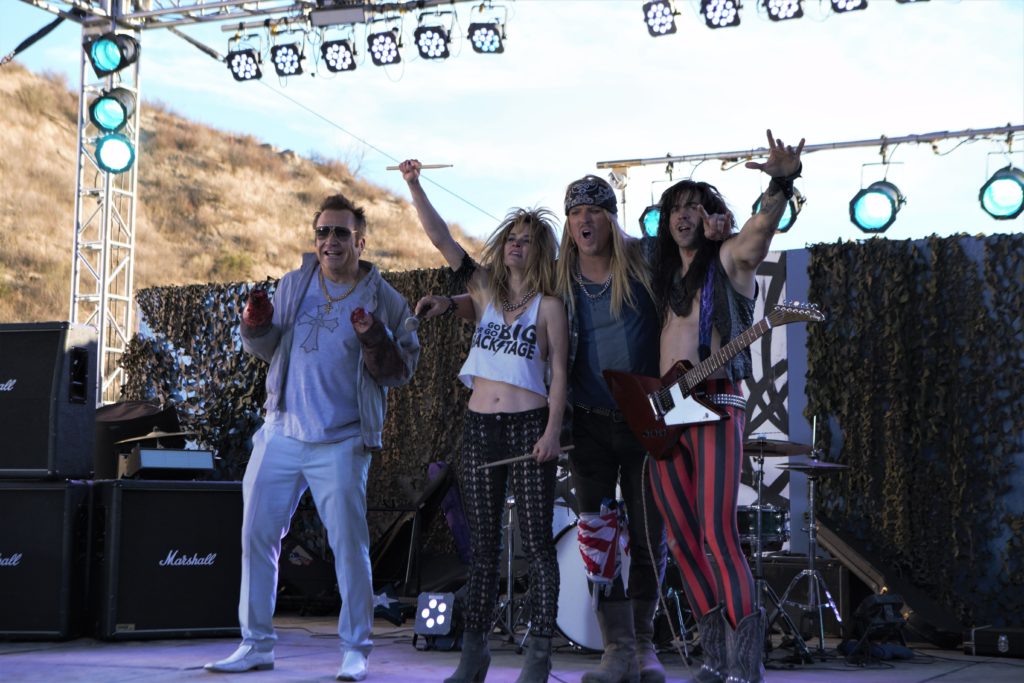
Part of the appeal of b-movies lies in their innate ability to redefine the parameters of expectation that audiences naturally take with them when sitting down to watch a film. The “so bad it’s good” trope reflects the fact that entertainment value can occasionally circumvent the typical binary we use to judge art. Dead Ant is a film acutely aware of this sentiment, embracing camp in favor of anything resembling a coherent narrative.

The plot of Dead Ant is fairly straight-forward. A washed-up hair metal band on its way to a music festival runs into a nasty insect problem after a pit-stop for psychedelic drugs. The cast of characters is fairly intimate, mostly featuring the members of the band Sonic Grave, including Sean Astin, Jake Busey, Rhys Coiro, and Leisha Hailey. Tom Arnold, co-star of the 90s hit True Lies, puts in a strong performance as band manager Danny, delivering most of the film’s memorable comedic lines.

The film struggles through its first half-hour, full of dated clichés about political correctness and power ballads. The idea that a hair metal band would be searching for a “comeback” in the late 2010s, decades after the genre’s heyday, is an absurdity that the film could’ve wielded to its comedic benefit, especially since none of the members look old enough to have been in a band in the 80s. Thankfully the jokes start connecting by the second act, timed well with the introduction of the titular ants.

Dead Ant finds its groove once it trades in the clichés for camp comedy, delivering several laugh-out-loud moments. There’s a point where Arnold starts to look more comfortable in his role, dropping one hilarious line after another in rapid succession as the characters start to fight back against the ants. Coiro is another standout of the film’s second half, owning his ridiculous scenes with a healthy dose of charm, like he finally figured out what the film was supposed to be. Dead Ant is the kind of movie that owes its success largely due to its actors’ willingness to embrace the film’s absurdities.

The script is a bit disjointed at times, but the actors find grace even with the occasional tumble through their lines. The plot holes are transformed into amusing comedic moments, embracing its own inconsistent continuity. In a strange way, the errors serve to heighten the film’s replay value, if only to see if there’s more lurking in the ant-riddled desert.

While few b-movies are known for their stellar special effects, Dead Ant actually exceeds expectations with plenty of pretty believable ants. There are a couple scenes where the digital ants hardly line up with the havoc they’re supposed to be causing, but in a way that’s part of the fun. The film never lets the effects distract from other comedy it’s trying to deliver, maximizing its assets in the process.

Clocking in at just under ninety-minutes, Dead Ant provides plenty of laughs without ever overstaying its welcome. The first half-hour is regrettably underwhelming, but the film course corrects with enough time left to provide an entertaining experience. If the idea of a b movie filled with hair metal and giant killer ants seems like your cup of tea, you won’t be disappointed by this weirdly endearing film.  
Monday

11

February 2019

0

COMMENTS

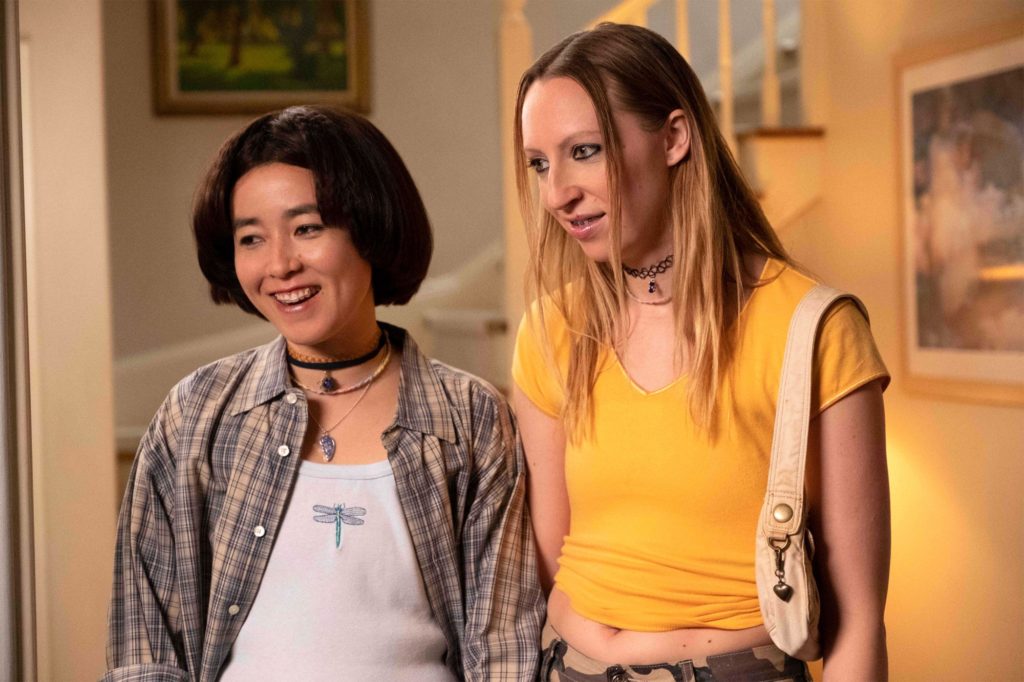
PEN15 Is One Of Hulu’s Best Original Shows

Written by , Posted in Blog, Movie Reviews, Pop Culture

The first episode of Dawson’s Creek garnered much controversy all the way back in 1998 for daring to talk about subjects like masturbation and premarital sex, airing at a time before premium cable changed the television landscape. Two decades later, shock value just doesn’t carry the same weight. The idea of a TV show set in middle school starring two adult actresses covering similar subjects in a far more graphic manner barely raises an eyebrow.

PEN15 sets its sights on the most cringe-worthy chapter in many people’s educational experience. As much as high school can be defined as a time full of awkwardness and poor decisions, middle school offers an environment with far less freedom and a lot more puberty. The sexual tension that fuels so many high school dramas essentially begins in middle school, though television has been reluctant to cover that period for obvious reasons. The material is too graphic for child actors, and adult actors don’t exactly look convincing playing thirteen-year-olds.

While co-creators and stars Maya Erskine and Anna Konkle hardly look like children, both actresses are immensely effective in sidestepping that issue completely. PEN15 crafts its own funhouse version of reality that allows Maya and Anna to navigate its halls with relative grace, considering the heavy dose of cringe comedy offered in practically every scene. Suspension of disbelief is hardly needed, as PEN15 eloquently captures the zeitgeist of adolescence in the early 2000s.

Though the adult actors carry the bulk of the drama, PEN15 does have an impressive cast of child actors in supporting roles. Each episode is mostly self-contained, allowing the show to thoroughly cover a wide variety of topics in its first season. There isn’t a single episode that reeks of filler, a rarity among streaming shows, especially in their first seasons.

What sets PEN15 apart from many shows that depict childhood is its unapologetic refusal to force resolution. For many, if not most, middle school is a cringe-worthy time that we’d like to forget. All the efforts made by ABC’s Afterschool Specials and shows like 7th Heaven and Boy Meets World to turn each conflict into a teachable moment seem to forget how often bad things happen that don’t serve some broader purpose. Kids can be mean. Often, justice isn’t served. The bad guys win all the time. Shows can pretend like there’s some silver lining hidden in bullying, but PEN15 deserves a lot of credit for throwing conflict out there in a way that doesn’t try to package it all up by the end of the episode.

Back in 2015, Wet Hot American Summer: First Day of Camp crafted a hilarious prequel that worked around the fact that actors in their 40s were playing teenagers. PEN15 deployed a similar approach, wielding the surreal to offer some brutally honest commentary on the struggles of growing up. The show has quickly become one of Hulu’s best original series. Few shows dare to take on middle school, but Maya and Anna prove how powerful such a journey can be while providing a hilarious experience along the way.

Monday

11

February 2019

0

COMMENTS

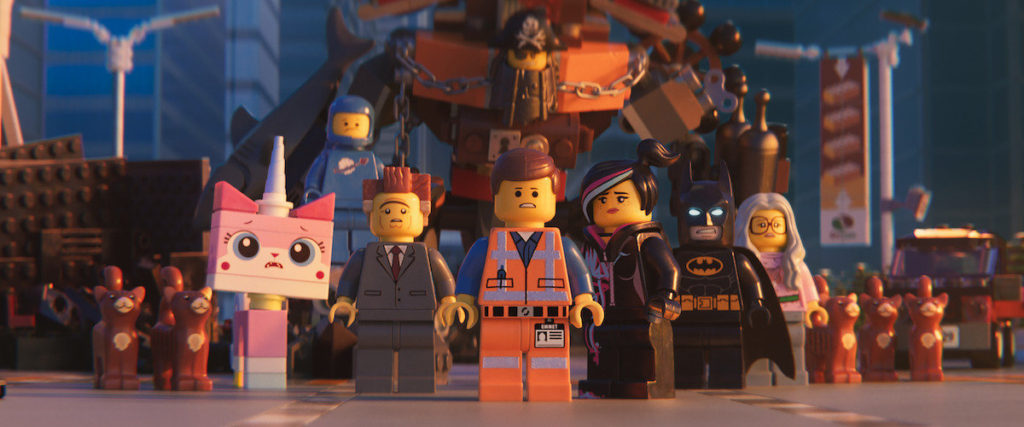
Following the Same Instruction Manual as Its Predecessor, The Lego Movie 2 Is Hilarious & Sweet

Written by , Posted in Blog, Movie Reviews, Pop Culture

The worst sequels are the ones that are too self-conscious about their own existence, straining the narrative with an unnecessary mandate. The world didn’t need The Lego Movie 2: The Second Part, but of course that was never going to have any bearing on whether or not the film was made. The success of the first made a follow-up inevitable. The notion of whether a follow-up could resonate in quite the same way is the only question that should be asked.

The Lego Movie’s biggest strength was its ability to blend silliness with thought-provoking realism. The film wielded a broad spectrum of human emotion, leaving the audience with much to chew on by the time the credits started to roll. That kind of experience is hard to recreate for many reasons, chief among them being that the viewers walk into the theatre knowing what’s in store for them.

The Second Part doesn’t try to reinvent the wheel, or the brick. The narrative is largely another medley of light-hearted humor set against a real-world backdrop, this time in the form of Finn struggling to get along with his younger sister. The jokes continue to come at a rapid-fire pace, delivering plenty of laugh-out-loud moments. The film does an excellent job offering jokes for audiences of all ages, alternating gags with plenty of references aimed at older viewers, including some memorable lines on Chris Pratt’s career and the state of DC Comics.

Sequels often mess with their characters’ personalities in an effort to manufacture new drama. Thankfully, The Second Part doesn’t fix what isn’t broken, playing to its characters’ strengths without forcing any unnatural conflict. Emmet is still an unrelenting optimist, Lucy is still afraid to open up, and Batman is still a raging narcissist. There are little bits of character development here and there, but the movie as a whole is content to keep the dynamic of the first film in place.

The musical numbers don’t pack the same punch and the plot wins zero points for originality, but the film has more than enough heart to make up for its lack of imagination. The Second Part is a lot of fun. Unimaginative concepts can still be entertaining, just as plenty of films are made each year that are completely derivative of earlier classics. The idea that a sequel should bring something new to the table can exist alongside the notion that it might just be okay if one doesn’t.

The Lego Movie 2: The Second Part is a well-paced comedy that knows exactly when to tug on the heartstrings. It’s not as imaginative as the first, but that’s practically a given for any sequel. When it comes to providing an experience well worth seeing on the big screen, the movie hits every note that matters. Maybe that won’t be enough for a future installment, but for now, everything is still pretty awesome.

Thursday

7

February 2019

0

COMMENTS

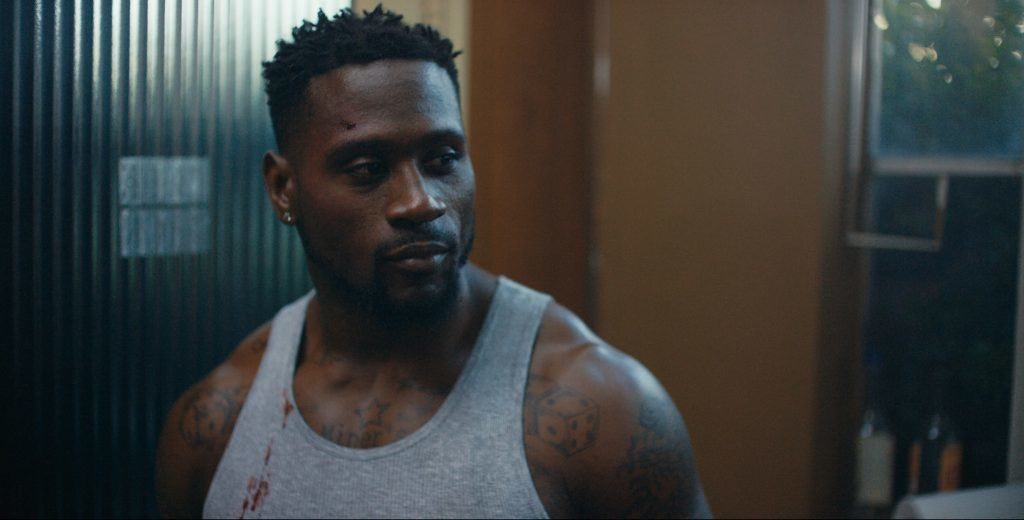
A Violent Man Doesn’t Have a Clear Sense of Purpose

Written by , Posted in Blog, Movie Reviews

Sports movies are in many ways completely antithetical to their real-life counterparts. Legendary plays happen spontaneously, but movies have to manufacture these moments in an effort to convey that same sense of shock and wonder to an audience that expects something to happen. A Violent Man effectively substitutes any sense of suspense that might occur in its MMA octagon for a murder mystery, sprinkling the sports genre with a heavy dose of thriller.

Ty Matthews is an aging fighter looking at the end of his prime. An opportunity for a practice match against the well-known Marco Reign gives him a sense of optimism for his future not enjoyed by his girlfriend Whitney. An effort to defy an NDA imposed by Reign’s manager Ben is scuttled when the reporter he contacted ends up dead after a sexual encounter between the two, with the police looking at Ty for the murder.

The acting is A Violent Man’s strongest attribute. Thomas Q. Jones does an effective job in the lead role, drawing out empathy for Ty’s struggle without requiring the audience to agree with many of his decisions. Ben Davison puts forth a solid effort as Reign’s manager, carefully juggling charm with sleaziness in nearly all of his scenes. Issach De Bankolé gives a strong performance as trainer/mentor Pete, anchoring the emotional core of the film with his concern for Ty and the current trajectory of his life.

While the actors are shown to be capable of carrying the drama, the writing doesn’t give any of them much to work with. The vast majority of the scenes are riddled with clichés. Khalilah Joi can’t really do much as Ty’s girlfriend, Whitney when the script constantly calls for her to deliver the most predictable lines imaginable. Denise Richard’s brief appearance as reporter Victoria is entirely undercut by her character’s painfully unrealistic lust for Ty, casting aside any sense of obligation to portray a believable journalist.

A Violent Man struggles to be a sports film and a thriller, stripping either of any sense of dramatic urgency. Much of the second half of the film is dedicated to the fallout of Victoria’s murder, but the film pivots back to Ty’s feud with Marco in the third act, culminating in a weak title fight that feels less like a climax than an obligation to get it out of the way as quickly as possible. The conclusion is rushed and undercut by the narrow scope of the film that renders it practically inevitable.

For most of the film, director Matthew Berkowitz makes the most of a small budget, using minimalistic lighting and a strong score to hone in the intimacy of his sets. The title fight loses this touch, feeling oddly small and out of a place in a narrative that otherwise knew how to make the best of its locations. Perhaps some of this is the fault of the limited use of Chuck Liddell as Reign, who isn’t in the film for long enough to leave any kind of lasting impression.

MMA fans may find something to enjoy in A Violent Man, which offers some decent commentary on the struggles of making it in an unforgiving business. The lackluster script hinders both the performances and the narrative pacing. There’s a lot to like in the concept, but the film fell apart as it tried to tie its various strands together.

Wednesday

23

January 2019

0

COMMENTS

Netflix’s Fyre Documentary Provides an Extensive Look at the Disastrous Festival

Written by , Posted in Blog, Movie Reviews

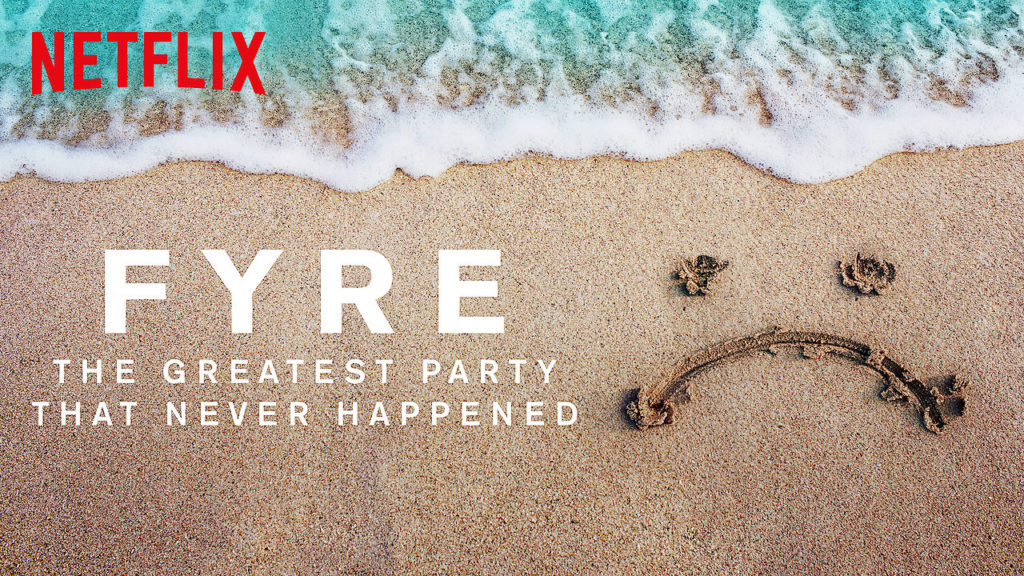
Part of the intrigue surrounding the Fyre Festival debacle lies in the sheer absurdity that the event wasn’t canceled well before guests began to arrive in the Bahamas. The simple answer of fraud barely begins to satisfy the larger question of what anyone behind the festival was thinking throughout its sloppy preparation period. Netflix’s new documentary Fyre: The Greatest Party That Never Happened seeks to illuminate the many twists and turns of this disastrous saga.

Billy McFarland is a professional conman with a long history of grifts before Fyre Festival, and even a couple afterward with the FBI right on his tail. The documentary explains his methods quite effectively, reconstructing his pyramid schemes to accumulate capital by making promises he couldn’t possibly deliver on. Fyre’s narrow application of these findings is mostly kept to how his behavior directly impeded the festival, making no broader assessments as to how McFarland might represent the current generation. The film doesn’t particularly care about the why of his motives, but instead about the people he harmed in the process.

The idea that Fyre Festival was doomed from the start is certainly present throughout the narrative, but the documentary doesn’t settle for the obvious findings. The infrastructure needed to hold a successful festival cannot be designed and constructed in a few weeks, but there were plenty of people involved with Fyre who did actually try to make it happen. While the weekend was never going to be the VIP luxury event advertised in the initial promo video, hard as it is to believe there was a significant effort made to actually plan a concert. Fyre breaks down everything that went wrong, conducting extensive interviews with employees directly involved with the planning. Extensive contemporaneous video of the planning in progress provides a front row seat to the disaster as it unfolded.

The film takes a measured approach to the comedic factor of the disaster. All the memes of stranded rich kids and the pictures of cheese sandwiches are quite funny, but there were a lot of people hurt by McFarland’s actions. Fyre manages to present its findings in an entertaining fashion while shedding light on the real victims of the nefarious con.

While McFarland lies at the heart of every scandalous decision, the documentary does a good job assigning responsibility to other key players. Fyre Media co-founder Ja Rule deserves much of the blame, as do the influencers and marketers who promoted a fairly obvious scam. In an uncomfortable conflict of interest, Fyre is produced by Jerry Media, the firm that marketed the festival. The ethical dilemma is worthy of scrutiny, but hardly detracts from the overarching narrative. Fortunately, other documentaries about Fyre Festival point this out, ensuring that the conflict will not go unnoticed as the history of the event is recorded.

Fyre presents an extensive look at the many cons and blunders that went into crafting the disaster. It manages to be funny, horrifying, and deeply sad all at the same time. Fyre Festival will live on as one of the most infamous grifts in concert history. The documentary ensures that its viewers will know all the various twists and turns of this epic tragedy.

Tuesday

22

January 2019

2

COMMENTS

Fyre Fraud Loses Sight of the Scandalous Festival In Pursuit of Millennial Bashing

Written by , Posted in Blog, Movie Reviews, Pop Culture

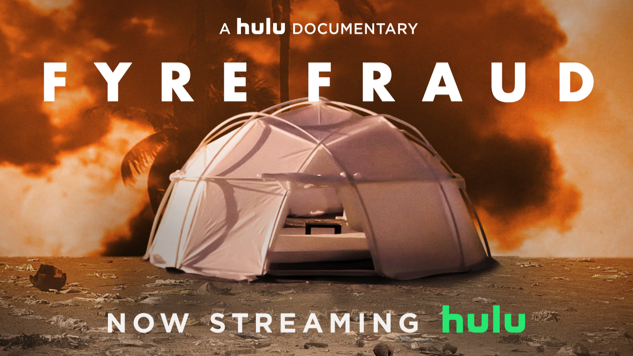
Millennials are a frequent punching bag for the media. Apparently, we’re selfish, superficial, and we ruin everything, claims that we’re supposed to believe have never applied to any other generation. Hulu’s new Fyre Fraud documentary, one of two films released about the disastrous festival in the Bahamas, builds its premise based on the notion that such a grift could only work in modern times. Such a thesis seems to forget that America’s luxury class has always pursued community through exclusivity.

Social clubs have been popular for hundreds of years, granting access to those deemed worthy of membership in the eyes of the elite. Hugh Hefner’s Playboy Club was built around the same premise, mainstreaming a sense of community through a shared interest in seemingly refined tastes. People frequent cigar lounges not for smokes, but for the chance of a fraternal bond blossoming beneath the fumes.

Fyre Fraud paints Fyre Media CEO Billy McFarland, currently serving a six-year prison sentence for crimes related to the festival, as a kind of genius capable of manipulating the easily-fooled millennial masses. The younger generation somehow deserves some blame for falling victim to the con, which hired hundreds of influencers to create an aura of luxury before any infrastructure was put in place to deliver on such promises. The documentary hoists McFarland up as a natural symptom of a narcissistic generation, hailing him as the spiritual successor to The Wolf of Wall Street Jordan Belfort.

The documentary is less about the festival than it is about McFarland, who was paid to appear in the film under ethically dubious circumstances. Billed as a “true-crime comedy,” Fyre Fraud uses frequent animated cutaways to poke fun at the disaster. There’s a lot to laugh at about Fyre Festival, as social media at the time collectively mocked the hoards of rich kids stranded in the Bahamas after being denied the luxuries they overpaid for. For some reason, the documentary felt obliged to play the role of standup comedian rather than to let the contemporaneous jokes speak for themselves, laughing off serious material that deserved closer scrutiny.

There are a few scenes where the interviewers hold McFarland’s feet to the flames, but can’t manage to shake anything substantive from his slick hands. There are natural reservations on his part to not reveal any information that could add to his prison sentence, but he isn’t forthcoming about much of anything at all. It’s hardly uncommon for a subject to not appear in a hostile documentary, which begs the question of why the film felt the need to pay him to appear at all. Such time could have been spent providing a fuller picture of how the festival was doomed from the get-go, or to showcase the many Bahamians who were conned out of payment for their services.

The documentary does shed some much-needed light on the involvement of Jerry Media, the company behind the infamous “fuckjerry” Instagram account that helped market the festival. Jerry Media produced the other documentary on Fyre Festival, a conflict of interest that deserves to be called out, but Fyre Fraud handles this footnote in a way that seems driven less out of journalistic obligation than as a dunk to claim moral superiority over a competing narrative. There are certainly other people to blame for Fyre Festival than simply McFarland, but this documentary doesn’t spend much time on any of the other perpetrators beyond those who dared to make their own film about the experience.

Fyre Fraud hoists Billy McFarland up as a straw man indictment against millennials, casting aside a thorough examination of the festival in favor of cheap laughs. Grifters like McFarland have been around for thousands of years, robbing Peter to pay Paul. The only difference between McFarland and Charles Ponzi is that none of Ponzi’s victims were able to post an Instagram picture of their experience. The documentary allows McFarland’s charms to suck the air out of the room, lazily criticizing millennials at the expense of exploring the greatest con in festival history.

Tuesday

22

January 2019

2

COMMENTS

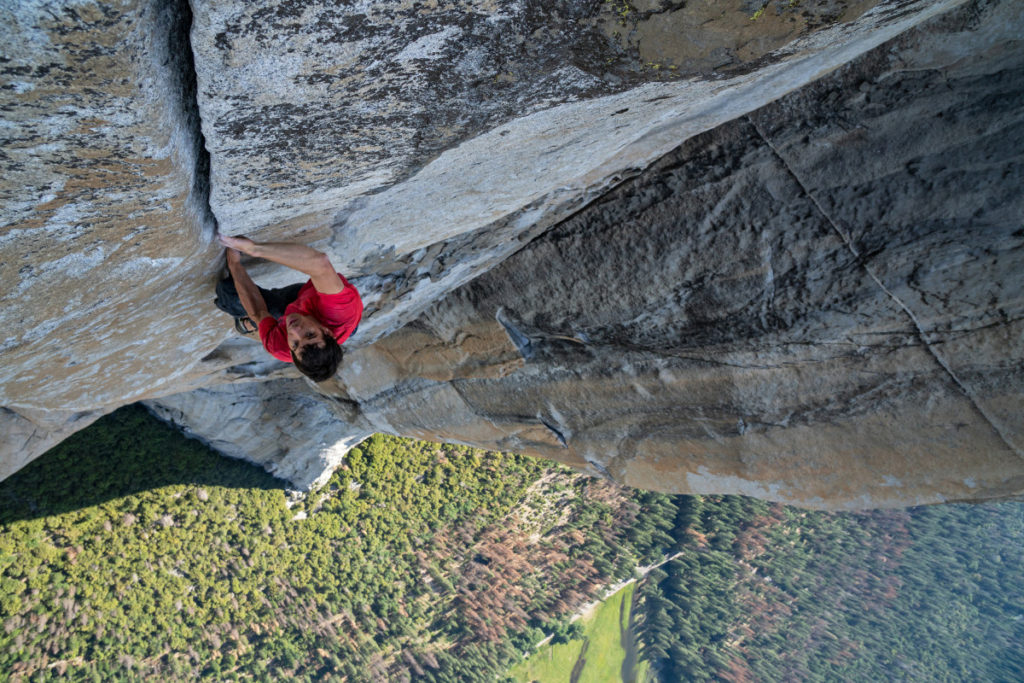
Free Solo Presents a Balanced Portrait of Alex Honnold’s Superhuman Life

Written by , Posted in Blog, Movie Reviews, Pop Culture

A documentary about an athlete like Alex Honnold faces an inevitable, and somewhat unattainable, objective beyond its purpose as a film. The question of why anyone would ever free solo when the stakes are literally life and death persists long after the audience is forced to accept the idea that there isn’t going to be a satisfying answer. Fortunately, Free Solo found plenty of alternative courses that depict its subject in a way that effectively circumvents the core of the mystique.

Honnold has been making headlines for a little over a decade for his free solo feats, rock climbing without a rope, but Free Solo sets its sights on a more intimate scope. The buildup to Honnold’s climb of Yosemite Valley’s El Captain, to be the first person to free solo the immensely difficult formation, gives the film a sense of purpose beyond a mere biopic. Directors Elizabeth Chai Vasarhelyi and Jimmy Chin cover many aspects of Honnold’s life, but the film constantly returns to El Captain, allowing the historic nature of the achievement to serve as a placeholder for any notion that the audience might begin to understand why anyone would want to embark on such a perilous adventure.

Free soloing is not without its detractors, who worry that climbers like Honnold are not only recklessly risking their own lives, but also inspiring others to do the same. The film never paints Honnold as a hero or a role model, despite the obvious cozy relationship the directors enjoyed with their subject. Honnold is immensely likable, an awkward individual without an ego one might expect from his stature, but he’s also clearly not someone meant to be emulated. He’s a singular force of nature, one whose predecessors in the field of free soloing have pretty much all met grim fates. Free Solo manages to celebrate his career while constantly flashing big “don’t try this at home” warnings to the audience, best illustrated through a montage of deceased free solo climbers who lost their lives in pursuit of their passions.

The directors do an excellent job explaining the fundamentals of rock climbing to the audience, as well as the particulars that make El Captain such a monstrous wonder. Capturing Honnold’s climb in progress was an impressive feat itself. Featuring the crew in supporting roles allowed Free Solo to give an added sense of gravity to the journey, as it’s clear that all care about Alex on a deeper level than their obligations as filmmakers.

The film dedicates a large portion of its runtime to Honnold’s love life, which was deliberately presented as nonexistent in one of the first scenes but gradually blossoms over the course of the narrative. Honnold’s girlfriend Sanni McCandless is put in an unusual position for a documentary, in many ways functioning as the film’s antagonist by token of her understandable apprehension toward free soloing. The complexities of their relationship give Free Solo a sense of personal depth that might otherwise be missing, as Honnold is less than forthcoming about the motives behind his wildlife.

At times, their relationship does appear to be used as a plot point, exacerbated by the fact that they started dating after the narrative began. McCandless’ reservations are also contrasted by Honnold’s mother, who takes a completely non-interventionist approach to his free soloing. As the film progresses, it’s clear that her feelings serve as a suitable conduit for the larger issue of why anyone without an apparent death wish would keep attempting such dangerous feats. Honnold seems unbothered by the sentiment, even as he ages and adds more real-world stakes to his life. After a while, the film does an effective job convincing the audience that such motives need not be explained.

Free Solo captures one of the greatest athletic feats in history while never losing sight of its much more human subject. There is a lot to admire in Alex Honnold’s achievements. He makes for a fascinating film subject, a kindhearted man who has dedicated his life to his dreams. There is a real-world danger in idolizing his career, as free soloing often leads to perilous results. Directors Chai Vasarhelyi and Chin crafted their film responsibly, showcasing Honnold’s superhuman talents while making clear that admirers should not leave the film hell-bent on free climbing up the first large object they see.

Monday

14

January 2019

0

COMMENTS

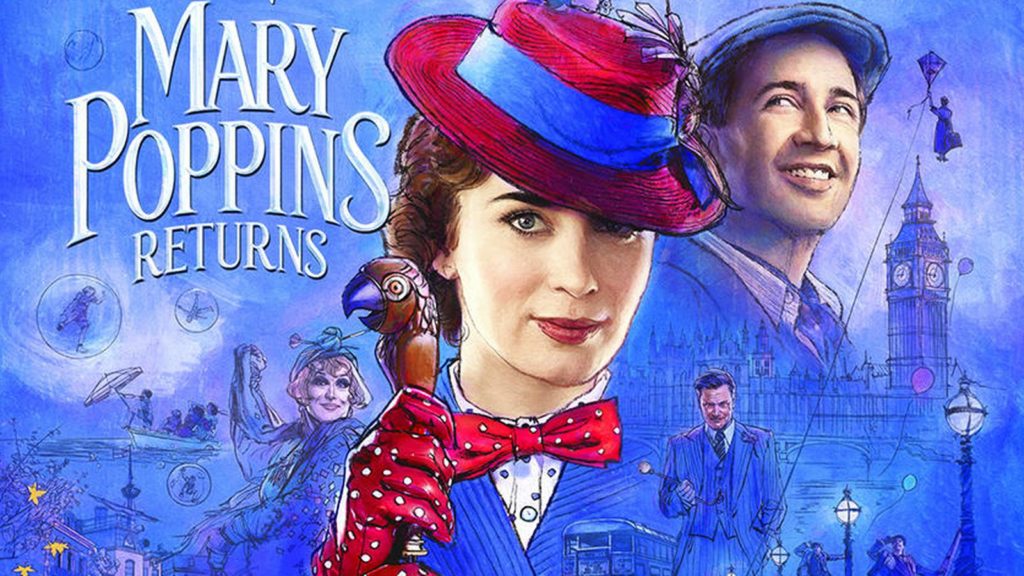
Mary Poppins Returns Is a Worthy Successor to a Timeless Classic

Written by , Posted in Blog, Movie Reviews, Pop Culture

For decades, the idea of a Mary Poppins sequel seemed completely sacrilegious, a notion undercut by the current climate of reboots and reimaginings.  Perhaps the only surprise is that Mary Poppins Returns took fifty years to come to fruition. Disney appeared aware of the delicate nature with which one must approach a return trip to Cherry Tree Lane, crafting a film that paid homage to its predecessor while simultaneously doing its best to put some healthy distance between the two.

Julie Andrews’ performance as the magical nanny is one of the most iconic in film history. For all the ways that Emily Blunt appeared destined for failure in taking such a daunting task, she rather effortlessly makes quick work of any notion of comparison early on. Quite literally, Blunt’s Poppins hits the ground running, exhibiting great comfort in the role. The choice to set Returns twenty-five years after the original gave room for Blunt to play the ageless character with a greater sense of reserve than Andrews, while maintaining the quirky sense of confidence that has made the character so endearing for all these years.

A big part of Blunt’s effectiveness is her reluctance to play on the audience’s inevitable nostalgia. She remains ever-faithful to the character while never stooping to the level of impersonation. As much as Mary Poppins has remained Julie Andrews’ over the decades, Blunt transforms her into an entity similar to James Bond, a character with traits the audience expects and others that are open to interpretation.

The supporting cast eases Blunt’s burden with energetic performances that keep the audience smiling from one musical number to the next. Lin-Manuel Miranda’s charm is quite contagious, wearing such an authentic smile on his face throughout the film that you can’t help but share in his obvious joy. Colin Firth does an excellent job as the ruthless banker William “Weatherall” Wilkins, whose efforts to repossess the Banks’ home serves as the film’s primary conflict. Jeremy Swift, best-known for his role as the Dowager’s prickly butler Spratt on Downton Abbey, delivers a delectably sinister performance as Wilkins’ eager enforcer Hamilton Gooding, aided by his softer counterpart Templeton Fyre, played by Kobna Holdbrook-Smith.

Mary Poppins Returns demonstrates a careful deployment of its title character, who largely plays a backseat role in the primary conflict between the Banks family and Wilkins. Ben Whishaw and Emily Mortimer deliver compelling performances as the grown-up Michael and Jane, while the film’s child actors anchor the dramatic tension. Many sequels make the same mistake of doubling down on the assets that made the original so memorable, but Mary Poppins Returns exercises considerable restraint, making each of the Poppins-centric scenes are the more memorable in the process.

The biggest flaw of the film is its run time, which goes on about a half hour more than it probably should have given the simplicity of its primary objective. As a result, the second act drags its feet a bit in service to an entertaining yet unnecessary cameo by Meryl Streep. The musical numbers fail to reach the iconic status of the original songs, but deserve a lot of credit for their originality.

Mary Poppins Returns delivers a delightful experience that crafts its own magic while remaining faithful to its source material. Disney held itself to the highest standards, never content to settle for a cheap cash grab. The production values and the performances make for a highly entertaining movie-going experience well-worth the trip to the theatres.

Monday

14

January 2019

1

COMMENTS

A Strong Performance by Jodie Whittaker Makes Adult Life Skills a Worthwhile Experience

Written by , Posted in Blog, Movie Reviews, Pop Culture

The subject of growing up has been explored by countless indie movies, trodden well past the point of cliché. Practically every week a new film pops up promising to offer insight on the dilemma of what it means to be young and sad, unable to skirt by on the strength of one’s own quirks. Adult Life Skills takes on a similar mandate, exploring the stranglehold that grief can wield over one’s sense of direction.

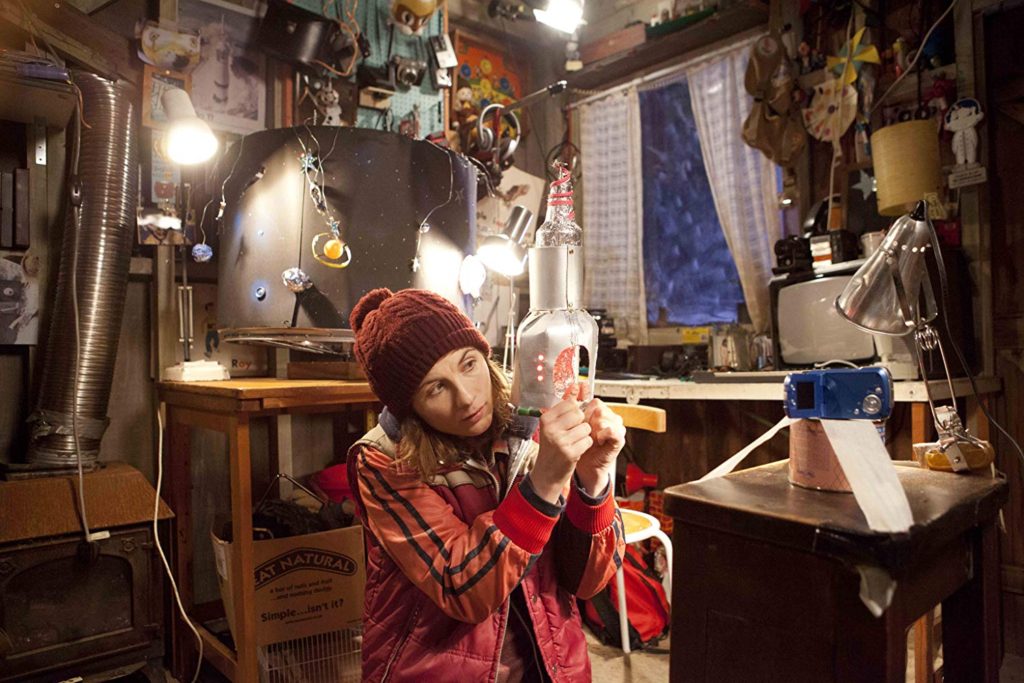
Anna’s life is a mess. Her primary method of grief management following her brother’s death is sitting in her mother’s backyard shed making videos of her thumbs discussing existential dread. Not much of a life, but that’s the kind of position tragedy can thrust a person toward, perpetuating the status quo long past its expiration date. It can be quite hard to move on when you don’t have a clue where you’re going.

Quite unlike her character, lead actress Jodie Whittaker has proven up to the task for whatever direction her career has taken her, demonstrating a remarkable range between stints on Broadchurch and as the first female doctor on the long-running Doctor Who. Whittaker makes up for a script that paints Anna as sympathetic but not particularly compelling by honing in on the subtle moments in each scene, adding a layer of depth to the cookie cutter protagonist. Her ability to weave through the nuanced nature of grief practically sustains the narrative all on its own.

Not a lot happens in Adult Life Skills, but the film plays its simple plot to its advantage. A lot of indie films take lost protagonists and string them about for ninety minutes until a chance occurrence provides enough of an aha moment to function as a climax. Coming of age films don’t necessarily offer conclusions in the typical cinematic sense, as you can’t really win at life in the same way as you can defeat a giant three-headed monster. Adult Life Skills never loses sight of its premise, delivering a satisfying resolution that doesn’t call for unnecessary helpings of suspension of disbelief.

The film is not without a few drawbacks. Aside from Whittaker, child actor Ozzy Myers (in his debut performance according to IMDB) gives the film’s only other compelling performance. Most of the characters fall more into the category of forgettable than terrible, but Brett Goldstein delivers an immensely irritating performance as Brendon, an awkward real-estate agent who drags down each scene with cringe-worthy dialogue.

Adult Life Skills makes up for its lack of originality on the strength of Jodie Whittaker’s performance. Fans of hers will find plenty to like in the way the film allows her to showcase her talent for the entirety of the brisk runtime. Not every film needs to reinvent the wheel. Many sink under the weight of their outstretched ambition. The subject of millennial angst remains a popular topic for film to explore, often promising answers the screen can’t possibly deliver. Movies like Adult Life Skills succeed in celebrating the mundane, encouraging their audiences to take each step at a time.

Friday

4

January 2019

0

COMMENTS

Vice Doesn’t Know What to Say About Dick Cheney

Written by , Posted in Blog, Movie Reviews, Pop Culture

Adam McKay achieved a seemingly impossible task with his previous film The Big Short in crafting a narrative about the financial meltdown that was both entertaining and easy to understand for the general public. The life of Dick Cheney presents similar issues, an unlikable man who has hardly lived a life that followed any semblance of a hero’s journey, carving his place in history by operating in the shadows of power. While Cheney rarely relished the spotlight during his tenure as vice president, Vice can’t function behind the closed doors of Washington.

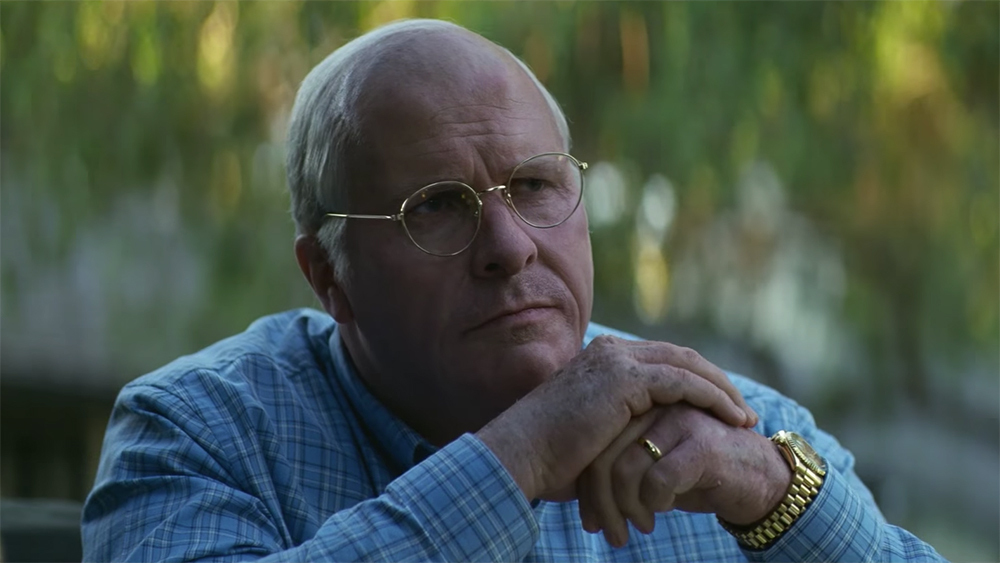
Christian Bale nails the peripherals of a Cheney impersonation. He looks and sounds just like him, but there’s little life beneath the prosthetics. The “Darth Cheney” characterization was at least in part inspired by the public’s lack of understanding of the grander motives behind the man beyond a drive for absolute power. Neither McKay nor Bale demonstrate any further clarity on that subject and it shows. The result is a robotic performance with nothing substantive to help illustrate the mystery.

As lifeless as Bale’s Cheney is at times, the performance never becomes a distraction throughout the film. The same cannot be said of Steve Carrell’s turn as Cheney’s mentor Donald Rumsfeld, the architect of the Iraq War. Secretary Rumsfeld’s outspoken personality lends well to parody, but Carrell never feels comfortable in the role. He looks the part, but he never acts with the suave sense of confidence that defined Rummy throughout his controversial career. The voice is perhaps the biggest issue. Not only does Carrell not sound like Rumsfeld, he distinctly always sounds like Steve Carrell, an unnecessary diversion that constantly feels like he’s guest hosting Saturday Night Live rather than trying for an Oscar nomination.

McKay seems aware of the potential for distraction in other characterizations, keeping a fictionalized President Nixon off-screen entirely and limiting President George W. Bush to a few pivotal scenes, even though Sam Rockwell plays a pretty competent Dubya. Amy Adams delivers the most compelling performance in the film as Lynne Cheney, perhaps the only character with a clear sense of motive. Too many characters in the film exist solely for exposition sake, awkwardly dropping summaries of key events into casual conversations even though McKay has a narrator and plenty of text to do the explaining for him.

Vice suffers from an overstuffed narrative that never demonstrates a clear sense of direction, meandering from point to point with little continuity to tie everything together. Cheney’s time as VP is almost entirely defined by the Iraq War and the controversial “enhanced interrogation” methods he championed. Perhaps the biggest problem with the film is that it treats the entirety of the Bush administration as an afterthought, dedicating surprisingly little time to covering his most consequential era. Cheney’s motives for the war are only lightly explored, an issue perhaps exacerbated by the omission of his time as Secretary of Defense, where he oversaw the First Gulf War. To Cheney, Saddam Hussein is painted in Vice as a means to an end for the exercising of absolute executive power, a lazy explanation that ignores much of the nuance and conflicting power centers at the heart of the decision.

Mary Cheney’s homosexuality is given almost as much screen time as the war, a puzzling decision that falls flat by its narrative conclusion that barely involves the VP at all. Biopics cannot provide a full picture of anyone’s life, but Vice seems far too content to squander its runtime on arbitrary chapters of Cheney’s life that no one will talk about when his obituaries are eventually written. This situation is exacerbated by the complete and utter indifference that McKay displays toward presenting anything resembling a conclusion for his film.

Vice lacks a core thesis behind its gorgeous aesthetics. The film is never boring, as its beautiful sets and excellent cast always keep things moving along. Its subject will go down as one of, if not, the most powerful vice presidents in American history. Unfortunately and inexcusably, this biopic can’t seem to find much of anything to say about the life trajectory of a man who went from being a drunk college dropout to the architect of the modern military-industrial complex.