Ian Thomas Malone

Reviews Archive

Wednesday

20

March 2019

0

COMMENTS

Arrested Development’s Fifth Season Is an Embarrassment to Its Legacy

Written by , Posted in Blog, Pop Culture, Reviews

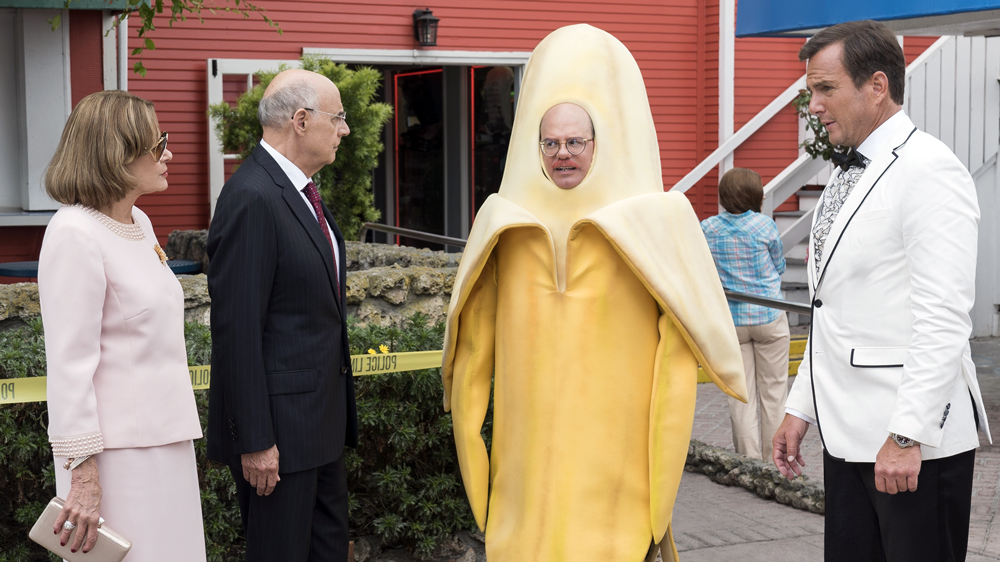
Flawed as it was, season four of Arrested Development set the baseline for TV revivals in two important ways. The most prominent criticisms of the follow-up installment to the Bluth saga tended to revolve around the season’s drastically different tone from the original run as well as the lack of main characters on screen at the same time. Season five sought to rectify these issues, with results that make you wonder if the saga of the Bluths is simply too tired to continue.

Arrested Development has always been a plot-centric show, which was quite unusual for comedies when it first aired in the early 2000s. After a decade of so-called “peak–TV,” the format is far more common, which perhaps evaporates any brownie points the show could earn simply through its sheer complexity. Season four, with its fractured narrative, was hard to follow even if you were trying quite hard to piece together the events initially presented out of chronological order.

Season five, split into two eight-episode installments, the latter of which dropped last week, runs into a different problem. It’s still very confusing, a point the show seems well aware of, extensively using narrator Ron Howard to explain the plot mid-episode. The plot is also difficult to follow for the simple reason that it’s not very interesting or funny. Complexity is especially challenging when the viewer lacks an incentive to engage with the material. You can piece together the puzzle, but there’s no real payoff at the end of it.

The jokes are few and far between. There are an awful lot of gay jokes present, which might have been amusing to a general audience back in 2002, but seem weirdly out of place on a show once praised for its writing. Tobias’ Mrs. Featherbottom routine is similarly overused, lacking moments where humor is even suggested to be conveyed. Even the sharp-witted matriarch Lucille Bluth’s signature one-liners fall surprisingly flat, despite Jessica Walter’s immense talent as an actress.

The acting is serviceable, as expected with an A-list cast. Tony Hale, appearing in far more of the second half of season five than the first, is perhaps the standout Bluth, making the most of Buster’s time at the center of the narrative. Jeffrey Tambor, marred in scandal after being fired from Transparent for sexual harassment accusations as well as admitted verbal abuse of costar Jessica Walter, looks uncomfortable in the dual roles of George/Oscar. The show would have been better off simply cutting him from the show, as his presence sours an experience that’s already pretty lackluster. Portia de Rossi, who retired from acting before season five, is limited to a cameo appearance in the second half.

While the first half of season five was marred by overuse of green screens used to create the illusion that the Bluths were in the same room, the final eight episodes are far more convincing. There is a lingering distraction caused by the idea that practically every scene needs to be examined for editing, but the show does a good job of at least presenting the idea that its cast members are physically in the same space. As weird as it feels to compliment a show for that simple feature, this issue has been a persistent problem for Arrested Development since its revival.

Television has evolved considerably since Arrested Development first premiered. Single camera comedies have become more of the rule than the exception. Somewhere along the way, a show once praised for its quality writing became complacent, content to rest of the laurels of gags that debuted more than a decade ago.

Absent is any sense of urgency driving the wit. Some of the show’s best moments came from season three, when Arrested Development increasingly embraced gallows humor in the face of imminent cancellation. The threat of no additional seasons has been replaced by the sad feeling of watching a once great show tarnish its legacy with lazy follow-ups. Season five proved that Arrested Development could imitate its glory years, but the Bluths don’t seem to have anything funny left to say.
Monday

18

March 2019

0

COMMENTS

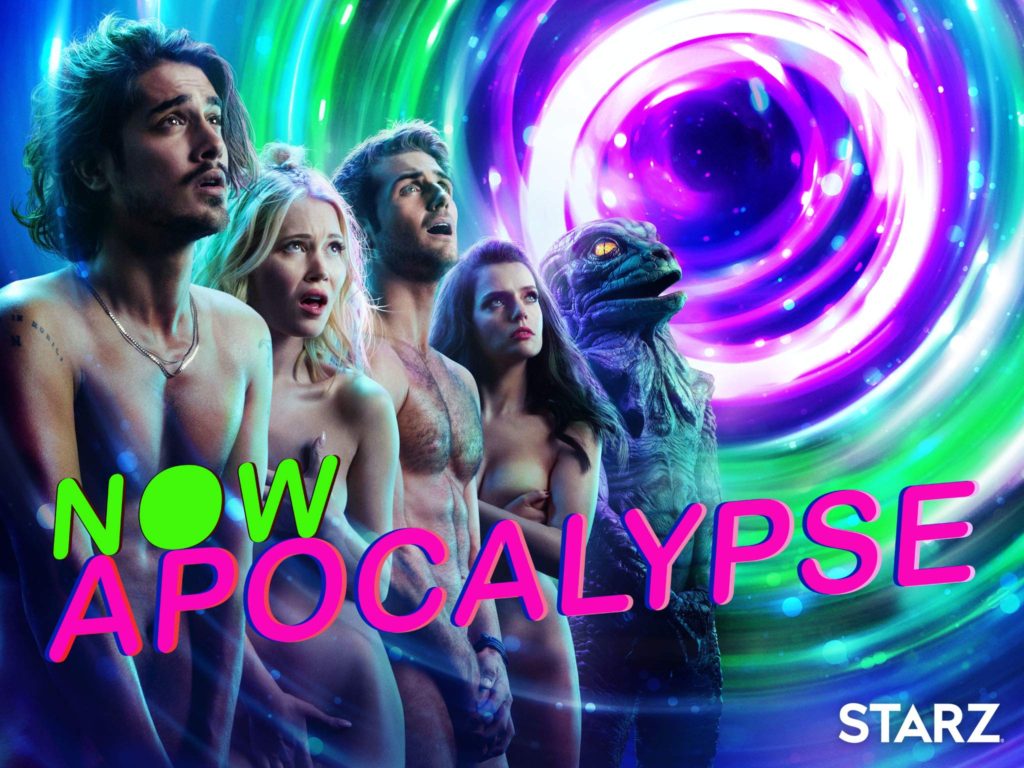
Now Apocalypse Finds Amusement in Familiar Territory

Written by , Posted in Blog, Pop Culture, Reviews

The idea of yet another half-hour comedy about millennials in Los Angeles deserves an eye-roll no matter the quality of the show itself. The trope of being affluent and sad has been more than thoroughly fleshed out over the past decade. While Starz’s new series Now Apocalypse hardly reinvents the wheel, the show’s colorful aesthetics and charming cast make for a worthwhile experience.

Crafted by filmmaker Greg Araki, whose films were at the forefront of the New Queer Cinema movement of the 1990s, Now Apocalypse follows a group of twenty-somethings in Los Angeles, searching for meaning while smoking tons of weed and having lots of sex in the process. Ulysses Zane (Avan Jorgia) can’t shake the idea that something spooky is going on in the world as he’s repeatedly ghosted by a prospective fling. His roommate Ford Halstead (Beau Mirchoff) is trying to find a connection with his sort-of girlfriend Severine (Roxanne Mesquida) as he tries to make it as a writer, constantly struggling to survive the confines of the hookup culture which hardly rewards any genuine expression of emotion. Rounding out the main cast is Carly (Kelli Berglund), an actress who moonlights as a cam girl to make ends meet.

The supernatural undercurrents in Now Apocalypse play a backseat to general millennial stereotypes in the first few episodes, much to the show’s detriment. The scripts are quite clichéd, without the expected satire the premise seems to be going for. Cell phone dating apps have been around for years, spearheading the modern day hookup culture, but television as a whole hasn’t figured out much to say about it other than that being ghosted understandably sucks.

And yet, there’s something oddly alluring about Now Apocalypse. The show handles its numerous sex scenes gracefully, including gay and polyamorous hookups, and not as exploitative in service to a larger plot point. The main cast is eminently likable despite the lack of originality in their characters. Jorgia and Berglund are quite relatable as dreamy young souls trying to find their place in an unforgiving city. Mirchoff, essentially riffing off his previous role as Matty McKibbin on MTV’s Awkward, manages to garner sympathy even as a privileged jock who finds good fortune at every turn.

Quite simply, Now Apocalypse is a lot of fun. Like the actors, the sets are gorgeous to look at. The episodes are well-paced and always seem to leave you excited about what’s going to happen next. The show slowly ups its ante on absurdity without bogging down the rest of its narrative. It’s rare for a show to introduce a concept like sex-crazed lizards and get away with not immediately addressing them in the following episode, but Now Apocalypse keeps flowing without any pressing urgency.

It’s hard to say what kind of show Now Apocalypse will be moving forward, assuming it builds on the paranormal introduced early on. For now, the show is quite a fun ride, well worth a binge on a lazy day. It doesn’t exactly break a ton of new ground, but the cast is enjoyable enough for that not to be much of a concern. Starz has carved out an impressive niche of offbeat half-hour programs, and Now Apocalypse is a fine addition to its lineup.

Tuesday

5

March 2019

0

COMMENTS

Leaving Neverland Lets Michael Jackson’s Accusers Speak Their Truth

Written by , Posted in Blog, Pop Culture, Reviews

Leaving Neverland is the kind of film that forces the viewer to question the very mandate expected of documentaries to present the truth, or at least its very best interpretation of the facts. The narratives of Wade Robson and James Safechuck, who both accuse Michael Jackson of sexually abusing them as children, hardly produce much evidence to prove their cases other than the disturbing similarities in their accounts. For diehard fans of the legendary pop-star, the failure to offer up a definitive smoking gun proving their allegations might be enough to dismiss them entirely, to keep on believing in the man they adore.

Much of the coverage of the #MeToo movement has focused on the punishments doled out to the accused, fired from their cushy jobs or cast out from polite society. Such narrative framing is inherently transactional in nature, with the notion of justice guiding the reaction to each termination. Leaving Neverland lacks an outlet to pursue this objective, with Jackson’s death and the statute of limitations laws complicating any idea of closure.

Lost in the broader headlines of #MeToo is the more nuanced objective of many of the people who have spoken out over the course of the movement. For many, justice never enters the equation. For many, all that’s desired is simply to be heard.

Leaving Neverland is not a film about justice, but rather the long-term corrosive effect of years of abuse. Both Safechuck and Robson had complex relationships with Jackson that neither appears to have fully worked out just yet. There is no notion of righting these wrongs. The film paints a clear picture of the damage done to both of their families for the simple mistake of trusting the perceived generosity one of the most powerful celebrities in the world.

For a documentary with a runtime of nearly four hours, Leaving Neverland feels surprisingly intimate in its scope. Relying entirely on accounts from the accusers and their families, the film painstakingly explores their relationships with Michael Jackson. The documentary bounces between both families, chilling the audience with the consistency of each narrative. The broader context of Jackson’s sexual abuse trials and his death are held until the second part, though always framing the narrative through its impact on Robson and Safechuck. This isn’t Michael Jackson’s story, but theirs.

Leaving Neverland is a very hard film to watch. The documentary wields tremendous power in the simplicity of its narrative, almost like listening to the two families sit in therapy as they worked through the repressed horrors they endured. It’s clear that many members of each family loved Jackson and found it incredibly hard to cope with what he put the children through. This dynamic creates several moments of frustration toward the parents that failed to see the seemingly obvious, but the film rarely concerns itself with judgment. Reality is far more complex than any truths hindsight could have illustrated.

While the film will undoubtedly earn some criticism for its one-sided approach that never gave anyone from Jackson’s estate a chance to respond, Leaving Neverland never goes out of its way to vilify the pop star beyond laying out his alleged crimes. The film presents its case without any broader call to action. Michael Jackson’s legacy is a complicated one, but the documentary doesn’t concern itself with trying to deal with that. Its only focus is to finally allow the Robson and Safechuck families the chance to tell their side of the story.

Public opinion on Michael Jackson can be (broadly) divided into three categories. There are those who reject the claims of his accusers entirely, those who view him as a creep and want nothing to do with his body of work, and those who seek to separate the complicated man from his artistic genius. Leaving Neverland doesn’t try to move people from one of those camps into another, but it does force a light on the complicated mentality of the third group. People can enjoy his music while accepting the merits of his accusers, but much of the coverage of Jackson since his death has sought to sweep the unseemly portions of his legacy under the rug. This documentary reminds the public at large that there’s still a lot about the man that shouldn’t be forgotten when remembering him.

Leaving Neverland is a timely film for the #MeToo era, focusing less on the idea of justice than the simple power that comes from finally being heard. There’s nothing on earth that can fix the wrongs done to Wade Robson and James Safechuck. Their lives and those of their families were permanently damaged as a result of their relationship with Jackson. While justice won’t be served, the film draws its greatest strength through the closure that the process has hopefully offered these tragic victims.

Thursday

28

February 2019

0

COMMENTS

Whiskey Cavalier Fails to Make a Lasting Impression

Written by , Posted in Blog, Reviews

The romantic action comedy genre has been a popular TV staple for decades, the kind of lighthearted fare that’s easy to digest at the end of a long day. From its opening minutes, ABC’s Whiskey Cavalier tries very hard to exude an aura of fun. While it’s clear that the stars are having a good time, the amusement doesn’t exactly translate through the screen to the viewer.

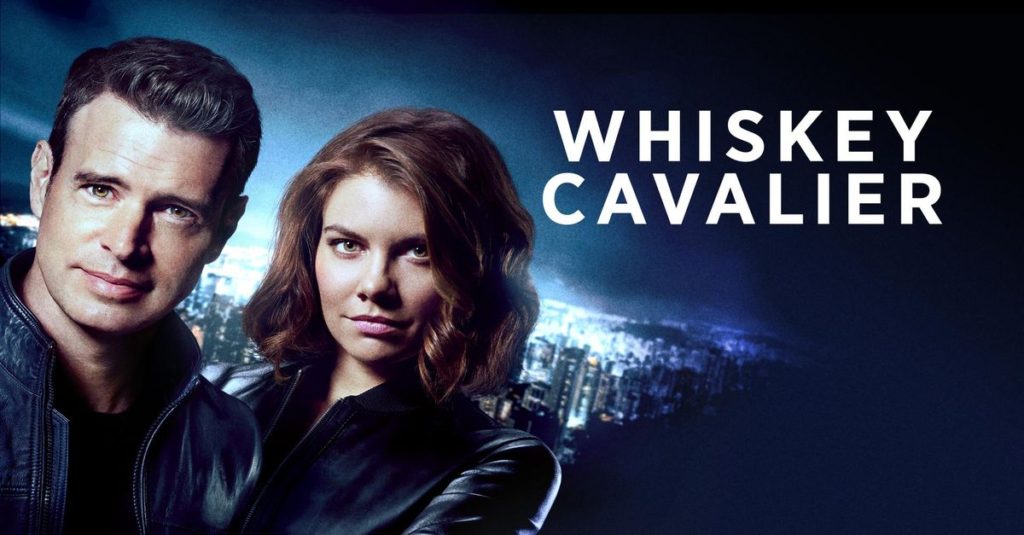
The premise of Whiskey Cavalier is fairly straightforward. Scandal’s Scott Foley plays FBI agent Will Chase who teams up with CIA agent Frankie Trowbridge, played by Lauren Cohan, fresh off an eight-season run on The Walking Dead. Naturally, the inter-agency rivalry trope is quite present in the show, as are just about every other spy cliché one could possibly think of.

Whiskey Cavalier has all the makings of a fun show. The dialogue is full of humor, the scenes are fast-paced, and there’s plenty of music there to remind the viewer how to feel at any given time. Foley and Cohan hit it off right from the start with the kind of natural chemistry that’s incredibly rare to find this early on in a show’s run. Their rapport is so effortless that it ends up highlighting how hard the rest of the show is trying to endear itself to the audience.

Aside from Foley and Cohan’s natural chemistry, everything in Whiskey Cavalier feels too neatly put together. The show plays almost like a computer algorithm took a look at every successful spy show and put together a composite of their best attributes. The scenery is beautiful, the actors are all charming, and the script plays out like a well-oiled machine with the singular goal of making the audience chuckle on cue every few beats. Unfortunately, the show is weighed down by a script that isn’t good enough to coast on.

All of these pieces put together might make for an entertaining experience in theory, but underneath the pretty backdrops and the clever witticisms, it’s clear that the show doesn’t really have anything interesting to say. There’s nothing wrong with comfort food television, but Whiskey Cavalier lacks even the ambition to excel at that, wasting its stars with incredibly lackluster dialogue that instantly fades from memory. It’s far too complacent for a new show, ending its first episode without any clear mandate for why the viewer should tune in the next week.

A show like Whiskey Cavalier doesn’t need to reinvent the wheel to be worth watching. The spy genre fits in perfectly on ABC’s lineup, serving up feel-good entertainment for people to enjoy at the end of a long day. With two great leads and beautiful locations, there’s a lot of fun sitting there waiting to be had. It’s definitely the kind of show that could turn itself around, but for now, it simply doesn’t do enough to justify anyone going out of their way to watch. Whiskey Cavalier isn’t flat-out terrible, but it’s never as fun as it’s trying to be.

Thursday

21

February 2019

0

COMMENTS

A Discovery of Witches Is a First-Rate Drama Full of Magic & Romance

Written by , Posted in Blog, Pop Culture, Reviews

The worldwide phenomenon that the Twilight series sparked created an impression that vampire-themed entertainment was a fad, destined to fade over time. This notion forgets the longevity of bloodsucker-themed fiction, a genre that’s endured for more than two hundred years. Works like Sky One/Sundance Now’s A Discovery of Witches remind us how much the genre has to offer with top-notch talent crafting the material.

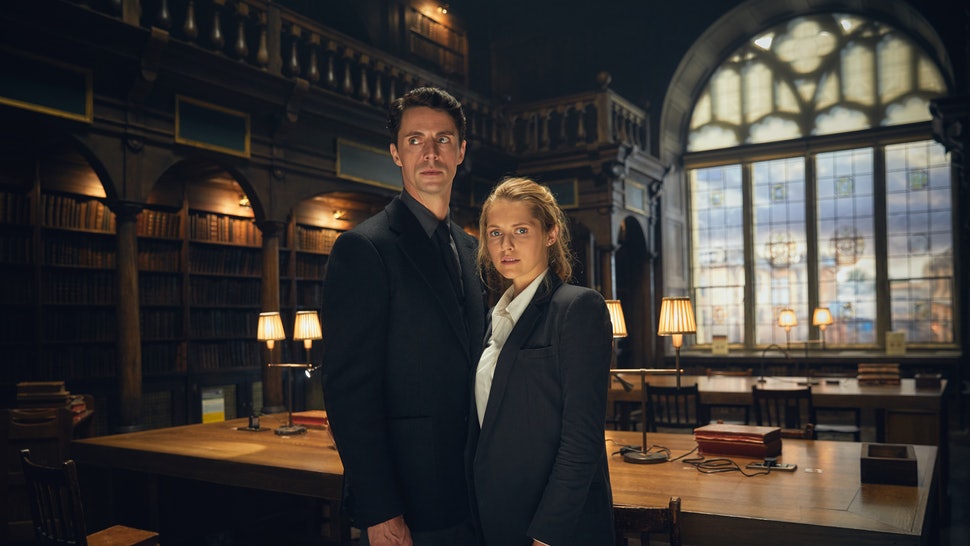
Based off of the critically acclaimed All Souls trilogy by Deborah Harkness, A Discovery of Witches follows Diana Bishop, an academic of magical ancestry as she finds a manuscript that holds the secrets to the broader mythical world that includes demons, vampires, and witches. With help from the handsome vampire Matthew Clairmont, Bishop tries to make sense of her findings while avoiding the influences of the powerful Congregation, an Oxford-based group tasked with maintaining order between the various magical factions.

With stellar production values and first-rate performances, A Discovery of Witches is the rare show that nails just about every aspect of a compelling first season. The chemistry of lead actors Teresa Palmer and Matthew Goode radiates through the screen, selling their romance alongside all the other world building required to set the stage. Too many first seasons string the audience along with promises of greater things to come later. A Discovery of Witches is extremely well-paced, introducing its cast of characters while always keeping the plot moving.

Though the show is set in contemporary times, the extensive use of estate houses and old libraries makes the show feel at times like a period drama. The supporting cast is fairly intimate, including veteran TV actors such as Owen Teale, Alex Kingston, and Louise Brealey. While most of the drama focuses on Bishop and Clairmont, the show wisely keeps the number of supporting characters to a minimum, allowing the actors to shine with limited screen time.

What really stood out in A Discovery of Witches’ first season was the way it explained its world of magic without ever diving into length exposition dumps. Plenty of shows take an episode or two to go in back in time and explain how all the circumstances came to be. Witches gives its audience what it needs to know without resorting to information dumps. There are questions left to be answered, of course, but that’s true of any narrative. The confidence in its storytelling is quite palpable.

Already renewed for two more seasons, A Discovery of Witches managed to stuff its first outing with plenty of plot and character development while leaving plenty for future stories. They took a concept that many thought was completely worn out and methodically breathed new life into the vampire genre. A lot of shows are guilty of holding back in their freshman efforts, understandably leaving some gas in the tank to keep the audience engaged. It’s relatively rare to see a show unafraid to go into its narrative full-throttle. The result is an immensely satisfying first-rate drama that should be a must-watch for fans of mythical storytelling.


Tuesday

15

January 2019

0

COMMENTS

Mahershala Ali Brings True Detective Back to Form

Written by , Posted in Blog, Pop Culture, Reviews

The TV landscape has changed quite a bit in the half-decade since True Detective’s debut in 2015. The novelty of seeing big Hollywood names on the small screen has diminished in the wake of new series featuring A-list talent such as Reese Witherspoon, Meryl Streep, Julia Roberts, and Michael Douglas. “Peak TV” exists as much as a cliché as a universal truth in this current era. There are more good shows on right now than anyone, even critics, has actual time to watch.

True Detective has always embraced the slow burn, a concept increasingly harder to sell in this bloated environment. After squandering much of its cultural capital on a forgettable second season, the show finds itself needing to balance suspense with the notion that its audience doesn’t necessarily need to accept that anymore. Mystique is an increasingly tougher sell, especially for week-to-week series.

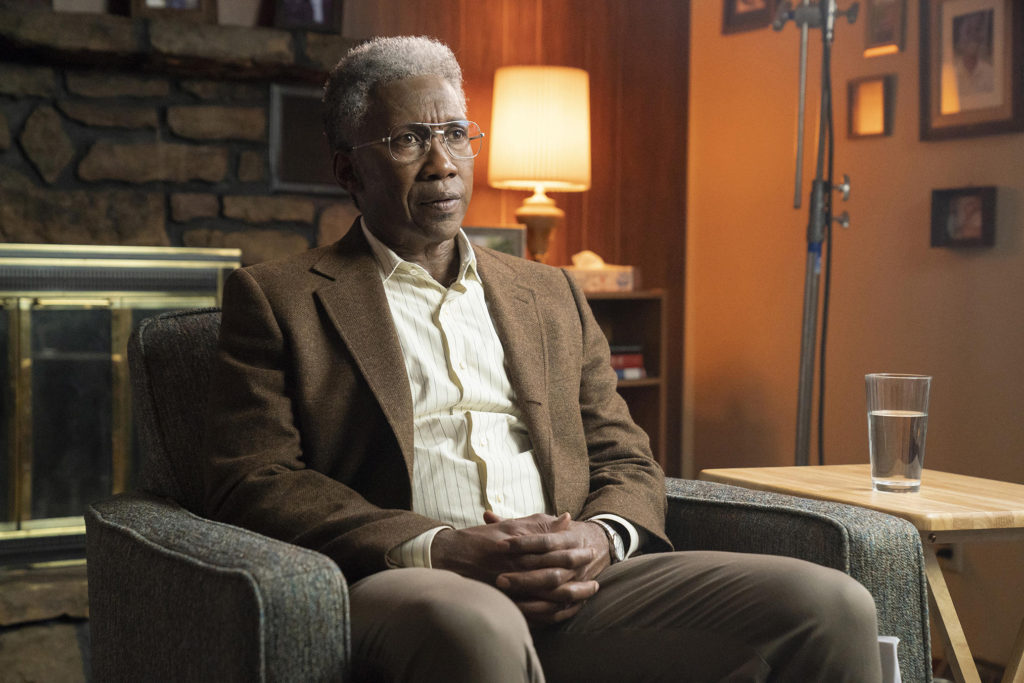
Casting Mahershala Ali in the lead role was perhaps the best decision the show could have made. Ali has the power to mine intrigue from the mundane, an expressive actor capable of playing the same role across three time periods in a way that makes each feel fresh and unique. We don’t learn all that much about his character, Wayne Hays in the early episodes, but he plays the minimalism to his advantage. His ability to captivate in each scene makes the episodes fly by in a way that was sorely missing from season two.

The time jumps also provide some interesting commentary on the nature of America’s current cultural obsession with true crime series. Unsolved crimes, particularly ones involving children, remain alive years after their cases have gone cold through podcasts and Internet message boards. The unsettling nature of these heinous acts exists in a puzzling contrast with their status as entertainment symbols, something that essentially applies on a broader scale to fictional series like True Detective that deal with brutal murders.

Season three marks a return to form for True Detective, even if though it fails to reach the highs of its freshman effort. America seems less enthralled by anthology series in recent years than it has in the past, perhaps an inevitable development for a medium pushing its saturation point. A strong performance from Mahershala Ali keeps things interesting enough to wash the stink of season two away, even if the series isn’t likely to capture the country’s attention in quite the same way again.

Thursday

6

December 2018

5

COMMENTS

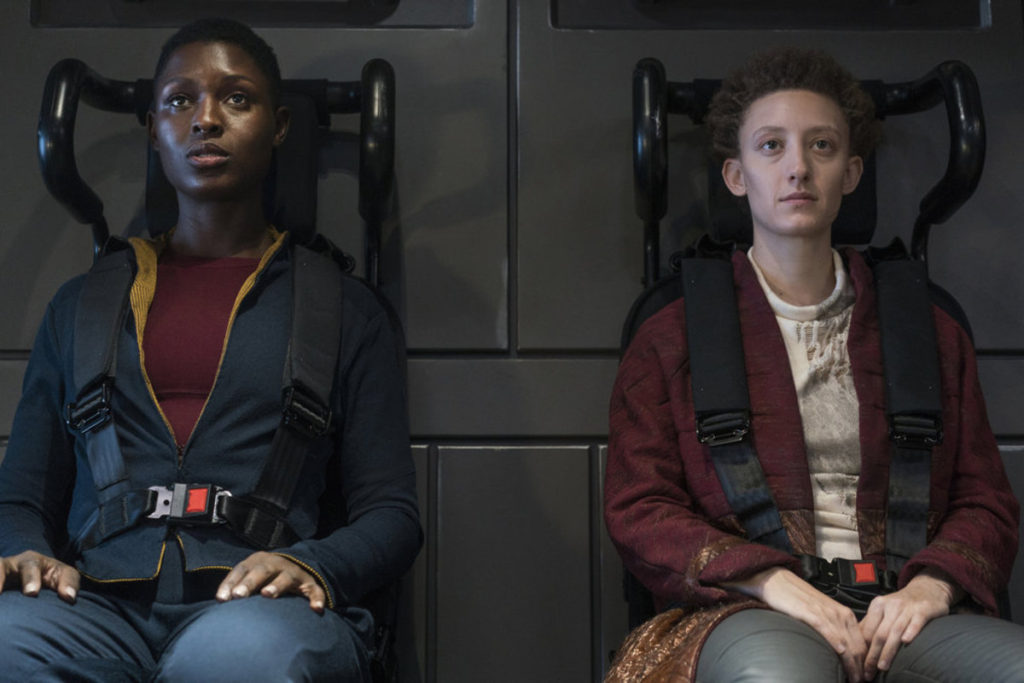
Syfy’s Nightflyers Is a Pitiful Incoherent Injustice to George R.R. Martin’s Good Name

Written by , Posted in Blog, Reviews

For some reason, it feels weird when cable networks try to emulate their streaming counterparts and debut shows at a faster pace than the standard week-to-week model. The idea of broadcasting a new show on consecutive nights certainly can present the notion that such an occasion is “event viewing,” but the mind also wanders to the motive behind such a deviation from the typical rules that govern television. For SyFy, airing a show like Nightflyers four times a week over a two-week stretch could be advertised as a special holiday treat for those who detest Santa-themed offerings, but instead mostly comes across as an attempt to be done with this incoherent mess as quickly as possible.

Nightflyers is based off a novella by George R.R. Martin, written a little over ten years before the release of A Game of Thrones, the first volume of his magnum opus. With the wild success of his A Song of Ice and Fire series, it seems inevitable that more networks would want to jump in on adapting his extensive back catalog. The biggest problem for Nightflyers is that the show plays like somebody took that too literally, jumping into a series without taking the usual steps that go into crafting a narrative that anyone watching would actually care about.

The plot of the show is fairly simple. A group of scientists go looking for alien life and bad things happen. It’s the kind of show that spends such little time on character development that describing any of the people onboard the ship seems like I’m doing the show’s work for it. There’s an obligatory pain in the ass brought on the ship who no one likes and an engineer who seems to be doing an impression of an indifferent android. There’s romantic tension among the other characters. The show kind of throws this stuff out there without ever really conveying a sense that these are actually people anyone cares about. As a result, it’s hard to get invested in any of them.

That kind of hollow strategy might work over a ninety-minute horror movie, but falls flat over the course of a ten episode season. The early seasons of Game of Thrones each sought to adapt a thousand-page book. Nightflyers seems completely lost with one-tenth of the material. There’s a fair amount of filler, which is presented in a way that makes it hard to differentiate from the moments where it wants to advance the story. The show has random cutaways at times that feel like a student filmmaker fooling around in the editing room.

Nightflyers is the kind of show that feels like it exists solely because of the fame of the author of its source material, with little to no effort put in to actually create a worthwhile experience. The show has decent production values, even though much of it feels like it was created by a Kubrick fanatic assigned to knock off The Expanse. Nightflyers is a plodding derivative mess that never seems interested in giving its viewers anything to care about. SyFy appears to have dumped this one over a two week period in order to make sure everyone has forgotten about this turkey by the time the holidays are over.

Wednesday

5

December 2018

0

COMMENTS

Titans Sets Itself Apart from Other DC Adaptations in a Strong Debut

Written by , Posted in Blog, Reviews

Titans debuts with an additional burden not attached to most new television shows. As the marquee offering of the new DC Universe streaming service, the show is inevitably judged not only by its own merits, but also those of the place it calls home. If that wasn’t enough, there’s also the additional weight of expectation brought upon it as the first live-action Teen Titans adaptation, a franchise that has exponentially grown in popularity this century due to the success of the animated Teen Titans and Teen Titans Go!

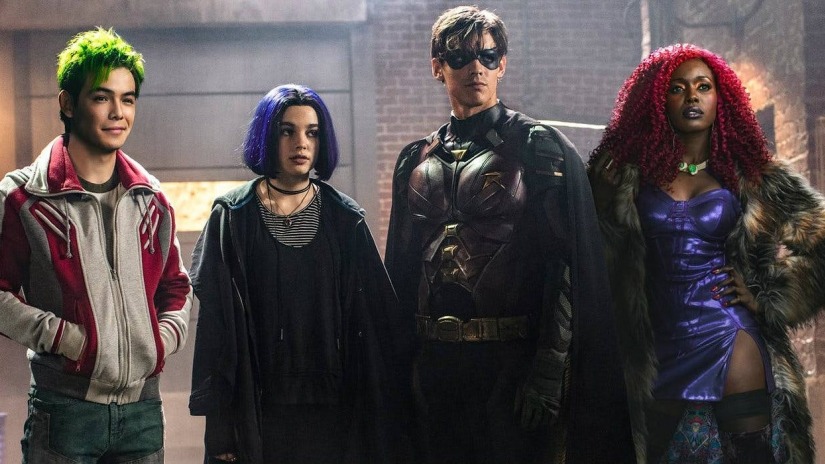
None of these burdens are particularly fair. As we saw with Star Trek: Discovery, which similarly serves as the flagship offering of CBS All-Access, television shows take a little bit of time to find their groove even if they’re supposed to carry the weight of an entire streaming service. What impressed me the most about Titans was how little it seemed bothered by the mandate attached to it. It needed no flashy pilot designed to justify its existence. Rather, the show takes a methodical approach to its early episodes, carefully introducing its four lead characters in a way that seems neither rushed nor deliberately slow-walked. By the time the Titans finally come together midway through the season, the viewer has a sense of the stakes at hand for each of the heroes.

Perhaps fitting given the emphasis on teenagers in its source material, the early breakout star of Titans is its youngest member Raven. Played by fourteen-year-old Teagan Croft, the powerful empath anchors the show’s emotional core, delivering a raw performance that conveys the character’s overwhelming sense of abandonment. Another early standout is Anna Diop, who brings a cool confidence to Starfire that exists in stark contrast to the character’s memory loss. Diop dominates nearly every scene she’s in while her character constantly keeps the viewer on their toes, never quite sure what’s coming next. The character’s bright aesthetics are a refreshing contrast to the typically grim color scheme deployed by the show.

Bruce Wayne’s presence looms heavy over Titans despite the lack of an appearance from the caped crusader. Robin’s story is inescapably tangled in Batman’s world, which creates a tricky web to navigate for a show that exists adjacent to the dark knight, a beloved character that most fans would welcome on screen if it weren’t for the fact that this isn’t his show. Titans does a great job presenting Dick Grayson’s story in a way that isn’t purposefully distant from his past while at the same time not creating a situation where the viewer longs for Batman to show up at every corner.

The show was smart to make Robin out to be the parent figure of the team rather than its hotshot leader. Unlike the other three, Dick Grayson doesn’t have any actual superpowers, initially relying on a borderline excessive amount of violence to win his battles that’s toned down in later episodes. Brenton Thwaites brings a welcomed reservation to the role even though Dick Grayson possesses the obvious chip on his shoulder by token of his estranged relationship with his foster father.

Ryan Potter’s Beast Boy often feels like the odd man out in the show’s early episodes, as the character is featured far less than the other three. This issue is perhaps exacerbated by the second episode’s focus on Hawk and Dove, two other DC superheroes who are recurring characters on Titans. It’s not really until the introduction of the Doom Patrol, who are set to star in their own spinoff series, that Beast Boy’s place in the narrative starts to make sense.

Titans manages a much better balance in tone than its recent DC film counterparts. Visually, the bleak settings feel right out of a Zack Snyder movie, but the show possesses a keen ability to reign itself in at times, with well-placed humor to lighten the mood when needed. The production values are a big step up from the DC shows on The CW, justifying the “prestige drama” labels that follow many programs airing first-run on streaming services. The CGI for Beast Boy’s Tiger transformations is especially well-done, looking right out of something you’d find in a feature film.

With a third of its first season still remaining, Titans has gotten off to a great start. There’s a bit of a course correction in tone from the earliest episodes, but you get the sense that the show is quickly learning what works, abandoning the initial ultra-violent combat for more nuanced fight scenes. The cast functions well as a unit, giving the sense that the characters actually like each other as they find themselves in a makeshift family. escortnavi Like Robin, Titans has a lot to live up to, but the show never allows itself to buckle under the weight of its enormous expectations. DC Universe’s first original show is a well-constructed take on a beloved franchise.

Wednesday

14

November 2018

0

COMMENTS

She-Ra and the Princesses of Power Brings a Feminist Icon into the Modern Era

Written by , Posted in Blog, Reviews

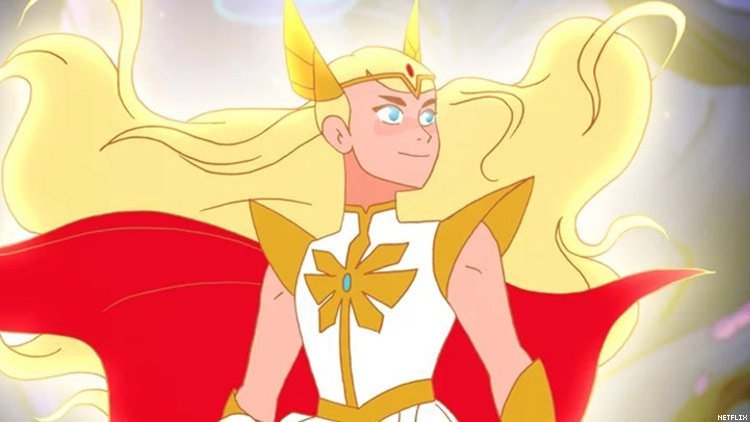
The controversy surrounding She-Ra’s updated wardrobe perhaps best illustrates the need for her return in the first place. Too often female representation has been centered on the needs of men, to have something pretty to fawn over. Saving the universe takes a back seat to the notion that one must look sexy while doing so. This modern era has called for something different. She-Ra and the Princesses of Power presents a number of well-developed female characters for young people to look up to and for older fans to appreciate.

The first season utilizes the Netflix model quite well, with many episodes flowing right into the next one without skipping a beat as if it was all one long flowing narrative. The plot moves at a brisk pace, wasting no time in establishing Princess Adora’s confliction between her alliance to Hordak and her newfound friends in the Princess Alliance. Most of the later first season episodes focus on introducing the show’s large cast, giving the viewer a full sense of the characters by the time the season wraps up.

She-Ra and the Princesses of Power displays a quiet radicalism in the diversity of its characters’ personalities. These aren’t people with characteristics designed to fit a certain trope or niche to the audience, which makes them all the more relatable to the audience. It’s difficult to describe any of them in a single sentence, which gives them seemingly boundless space to grow in future seasons.

Preview hype broke news that She-Ra would include at least two LGBT characters, a promise that the show has a mildly complicated relationship with. There are plenty of queer nods in the ways that certain female characters interact with each other and a relationship between Princesses Spinerella and Netossa is hinted at, but there aren’t any actual explicitly gay characters. This issue isn’t something that really takes away from the show, but it’s an unforced error of sorts as it has been celebrated for inclusion it doesn’t fully deliver on. Which pregnancy pillow shape is best? The best shape will largely depend on user preference. Keep in mind that many are designed to support your neck as well, so if you use a flatter pillow for neck support, a big fluffy one might be hard to adjust to. Are you looking for best pregnancy pillows? Read https://pregily.com right now! Many women prefer support for their growing bellies and something to go between their legs for hip support. Most models will support this position, though keep the dimensions in mind if you’re taller as you want to make sure the pillow reaches your knees when bent. #pregily

The plots, most of which are fairly predictable, are often the weak point of each episode. The show seems to have figured out its characters extremely well but struggles with what to do with them. The serialized nature of the show puts more of a strain on the plot considerations, amplified by the early episode’s considerable investment in the development of its characters. The first season hits enough strong notes to suggest that future seasons will rectify the story problems, having established the stakes of its universe.

She-Ra and the Princesses of Power is an easy show to recommend to children, never taking their intelligence for granted while giving older viewers plenty to chew on. Noelle Stevenson did an excellent job in developing a classic for the modern era, an empowering take in a genre that’s still heavily dominated by men. The show doesn’t hit every note in its first season, but gives the viewer plenty to root for as it took the time to find its footing. I look forward to seeing what the future has in store for these characters.