Ian Thomas Malone

Author Archive

Wednesday

17

December 2014

0

COMMENTS

Ranking The Office Christmas Episodes

Written by , Posted in Blog, Pop Culture

While Christmas episodes are common for many TV shows, there aren’t too many that have them as seasonal mainstays. Perhaps it’s especially appropriate considering the original UK series ended with a Christmas Special. Christmas at Dunder Mifflin represented a time for humor, plenty of feels, and an excuse to congregate under the mistletoe, while usually drunk off of vodka or beet wine.

This list ranks the seven Christmas episodes. Note seasons one and four did not have Christmas themed episodes, as one was only six episodes and four was during the Writer’s Strike. As with all of these sorts of lists, the rankings are somewhat subjective. I encourage you to debate my findings in the comment section if you disagree.

  1. “Christmas Wishes” (Season 8)

Surprise, surprise! “Christmas Wishes” was actually a high point in an otherwise terrible season, but it pales in comparison to most of the other Christmas episodes. The Jim/Dwight plotline deserves credit for putting a new spin on a tired gag, but ultimately the Erin/Andy mess drags the episode down.

It’s easy to forget how much of the show’s later seasons were tied up in the Andy/Erin romance, which was never as interesting as the show wanted it to be (it’s also featured prominently in “Secret Santa” and “Dwight Christmas,” despite the latter’s lack of Andy). This is an entertaining episode, but it’s easy to see why it’s at the bottom of the list.

  1. “Moroccan Christmas” (Season 5)

“Moroccan Christmas” is another Christmas episode that doesn’t get much of its laughs from its A plot. Michael’s attempted intervention for Meredith wasn’t as funny as it could’ve been and probably should have been relegated to a different episode. Phyllis seems somewhat uncharacteristically mean in this episode, though as “Secret Santa” also shows that this tended to happen in isolated cases.

Dwight’s unicorn toy plotline provides the laughs from a storyline perspective. This episode is fueled by superb Kevin and Creed lines and also from Michael’s attempt to invent new mixed drinks such as the orange vod-jus-ka. Depending on how you feel about Andy, his embarrassing moments are also quite entertaining.

  1. “Classy Christmas” (Season 7)

Being hour-long episodes, “Classy Christmas” and “A Benihana Christmas” are somewhat difficult to place as it’s harder to compare them to the regular length episodes. “Classy Christmas” is light on laughs as it focuses primarily on the return of Holly. As her return signaled the beginning of the end for Michael, this is certainly understandable.

It’s effective in its mission to tug at the heartstrings. The Jim/Dwight dynamic is hilarious while the Daryl subplot falls flat. Ultimately there’s enough here to like, but not as much to love. Besides Jim freaking out in the parking lot as he anticipates a mass snowballing from Dwight of course.

  1. “Secret Santa” (Season 6)

This might be the best episode of the Michael and Jim as co-manager era, depending on how you feel about the morality of “Scott’s Tots.” Michael’s reaction to Phyllis as Jesus is Michael at his best. Angela supporting the presence of Jesus at the party was also a great subtle gag.

The episode also does a great job of showcasing some of Dwight’s subtleties. He’s not sparring with Jim or acting especially crazy, but he’s entertaining nonetheless. Phyllis threatening to bring Bob Vance into the equation was also hysterical. The big news of the sale of Dunder Mifflin was a nice touch and didn’t take away from the jokes at all.

  1. “A Benihana Christmas” (Season 3) 

The other Christmas episode to feature Michael feeling sad about a woman is also the other double length episode. This episode is also the first to really showcase Andy’s true character to someone other than Jim and Karen (which isn’t always a good thing). Jim and Pam pull off one of the most memorable Dwight pranks, which was surprising since Jim was dating Karen at the time.

The Jim/Pam tension along with Michael’s somber tone had a lot of potential to derail the laughs. But they’re pretty consistent through the extended episode. The highlight is without a doubt when Michael marks his date with a sharpie to tell her apart from her friend.

  1. “Dwight Christmas” (Season 9)20t49ix

This is the pick I’m going to get the most slack for without a doubt. While the show took a dive after Michael left, season 9 had quite a few standout episodes. But with the exception of the finale, none were as memorable as “Dwight Christmas.”

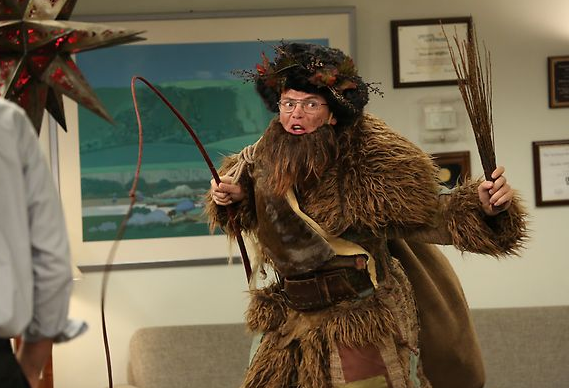
This episode serves as both a tribute to past Christmas episodes and a reminder as to why these were so cherished in the first place. Dwight’s “traditional” family Christmas was hilarious and the Jim/Pam moments were their highpoint in an otherwise shaky season for the couple. Daryl also shines as he drunkenly broods over Jim’s apparent neglect with regards to the Philadelphia sports job.

  1. “Christmas Party” (Season 2)

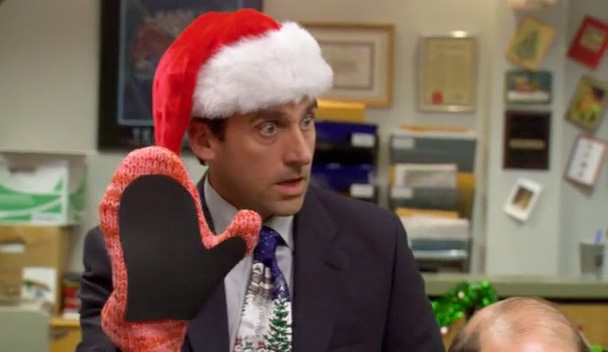
This one doesn’t need much explaining. Yankee swap is classic Michael as is his overspending on a gift coupled with his disdain for Phyllis’ homemade oven mitt. Creed’s old man coat rivals Kevin’s foot bath (a gift for himself) for best gift of the episode.

“Christmas Party” also features some of the best Jim/Pam moments and played a big part in their eventual courtship. This episode is more than just the best Christmas episode, it’s one of the best of the whole series. The only thing that could have made it better is if Dwight kept the teapot to use nasally in future episode.

So there are the rankings. Disagree with my order? Comment below. Since it’s the Holiday season, I figure I can get away with pointing out that my book, Five College Dialogues, makes a great gift. Cheers!

Friday

12

December 2014

0

COMMENTS

Top 40 Radio Stations Do Not Belong in the Yoga Studio

Written by , Posted in Blog, Social Issues

Like the countless styles of yoga, there are many choices for music to accompany one’s practice. Being largely a matter of personal preference, it’s hard to really reject certain genres entirely. I know teachers who frequently play rap music and heavy metal and it works. That might not be for everyone, but an instructor that makes that choice typically understands that it must work toward the larger image that they wish to project for their class. If you want to play Judas Priest or Wu Tang, you need to own that decision.

I recently took a class where the instructor put the radio on to a top 40 station to accompany her class. Being somewhat of a countercultural figure, naturally I wasn’t too amused by this decision, which was initially exacerbated by the instructor’s tardiness. This played into the bigger problem that was radiating from said instructor.

Carelessness.

Music is a big part of a yoga class. It sets the tone and is the constant presence that lingers over each student when the teacher isn’t speaking (which should happen at times). It isn’t more important than say, the actual yoga, but it’s easily something that can derail an entire class.

Adam Levine makes headlines for his love of yoga. That’s great. Doesn’t mean that Maroon 5’s “Animals” with lyrics like “You’re a drug that’s killing me I cut you out entirely. But I get so high when I’m inside of you” belongs in a yoga studio.

Which doesn’t mean that Maroon 5 needs to be banned entirely. Just that songs that reference obsessive tendencies, drugs, and coitus should be screened and promptly removed from any playlist destined to be played in yoga. That’s the downside of playing a radio station. You don’t get to pick what comes on and with something like top 40, you can be sure that much of it is inappropriate for your class.

I put a great deal of effort into my playlists, which are generally a mix of 60s rock, 80s New Wave, and Indie music. It’s not effort that every instructor needs to have, but it makes a difference. Over the years, I’ve got as many compliments for my music as the yoga itself (make of that what you will). As a big fan of The Smiths, I know that they only have a couple of songs that can be played in a yoga setting. So “Stretch Out and Wait” gets played while “Some Girls are Bigger than Others” does not.

That’s not to say I haven’t made playlist mistakes. Once I played “Yesterday” by The Beatles, which came on during seated poses which didn’t help matters. Needless to say, I made the room laugh by apologizing for playing a sad song during hip openers.

Each yoga class should in some way, shape, or form reflect the personality of the instructor. What does Top 40 radio reflect? The United States of Generica? Something you can hear anywhere? I think so.

You might at this point think that I’m being too harsh on Top 40, especially the songs that might be acceptable. What if the instructor loves Taylor Swift? That’s fine. The presence of TSwift should be because the instructor wanted her there. Not because she happened to be on the radio (which oddly enough didn’t happen in this class despite the low odds).

Yoga classes take effort. They should also look like they take effort. People are giving you their money and their time for a service. Throwing on the radio shows that you couldn’t be bothered to be in control of your class. Which in turn might inspire a student to stay home with a yoga DVD and Ms. Swift.

When you don’t put any effort into parts of your class, it shows. Who wants to hold a balancing pose while the insufferable Calvin Harris is blasting in the background? Not I!

Friday

5

December 2014

0

COMMENTS

Could the Onion Knight Bring a Belated Gift to the Bastard Wedding?

Written by , Posted in Blog, Game of Thrones, Pop Culture

While the separation of the Stark children can lead one to forget about the importance of the North in general, excluding The Wall, much of A Dance With Dragons alludes to the depth of the Northern conflict. There’s been plenty of blog and podcast speculation on the Battle of Ice and for good reason. At first glance, we tend to forget about minor houses like Ryswell, Dustin, and Cerwyn in favor of speculation surrounding the more important characters. I initially set out to write an overview of my thoughts on the outcome of the battle, but instead want to focus on a more specific x factor in all of this who could change everything.

This article will approach things more from a literary/storyline perspective. There isn’t a lot of textual evidence so most of this should be treated as educated speculation. I’ll include some links at the bottom for more information on the Battle of Ice.

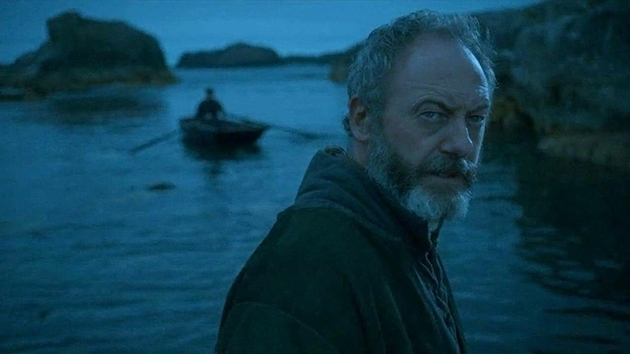
When we left Davos Seaworth in A Dance With Dragons, he was about to embark on a dangerous mission to secure the loyalties of House Manderly for Stannis’ cause. This involves traveling to the dangerous island of Skagos to retrieve Rickon Stark, who set out there with Osha and Shaggydog after A Clash With Kings. We don’t really know if they’re actually there, but for the sake of the storyline, I think it’s fairly safe to assume they made it.

There’s something odd about the placement of Davos’ chapters in A Dance With Dragons. They’re over well before the end of the book. Now you can argue that this doesn’t have to mean much because there’s a ton of characters and other major POV characters like Bran get similar shafts. But Davos’ quest has immediate ramifications to the story line while characters like Bran and Arya play more into the bigger picture.

The real question is, could Davos have enough time to go to Skagos, get Rickon, and make it to Winterfell before the battle?

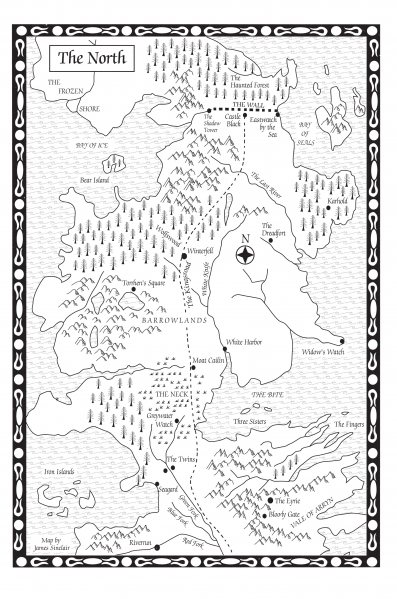
Let’s look at a map and see.

Credit to James Sinclair of A Wiki of Ice and Fire

Credit to James Sinclair of A Wiki of Ice and Fire


Skagos is a bit far from White Harbor. Davos doesn’t really know anything about the island. It’s also kind of far from Winterfell and we don’t know that Osha and Rickon even want to go with Davos. It’s also winter and Davos isn’t an expert in Northern geography. Things rarely go perfectly in these books and they would need to for Davos to factor into the equation. Doesn’t look too promising, right?

Maybe.

Time is tricky in A Song of Ice and Fire. The events of Robert’s Rebellion are supposed to take place in just a year, which leaves plenty of discrepancies that haven’t really been explained. Factor in the fact that Davos is an experienced smuggler and Osha knows the area and you’ll see that we have what appears to be the best makings to pull off a job like this. Davos is the man who got past the Tyrell blockade to save Storm’s End after all.

The other kicker is the start of the battle itself. It hasn’t started yet and doesn’t appear to be completey imminent either. Stannis has his hands full with what to do with the Karstark’s and the Greyjoy’s. To answer the question of where or not its possible Davos to make it, the best answer is that it can happen if Martin wants it to happen.

Another thing to consider is what would happen if The Winds of Winter picks up with Davos in Skagos or even further behind in his journey. That pretty much takes this particular plotline out of the equation for the whole book, as we’d likely be treated to another traveling narrative. This plotline isn’t completely needed to fuel the Northern story, but its absence would create somewhat of a holding pattern that doesn’t seem too terribly likely with what’s happening at the Wall and in Winterfell.

Davos isn’t the only x factor in all of this. There’s another character whose placement is important when considering the likelihood of the return of a Stark to Winterfell.

Wyman Manderly

What’s he doing at the Bastard Wedding? Why does this obese man want to make the long trek in bad weather to attend a wedding of people he hates? Couldn’t he have sent someone else with his Frey pies and added that to the list of things he does to piss Roose Bolton off?

Yes, but he didn’t and that means something.

Davos’ quest is all about securing Manderly’s loyalties and yet Manderly seems to have a death wish at Winterfell. Bolton knows he’s up to no good. Is there really a scenario where Manderly isn’t a surefire goner in this battle?

It’s right up Martin’s alley to have Davos show up with Rickon right as Manderly bites the dust, or snow if you will. Which doesn’t really mean that Manderly’s army doesn’t defect, but the cause would be without its biggest Northern supporter still alive save for the captured Greatjon Umber. If Manderly is a goner and Davos doesn’t show up, doesn’t that sort of take some of the fun out of the White Harbor chapters?

Outcomes of the Battle of Ice are tough to speculate. It could go many ways. It’s hard to envision a scenario where Stannis loses, but doesn’t die. What does Davos do without Stannis? It’s not like he’s a throwaway character. With what’s happening at the Wall and with Mance fooling around, winning doesn’t necessarily mean all is well in the land of the Mannis either. Having Rickon doesn’t mean that all of the other houses will flock to his cause either. This whole thing is a mess, but that’s a big part of why it’s so entertaining.

Here’s my simple speculation for the outcome of the Battle just to give you an idea where all I think all of this could go (I am not at all confident that this is how it will actually go). Stannis wins after the Umber’s and Manderly’s unite behind him, Roose dies, and Ramsay flees back to the Dreadfort after seeing that Rickon’s presence ruins everything and they Frey’s won’t support him. This gives the fans an outcome without concluding anything in the North.

But I am confident that Rickon will be a factor. Why? Because now is the time where he matters. Wizard Bran, Azor Azai Jon, and Littlefinger backed Sansa aren’t part of the equation just yet, but likely will be down the road. Stannis needs some sort of boost to keep him in the picture, unless the Battle of Ice is his last stand. Which it could be, but if it is then where does Rickon come in at all? The Onion Knight should deliver because that’s what Davos does. He’s one of the series more bankable characters and easily the best person for this particularly job besides possibly Drogon.

So here’s my speculation. Is any of this hard evidence? Not when you compare it to something like R + L = J. But the depth of those theories is a big part of why ASOIAF is so special and not every single thing that happens requires a prophetic foreshadowing. This one’s foreshadowing comes from surface level logic. Thanks for reading and please leave a comment with your own speculation/thoughts if you feel so inclined.

Here are some links to check out for Battle of Ice related content

https://cantuse.wordpress.com/2014/09/30/the-mannifesto/


https://www.youtube.com/watch?v=syFM7936yMs


https://bryndenbfish.wordpress.com/2013/11/15/a-complete-analysis-of-the-upcoming-siege-of-winterfell-part-1/


Thursday

4

December 2014

0

COMMENTS

Christmas in ‘Nam: An Alternative Pageant Narrative

Written by , Posted in Blog

The Christmas Pageant play is a staple in churches around the world. While the second greatest story ever told (naturally deferring to the original Star Wars trilogy) certainly deserves such widespread attention, I thought a modern update might be appropriate for children to perform this Christmas. Enjoy!

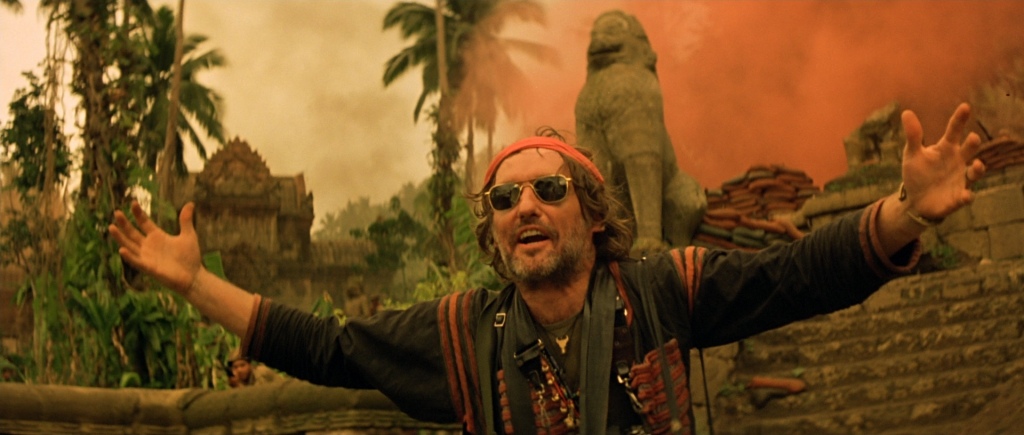
Narrator: December 24th, 1974. Joseph, an American journalist, leads Mary, a pregnant nurse, away from the swamps of Saigon, where U.S. forces are under siege from the Viet Cong. Mary fled her company once for fear of punishment and for the safety of her unborn child and found Joseph, whose anti-war sentiments lead him to be cast away from the company he was covering. Fearing the birth is nearing, Mary and Joseph trudge through the swamps in search of shelter.

Mary: Joseph, it’s dangerous here. Are you sure you know where you’re going?

Joseph: Yes, we trudged through this area a couple of weeks ago. I remember it vividly. There’s an abandoned camp somewhere around here. We should be able to find shelter and maybe a MRE if we’re lucky. Those things last forever you know.

Mary: And what if we’re captured?

Joseph: What would the enemy want with a reporter and a pregnant nurse? It’s the Americans we should be worried about. They’ll spin this somehow. Say I knocked you up and hang me.

Mary: Oh Joseph, you can’t think like that. You’ll be a hero when we get home. Everyone will know it.

Joseph: Yea that’ll be the day. Look, up ahead. A tent. Maybe someone will help.

Joseph approaches the tent. An old Vietnamese man appears.

Joseph: Excuse me. My wife and I are traveling and need shelter for the night. Is there room in your tent for us?

Old Man: No. No room.

Joseph: Please, she’s pregnant. I’ll help you forage for food and firewood. Just let us stay.

Old man pulls out a gun

Old Man: I said no room. Go away American scum.

Mary: What did he say?

Joseph: He said he was having people over to watch M*A*S*H later and doesn’t have any room for us.

Mary: Oh dear. I don’t think I can go on much longer.
Joseph: We’ll find something Mary. I know we will.

Joseph and Mary walk for a few steps until they see a makeshift campsite.

Mary: Joseph, I think I see something up ahead. It looks like a campsite of sorts.

Joseph: It looks too disorganized to be the work of the army. Unless something happened. I don’t like the looks of it.

Mary: We have to try. The baby is coming soon. I have a good feeling about it.

They approach the campsite. An army officer appears from a tent.

Soldier: Civilians? What are you doing out here? It’s dangerous.

Joseph: Please, my wife is pregnant and we need shelter. Do you have any room in your tent?

Solider: This is a warzone. The Viet Cong could show up at any moment. An outpost is no place for a pregnant woman.

Joseph: We have nowhere else to go. Please. We’re tired and hungry.

Soldier: Well all right. There’s room under the tarp for two more. It’s not much, but it’ll keep you dry.

Narrator: Mary gave birth in the middle of the night to a baby boy. Joseph, the soldiers, and various wildlife gathered to celebrate the joyous occasion. Danger lurked as the Vietcong approached.

Scout: Sir. The enemy is approaching.

Soldier: Load up men. Let’s do what God put us here to do. Wait until they’re out of the swamp.

Splashes in the swamp are heard as the Vietcong approach

Solider: Fire on my mark.

The Vietcong cry out

Angel: Don’t shoot. I bring you tidings of great joy. The boy that was born here tonight, the baby to be known as Jesus. He is the savior that will end this war and all wars after it. Lay down your weapons and share the good news.

Solider: We must go to command and tell them what we have seen.

The Vietcong nod in agreement. A rustling in the bush is heard. Three men appear.

Red Cross Volunteers: Don’t worry. The Angel guided us to you. We bring the gifts of Playboy magazines, MREs, and toilet paper.

Mary: Hosanna in the highest!

The cast sings, “Light my Fire” by The Doors

Sunday

30

November 2014

0

COMMENTS

Should The Walking Dead Revisit Its Seasonal Episode Count?

Written by , Posted in Blog, Pop Culture

The Walking Dead will air its “season finale” tonight. The quotation marks are there to highlight the somewhat grey area surrounding that phrase. While the show comes back in February, AMC is advertising this as a finale and past seasons have showed us that this show puts more stock in providing a noteworthy midseason break than many other shows that use the same practice.

The rationale behind splitting up a season into two parts is clear. It’s a common way for cable shows to expand their episode counts beyond the standard thirteen. In the case of The Walking Dead, it also allows the show to keep plotlines fresh. Season two was the only one to use a thirteen-episode model. The group’s elongated stay at Herschel’s farm provided plenty of reasons why this isn’t the greatest idea.

Problem is that the show has changed quite a bit since then beyond just the cast changes, though it’s worth noting that only seven of the characters from season two are still alive. This isn’t a show where the characters stay in one place for very long anymore. It’s also followed Lost’s later season model in keeping its ensemble cast separated into groups for large periods of time.

This makes splitting up the seasons into eight episode blocks problematic. There is a ton of stuff going on and its happening to tons of characters. Remember how little screen time T-Dog and Beth got back when everyone was just hanging out on the farm? The cast has grown exponentially since then while the death count has slowed down, leaving the show with the task of figuring out what to do with all its characters.

The simple answer? Expand the episode count to twenty.

This is neither unprecedented nor ridiculous in nature. The SyFy Channel’s old Sci-Fi Friday block of Stargate SG-1, Stargate Atlantis, and Battlestar Galactica used this model to great success. None of these shows were quite the phenomenon that The Walking Dead is either. This show is AMC’s cash cow, especially with Breaking Bad over and Mad Men on its way out. There’s nothing really standing in the way of more episodes.

You can make the argument that The Walking Dead is the most popular cable show of all time. Its ratings crush most of what’s on network TV and that doesn’t take in harder to quantify numbers like Twitter traffic and Netflix views. It may not be a contender in many awards shows, but it has what matters most, the interest of the people.

We can use the critical complaints to examine why a switch would be a good idea from a storyline perspective. Splitting up the season the way The Walking Dead does creates the need for an extra finale and primer, which also affects episode progression. The constant rise/fall dynamic makes for great suspense and anticipation, but it also takes precious screen time away from advancing the plot. This problem is exacerbated by extreme character centric episodes that leave out the bulk of the cast.

Which is probably the point. Urgency exists mostly in the eyes of the characters. For the show itself, it’s not really headed in a specific direction. Since the prison, the characters have been roaming, but so has the plot. That’s really all it can do.

If you look at the last three eight episode blocks, you see a pattern. The first episode wraps up the cliffhanger and there’s at least two episodes dedicated to very specific character studies that leave out the majority of the cast. Excluding the finale, that leaves four episodes to get the plot forward before it needs to blow things up again (sometimes literally). For a show with such a large cast, that’s not enough time at all.

Expanding the episode count would make Beth or Governor centric type episodes easier to stomach. Its easy to see why the show likes these types of episodes, but this isn’t the type of show that can afford to toss episodes away on non-essential characters. Adding more episodes lets the show have its cake and eat it too, with plenty of filler.

Wednesday

26

November 2014

0

COMMENTS

The Similarities of “Baby Got Back” and “All About that Bass”

Written by , Posted in Blog, Pop Culture, Social Issues

I had an interesting experience on my way to Dunkin Donuts yesterday. While flicking through the radio stations, I encountered Six Mix-a-Lot’s classic “Baby Got Back” (not Nicki Minaj’s painful “Anaconda” pseudo cover). After indulging in the perennial favorite of middle school mixers, I switched channels only to find Meghan Trainor’s “All About that Bass.” This bizarre coincidence got me thinking about the overall message of these two songs.

At first glance, we might call Trainor self-empowering and Mix-a-Lot misogynistic. Which sort of makes sense but you could also look at it a different way. Trainor says love your body and Mix-a-Lot says he loves your body. That’s kind of nice right?

Both songs address the issue of “skinny bitches” Mix-a-Lot opens his songs with a conversation between two condescending, presumably small butted, women criticizing the tushie of another girl, denounced as a prostitute until Mix-a-Lot jumps in to start the song. Trainor addresses them herself with “go ahead and tell them skinny bitches that,” with regards to her plans to bring booty back (it’s still somewhat unclear where it went in the first place). It wouldn’t be fair to Trainor to not mention that she says she just playing, though that phrase has been a major bone of contention against the song as people have accused her of “skinny shaming.”

We also see a similar love of genuine curves from both performers. Both take shots at the silicone Barbie look. Trainor “won’t be no stick figure silicone Barbie doll,” expressing a concurring opinion to Mi¬x-a-Lot’s “silicone parts of made for toys.”

The difference in message deviates on the matters of romance as to be expected. Trainor is speaking from a personal standpoint. Mix-a-Lot is an observer and a fan. So whose message with regards to matters of the heart is better?

Mix-a-Lot’s

You might be shaking your head at this point. But look at what Trainor uses to address suitors. She says her mother has told her “boys like a little more booty to hold at night,” which is another rallying point for her critics. This one is perhaps more legitimate than the “skinny bitches” comment as she’s essentially using outside perception as a factor in determining her own self worth.

This is something that Mix-a-Lot has to do. He is an outside observer. This matters in terms of the context of the message itself. It’s harder to dismiss the commentary of a curvaceous woman speaking about being curvaceous than the words of a man who calls himself Sir Mix-a-Lot.

Which is actually unfair to Mix-a-Lot. The inspiration for this article came from a line in “Baby Got Back,” where he says “so Cosmo says your fat, well I ain’t down with that.” Couple that with his earlier assertions that he’d “rather stay and play,” and you get a picture of a man who’s not necessarily as misogynistic as one might think at first glance.

So what to take away from all of this? Both of these songs essentially preach the same message. Love your body. This is somewhat skewed in the case of Mix-a-Lot as the sexual innuendos tend to dissipate one’s desire to analyze his message. But Trainor’s isn’t exactly perfect either. These songs really aren’t all that different, which really just means you should love your body regardless of what a musician wants to tell you.

Tuesday

25

November 2014

0

COMMENTS

Breaking Down the Hanley Ramirez/Pablo Sandoval Signings and the Red Sox Roster Crunch

Written by , Posted in Blog

Breaking Down the Hanley Ramirez/Pablo Sandoval Signings and the Red Sox Roster Crunch

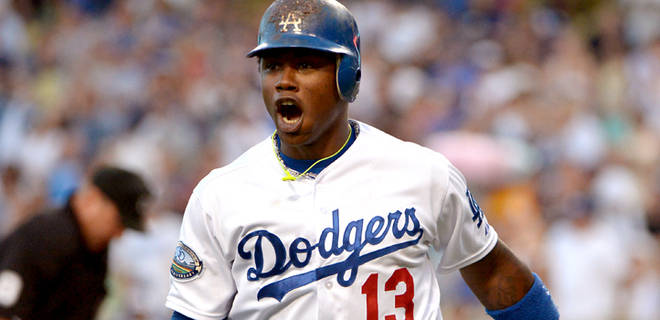
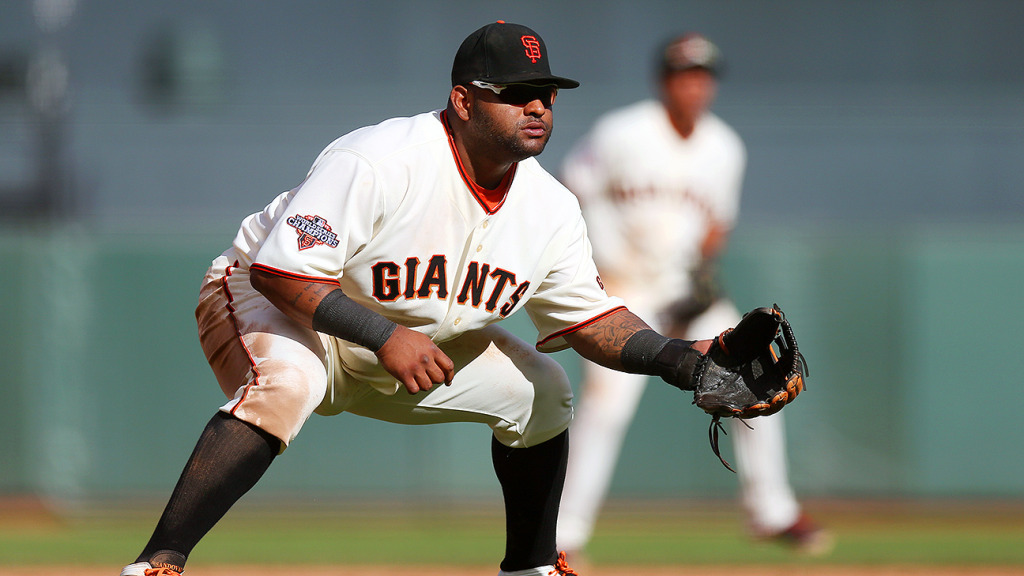
The Red Sox shocked the baseball world yesterday by agreeing to terms with not one, but two, of the top free agents in Hanley Ramirez and Pablo Sandoval. This is somewhat puzzling for two reasons. Many top baseball analysts projected both to hit nine figures. Ramirez could hit that mark with his vesting option, but the 4/88 he settled for seems a bit low, especially in November. The exact terms of Sandoval’s contract remain to be seen, but the 5/95 reported amount is also somewhat low for playoff proven panda. The fact that most had Ramirez pegged for a permanent move to third complicated the roster.

The Sox also have one of baseball’s most impressive logjams on their hands with their outfield with Rusney Castillo, Mookie Betts, Shane Victorino, Allen Craig, Yoenis Cespedes, Daniel Nava, and Jackie Bradley Jr. all under contract. It’s clear that one or two of them needed to go even before you factor in Ramirez and Sandoval. Some early reports have left field as a possibility for Ramirez, but first let’s look at all the pieces before we can determine who goes where.

To make things a little easier, we can take second base, designated hitter, and catcher out of the equation. Dustin Pedroia, David Ortiz, and Christian Vasquez will man those positions. Even if you’re not convinced with Vasquez as a major leaguer, none of the aforementioned players will take his place anyway. With starting pitching to address, it seems unlikely that Ben Cherington will look to add a costly option at catcher anyway, likely preferring a veteran backstop to mentor Vasquez and eventually Blake Swihart.

So there are six positions for about a million players, many of whom are legitimate starters. The fact that Cherington is essentially forced to trade a couple might hinder their value, but the overall bleak state of free agency should mean that there are plenty of suitors. But who to trade? And for what?

The first thing to consider is that this logjam is really only a problem for this season. The three most likely trade options are Cespedes, Victorino, and Mike Napoli as all three only have one more year on their contracts. Napoli’s grit and beard fit perfectly with the team and played a major role in the 2013 World Series but the case could also be made that he’s their most desirable commodity that the team could stand to lose. The team is said to be somewhat sour on Cespedes, which could hamper his return, and Victorino spent much of last season on the DL. The Sox would likely have to eat a couple million to send Victorino away before Spring Training unless a team is quite desperate (I’m not sure I’d rule that out).

Trading Napoli would allow Sandoval to man first. Despite his size, he’s actually a pretty good third baseman, but Hanley’s limitations at shortstop could prompt the team to put him at the hot corner instead. It seems somewhat unlikely that Ramirez will play short unless the team trades Xander Boegarts. Craig figures to be the backup first baseman, though I’d imagine the team would trade him for just about anything.

The problem is that the team’s biggest need is frontline starting pitching and three players with only a year left on their deals aren’t going to net that kind of return. Moving two to the same team isn’t terrible likely given the salaries involved. Teams don’t typically trade aces for anything besides top prospects and the Sox have something special in Betts and I think they know that. Cole Hamels is the most desirable trade target, but Ruben Amaro isn’t going to part with him unless he gets a mammoth return back.

The Reds have four starters who will hit free agency next year in Johnny Cueto, Mat Latos, Alfredo Simon, and Mike Leake. The Sox would love either Cueto or Latos and the Reds look to want to contend in 2015, suggesting that the two could be trade partners. The problem is that Latos was injured for much of last year and Cueto deserves a king’s ransom that the Sox don’t seem particularly likely to provide.

A reunion with Jon Lester would solve some of this mess. I’d say the Ramirez and Sandoval signings could prompt Lester to return to Beantown, but he won’t come cheap and has plenty of other suitors. James Shields poor playoff performance made a laughing stock of his “Big Game James” nickname, but could be a good fit if the price is right. With the below market signings the Sox just pulled off, I think there’s more value in him than might have been expected.

The outfield projects to at least have Castillo manning center and likely Betts somewhere as well. That leaves one spot for Victorino and Cespedes assuming Craig and Nava are destined for the bench and JBJ goes to AAA or another team. If both get traded, Ramirez could factor in at left, but I have a hard time seeing it happen.

The Sox are not going to bet on Victorino’s health to the point where he’ll be guaranteed a starting spot. Keeping him around on the bench is a possibility if there aren’t any appealing trade scenarios, but the Sox should try to move him for bullpen pieces or fringe prospects as long as they can move 80% or so of his salary. Nava put up a 3.3 WAR season and has more value than people might give him credit for considering he’s a platoon player. The Sox won’t trade a valuable cost effective piece for nothing.

My guess is that Victorino and Napoli are the ones to go unless Cespedes can bring back a starter. The Sox have prospects that teams will be interested in, increasing the chances for some sort of package revolving around one of these guys or Nava. I wouldn’t rule out a Boegarts trade, but the possible landing spots are vague. The same holds true for Craig, which makes the Lackey trade look even worse than it did when it was made, though Joe Kelly is an interesting pitcher to watch. It seems like a bit of a waste to play Sandoval at first and I wouldn’t rule out the idea that Ramirez might be tapped for short, but that seems unlike from a defensive standpoint.

This is all contingent on the trade market, which Boston figures to be quite active in. From an offensive standpoint, these moves solidify one of Boston’s weak points from last season. But the team needs to figure out its rotation or these moves will be for naught. Signing both players looks somewhat excessive considering the logjam, but the Sox got two fantastic bargains and the bleak free agent market for next year make prudence of particular importance.

I’ll have another article on the shifting culture of the Sox at some point. To keep up with my articles, please like me on Facebook or subscribe via e-mail (or both).

Tuesday

18

November 2014

1

COMMENTS

Is the Qualifying Offer Working?

Written by , Posted in Blog

As MLB’s Hot Stove got turned up a bit with the rather unexpected five year, $82 million dollar contract handed out to Russell Martin by the Blue Jays, I thought I’d look at the Qualifying Offer. The QO is in its third year of existence and saw another offseason go by without a single player accepting the one year $15.3 million dollar contract required for teams to receive draft pick compensation. This is sharp contrast to the old compensation system, which usually had a couple of players accept each year.

Which brings the question of the effectiveness of such an offer if no player is interested in accepting the offer. This was a major bone of contention for last years crop as the agents for Kendrys Morales, Ervin Santana, Ubaldo Jiminez, Stephen Drew, and a Nelson Cruz all complained ad nauseam about the negative effect the offer had on their clients. Before we examine the legitimacy of their complaints, I wanted to first explain the old system a little bit to see the differences.

Under the old Type A/B system, players were categorized by the Elias Sports Bureau into tiers that determined draft pick compensation. Type A’s netted the former team either a first or second round pick depending on the ranking of the signing team plus a sandwich pick. Type B’s did not require a loss of draft pick for the signing team, but earned the former team a sandwich pick and type C’s didn’t really factor into the equation. If a player accepted, unlike the QO which is determined by the average earnings of the top 125 players, the old system forced players to negotiate with teams as they would under salary arbitration. This model seems a bit archaic especially considering the rise in pre-arbitration extensions and it makes sense that teams and players alike would wish to gravitate away from this often hostile practice. The one advantage for players was that their salary could not be less than 80% of their current deal, making a pillow contract style situation at least somewhat appealing.

The problem with the old system was that it was unfair to players who were typically undervalued by free agency. Career middle relievers like Jason Frasor could be ranked at Type As alongside closers as the rankings failed to differentiate between types of relievers and as such, these sorts of players were practically forced into accepting these deals. Bench/utility players were sometimes victims of this as well, creating somewhat of a double-edged sword. More playing time would likely mean a greater salary, but becoming a type A free agent would negate those benefits fairly quickly. It’s really no surprise that this was done away with.

The QO lets teams determine the value of their players. A career middle reliever like Frasor could in theory be offered one, but compensation no longer acts as a hindrance to players like him. Players traded midseason can no longer be tied to compensation, increasing the risk in making such acquisitions.

So why do players hate it so much? Why does no one want a $15.3 million dollar payday?

We’ve seen a drastic shift in mentality with regards to dollars vs. years. Young players frequently take below market value extensions to get the guaranteed money, which has radically changed free agency as a whole. Fifteen million is a bigger, one year payday than many of these players would get, but it’s still only a year. An injury or a down season would have a big impact on the future. Jimenez’ four year deal with the Orioles pays him an AAV less than the $14.1 QO he was offered last year, but his poor performance this season would’ve taken a big contract off the table.

Of last year’s crop, it’s hard to really say really say that any of them made a mistake turning their QO’s down. All the players mentioned are guilty of drastically overvaluing their markets, which served as more of a deterrent than the draft pick. Santana wasn’t a $100 million dollar pitcher and Cruz was never going to get close to $75 million regardless of the draft pick. Drew and Morales probably should have considering Scott Boras’ insistence that both deserved elite salaries despite the numerous question marks surrounding both players. Pillow contracts would’ve gone a long way and now both players find themselves in unenviable positions.

To put it simply, there hasn’t been a straight case of “you have no market because you’re tied to a draft pick.” Sure it makes certain teams less interested, like the case of Michael Bourn and the Mets two years ago. But that’s also another case of a player who was hurt because he waited too long for his market to develop.

Perhaps the best example of this was seen last year with Ricky Nolasco and Matt Garza. Nolasco was viewed as a tier below Garza, Jimenez, and Santana, but wound up with a four year $49 million dollar deal that was a lot closer to Garza and Jimenez’ 4/50 deals. All three have vesting options with performance bonuses that could make any of the three the highest paid overall, though we won’t know that for a couple years. Oddly enough, Nolasco and Garza were not tied to compensation.

The big difference between these pitchers was that timing. Nolasco signed at the end of November. Garza waited until the end of January and Jimenez waited almost another month before inking his deal. Teams had spent most their available money by that point. It’s hard to really blame the draft pick when players want drastically more money than anyone is realistically willing to pay them.

Michael Cuddyer’s recent deal with the Mets prevented him from likely becoming the first player to accept the QO. The Rockies were criticized for extending what looked like a gross overpay to a player who spent much of the season on the DL, but the Mets quickly made that look like a great decision. A one year overpay of a few million wouldn’t hurt most teams, but the cash strapped Rockies might have been in trouble. But they valued both the draft pick and Cuddyer and now have something to show for it.

It’s hard to argue that the QO benefits larger market teams over smaller ones either to an extreme extent either. This year the Pirates handed out the same amount of QOs as the Yankees, Dodgers, and Red Sox combined. There’s plenty of parity in the QO and that doesn’t look like it’s going to change anytime soon.

The QO is not perfect, but it’s also not really the drastic hindrance that it’s made out to be either. Players are offered a sweet one-year deal and if they don’t like it, they can test the market. But testing the market has its risks and when the waiting game doesn’t work out, it’s easy to blame the QO. That doesn’t mean that it’s at fault or that it should be changed.

Tuesday

11

November 2014

0

COMMENTS

Season 5 of Downton Abbey Bides Its Time While Waiting for the End

Written by , Posted in Blog, Downton Abbey, Pop Culture

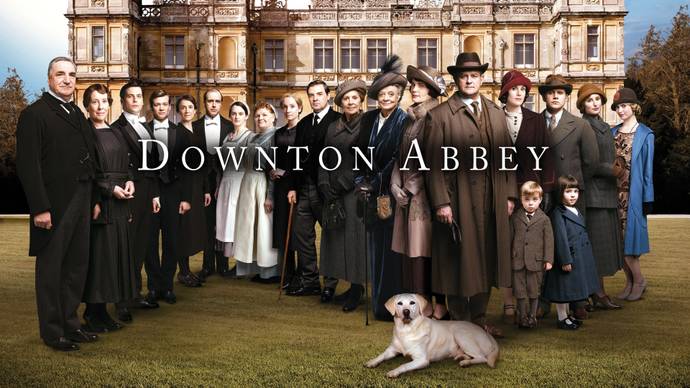
Change has always had a consistent presence on Downton Abbey. Being a period drama, we have a fairly good idea of where the show is going to go as it creeps closer to its inevitable finale. Despite this, the show has done a remarkable job in breathing new life into the old house and decaying aristocratic society.

We saw this particularly in season three with the arrivals of Alfred, Jimmy, and Ivy, which gave the show’s dynamic a breath of fresh air. The youth movement did wonders to negate the feeling that from here on out, life at Downton would veer from the extravagant to the simplistic. With Alfred’s departure in series four, Ivy’s after the Christmas Special, and Jimmy’s after the first episode of series five, that youthful energy is all but gone, leaving Daisy in a similar holding pattern she was in at the start of the show.

The absence of the three of these characters isn’t a big loss from a story perspective. Eight episodes is hardly enough time to adequately address the show’s ensemble cast anyway. Their departures address something that we’d all rather avoid. Things are winding down and now it’s starting to show.

The future was a predominant theme is season five. Carson, Hughes, Patmore, and the Bates all made arrangements for their retirements while Tom continued to grapple with his desire to leave for America while taking Sybbie’s best interests into consideration. Lord Grantham continued to weigh the interests of the village against his obligation to preserve the way of life that can be threatened by those whose interest lie solely in monetary game. Mrs. Crawley debates a marriage proposal to the disdain of Lady Violet, who fears losing her treasured companion as selfish as that may be.

Problem is, this is all familiar territory. Edith and Tom’s storylines are merely continuations of plots from last season that could, and probably should have been wrapped up. Lady Rose’s late-season courtship with Atticus is just about the only fresh plotline to be had other than Mrs. Crawley, who unexpectedly found herself in possession of one of the show’s better stories.

The Bates remain the biggest thorn in Julian Fellows’ paw. He has never really known what to do with them. Sadly, this has resulted in yet another murder plotline that’s even droller and tedious as the first. It’s hard to imagine that #freebates was ever a legitimate fan rally as the couple hasn’t had a positive moment in years.

Fan sentiment also provides a roadblock for Lady Edith and her illegitimate child. It’s sad story. It isn’t a particularly interesting one and Edith’s years of being an annoying/whiney character didn’t do the plot any favors. After five seasons of watching her mope around, it’s hard to care.

This season had a few shining moments worth remembering. Miss Bunting quickly became of the most hated characters in the show’s history and Fellow’s timed her depature perfectly as to not allow her to overstay her welcome (or rather unwelcome). Thomas received redemption of sorts from Dr. Clarkson in one of the season’s most touching moments. Molesley was Molesley and as such, got his own article.

I watched an old season two episode in between episodes to see the contrast between then and now. It’s to be expected that shows drop off a bit as they get older. Even a worldwide phenomenon like Downton.

The problem is that Downton has an identity crisis, a problem that’s existed since the World War I storyline ended but was exacerbated by Matthew’s death. The show knows where it’s going, but it doesn’t know what to do with itself in the meantime. It seems to be a fairly safe assumption that next season will be the final one, which may not be such a bad idea.

Downton Abbey is certainly more entertaining the most of what’s on TV, but it’s also clear that the show is well past its prime. Fellows overindulged in repetitive storylines and drew out others unnecessarily. It’s hard to call season five bad, but when the bar was raised so high from previous years, the drop in quality is a tad unfortunate. The Dowager would certainly not be impressed.

Friday

7

November 2014

0

COMMENTS

Mr. Molesley: The Man, The Myth, The Legend

Written by , Posted in Blog, Downton Abbey, Pop Culture

From his first appearance in episode two, it would be hard to tell that Joseph Molesley would become one of Downton Abbey’s most endearing characters. From butler to valet to laborer to footman, Molesley has a list of occupations rivaled only by Thomas. The backwards progression of these jobs naturally lead to a consistent suffering matched only by Lady Edith. Yet as season five comes to a close, Molesley goes on, earning both the adoration and respect of his fellow workers and viewers alike.

Molesley begins his time on Downton as the butler to Mrs. Crawley, a job that appears to have been organized by either Robert or Violet as Molesley was away from the area at the start of the show. He continued to be a minor character and occasional comic relief throughout the first season. His standout moment was perhaps when Matthew struggled to embrace his services, creating a unique moment where the lavish excess of the upper class is countered by the pride that a person like Molesley takes in his duties.

We see this evolve in season two as Molesley finds himself with little to do in Mrs. Crawley’s absence. Rather than sit around twiddling his thumbs, Molesley makes himself useful at the big house. This is overshadowed by his accidental drunkenness brought on by wine tasting and his failed romantic overtures directed at Anna. Season two establishes Molesley as the good-natured Mr. Bean like klutz destined to be Julian Fellows’ whipping boy.

This “Molesley must suffer” mentality continues in season three. With Matthew engaged to Lady Mary, it makes sense that Molesley would be destined for the big house as the valet to the heir of Downton. Problem is that Matthew doesn’t want a valet. But then he gets one for some strange reason, only it’s not Molesley. It’s Alfred. Without the interference by a jealous Thomas, who insisted that Alfred was not ready for such duties, Molesley might still be in the service of Mrs. Crawley.

Molesley’s high status as Matthew’s valet was short lived. While Mary and Mrs. Crawley could recover their statuses following Matthew’s death, there was no one for Molesley to valet for. Season four showed Fellows’ love of making Molesley suffer as convenient landing destinations for his services were foiled using spotty logic. Mrs. Crawley could’ve easily taken him back as butler and Spratt could have been kicked to the curb following his sabotage of Molesley’s audition. So poor Joesph had to settle for the lowly job of second footman.

The problem is that the positive outcomes would’ve taken him away from the big house, which at this point is where he belongs. The staff has taken quite a beating over the past two years, seeing O’Brien, Alfred, Jimmy, and Ivy all leave. The latter three weren’t exactly replaced by new characters, making Molesley even more important.

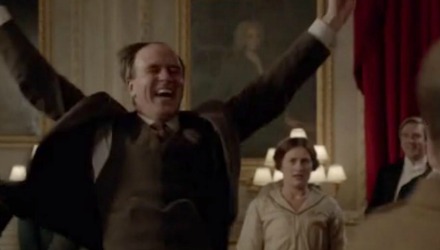
There are two distinct versions of Molesley that the viewer gets to see. There’s the drunken bumblehead who loses at cricket and can’t seem to catch a break. But then there’s the man who shows a genuine desire to help others like Baxter and Daisy and of course, the strong man victory in the season three Christmas special.

Mrs. Patmore’s scolding of Daisy for her treatment of Molesley was what prompted me to write this article. In telling Daisy to be nice to people who are kind, Patmore reminds us why people like Molesley are special. They’re rare.

Molesley has had his fair shares of ups and downs, but besides his reluctance to accept the footman position, which received a rather rude response from Carson, he takes his fortunes in stride (even his strong man carnival victory). How many of us can say the same?

Through five seasons, Molesley has grown from a background comic relief figure to the heart and soul of Downton Abbey. He’s an older worker facing uncertain times without the capital of Carson, Hughes, Patmore, and the Bates, who can all invest in retirement options. But you wouldn’t know that just by looking at him. He’s neither the best looking nor the most interesting person on the show, but his consistent good nature sets him apart from the rest of the cast and earns him a place in the viewer’s hearts.