Ian Thomas Malone

Author Archive

Wednesday

17

June 2020

0

COMMENTS

The Ghost of Peter Sellers is a fascinating look at the complications of filmmaking

Written by , Posted in Blog, Movie Reviews, Pop Culture

Peter Sellers was one of the most talented comedic actors in cinematic history. By most accounts, he was a pretty awful person in both his private and professional life. His behavior hindered or derailed many productions. The documentary The Ghost of Peter Sellers examines his effect on the 1973 comedy Ghost in the Noonday Sun.

Both the documentary and its subject film are directed by Peter Medak, providing an intimate perspective on the material. The Ghost of Peter Sellers occupies a fairly unique place in cinematic lore. Medak interviews several people involved with the original film, providing a rare look behind the curtains into the messy world of show business.

Medak’s great triumph lies in his ability to craft a compelling narrative that doesn’t require the audience to have seen Ghost in the Noonday Sun. After watching the documentary, you may not want to. Noonday Sun looks like a complete and utter disaster from both behind that camera and in front of it, but Medak consistently keeps things interesting, examining the Cyprus location and the various geographical issues presented.

The documentary works as both a vanity project and a valuable piece of film history. Medak is pretty open about how the film continues to haunt him, having played a major role in the downturn of his career. The narrative of the documentary essentially follows him on his path to catharsis, retracing the original film’s various disasters. Medak is an affable figure to watch, conversing with his subjects in a way that’s easy to follow.

As the title suggests, Sellers is the film’s true villain. His behavior on set is outlined in great detail, with most of the subjects backing up Medak’s account of the events. One of Sellers’ own daughters is even interviewed, providing further perspective on her troubled father.

Medak does take care to provide a balanced perspective of Sellers, an immensely complicated figure. He includes a few intimate stories of their interactions, the kind of stuff that biopics about Sellers have dramatized for years. There’s a weird sense of affection present that enriches the documentary.

It’s a fair question to wonder how much of the documentary would be different under the steward of a less biased director. Medak is quite open, but he’s also human. He takes responsibility for being the captain of the ship, not blaming everything on Sellers, but it remains difficult to pinpoint how much of his career trajectory was hindered by the film.

The Ghost of Peter Sellers is a real treat of a documentary perfect for Sellers diehards and film aficionados. Medak didn’t have the career he would have liked, directing few feature films after Noonday. It is quite interesting to watch him retrace the footsteps of his career and the shadow that continues to haunt him.


Wednesday

17

June 2020

0

COMMENTS

Babyteeth finds solace in the quiet moments

Written by , Posted in Blog, Movie Reviews, Pop Culture

It can be hard to admit how little control we have over our own feelings of affection. Even harder when confronted with the reality that those around us will choose to love, often with little considerations to practical circumstance. It’s natural for humans to want to possess at least some degree of control over their surroundings.

At its core, Babyteeth is a film about control. Milla (Eliza Scanlen) is a teenager battling cancer who begins a passionate love affair with a slightly older drug dealer Moses (Toby Wallace). Moses has plenty of charm, but hardly possesses the demeanor suited for the particulars of Milla’s situation, a notion hardly lost on Milla’s parents Henry (Ben Mendelsohn) and Anna (Essie Davis). The heart wants what it wants, forcing Milla’s parents to confront their own reservations for the sake of their daughter’s sense of happiness.

Making her feature directorial debut, Shannon Murphy frames Babyteeth almost like a stage play, with the family home in suburban Australia used as the backdrop for this intimate family drama. Murphy has a strong talent for extracting suspense from each scene, keeping the dramatic tension high throughout the narrative. It’s a quiet kind of film, with Murphy’s long takes letting the emotion play out.

The acting is pretty superb. Scanlen does a great job showcasing Milla’s internal struggle between her lust for life and the realities of her illness. Her relationship with Moses follows predictable patterns but feels genuine. Mendelsohn makes great work of the dark material, a father forced out of his own myopic mindset to take care of his daughter.

Youth illness is a very sad topic, hardly the kind of material that needs to be sensationalized. Murphy manages to find a strong balance between the heavy material and the smaller, harder-to-notice joys of life. Milla is sick, but not necessarily unhappy. The film does a great job exploring the simpler joys of life, namely the interactions that make this complex journey worth it in the long run.

The film does run into some pacing issues. With a runtime of just under two hours, there’s a balance between the main narrative of Milla’s illness and the subplots of the other characters that Murphy occasionally struggles to balance. It feels like there’s more to Anna’s story in particular that gets truncated for the sake of the film’s other ambitions. Obviously two hours is a short amount of time to spend with an entire family’s issues, but the allocation of time is a bit bloated in some areas while undeveloped in others.

Babyteeth is occasionally uncomfortable to watch, a strong debut by Murphy that demonstrates her firm grasp on the complexities of human emotion. Life is short, even for the lucky ones. When faced with an uncertain future, the heart makes allowances beyond that which it might typically consider. Tragedy has a weird way of bringing people together, even those once thought diametrically opposed.

Wednesday

17

June 2020

0

COMMENTS

Queen of the Capital

Written by , Posted in Blog

Pride coverage rolls along! We are thrilled to welcome Josh Davidsburg and Muffy Blake Stephyns, director and star of the new documentary Queen of the Capital, to the show. Queen of the Capital follows Muffy’s campaign to be elected Empress of the Imperial Court of Washington, an organization of drag performers that raise money for charity. Josh and Muffy share plenty of insights from making the film and the history of drag in Washington D.C. One of Ian’s favorites from the Slamdance film festival, Queen of the Capital is definitely one you won’t want to miss.

Queen of the Capital is available on Alamo Drafthouse VOD starting June 20th. https://ondemand.drafthouse.com/film/queen-of-the-capital/. You can also check out the film’s website http://queenofthecapital.com/.

Be sure to follow Muffy and Josh on Twitter @MuffyBStephyns & @jdavidsburg

Cover art by Karolyn Popat

Tuesday

16

June 2020

0

COMMENTS

Sam Feder, Director of Disclosure

Written by , Posted in Blog

Pride coverage continues! Today we are joined by Sam Feder, director of the documentary Disclosure: Trans Lives on Screen, which Ian had the pleasure of seeing at Sundance. Sam talks about the importance of visibility, the challenges of presenting a history in real time, and the responsibility of filmmakers to depict trans people accurately. 

Disclosure premieres on Netflix on June 19th.

You can follow Sam on Twitter @SamFederfilm and Disclosure @Disclosure_Doc

Be sure to check out Ian’s review of Disclosure for FanSided: https://fansided.com/2020/01/28/disclosure-trans-lives-on-screen-sundance-review/

Photo credit: Alex Schmider


Monday

15

June 2020

0

COMMENTS

Legal Analysis of the Supreme Court LGBTQ Ruling

Written by , Posted in Blog

Big day for LGBTQ rights! The Supreme Court ruled in a 6-3 decision that employers cannot fire LGBTQ workers simply for being gay or transgender. The landmark decision, authored by Trump appointee Justice Neil Gorsuch, represents a major milestone in the fight for LGBTQ equality.

We are delighted to have legal analyst & journalist Colin Kalmbacher on the show to break down the case for us. Colin authored an excellent piece for Law & Crime explaining the importance of the decision. In a brief breaking-news episode, Colin supplies some superb analysis of the significance of today’s ruling.

Be sure to read Colin’s article for a very thorough explainer. https://lawandcrime.com/supreme-court/liberal-and-conservative-justices-in-6-3-decision-agree-that-sexual-orientation-and-gender-identity-are-protected-by-civil-rights-act/

You can follow Colin on Twitter @colinkalmbacher

Friday

12

June 2020

0

COMMENTS

Teraj – Singer, Travel Host, & Entertainer

Written by , Posted in Blog

Our Pride coverage begins! Join host Ian Thomas Malone and special guest Teraj for a fascinating conversation about the protests against police brutality happening across the country and Teraj’s career. Teraj is the host “Gay Travel Today” on Amazon’s Alexa and recently put out his debut album “Defy.” Ian & Teraj also talk about the role of Pride as an outlet for protest.

For more of Teraj, check out his social media and be sure to tune in to “Gay Travel Today.”

Twitter: https://twitter.com/IAmTeraj
Facebook: https://www.facebook.com/IAmTeraj/
Instagram: https://www.instagram.com/teraj08/
Alexa Flash Briefing: https://amzn.to/2WMUJ3j
Website: https://www.terajmusic.com/
YouTube: https://www.youtube.com/channel/UCpHce1qpmSQZ4eGy-c0pXXg

Teraj’s music video for “Let Yourself Soar” that was referenced in the episode can be viewed here: https://www.youtube.com/watch?v=ghhBjpp7YiI


We at Estradiol Illusions would like to affirm our support for Black Lives Matter and the movements across the globe. 

Thursday

11

June 2020

0

COMMENTS

13 Reasons Why Season 4

Written by , Posted in Blog

What a mess. Join Ian Thomas Malone as she breaks down 13 Reasons Why’s terrible fourth and final season. From the bad writing, underwhelming narrative, and totally checked out actors who all looked way too old to be in high school, this season was a mess for just about every reason imaginable. Ian also provides a brief overview of the series as a whole and what drew her to it initially.

Be sure to check out Ian’s review of the season for FanSided: https://fansided.com/2020/06/07/13-reasons-season-4-review/

Tuesday

9

June 2020

0

COMMENTS

Seahorse Handles Transgender Pregnancy with Grace and Dignity

Written by , Posted in Blog, Movie Reviews, Pop Culture

It would be nice to live in a world where news like Freddy McConnell’s pregnancy wouldn’t make international headlines, leading to a cascade of unfortunate headlines seeking to sensationalize his person life. McConnell, a British transgender man who gave birth to a son in 2018, is an affable individual who understandably shies away from the kind of cringeworthy tabloid coverage that follows him around. Seahorse: The Dad Who Gave Birth seeks to tell his intimate story.

Director Jeanie Finlay captures extensive footage from McConnell’s entire pregnancy. The film does a great job explaining the unique challenges the process presents to trans men. Being off of hormones for any extended period of time is an incredibly taxing endeavor, something that McConnell handles with grace.

The artificial insemination procedures aren’t very different for trans men as for cisgender women, a reality that Finlay highlights quite well. Seahorse presents a refreshingly sober look at pregnancy, a soft-spoken effort to tone down the rhetoric surrounding transgender issues. Much of the film is pretty mundane stuff, but that’s also kind of the point. McConnell isn’t a radical figure. He’s a man who wants a family.

Seahorse does at times struggle with presenting a narrative. Much of the film’s first act centers around McConnell’s relationship with CJ, a masculine-presenting non-binary person, who was initially supposed to co-parent McConnell’s child. CJ exits the narrative early on, leaving Freddy on his own, though with support from his mother among other people.

At a certain point, Finlay stops trying to organize the steps of McConnell’s pregnancy into a cohesive story. The third act suffers from a few meandering sequences that don’t serve any broader narrative. Mundane might be the point, but it’s gets a bit tedious after a while.

Seahorse would likely have benefited from Finlay taking a broader approach to the subject. A quick Google search shows the especially toxic media environment in the UK toward transgender people. None of this is covered in the film, perhaps a missed opportunity to provide some broader context to the audience.

For his part, McConnell expresses a desire to be away from the media spotlight late in the film, a peculiar position for the subject of a documentary to be in. Finlay keeps some understandable distance toward a subject going through an emotionally taxing journey with minimal external support. It is McConnell’s journey more than than that of pregnant transgender men as a whole, a tricky tightrope that many narratives focused on marginalized groups must walk.

Seahorse is a very good film that handles its sensitive subject material with great care. There is the sense that there is plenty left on the table with regard to the subject matter. Perhaps another documentary with broader intentions to capture transphobia in Britain can expand on these themes, but if Seahorse succeeds in its primary objective, the thought might not be there to make another film on this topic.

Thursday

4

June 2020

0

COMMENTS

The Donut King Explores the Origins of a SoCal Institution

Written by , Posted in Blog, Movie Reviews, Pop Culture

There are plenty of parts of Los Angeles where it’s hard to drive more than five feet without passing a donut shop. SoCal is home to thousands of independent stores selling the iconic American treat. LA’s Cambodian population dominates the donut market, with over 90% market share across the region. The new film The Donut King explores the man who made much of this possible.

The life of Ted Ngoy is a classic example of the American dream. Escaping Cambodia as a young refugee, Ted arrived in SoCal in the mid 70s, seeking a better life for himself and his family. Recognizing the difficulties of raising a large family on a church janitor’s salary, Ted was drawn to the donut trade, which offered high traffic, long operation hours, and good margins.

After a three-month apprenticeship working for the legendary Winchell’s Donuts, Ted went out of his own, opening his own shop. Quickly learning the trade, Ted expanded rapidly through the region, in the process employing hundreds of his Cambodian countrymen. Ted’s deep-fried empire grew so massive that it severely cut into Winchell’s own market share, in the process keeping east-coast leviathan Dunkin Donuts from expanding westward.

Ngoy makes for a compelling subject, a complex man who squandered much of his empire after developing an unhealthy affection for neighboring Las Vegas. He’s very open about his life’s story, giving a personal touch to director Alice Gu’s broader narrative about how the Cambodian population came to dominate the LA donut market. Gu thoroughly unpacks the material, interviewing executives from Winchell’s and Dunkin Donuts to provide a very digestible explainer on all things donuts.

The film’s biggest struggle lies with its runtime. The Donut King almost justifies spending more than ninety minutes on Ngoy and the SoCal donut market, but the film drags pretty hard for a long stretch in the middle. A solid twenty minutes should have been cut to ease the burden on the narrative.

Gu also includes several animated sequences from films and cartoon references donuts. These cutaways help ease the burden on the repetitive landscape for a while, but they grow stale and tiresome as the narrative progresses.. There’s a very good story in The Donut King, but Gu would’ve done well to trim it down a bit.

The Donut King is a touching love letter to an important slice of SoCal culture and a man who lived the American dream. Ngoy has had his ups and downs in life, but he singlehandedly changed the landscape of a vital LA market. Be sure to grab a pink box full of everyone’s favorite treat before watching.

Saturday

16

May 2020

0

COMMENTS

Dead Still Is a Well-Crafted Period Drama with Plenty of Humor

Written by , Posted in Blog, Pop Culture, TV Reviews

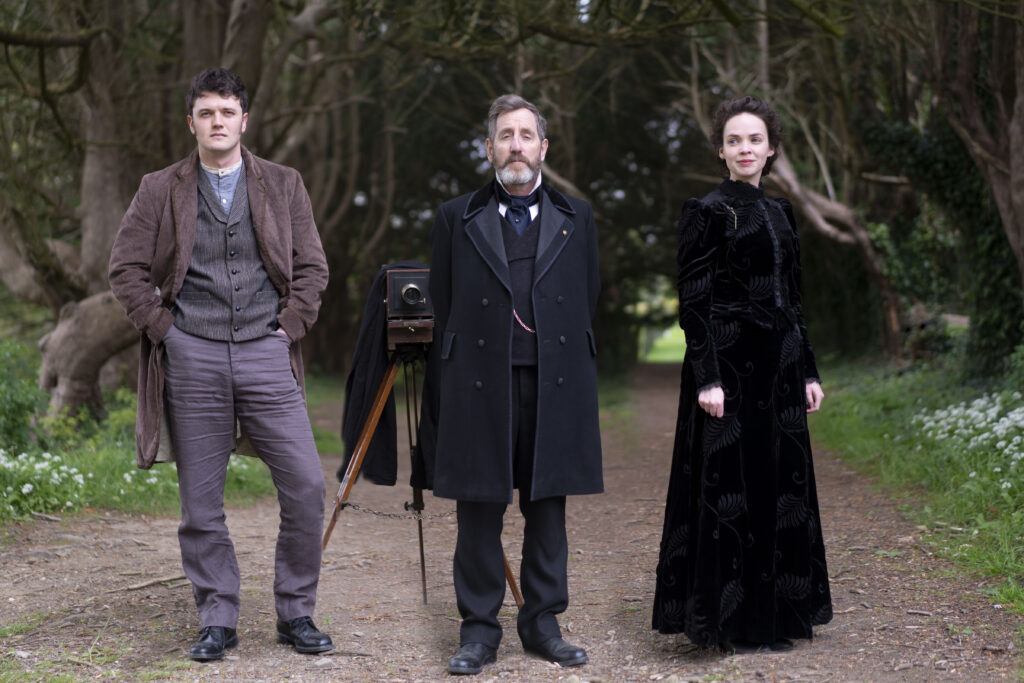
Pictures carry a degree of disposability in the modern era. Selfies on Instagram or Snapchat can disappear into the void not long after they’re taken. Set in Ireland during the 1880s, Acorn TV’s new drama Dead Still captures an era back when photographs were still a valuable commodity, a luxury that few could afford.

The show follows Brock Blennerhasset (Michael Smiley), a memorial photographer who makes his living taking pictures of the recently deceased. A practitioner of the daguerreotype process, which uses steel plates to capture photographs, Blennerhasset finds himself in an era that is rapidly evolving, with cheaper and easier methods hitting the market. Accompanied by his niece, Nancy Vickers (Eileen O’Higgins), and gravedigger-turned-assistant, Conall Molloy (Kerr Logan), Brock goes about his business as a broader conspiracy involving the illicit photograph trade begins to ensnare him.

Dead Still owes its success to the delightful chemistry between Smiley, O’Higgins, and Logan. The three are absolutely marvelous to watch, elevating each other in practically every scene. Smiley brings an understated dry wit to Blennerhasset that’s well complemented by the more affectionate Nancy and Conall. The show makes a compelling case for why they’re drawn to each other, outcasts who find community in their rather peculiar line of work.

O’Higgins often sets the tone for the narrative, working wonders as the show’s sole primary female character. Nancy is maybe a bit more modern than period drama purists might like, but O’Higgins exudes such emotion in each scene that it’s practically impossible not to like the character. Dead Still looks like the kind of show that’s a lot of fun to work on, with a sense of joy that permeates through the screen.

The show finds a good balance between drama and comedy, frequently using humor to lighten the dark aesthetics. Blennerhasset’s coachman Cecil (Jimmy Smallhorne) is quite amusing, though Smallhorne brings a surprising amount of depth to the character. Dead Still makes great use of the Irish landscape, frequently giving the eyes plenty to feast on with its emphasis on old architecture.

The six-episode season mostly utilizes serialized storytelling, though the front half is a bit more self-contained. The narrative bites off a bit more than it can reasonably chew in six episodes, emphasizing world-building and character development over pacing of the narrative. This approach works pretty well, endearing the characters to the audience while leaving plenty of hunger for more. The season could’ve easily gone on for another four episodes.

Dead Still is way more fun than you’d expect from a period drama about photographing the recently deceased. The acting is superb and the production values are top notch. Acorn TV has a gem on its hands, hopefully one that has a second season in the works.

The entire six episode first season was screened for review.