Ian Thomas Malone

TV Reviews Archive

Monday

27

May 2019

3

COMMENTS

Game of Thrones’ Final Season Was a Frantic Mess

Written by , Posted in Blog, Game of Thrones, Pop Culture, TV Reviews
The image of Daenerys Targaryen’s massive armada sailing to Westeros at the end of season six ended up being the high point of her time on the series. After spending years building her up as the apex player destined to “break the wheel,” seasons seven and eight largely focused on tearing her back down, slowly eating away at her army until her opposition established a believable sense of equal footing. Dany may have taken King’s Landing with brute force, but her cause was lost with waiting, heeding Tyrion’s advice not to sack the capital at the expense of most of her original Westerosi allies.

Season eight sought out to complete Dany’s downward spiral, along with defeating the White Walkers and providing satisfactory conclusions for many of the show’s large ensemble. All in six episodes, a choice made by creators David Benioff and D.B. Weiss. To call this season rushed would be an understatement.

The first two episodes largely concerned themselves with table-setting for “The Long Night.” Episode two, “A Knight of the Seven Kingdoms,” stands out as one of the best of the series for its focus on the complex relationships between the many characters, an immensely satisfying episode that functioned as a bit of a finale in its own right. The calm pace of the first two episodes contrasts with the frantic nature of the final two, which barely took a moment to breathe, more than understandable given how much needed to be done before the end.

A six-episode season was never going to be enough to wrap up such a complex series, but a bigger issue was the fact that the show dedicated half its final run to an underwhelming villain who didn’t even factor into the endgame. The White Walkers may have been a presence in the show since the first episode, but the underwhelming battle of Winterfell failed to reflect the Night King’s billing as an arch villain. Considering how rushed the final three episodes felt, it’s clear that the Night King should have been disposed of last season, giving the show a bit more wiggle room to focus on its endgame.

The first four episodes all built up a feud between Daenerys and Sansa that ended up pretty much going nowhere. You could argue that Sansa’s feelings toward Dany helped turn Jon, Tyrion, and Varys against her, but the Northern territorial disputes were hardly needed in that regard. Dany’s burning of King’s Landing superseded any of the peripheral politics.

The show struggled to portray Jon and Dany’s relationship, complicated by a few reasons. Putting aside the incest, Kit Harrington and Emilia Clarke didn’t have much natural chemistry, exacerbated by the show’s reluctance to give them scenes alone together. Jon’s stabbing of Dany made for beautiful cinematography, but the gravity of the moment failed to accurately reflect the underdeveloped nature of their relationship.

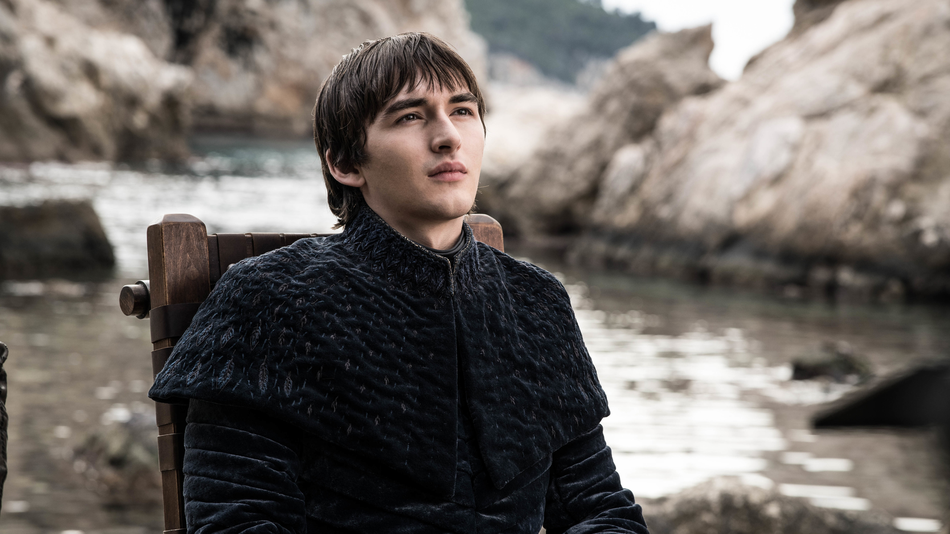
For a show ostensibly about the mechanics of power, the idea of having Bran end up on the show is complicated to say the least. His abilities helped turn the tide of the Battle of Winterfell, but the three-eyed raven stayed out of the conflict in King’s Landing. We don’t know if he made the decision based on the knowledge that he’d become king, but we don’t necessarily need to in order to recognize that a monarch shouldn’t possess that kind of absolute power.

The finale acknowledged Tyrion’s mistakes, suggesting he’d spend the rest of his life fixing them, but such a “punishment” perhaps fails to truly acknowledge his role in Dany’s decline. It’s hard to find a single moment in his time as Dany’s Hand where he offered good advice. Why would he be rewarded for such incompetence?

Cersei felt weirdly irrelevant for too much of the season. For all the excellent villains we’ve seen on the show over the years, Cersei has always been the best. The show made the right move placing her as the final big bad over the Night King, but it didn’t give her many opportunities to shine. Instead, she mostly stood around giving orders and not doing much else with her time. The show’s finest manipulator of politics sat on the sidelines for its final stretch, perhaps the strongest encapsulation of the issues with season eight.

The show did offer satisfactory conclusions for many of its key characters, including Arya, Sansa, Brienne, and Jaime. “A Knight of the Seven Kingdoms” worked so well for its focus on characters and not on moving the plot forward a mile a minute. We spent almost a decade with these people. The final season had its share of payoff for that investment, but it was constantly undercut by the rapid nature of the plot.

Finales are difficult to pull off under any circumstance. TV is generally much better at maintaining the status quo than concluding it. With so many loose strands heading into season eight, it seems unlikely that four more episodes would have been able to wrap things up much better than six did. That doesn’t really change the fact that this season spent much of its time poorly, a product of needing to do too many things at once.

Season eight made the regrettable mistake of giving half its time to an underwhelming villain at the expense of the characters who made the show special in the first place. For all the ways this series has felt larger than life over the years, becoming a worldwide phenomenon, its conclusion constantly felt unnecessarily rushed. These characters deserved better.
Tuesday

7

May 2019

0

COMMENTS

The Hot Zone Is a Brilliant Thriller That Kicks the Summer TV Season off with a Bang

Written by , Posted in Blog, Pop Culture, Reviews, TV Reviews

A series like The Hot Zone possesses a kind of natural antagonist that crawls under the skin of its audience through its simple realism. Based off Richard Preston’s 1994 bestseller of the same name, the series depicts the Ebola virus in two separate time periods, from its 1976 outbreak in the central African rainforest to its 1989 discovery in a primate quarantine facility in Reston, Virginia. National Geographic’s upcoming limited event supplies a sense of terror that few series can wield in such an effective manner.

At the heart of The Hot Zone is Dr. Nancy Jaax, an Army colonel working as a veterinary pathologist at the United States Army Medical Research Institute of Infectious Diseases, dealing with some of the most dangerous viruses on the planet. Played by Juliana Margulies, Jaax leads the effort to diagnose and later contain the facility in Reston that potentially possesses an existential threat to America. While dealing with the occasional sexist remark, Marguiles plays Jaax as a force of nature on the base, a careful professional working diligently to get to the bottom of what they discovered on U.S. soil.

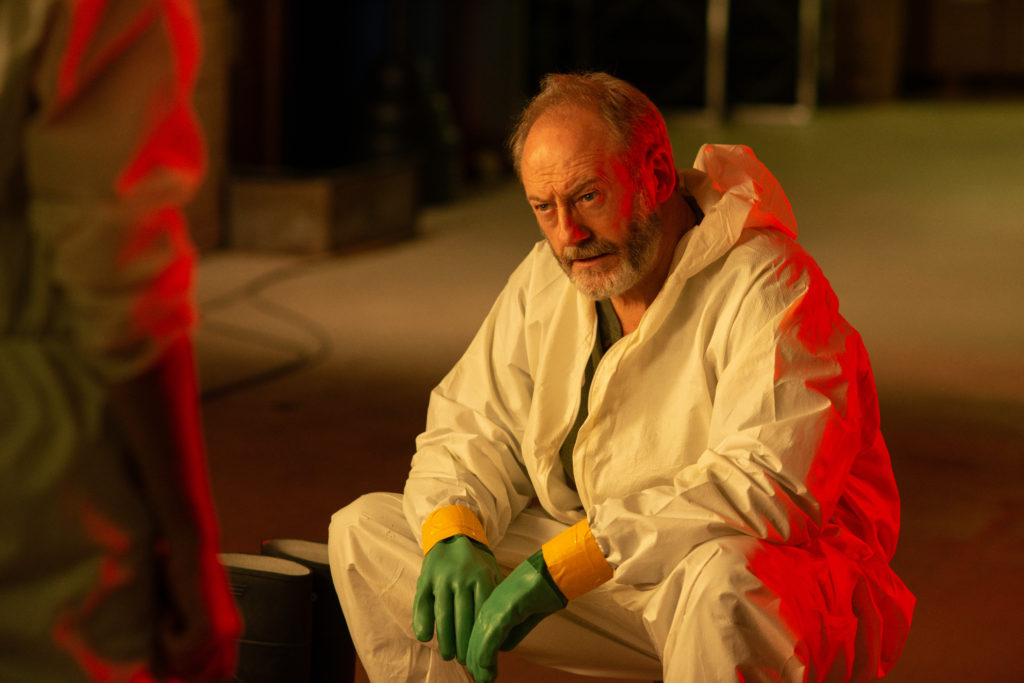
Aiding her efforts are Dr. Peter Jahrling (Topher Grace), a civilian working in the USAMRIID, who initially discovers that the virus plaguing the monkeys is more than a simple case of Simian hemorrhagic fever, and Wade Carter (Liam Cunningham), her mentor who was on the front lines of the Ebola outbreak in 1976. Carter is also the focus of the series’ numerous flashbacks as he tries to figure out how to deal with the virus tearing apart central Africa. Jaax’s husband Lt. Colonel Jerry Jaax (Noah Emmerich) works alongside her at the base, often acting as a go-between with the higher-ups, cautious to prevent the outbreak from becoming a nationwide panic.

The Hot Zone does an excellent job of breaking down the science behind the virus for a general audience. The show takes a thorough approach to the Reston disaster, exceptionally well-paced over the course of its six episodes. The Africa flashbacks provide an additional broader perspective on Ebola, showing the devastating effects of the virus that continue to this day.

Part of what makes The Hot Zone so compelling is its grasp on the nature of suspense. The series hones in on the basic fundamental fear that Ebola invokes, an incurable plague that one can become infected by with a simple breath of air, brutally tearing one’s insides apart as it wreaks its carnage. Several scenes look like they could have been part of an installment in the Resident Evil franchise, with disaster lurking at every corner. Like the characters in their hazmat suits, there’s a natural sense of claustrophobia that reverberates back to the audience.

Character development can be a tricky subject for limited series, especially ones as plot heavy as The Hot Zone. The series takes the time to emotionally invest in its subjects, enhancing its narrative by giving the audience more to care about than just the virus. Jaax is more than a scientist fighting a deadly virus, she’s a mother, wife, and daughter who cares deeply about the people she works with and the nation she’s trying to protect. There’s real tangible growth in this journey for many of the characters, a rarity for a show that almost certainly won’t see another season.

Bolstered by a stellar cast, The Hot Zone is a brilliant thriller that kicks the summer TV season off with a bang. The three-night format is a great way to experience the show, giving the audience two episodes of this delectably bingeable suspense ride at a time. One of the best limited series of the year so far, National Geographic’s adaptation of Richard Preston’s bestseller is a joy to watch from start to finish.

Saturday

17

November 2018

11

COMMENTS

The Kominsky Method Is an Embarrassing Waste of Time for Everyone Involved

Written by , Posted in Blog, TV Reviews

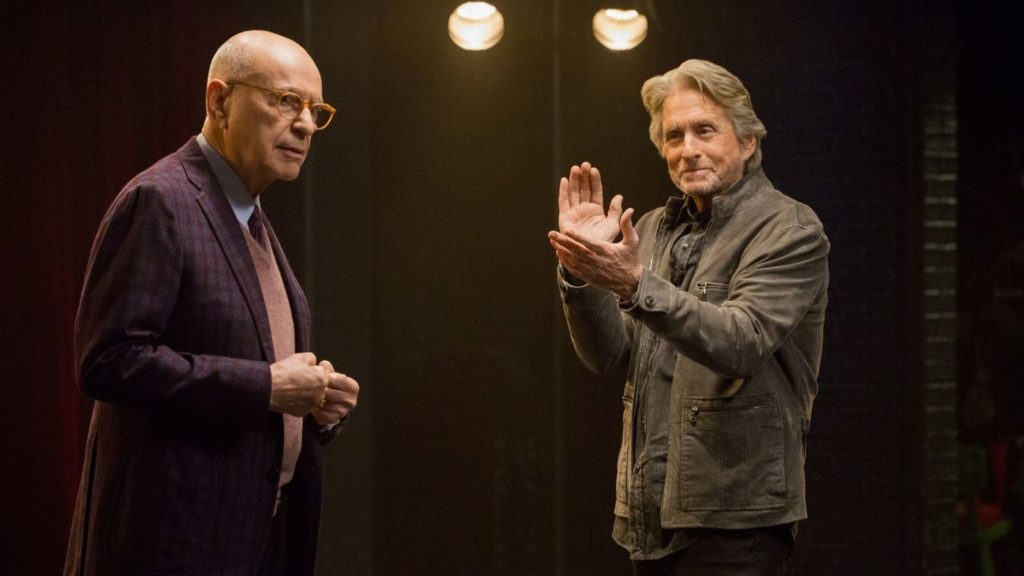
The opening scene of The Kominsky Method throws a nod to non-binary people, an inclusive tone contradicted a few minutes later when Michael Douglas’ title character holds an embarrassing public inquisition to his acting class over feminine hygiene products clogging his studio’s bathroom. This contrast embodies the struggle at the heart of the show, acutely aware of the era it occupies while unable to resist the low-hanging fruit of sexist toilet humor. Quite unsurprisingly, The Kominsky Method is exactly what you’d expect if you asked someone to dream up what a Chuck Lorre take on Grace & Frankie might look like from a straight man’s perspective. The result is a pathetic attempt to sound intellectual while offering little other than the basic novelty of watching Michael Douglas interact with Alan Arkin in the comfort of your own home.

The Kominsky Method is ostensibly a show about aging. Douglas’ Sandy Kominsky is a moderately successful acting teacher who dates his students even though he’s demonstrably aware that such behavior is hardly acceptable in the #MeToo era. Arkin plays Norman Newlander, his agent who spends much of the season grieving his wife, who dies early on in the series. The show chooses a grand life question to ponder in each episode, picking at it like an unwanted salad that comes with your meal, something that doesn’t need to be seen to completion.

Occasionally, The Kominsky Method hints at modern culture, like political correctness, as if it wants to say something meaningful about the nature of humor in an era where marginalized people are allowed to publicly object. Problem is, the show really doesn’t have anything to say besides a snippet of commentary one might pull from a segment on Fox News. It never commits to any particular direction, particularly on display with the handling of Newlander’s wife, whose terminal illness is originally exploited to further Komsinsky’s romantic storyline before becoming the main plot driver for the next few episodes. The show is desperate to sound insightful, but it can’t seem to make anything out of the scenarios it forces its characters to play out.

The Kominsky Method isn’t so much bad as it is simply not good, relying extensively on the name recognition of its stars to substitute for an indecisive narrative. The entire show is constructed similarly to a scene that might be performed in an acting class, an incomplete scenario used to showcase the talent of the actors. Douglas and Arkin are talented, but this was a given already. The show is far too content to coast along on their abilities.

Part of what makes Douglas such a charm in recent movies such as Ant-Man and the Wasp is that he genuinely looks like he’s having fun. His own enjoyment is less convincing in The Kominsky Method, like a college freshman out of a place at a foreign film screening where they don’t understand the jokes. The Kominsky Method doesn’t really have jokes, but rather things to smile at occasionally if for no other reason than to simulate the concept of enjoyment.

The Kominsky Method is very watchable television, but it’s an empty experience once one moves past the novelty aspect. The beauty of television is that the viewer isn’t necessarily required to do that. A person can sit down and enjoy two actors working off each other in the latter stages of their careers, but the experience could have, and should have, been so much more. The Kominsky Method might be Netflix’s laziest offering that anyone would be expected to take seriously. The “peak TV” label is one handed out generously in this era, sometimes, sadly, to shows that expect it to be given as a birthright before laying down anything of substance to merit such praise.