Ian Thomas Malone

Yearly Archive: 2026

Tuesday

14

April 2026

0

COMMENTS

Classic Film: To Live and Die in L.A.

Written by , Posted in Blog, Movie Reviews, Pop Culture
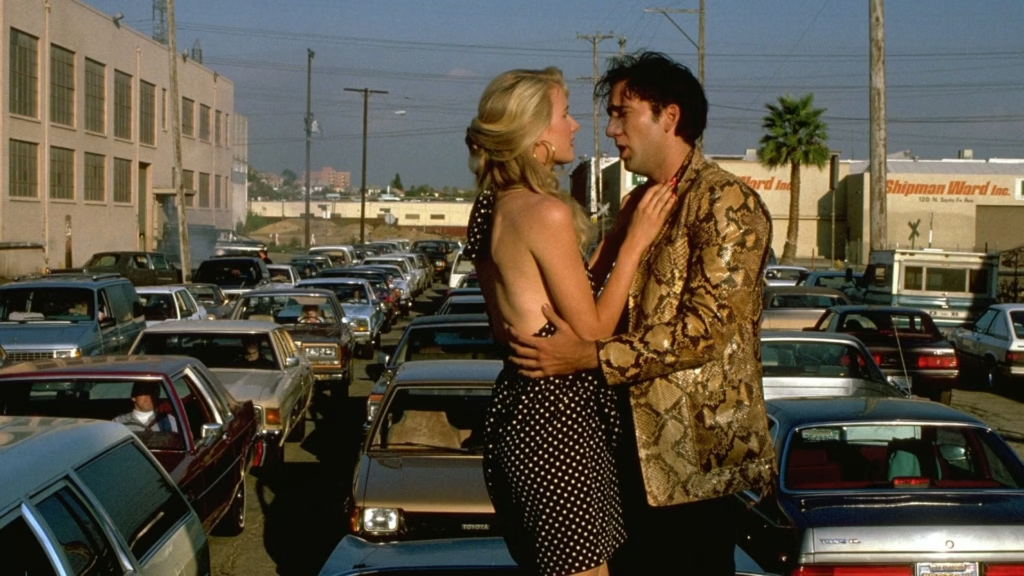
The city of Los Angeles is in a tumultuous era for its marquee industry. As film studios gobble each other up, and bureaucratic red tape makes it harder than ever to film in the entertainment capital of the world, it can be easy to forget the vibrancy that the city brings to each production that chooses to call it home. The city itself is essentially the main character of the 1985 classic To Live and Die in L.A.

Richard Chance (William Petersen) and Jimmy Hart (Michael Greene) are Secret Service agents assigned to a counterfeiting case in Los Angeles after foiling a terrorist plot to assassinate President Reagan. Hart, imminently approaching retirement, spends his last few days on the job locating the counterfeiter’s warehouse, run by Rick Masters (Willem Dafoe). Hart is killed after discovering the operation, with Chance vowing to avenge his mentor.

Now working with John Vukovich (John Pankow), Chance vows to take down the counterfeiting ring and avenge his partner, regardless of ethical lines. Vukovich takes umbrage with Chance’s unethical approach to the case, including his relationship with Ruth (Darlane Fluegel), a convict turned informant who’s out on parole. Chance frequently extorts Ruth by threatening to send her back to prison, the first of many laws he tramples over in his pursuit of Masters.

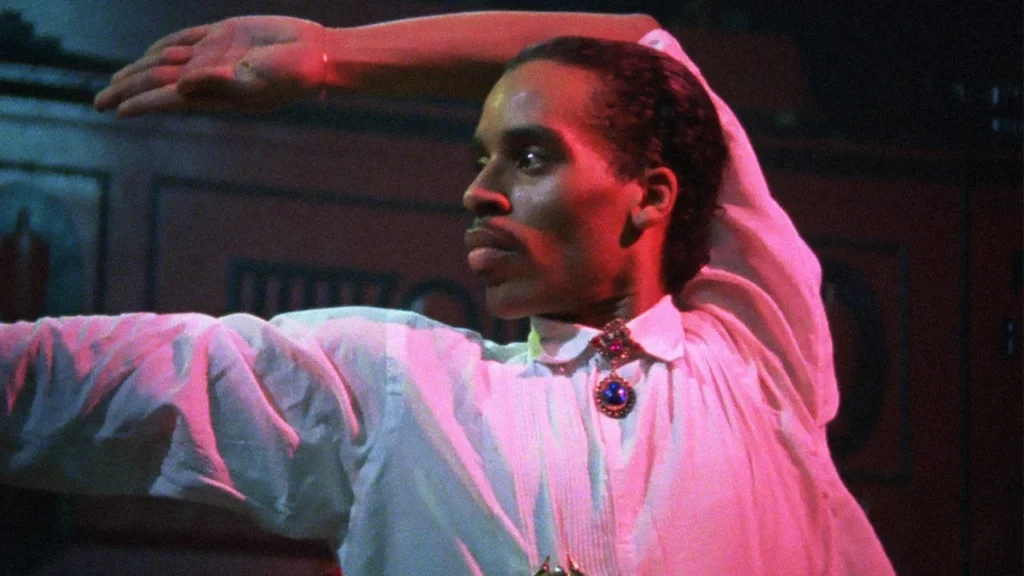
Director William Friedkin was no stranger to the genre by 1985, having previously directed The French Connection, one of the gold standards of American thrillers. To Live and Die in L.A. is a masterclass of dramatic tension. Friedkin never lets up across the 116-minute runtime, an immaculately paced fever dream set against the dreamy backdrop of the city and Wang Chung’s spectacular score.

Friedkin’s triumph comes from an extended car chase, one of the best in film history. To Live and Die in L.A. is a rare case of style mattering more than substance. Petersen does an admirable job in the lead role. Friedkin isn’t very interested in exploring Chance as a person, but Petersen more than sells his determination to avenge his friend.

Chance’s tenuous relationship with Vukovich is a classic tale of Los Angeles, a city full of transplants. Many come to the West Coast with no connections, and little more than a suitcase. LA is the kind of place that rewards those with an open heart and a scrappy, endless drive. Maybe it’s the sunshine, or the abandoned warehouses everywhere, but LA is the kind of city where you can make a new best friend in the course of an afternoon.

LA is also the kind of place where an artist can parlay their talents into a successful counterfeiting operation. Masters is the film’s most interesting character. Dafoe beautifully plays into Rick’s mystique. You can’t always tell if he wants to kill Chance, or sleep with him. Maybe both, another classic tale of the city.

To Live and Die in L.A. is kind of a mess. Friedkin threw character development out of the window, but managed to sustain his narrative for almost two hours on vibes, beautiful people, and Wang Chung. It doesn’t make a lot of sense, but with car chases like this, who’s really thinking about anything?

Friday

10

April 2026

0

COMMENTS

Classic Film: Brink!

Written by , Posted in Movie Reviews

A cornerstone of Gen-X culture was the fear of “selling out.” Joy was not tied to the clutches of capitalism. You made art for the love of the game, not for profit. Nirvana, the standard-bearers of the entire generation, famously kept their ticket prices low, criticizing the artists who exploited their fans.

That kind of anti-profit mindset drives the narrative of the 1996 Disney Channel Original Movie Brink!, a loose adaptation of the 1865 Dutch children’s novel Hans Brinker, or the Silver Skates. Andy “Brink” Brinker (Eric von Detten) is a young high school student who skates strictly for fun. His friend group is known as the “Soul-Skaters,” eschewing monetary gain in favor of their love of the game.

A rival group of high schoolers skate for Team X-Bladz, which pays them a salary, along free with gear and promotional opportunities. Team X-Bladz is led by Val (Sam Horrigan), a vicious bully unafraid to cheat to achieve his objectives. Val sees his teammates as a commodity, victory his only lodestar.

The Brinker household is put under financial strain when Andy’s father, Ralph (David Graf), suffers an injury at work. With his father’s disability pay coming to an end, and an uncertain future at his construction job, Andy joins Team X-Bladz, leaving his friends out to dry at the upcoming Invitational. Andy leaves everyone in the dark, including his father, who forbade him to try out for Team X-Bladz, instead finding employment for his son at the local dog groomer, Pup ‘N Suds.

Brink! is a decidedly anti-capitalist narrative that goes to great lengths to avoid engaging with the financial reality of the Brinker family, undercutting the film’s valuable warnings to future influencer generations. Andy is a phenomenal skater. Even Val, the stereotypical high school bully, acknowledges the raw talent of his carefree rival.

The real antagonist in Brink! is the American healthcare system. Director Greg Beeman covers for capitalism in several peculiar ways. Val’s villainy is amped up to the point of absurdity. Jimmy (Geoffrey Blake), the owner of Team X-Bladz, is not a bad dude at all. He’s actually quite pleasant in all of his interactions with Andy. His only real crime is putting control of his expensive team in the hands of a vicious high school student.

The other members of Team X-Bladz are also not bad people. Boomer (Walter Emmanuel Jones, an original Power Ranger) is quite nice to the Soul-Skaters. The film tries hard to promote an anti-capitalist message, at odds with the reality that Val, who possesses a tenuous grasp on the levers of Team X-Bladz, is the film’s only bad guy.

The film also bends over backwards to craft a scenario that makes the perpetually affable Brink into a bad guy. Andy was trying to do the right thing by helping his father out. His main crime was lying to his friends, particularly defecting to a rival team ahead of the Invitational, itself a precursor to the Championship (neither tournament has any name more specific than that).

The narrative loses a bit of steam when Andy’s lies catch up to him. His friends shun him, even after he explains his parents’ financial situation. To them, refusing sponsorships was something they all did together, because money would dilute their enjoyment of the sport.

The film’s through line boils down to “Skating is what we do. It’s not who we are.” Brink achieved this revelation after his father confessed to having put too much of his own identity into his job. The message is clear. Work and play are separate.

In a fairy tale world, this theme might make some sense. The problem is that film doesn’t exist in a vacuum. Even in 1998, Brink! is dealing with broader safety-net issues that still plague America to this day.

The “Soul-Skaters” are supposed to be the good guys. But Jimmy and his Team X-Bladz aren’t really villains besides Val. Andy’s friends on the other hand, refuse to forgive Andy until he rejects his opportunity for financial gain. Andy is the best skater among them, presented with a real chance to help benefit his family. His real friends stood in the way of that, a theme endorsed by the film’s narrative.

Gen-X hated selling out. Gen-X can also afford homes. The idea of suppressing monetizable skills in favor of some purity test is fine in the abstract.

But Brink! is a film made by Gen-X for predominantly millennial audiences. Few millennials have the same safety nets that were already disappearing in the 90s. The influencer era has opened so many doors for artists and athletes to monetize their talents.

Is that really so wrong? Brink! is a fun film. Von Detten has a certain charm that makes him easy to root for. This film tackles big themes, among the more ambitious efforts of the 90s DCOM output.

Andy Brink has a lot of integrity. Brink! as a film leaves a lot to be desired on that front. High school is a period where children start to grow up. Capitalism is an unavoidable aspect of reality. Unfortunately, for many, so is selling out. Gen-X might think that’s lame, but people in glass houses shouldn’t throw stones at future generations, most of whom can’t afford any house at all.


Monday

6

April 2026

0

COMMENTS

‘The Drama’ review: Zendaya and Pattinson salvage a charming, underwhelming romcom

Written by , Posted in Blog, Movie Reviews, Pop Culture

Society has a weird way of selectively clutching its pearls regarding morality. We’ve celebrated bad people for years, villains we love to hate. But social issues, like gun violence and abortion, exist in this space, where people second-guess the suitability of the subject matter for artistic purposes.

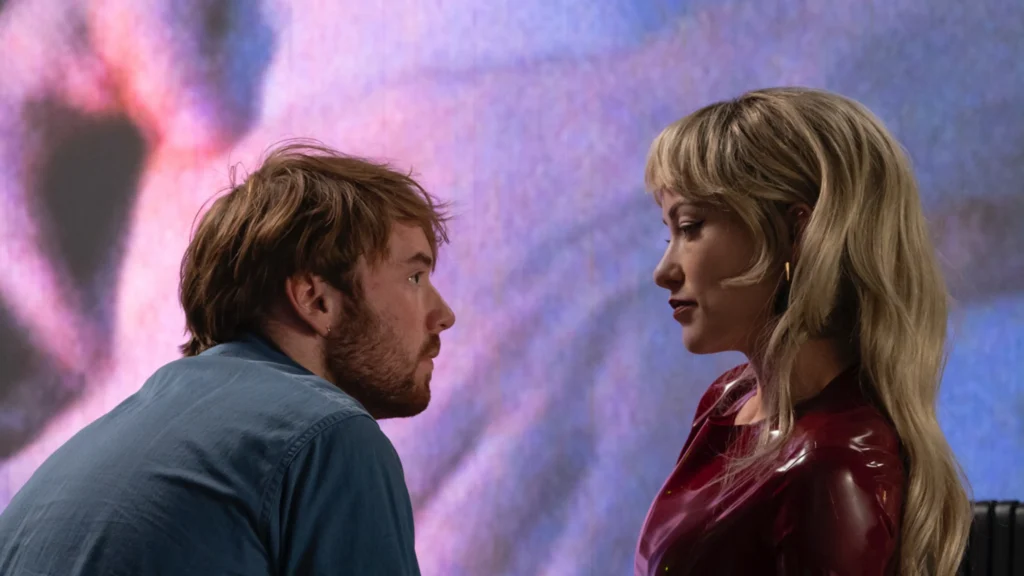
The Drama is a film that basks in the taboo nature of its material. Charlie (Robert Pattinson) is a British museum curator living in Boston. He notices Emma (Zendaya) reading a book. Rather than engage her in a normal conversation, Charlie lies about having read the book.

The narrative takes a time jump to right before Charlie and Emma’s wedding. At a wine tasting that seemed a little too close to the wedding, the two get drunk with their best man and maid of honor, each sharing the worst thing they’d ever done. The relatively harmless crude game took a turn when Emma revealed that as a child, she’d planned and almost carried out a school shooting.

Director Kristopher Borgli is clearly having the time of his life exploring the messy nature of love, set against the backdrop of the most heinous hypothetical many could think up. Plenty are familiar with the concept of “love makes you do crazy things,” but that whole dynamic takes on a different meaning when love is making you forgive crazy things. The narrative essentially exists in a level deeper than that, as the entire case against Emma amounts to a thought crime, something she came close enough to achieving that she became deaf in one ear from rifle practice, but not actually something she went through.

Charlie, on the other hand, has more tangible deficiencies. He’s a liar. His friends who are judgmental of Emma have also done bad things in their lives. The Drama works best as a narrative when it allows itself to explore the inherent messiness in watching not great people judge someone who is probably a psychopath.

Zendaya brings such a quiet intensity to Emma that really sells the whole experience. Her performance highlights Emma’s vulnerabilities that draw you in, even if you don’t trust her in the slightest. Charlie’s infatuation with her, and his reluctance to cut her from his life, make perfect sense.

In Zendaya, Borgli found an actress capable of eliciting all the nuance from Emma needed to make everything work. His screenplay and narrative choices betray a lack of confidence. Early on, Emma reveals that Charlie was her first real crush, having met him at the age of 28, a sequence clearly meant to convey a personality disorder.

Frequently throughout the film, we see a younger Emma (Jordyn Curet), sometimes alongside Charlie. We see some of Emma’s motivations, lonlieness and a desire to belong, not dissimilar from alt-right fare centered on the manosphere. At times, it feels like Borgli is simply throwing stuff out into the ether as possible explanations for Emma’s character rather than exploring her through the mechanics of the material itself.

Emma’s revelation consumes the whole film, a layered thought experiment that isn’t explored with nearly the same depth with which it was created. There’s a lot of fun to be had in watching Charlie wrestle with his emotions. Pattinson is perfect for the way, infectiously charming while wielding the kind of ego necessary to entertain the thought of staying with Emma.

We see Charlie’s personality deficiencies mostly through the prism of his relationship to Emma. We don’t learn much about Charlie himself. Borgli shows a bit of Charlie and Emma’s work lives to get a glimpse of who they are outside of their relationship, but the scenes border a bit on filler. These characters are fun to watch, but they’re not really convincing people.

Borgli also has nothing interesting to say about school shootings, somehow completely removing politics from potentially the most politically charged topic in the country. At one point, Charlie wonders how many other Americans think about mass shootings, considering how many we have each week. This observation would be more compelling if it went anywhere.

Zendaya and Pattinson have enough chemistry to buoy the experience, but The Drama lacks depth. This is a really interesting subject, explored solely at the surface level. As a filmmaker, Borgli has a lot of impressive technical skills and a firm grasp on the pacing of his work. The 105-minute runtime flies by.

School shootings are a part of American life. There is no reason we shouldn’t be able to tackle this subject in our art, even if some people find that notion gauche. Art is not supposed to be comfortable.

But the best art also has a perspective. The Drama has a really engaging hook. It has brilliant lead performances by two actors at the top of their games. If only it had something more interesting to say.

Friday

3

April 2026

1

COMMENTS

‘The Super Mario Galaxy Movie’ review: another bucket of slop for your feed trough

Written by , Posted in Blog, Movie Reviews, Pop Culture

For all the talk of the difficulties of landing a perfect sequel, the formula offers a few key advantages. Sequels don’t have to dedicate chunks of their runtimes to establishing their characters. We know that more isn’t always better, but with a franchise like Mario, it really should be. There’s certainly no shortage of subject material to adapt.

The Super Mario Galaxy Movie dives right into its plot. Princess Rosalina (Brie Larson) raises the Lumas, a cute starry species, on the Comet Observatory, having long ago sent her sister Peach (Anna Taylor-Joy) to the Mushroom Kingdom. Rosalina is captured by Bowser Jr. (Benny Safdie), seeking to carry on his father’s legacy.

The film largely follows Peach’s efforts to rescue her sister, while Mario (Chris Pratt), Luigi (Charlie Day), and newcomer Yoshi (Donald Glover) guard the Mushroom Kingdom back home, including their Bowser (Jack Black), still their prisoner after the events of the first film. There are some cursory thoughts given to things like character development, quickly abandoned. The narrative rarely lets up the gas, even to properly introduce the newcomers.

Directors Aaron Horvath and Michael Jelenic have no ambitions for their work beyond crafting a feature-length cutscene, a gorgeous film with absolutely zero substance. It’s almost astonishing to see how little effort was put into telling a story. The brisk 98-minute runtime has little room for an overstuffed cast or anything at all besides constant action sequences.

The Super Mario Galaxy Movie falls into the same trap as many recent franchise sequels of prioritizing new characters at the expense of the titular hero. Mario is barely a factor in his own movie. There isn’t a single scene where Chris Pratt makes an impression as the leading character of the film.

There is a certain temptation to say that Peach is actually the star of the movie, given her added screentime. The relationship between Peach and Rosalina is certainly the emotional anchor, and the banter between Peach and Toad (Keegan-Michael Key) is a lot of fun. The film doesn’t really have a star, constantly bouncing back and forth between its characters and its action sequences, rarely taking a moment to breathe.

The lack of downtime really kills the humor. Day, Key, and Black were all highlights of the first film, the latter clearly having the time of his life as Bowser. Black is completely wasted, while Day and Key are given little to do. Worst of all, Donald Glover is given practically nothing to work with for Yoshi. They’re all just kind of there.

The film does have a lot of easter eggs. Longtime Mario fans will be impressed with the way the throwbacks were woven into the action, but that dynamic begs the broader question. Why wasn’t such care taken toward the rudimentary fundamentals of this story? Why is this such an empty experience?

The answer lies in the bread and butter of filmmaking. We are given no reason to care about Mario. The only effort made to make us care about Peach comes from tugging at the emotional heartstrings of a sibling relationship, not from work put into the screenplay. The action is quite good. Once again, Horvath and Jelenic have shown us that they know how to adapt video gameplay, a feat that might be impressive to anyone who hasn’t seen one of those epic Super Smash Bros. openings. They’re really, really good at the easiest part of this whole experience.

The storytelling is pure slop. To call it paint-by-numbers would be insulting to the brainpower required to count. The Rosalina rescue mission is lazy and predictable, just like the whole experience, which is actually pretty frustrating if you’ve ever played a Mario game, which almost always has that one level that drives you crazy. Unlike this nonsense, those games have identities.

That level for these movies appears to be character development. The Super Mario Galaxy movie has some entertainment value from the nature of the spectacle, but it’s a stunningly empty experience. Mario’s source material is a video game. That’s no excuse for his exceedingly lazy characterization over the past two films.

Mario games have never forgotten that great gameplay doesn’t have to come at the expense of great art. Super Mario Galaxy is one of the greatest games of the 21st century. If only this movie had any ambitions beyond replacement-level content for young children with poor attention spans.

Tuesday

31

March 2026

0

COMMENTS

The Easter Bunny Is Comin’ to Town

Written by , Posted in Podcast

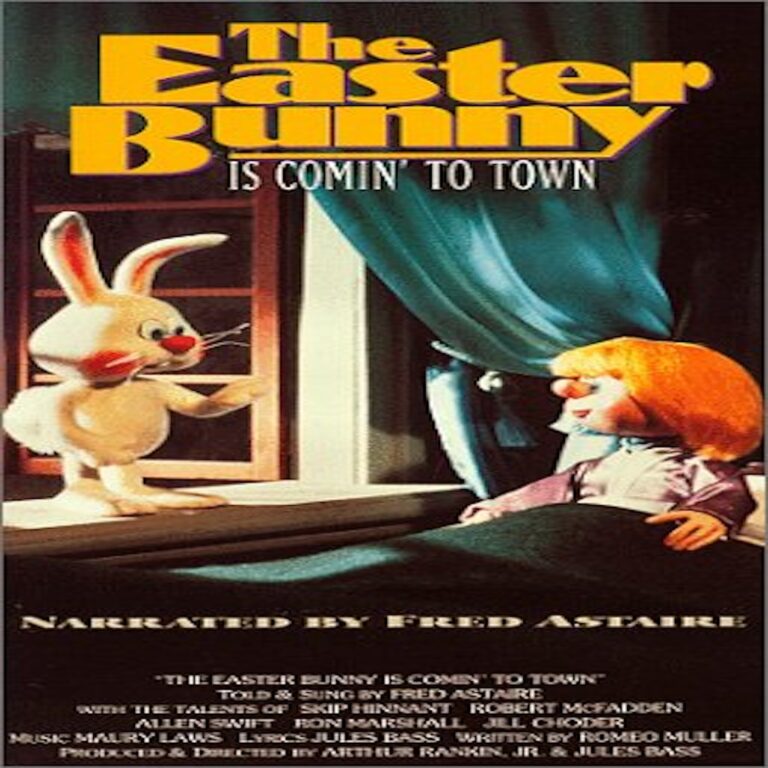
We are back in the Rankin/Bass cinematic universe for their only stop-motion Easter special. A loose sequel to Santa Claus is Comin’ to Town, the Easter version is pretty much running on fumes right from the start.

Did you ever wonder why we eat jelly beans and wear nice clothes for Easter? Have you ever stopped to appreciate a hard-boiled egg? If so, you might want to check out this complete mess of a holiday narrative.

Ian’s newsletter, covering politics and LGBTQ issues: https://ianthomasmalone.substack.com/

Friday

27

March 2026

0

COMMENTS

‘Pizza Movie’ review: an eager casts buoys this messy, endearing college stoner film

Written by , Posted in Blog, Movie Reviews, Pop Culture

The buddy stoner movie is a timeless genre. It’s hard to look back on your college days without a tinge of nostalgia for the days when acquiring pizza was the most complex issue at hand. Directors Brian McElhaney and Nick Kocher turned to the absurd for their take on well-trodden territory, swapping the now-legal marijuana out for something trippier.

Jack (Gaten Matarazzo) and Montgomery (Sean Giambrone) are college roommates and close friends. Jack earned the ire of his university by getting the school football program cancelled, now subject to numerous bullies who pin him down and fart in his face on a regular basis. Both on the nerdier side, Jack and Montgomery harbor resentment toward Lizzy (Lulu Wilson) for abandoning them in favor of the cool kids group.

After the bullies destroy their alcohol, Jack and Montgomery take an illicit substance called “M.I.N.T.S.” which produces a highly specific type of hallucinogenic high that’s essentially just a bad trip. The only counterbalance to the drugs is pizza, which Montgomery orders by delivery drone. Their efforts to acquire the pizza are thrown into disarray by Blake (Jack Martin), an obnoxious R.A. who puts the building on near lockdown after catching a student with weed.

McElhaney and Kocher move to the beat of their own drum. Pizza Movie is an absurd trip that soars above its many narrative shortcomings, bolstered by outlandish humor and the stellar chemistry between Matarazzo and Giambrone. The dialogue is strong and works well with two leads who clearly showed up to play. McElhaney and Kocher know how to get a laugh, even sometimes from jokes that don’t quite work.

None of these characters are particularly complex people. The script makes the function of M.I.N.T.S. needlessly complex, introducing stages of the drug that makes the movie feel too formulaic at times. The second act almost sinks the entire experience, letting a lot of the air out of the room after a strong start.

In many ways, Pizza Movie feels like a high school movie forced to masquerade as a college narrative. It’s not clear what year Jack and Montgomery are supposed to be in. Much of the social politics, particularly the bullying, feels out of place in a college setting.

The film doesn’t dedicate enough time to character development to pack much of an emotional punch, but there’s still a lot to enjoy in watching Matarazzo, Giambrone, and Wilson work, three kids desperate to let their freak flags fly in a world that demands conformity. The jokes rely a bit too much on gross-out humor. McElhaney and Kocher do themselves no favors with some cheap meta jokes late in the third act, a script in desperate need of revision.

Pizza Movie is kind of a mess, the sort of film that requires you not to think too hard about the plot mechanics. McElhaney and Kocher are fantastic technical directors, but leave a lot to be desired as storytellers. The film isn’t likely to go down as a college classic, but this trip is a fun way to spend the evening.

Monday

23

March 2026

0

COMMENTS

‘Project Hail Mary’ review: a bland, entertaining science fiction narrative

Written by , Posted in Blog, Movie Reviews, Pop Culture

The past ten years have provided a lot of perspectives on the question of extraterrestrial life. If there were aliens out there, would they really want to come to America? Could they really be any worse than humanity ourselves? The film Project Hail Mary finds some unique perspectives on the subject amidst a narrative that’s rather familiar.

Dr. Ryland Grace (Ryan Gosling) awakes from deep sleep on a spacecraft, quickly learning that he’s the only survivor of the three-person crew. Grace figures out that he’s on a one-way mission to a distant star to prevent microorganisms from eating the sun. As the Hail Mary approaches its destination, Grace encounters an alien spacecraft piloted by a five-legged alien who resembles a pile of rocks.

Dubbing his new friend Rocky, Grace bonds with the alien as they figure out how to stop the organism and save their respective planets. Grace develops a system of communication with Rocky based on echolocation. Periodic flashbacks to Grace’s time on Earth reveal some of the particulars of the mission, organized by Eva Stratt (Sandra Hüller).

Based on the 2021 novel by Andy Weir, directors Christopher Miller and Phil Lord seem to be attempting to recapture the cinematic magic of another adaptation of Weir’s work, The Martian. The duo even enlisted Martian screenwriter Drew Goddard for their first effort in the director’s chair since 2014’s 22 Jump Street. Godard’s screenplay evokes plenty of the humor from The Martian, not always to the film’s benefit.

Gosling puts in great work in the lead role. Grace is sweet, funny, and easy to root for. Like the Hail Mary ship itself, sometimes it feels like Gosling could be operating on autopilot, a broader problem as the narrative hums along.

There’s an innate sense of sadness to Grace’s life that Lord and Miller refuse to allow Gosling to work with, limiting the impact of their competent but forgettable work. Project Hail Mary is a beautiful film to watch. The special effects are great, and the physical set of the ship is well-made. It’s hard to shake the idea there’s something missing here.

Project Hail Mary suffers from an intense lack of suspense. There are predictable hiccups along the way, but the film doesn’t know how to get its audience to buy into its drama. The 156-minute runtime is excessively bloated for a feature that really doesn’t have anything original to say.

Miller and Lord never seem to care that Grace is essentially a one-dimensional character. The flashbacks hint at something more substantive that never really arrives. There are some interesting strands related to the nature of memory that aren’t explored in any meaningful way. Gosling gets a few moments to show off his signature charm, but not many, a peculiar dynamic across a film where he’s often the only human character.

Mankind made it to space because of ambition. Project Hail Mary has no ambition, a film simply content to go through the motions of what people expect from a science fiction narrative. Lord and Miller, along with Gosling, are consummate professionals. The fact that they have nothing interesting to say somehow doesn’t completely sink their work, a fairly impressive feat of its own.

Project Hail Mary is an underwhelming exercise in competent filmmaking. Science fiction at its best tends to evoke a feeling of awe and wonder. It’s hard to be blown away by anything on the screen when the narrative doesn’t offer much besides memories of earlier, better work.

While at least twenty minutes too long, there is some fun to be had watching Grace and Rocky exchange their thoroughly unoriginal banter. Project Hail Mary could have been something great. It doesn’t appear that anyone involved with the film cared about such a lofty goal. The end result is an entertaining time at that theater, but nothing worth saving humanity over.

Thursday

12

March 2026

0

COMMENTS

The 2026 Oscar Nominees for Best Picture, Ranked

Written by , Posted in Blog, Movie Reviews, Pop Culture

2025 was a peculiar year for filmmaking. This is probably the weakest field of contenders in the post-pandemic years. The top half of the list features some exceptional movies, but it’s definitely not a year where practically any film could win.

I went back and forth on my prediction for Best Picture several times over the past few weeks, but I always returned to the conventional pick. Sinners is an outstanding film and would be a worthy winner. This year is a rare year where my favorite is also favored to win.

For a while, I thought this was a three-picture race between Sinners, One Battle After Another, and Hamnet, the latter serving as a more conventional pick opposite a genre film and one based on a Thomas Pynchon novel.

But I think this field shares a lot in common with the 2023 nominees. Everything Everywhere All at Once was heavily favored while also being a genre film and a box office hit, without a clear contender at the front of the pack. I don’t think OBAA made enough of a mark to steal Sinners’ thunder.

Here is my list, ranked by my own personal preference, not by likelihood of victory.

1. Sinners A horror film has not won Best Picture since The Silence of the Lambs, the year I was born. Ryan Coogler’s work is exceptional, an inviting sense of world-building that feels genuinely lived-in. Michael B. Jordan has never been better, and longtime underrated actor Delroy Lindo is finally earning recognition for his delightful performance. Horror is a well-trodden genre. Many have drawn comparisons between Sinners and From Dusk Till Dawn, which perhaps makes it even more impressive that Coogler managed to bring such an impressive perspective to the table.

2. The Secret Agent – Wagner Moura would probably be my pick for Best Actor if I had a vote. The Secret Agent is a delightful period piece about the political turmoil of the military dictatorship in Brazil. Director Kleber Mendonça Filho plays around with the nature of memory a lot, constantly defying audience expectations throughout the narrative. The film takes some big swings that don’t all land, but it’s a highly ambitious work that shouldn’t be missed.

Ian’s full review of The Secret Agent.

3. Marty Supreme Putting aside Chalamet’s obnoxious comments on ballet and opera (that went viral after Oscar voting closed, mitigating the damage), Marty Supreme is really, really good. Director Josh Safdie did a wonderful job in his first solo effort without his brother Benny since 2008. Chalamet is mesmerizing as a complete sleaze, which may not have taken that much acting. The tension in the pacing never lets up, an exhausting ride that still flies through a hearty runtime. The biggest knock against the film is that it did not surpass the highs of Safdie’s last film, Uncut Gems, while revisiting many of the same devices.

Ian’s full review of Marty Supreme.

4. One Battle After Another As a huge fan of Paul Thomas Anderson and Thomas Pynchon, OBAA felt kind of like a fever dream of everything I wanted in a movie. Its imposing 162-minute runtime absolutely flies by. It’s pretty laughable that Teyana Taylor wasn’t nominated for Best Actress, the heart and soul of a movie starring juggernauts like Leonardo DiCaprio and Sean Penn. DiCaprio puts forth his most interesting effort in years in what’s largely a supporting role. I really liked OBAA, and wouldn’t be upset if it won Best Picture. Like Marty Supreme, it loses a few points for not coming close to PTA’s best work, particularly There Will Be Blood, Magnolia, and The Master.

Ian’s full review of One Battle After Another.

5. Sentimental ValueRenate Reinsve first blew me away with 2022’s The World Person in the World. She puts forth excellent work here opposite Stellan Skarsgård, in one of the best performances of his career, in an intimate narrative about the remnants of a family long splintered. While mostly in Norwegian, Elle Fanning has a superb supporting role as an actress hoping to play Reinsve’s character in a film directed by her father. Director Joachim Trier makes a pretty outstanding case for why artists often make shitty parents. As an avid fan of foreign film, I was delighted to see Sentimental Value nominated, something I wish the Academy would do more of instead of giving nominations to lackluster releases by perennial contenders. Sentimental Value also gets bonus points for featuring the song “Same Old Scene” by Roxy Music, off a lackluster album I’d been playing heavily before watching the film, which was quite a bizarre coincidence.

6. Hamnet I was pretty shocked not to see Hamnet in the Best Cinematography category, especially over Frankenstein. Director Chloé Zhao’s meditation on grief is less about William Shakespeare, than Anne Hathaway, with a fantastic lead performance by Jessie Buckley. Hamnet delivers some truly compelling perspectives on the creative process that you don’t see much in the countless Hollywood narratives centered on writers. There’s a lot to admire in the way Zhao moves through her work, but much of the pieces of Hamnet work better than the collective final product.

7. Train Dreams Director Cliff Bentley heavily channels Terence Malick in the BP race’s other major commentary on grief. Joel Edgerton is exquisite as a laborer frequently away from his family in the late 1800s, a narrative that spans 80 years. It’s a tragic film that doesn’t wallow in its grief, but finds a lot of beauty in the quiet moments of life. Bentley’s gentle pacing that constantly evokes Malick is severely undercut by its heavy-handed narration. Another pass at the script might have made Train Dreams a serious contender amidst a fairly open year.

8. Bugonia Yorgos Lanthimos is a polarizing director who has created a lot of thought-provoking original work. The Favourite and The Lobster are two of my favorites of the twenty-first century, but I was not a big fan of his last BP nominee, Poor Things, which I thought meandered a bit too much. Bugonia had a leaner runtime, and wonderful performances from Emma Stone and Jesse Plemons, but the narrative doesn’t have a lot of meat on its bone. Bugonia peters out long before its third act, which itself has some glaring issues.

9. Frankenstein – Guillermo del Toro’s long-awaited passion project just didn’t do it for me. The special effects were lackluster. Del Toro captured Shelley’s aesthetic, but I didn’t feel her voice, particularly when the narrative shifted toward The Creature. Oscar Isaac, Jacob Elordi, and Mia Goth all put forth solid work here, but this was a rare miss from del Toro, an adaptation of a well-known book that doesn’t do much to justify its existence or its bloated 150-minute runtime.

10. F1 –  The Oscars have generally tried to have at least one blockbuster in the mix for Best Picture. This year has two legitimate box office hits, which bookend this list. F1 is a very entertaining remake of Top Gun: Maverick, which was once itself the token crowd-pleaser in the BP category. Brad Pitt delivered a compelling performance, even if you put aside the absurdity of a sixty-year-old professional race car driver. It was a lot of fun to see on the big screen, but I don’t think it has any business being in this race.


Sunday

22

February 2026

3

COMMENTS

‘Wuthering Heights’ review: Brontë’s depth is thrown out the window in this substance-free adaptation

Written by , Posted in Blog, Movie Reviews, Pop Culture

There is no set formula for what makes a successful film adaptation of a literary classic. The closest thing we might get to a rubric lies in the essence of the source material. Wuthering Heights is one of the most imposing novels in the English canon, a brutally miserable text with practically no one to root for.

At its core, Emily Brontë’s only book is about the ramifications of generational trauma. Heathcliff arrives to the titular Wuthering Heights as an orphan boy, quickly becoming the favorite of his adoptive father, Mr Earnshaw. Earnshaw’s two biological children have polar opposite reactions to Heathcliff. Hindley Earnshaw is jealous of his new brother, while Catherine “Cathy” sees a new pet, and later, the love of her life.

The generational trauma in the text is set in motion after the death of Mr Earnshaw. Hindley and his new wife Frances hate Heathcliff, beating him and reducing his status to that of a servant. With Heathcliff’s prospects limited, particularly by the restrictions and cruelty of his adoptive brother, now the master of Wuthering Heights, Catherine turns to their neighbor, Edgar Linton, as a potential match.

Heathcliff never gets over his poor treatment by Hindley, or his rejection by Cathy. Cathy dies during childbirth about halfway through the novel. Its second half is entirely consumed with Heathcliff’s desire for vengeance upon the descendants of Hindley and Edgar, plus his own hated son, born of his perplexing and cruel marriage to Isabella Linton, Edgar’s sister.

Heathcliff knew only cruelty as a child. Whatever sympathies the reader might feel for him are gradually washed away through the course of the text, as Heathcliff doles out brutality in more than equal measure. Mostly through the novel’s narrator, Nelly Dean, Brontë makes clear that Heathcliff is not a figure to root for.

For her third feature, Emerald Fennell largely truncates the sprawling nature of Brontë’s work. There is no Hindley Earnshaw, or subsequent generation. The second half of the book is gone. The quotation marks placed around the title Wuthering Heights make clear that this is a very different adaptation of the seminal book.

Heathcliff (Jacob Elordi, with Owen Cooper portraying young Heathcliff) comes to Wuthering Heights in much the same way as the book. Only now, Mr Earnshaw (Martin Clunes) is the degenerate gambler who beats him. Cathy (Margot Robbie, with Charlotte Mellington portraying young Cathy) is now an only child, who gives Heathcliff his name as a mark of possession, her pet to endure the boredom of her unstimulating environment.

From a stylistic standpoint, Fennell marvelously captures the essence of the book. Wuthering Heights is an imposing, dreary structure out in the middle of nowhere. By comparison, the Linton’s Thrushcross Grange is a beacon of hope, brimming with life. The cinematography beautifully captures all of the characters’ natural feelings of isolation, alongside the foreboding sense of dread that lingers of every page of Brontë’s prose.

Robbie and Elordi are both cartoonishly miscast. Heathcliff is unambiguously dark-skinned in the book, contributing to his sense of othering. Elordi does his best to capture Heathcliff’s brutishness, but it’s not particularly convincing.

In the book, Cathy was eighteen when she died during childbirth. Robbie is quite a bit older. The film makes modest allowances for this discrepancy, once referring to Catherine as being as old as a spinster, but Fennell misses a key opportunity to explore how these age dynamics might play into her new version of why Catherine abandoned her true love.

Cathy and Heathcliff’s unresolved sexual tension is a vital throughline in the book. Cathy basically edges Heathcliff into oblivion. He never stops loving Cathy, yet treats her daughter, who has many of her features, with inexplicable cruelty.

Fennell has no interest in keeping Elordi and Robbie’s hands off each other. In doing so, she relents on the undercurrent powering much of the novel. What takes its place is largely the downfall of her film.

Brontë wrote Wuthering Heights with such intensity and fervor that it’s hard not to admire her work, even if you never want to read it again. Fennell reduces all of that to a mere matter of vibes. This film is all about the vibes.

To be clear, there’s a lot to like about Fennell’s sense of atmosphere. Every frame is full of meticulously structured imagery. It’s a beautiful film to look at. The music, with a score provided by Fennell regular Anthony Willis, and original songs by Charli XCX, is delightfully on point.

But there’s an emptiness of substance that Fennell struggles to shake. Edgar Linton (Shazad Latif) is reduced to nothing more than a patsy. Nelly (Hong Chau) is barely around at all, lacking the delectable nuance she wields throughout the text.

The biggest crime is Isabella Linton (Alison Oliver), whom Fennell treats as a complete joke. Isabella’s loveless marriage to Heathcliff is not the confusing tragedy of the text, but an outlet for BDSM humor. Heathcliff is let off the hook for his cruelty, a recurring theme for Fennell throughout her narrative.

Brontë does supply reasons to feel bad for Heathcliff in the text, but she never tries to carry water for her character. Heathcliff is a bad man who unquestionably becomes the primary antagonist of the book for its second half. Fennell isn’t really interested in exploring the nature of his descent into a monster so much as she wants to make excuses for him. Nothing in Fennell’s Wuthering Heights is ever Heathcliff’s fault.

The absence of characters like Nelly or Mr Lockwood to process the ramifications of Heathcliff and Cathy’s romance isn’t really satiated by anything else in the narrative to give meaning to all this constant heartache and turmoil. Fennell isn’t interested in generational trauma, that much is clear. What exactly is she interested in, besides horny people in the middle of nowhere, with nothing to obsess about but each other?

Wuthering Heights is a brutal read. Brontë’s work largely endures on the strength of her prose, and the gravity of her ideas. There’s so much depth to this book. It’s the kind of narrative that sticks with you, even if you didn’t like a single character.

Fennell’s work is a lewd, empty fever dream. There are a lot of attractive people being horrible to each other. Her technical skills as a filmmaker are on full display, a narrative as gorgeous as it is vacuous. Shallow should never be a word that comes to mind regarding the work of Emily Brontë.

Tuesday

17

February 2026

0

COMMENTS

‘The Secret Agent’ review: a powerful commentary on time and memory

Written by , Posted in Blog, Celebrity Apprentice, Movie Reviews

One of the great powers of film as a medium lies in its ability to capture mood. Film offers a narrow prism into its subjects’ lives, two hours against a whole existence. The saying that the journey is more important than the destination has become a bit of a cliché. Some subjects, particularly fascism, carry more weight from the perspective of the atmosphere.

The film The Secret Agent (Original Portuguese title: O Agente Secreto) beautifully captures the all-encompassing nature of a brutal dictatorship. The narrative follows Armando (Wagner Moura), a former professor on the run. Armando travels to Recife during the Carnival, where his son Fernando (Enzo Nunes) lives with his dead wife’s parents. Armando syncs up with a dissident network run by the elderly Dona Sebastiana (Tânia Maria), who connects him with a job at an identity card office, which gives him a chance to search for information on his dead mother.

Director Kleber Mendonça Filho crafts an exquisite portrait of 1970s Brazil and its all-encompassing paranoia. An open sequence centers on Armando filling up for gas outside the city. A dead body sits fifty feet from the gas station, barely covered with a piece of cardboard. The police soon arrive, not to investigate the corpse, but to shake Armando down for a “donation,” making their priorities clear.

Mendonça Filho presents his narrative with the trappings of a political thriller. Armando encounters a corrupt politician, Ghirotti (Luciano Chirolli), who hires cheap hitmen to kill him. While his son is desperate to see Jaws, Armando’s only consistent communication with family comes from meetings with his father-in-law at the movie theater where he works as a projectionist.

Moura puts forth a spectacular performance in the lead role. Armando has all the trappings of a classic 70s thriller protagonist, a calm demeanor with an understated sense of suavity. You feel Armando’s paranoia through every frame, an exhausted man with no choice but to keep going, impeccably easy to root for.

Mendonça Filho has a constant bag of tricks for his audience through the film’s imposing 161-minute runtime. There’s a subplot involving a severed leg that transforms into a surrealist sequence. Set against the backdrop of Carnival, Mendonça Filho throws constant atmospheric whiplash at his audience, forced to reckon with the reality that authoritarianism never takes a breather, even in moments of celebration.

The film further upends expectations with a time-jump to the present, where a student (Laura Lufési) is researching the underground movement that Armando was a part of. Just as Armando was trying to uncover information about his mother, researchers in the present day were trying to learn about his history. The cycle continued.

Thrillers often spend their whole runtime building tension for a dramatic payoff. Mendonça Filho is a master at tension, but his work looks beyond the kind of payoffs that film typically offers. You don’t need to see a man like Armando topple over a fascist regime to see the power in his story. History is rarely as neat as film often tries to make it out to be. The power of resistance is not always measured in success, but through the human heart’s refusal to bow down to tyranny.

The Secret Agent is often a challenging watch. Mendonça Filho’s sense of pacing occasionally edges his audience to the point of frustration, all in service to his powerful broader themes. History rarely leaves us with all the pieces. Some people want answers to the broader politics of the era, others just want to remember the summer blockbuster they enjoyed amidst the carnage.