‘Toy Story 5’ Review: Plenty of Life Left in the Toy Box
Written by Ian Thomas Malone, Posted in Blog, Movie Reviews, Pop Culture
The generation that grew up with the original Toy Story is old enough to have plenty of kids of their own. Sixteen years ago, Toy Story 3 delivered one of the finest finales to a trilogy that cinema has ever seen. It’s a testament to the creative team that they’ve managed to produce two subsequent installments that stood on their own without diminishing the emotional impact of their predecessors.
Toy Story 5 arrives with a newfound sense of urgency. Screens dominate our lives, and destroy our attention span. The almighty algorithm poses a particular threat to children. Considering that the original Toy Story was made for the last generation of kids to grow up with memories of life before the predominance of the internet, it’s only fitting that the gang would have some thoughts on the technology that we’re all pretty sure is ruining our lives.
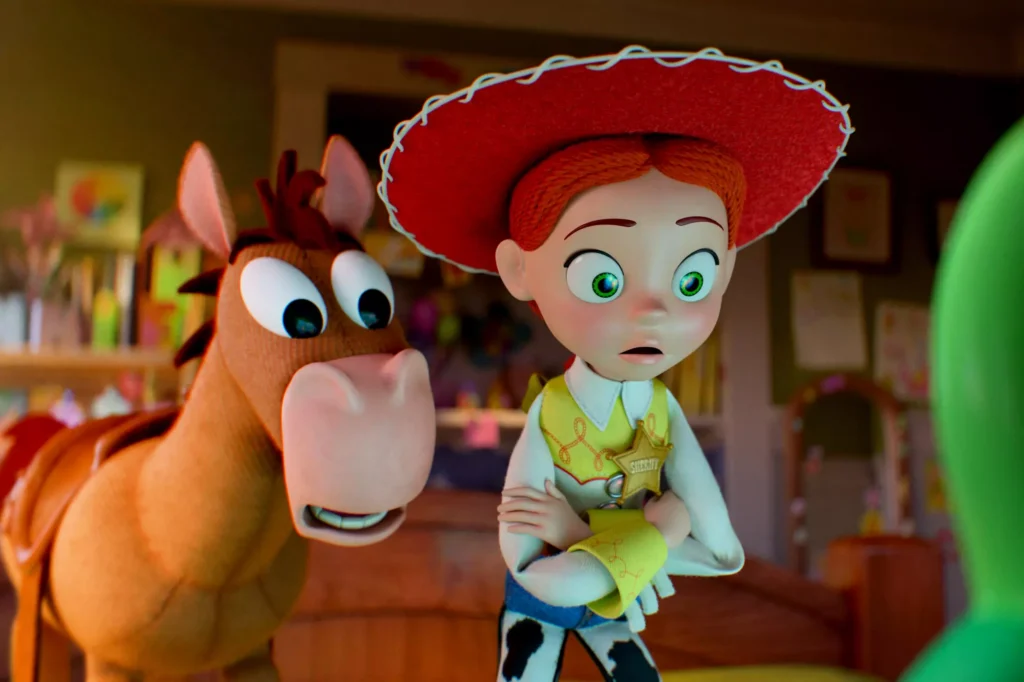
The fifth film takes place two years after the events of Toy Story 4. Bonnie (Scarlett Spears, taking over for Madeline McGraw) still loves her toys, but her classmates are all obsessed with tablets. Hoping to make it easier for Bonnie to make a friend, her parents purchase a Lilypad (Greta Lee), known as Lily. Having seen the effects of screen use on the neighborhood, Jessie (Joan Cusack) and gang resolve to keep Bonnie away from the addictive allure of the tablet.
Toy Story 4 essentially justified its existence by serving as an extended character piece for Woody (Tom Hanks). The fifth movie takes the same approach, centering Jessie as the new lead. Director Andrew Stanton manages to revisit some of Jessie’s arc from Toy Story 2 without totally cribbing its emotional beats. Much of the drama stems from Bonnie attempting to befriend a group of mean girls who dislike her youthful energy, stoking Jessie’s long-held fear of abandonment.
The pivot toward Jessie gives the franchise a breath of fresh air, only made a little awkward by the perpetual presence of the character that we spent the last film saying goodbye to. Woody has been aged by his years in the wild, best exemplified by the bald spot on his head that the writers think is absolutely hilarious. Sadly absent from this film are the many quips usually allotted to the supporting players.
Many franchises have successfully pivoted away from their original lead. Films like Blade Runner: 2049 and Spider-Man: No Way Home managed to incorporate legacy characters quite well, usually reserving them for the third act. Here, Woody enters the narrative fairly early on. Neither Woody nor Buzz Lightyear (Tim Allen) gets a lot to do. Particularly in the case of Woody, his presence can be distracting at times, leading to a natural feeling that he’d make more of an impact than he really delivers.
Toy Story 3 had a lot of big swings. This film largely plays it safe. The creatively ambitious move would have been to either limit the original sheriff to a cameo, or cut him entirely. Instead, Woody lingers, essentially boxing out the rest of the original supporting players. Woody might sell more toys than Rex, Hamm, Slinky Dog, or the Potato Heads, but he had his time. Part of a great goodbye involves not saying hello basically ten minutes later.
That sense of narrative laziness also extends to the whole tablet plot. The film does have a few sequences showing the mindlessness of doom-scrolling. It’s uncomfortable at times to watch if you’re an adult who wonders if you spend too much time on your phone (you probably do).
Pixar movies usually go straight for the heartstrings, unafraid to showcase the big feelings for all to see. Randy Newman’s iconic “Strange Things” was a wake-up call to Woody in the first movie about the realities of being replaced. Jessie went through the same stuff in the sequel. Stanton’s first Pixar film, Finding Nemo, went for broke in the first five minutes, killing off Nemo’s mother immediately. Pixar doesn’t play around with emotion.
Toy Story 5 does not approach the dangers of screen addiction with that same sense of determination. We see Bonnie going through it a bit, but the film does not attempt to make screens the enemy. One look at Disney+ can show us why, but Pixar is also the same company that produced the excellent Marxist primer A Bug’s Life, which taught countless young people how to overthrow the grasshopper bourgeoisie. Toy Story 5 is clearly done with the socialism.
The voice acting is mostly solid. There’s no getting away from the fact that Allen, Hanks, and Cusack are all a lot older than they were when these movies started, but only Allen is noticeably subdued in his delivery. The film does lean into the physical age of its toy characters at times, offering some compelling commentary on learning to accept the passage of time.
Toy Story 5 is in many ways an improvement over its immediate predecessor, especially for those of us who thought it was a little childish of Woody to peace out when he wasn’t the favorite toy anymore. Stanton gives Jessie the payoff many of us have been waiting for. The film manages to be a worthy installment in the franchise without feeling the need to try to top the emotional heights of its predecessors. It’s not the most revolutionary experience on the planet, but it’s first-class entertainment for all ages to enjoy at the theater.